Edward WestonÉtats-Unis, 1886–1958
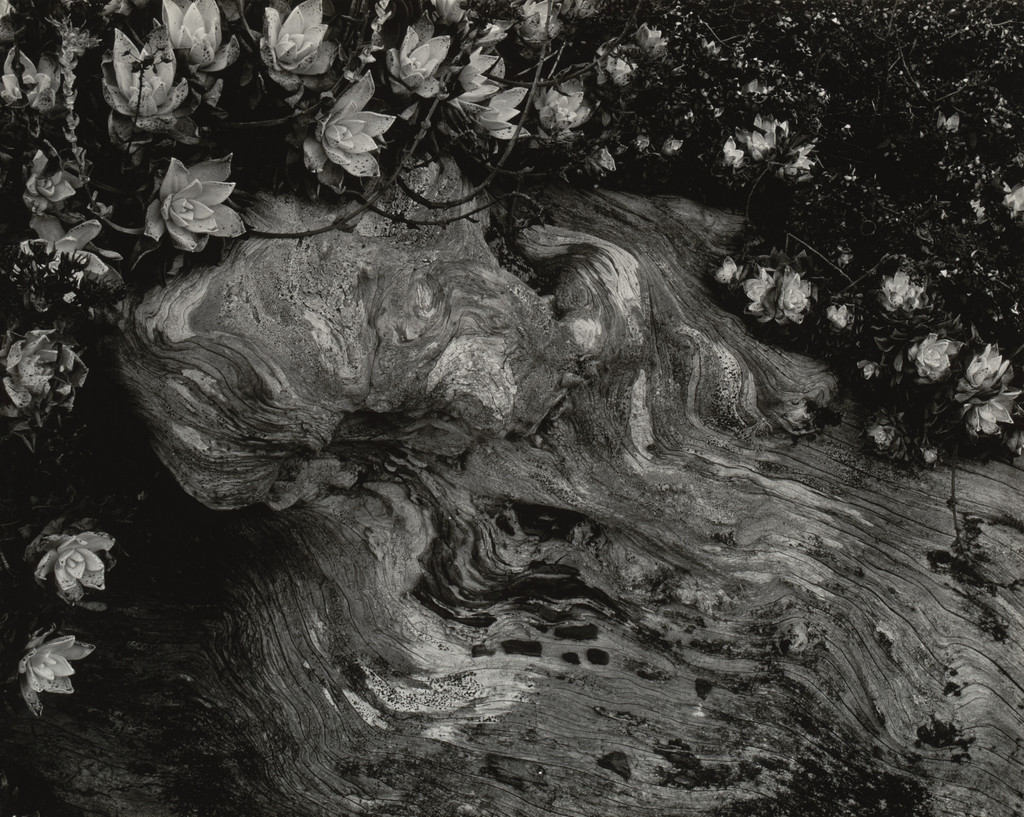
Cypress, Pebble Beach
Peut-on la contempler ?
Elle ne reçoit pas en ce moment

Washington, États-Unis
Elle appartient à la collection, mais n’est pas présentée en ce moment.
- Vérifié
- Dans cet état depuis
- Source
- Le musée
Notice
- Numéro d’inventaire
- 2020.29.81
Ce qu’elle montre
Au catalogue
Sources
- National Gallery of Art
- Image : National Gallery of Art — © the artist or rights holder
Pendant ce temps, chez Edward Weston
La vie entière1930–1931
A series of one-man exhibitions, 1930–1931
The first is at Alma Reed’s Delphic Studio Gallery in New York, followed closely by the same show at the Denny Watrous Gallery in Carmel; both receive rave reviews, including a two-page article in the New York Times Magazine. Shows at the De Young Museum in San Francisco and the Galerie Jean Naert in Paris follow.
1932
The first book on his work: “The Art of Edward Weston”
The Art of Edward Weston, edited by Merle Armitage, is published, the first book devoted exclusively to Weston’s work; it is dedicated to Alice Rohrer, an admirer and patron whose $500 donation helped pay for its publication.
1932
The Group f/64 exhibition at the De Young Museum
A small group of like-minded photographers in the San Francisco area, led by Van Dyke and Ansel Adams, inspired by Weston’s show at the De Young Museum the previous year, approach the museum with the idea of a group exhibition; calling themselves Group f/64, they open a show of 80 of their prints there in November 1932, and it is a critical success.
1933
Buys a 4 × 5 Graflex camera
The new camera is much smaller and lighter than the large view camera he had used for many years; he begins taking close-up nudes of Noskowiak and other models — the smaller camera lets him interact more with them — and the nudes begin to resemble the contorted roots and vegetables he had photographed the year before.
early 1934
Meets Charis Wilson at a concert
Meeting Charis Wilson at a concert, he is immediately captivated by her beauty and personality, even more than with his previous lovers; a new and important chapter opens in his life. He writes that a new and most beautiful love has come into his life, one that he believes will stand the test of time.
1934
Stops writing his Daybooks
Perhaps because of the intensity of his new relationship, he stops writing in his Daybooks, and six months later makes one final entry, looking back from 22 April: Charis, he writes, may be remembered as the great love of his life.
![Ginevra de' Benci [obverse], Leonardo da Vinci, c. 1474/1478](https://api.nga.gov/iiif/8f29e3c9-a289-4d53-abf0-31a66e9e98fa/full/!2400,2400/0/default.jpg)
![Wreath of Laurel, Palm, and Juniper with a Scroll inscribed Virtutem Forma Decorat [reverse], Leonardo da Vinci, c. 1474/1478](https://api.nga.gov/iiif/ff62e8d0-45c4-498f-ad36-6358de827e04/full/!2400,2400/0/default.jpg)