 Annibale CarracciItalie, 1560–1609
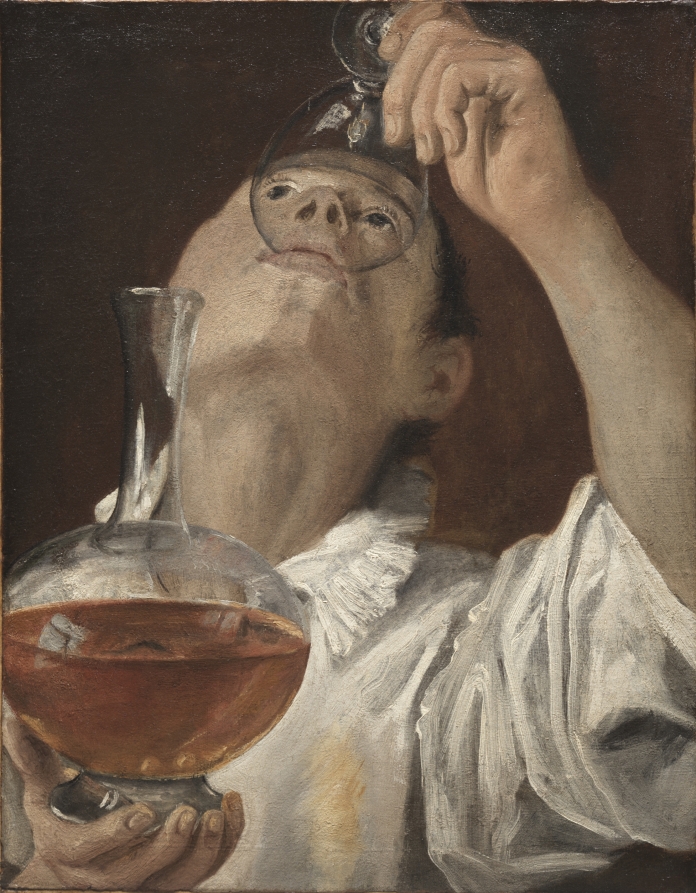
Boy Drinking
Peut-on la voir ?
Oui, exposée actuellement
Où est « Boy Drinking » aujourd’hui ? Cleveland Museum of Art, 217 Italian Baroque, Cleveland. Oui, exposée actuellement. Vérifié 16 novembre 2026.

Ouvert· jusqu’à 21:00
Présentée au public.
- Vérifié
- Dans cet état depuis
- Source
- Le musée
À propos du tableau
Light passing through glass distorts forms in Annibale Carracci's Boy Drinking, painted in 1582–1583 and now in the Cleveland Museum of Art, Cleveland. The rough canvas and unidealised subject belong to his approach based on observing nature. Annibale, his brother Agostino and their cousin Lodovico helped reform Italian painting around such observation. His manner occupied a position between Mannerism's polished artifice and the intensified drama of Caravaggio. Here the behaviour of light through a drinking vessel is recorded alongside the coarse texture of the support. On view in gallery 217.
Selon le musée
Together with his brother Agostino and cousin Lodovico, Annibale Carracci introduced artistic reforms in Italy based on close observation of the natural world. Annibale’s innovative and highly influential style steered a path between the smooth artificiality of Mannerism––in which style and technique took precedence over fidelity to nature––and the heightened drama of paintings by Caravaggio. In this remarkable early work, the coarse surface of the canvas, the inelegant subject matter, and the striking distortion of forms from light passing through glass all speak to his naturalistic approach.
Cleveland Museum of Art
Notice
- Numéro d’inventaire
- 1994.4
Au catalogue
Sources
- Cleveland Museum of Art
- Image : Cleveland Museum of Art — Museum open access
Dans la vie de Annibale Carracci
La vie entière1578–1595
Travaille à Bologne
1580
Travaille à Parme
1580
Travaille à Venise
1580–1581
Voyage en Italie avec Augustin
À l’instigation de leur aîné Louis Carrache, Annibal et Augustin voyagèrent en Italie et étudièrent notamment Titien. De là naquit leur intérêt pour les couleurs chatoyantes empruntées aux Vénitiens.
1582
Ouvre un atelier-académie à Bologne
En 1582, Annibal, son frère Augustin et son cousin Louis ouvrirent à Bologne un atelier, d’abord appelé Académie des aspirants (Desiderosi), puis Académie de ceux qui se sont engagés dans la bonne voie (Incamminati). On la considère comme la première grande école d’art fondée sur le dessin d’après nature et comme un modèle pour les écoles européennes ultérieures.
from 1582
Le dessin d’après le nu à l’Académie
À l’Académie, les élèves pouvaient dessiner d’après des modèles vivants nus, ce que l’Église interdisait à l’époque de la Contre-Réforme en vertu des décisions du concile de Trente. On y enseignait la théorie et la pratique de l’art, ainsi que la perspective et l’anatomie plastique.