 Utagawa HiroshigeJapon, 1797–1858
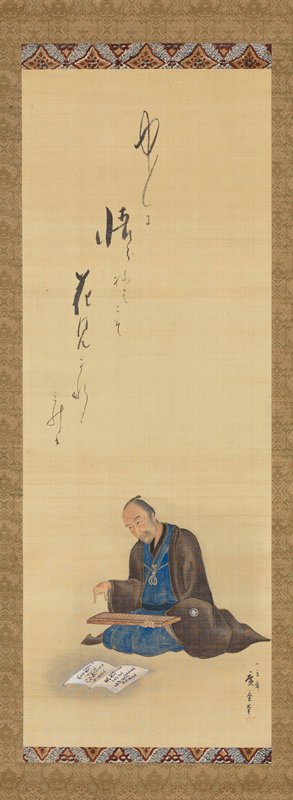
A Wealthy Merchant
Peut-on la voir ?
Pas exposée actuellement
Où est « A Wealthy Merchant » aujourd’hui ? Collection: Minneapolis Institute of Art, Minneapolis. Pas exposée actuellement. Vérifié 29 septembre 2026.

Minneapolis, États-Unis
Elle appartient à la collection, mais n’est pas présentée en ce moment.
- Vérifié
- Dans cet état depuis
- Source
- Le musée
Notice
- Numéro d’inventaire
- 2015.79.121
Au catalogue
Sources
- Minneapolis Institute of Art
- Image : Minneapolis Institute of Art — public domain
Dans la vie de Utagawa Hiroshige
La vie entière1832
Journey to Kyoto along the Tōkaidō
As a fire warden he was entitled to minor privileges reserved for low-ranking samurai, which is how he secured an invitation to join an official procession to Kyoto and travelled the Tōkaidō route linking the two capitals. He sketched the scenery along the way.
October 1838
Death of his first wife, who had helped fund his travels
Hiroshige's first wife, who had helped finance his trips to sketch travel locations, once selling some of her clothing and ornamental combs, died in October 1838.
1856
He becomes a Buddhist monk
In 1856 Hiroshige “retired from the world”, becoming a Buddhist monk; this was the year he began his “One Hundred Famous Views of Edo”.
1856–1858
One Hundred Views of Edo: a priest pays up front
His great “One Hundred Famous Views of Edo” was paid for up front by a wealthy Buddhist priest in love with the daughter of the publisher Uoya Eikichi, a former fishmonger. Hiroshige was usually poorly paid per series, yet he remained capable of remarkable art when the conditions were right.
1858
The cholera epidemic in Edo
Hiroshige died aged 62 during the great Edo cholera epidemic of 1858; whether the epidemic killed him is unknown.
12 octobre 1858
Died
![Shinano Province, Moon Reflected in the Sarashina Paddy-fields, Mount Kyōdai (Shinano, Sarashina tagoto no tsuki, Kyōdaisan), from the series Famous Places in the Sixty-odd Provinces [of Japan] ([Dai Nihon] Rokujūyoshū meisho zue), Utagawa Hiroshige 歌川広重, Edo period, 1853 (Kaei 6, 8th month)](https://nrs.harvard.edu/urn-3:HUAM:CARP04802_dynmc/full/!2400,2400/0/default.jpg)