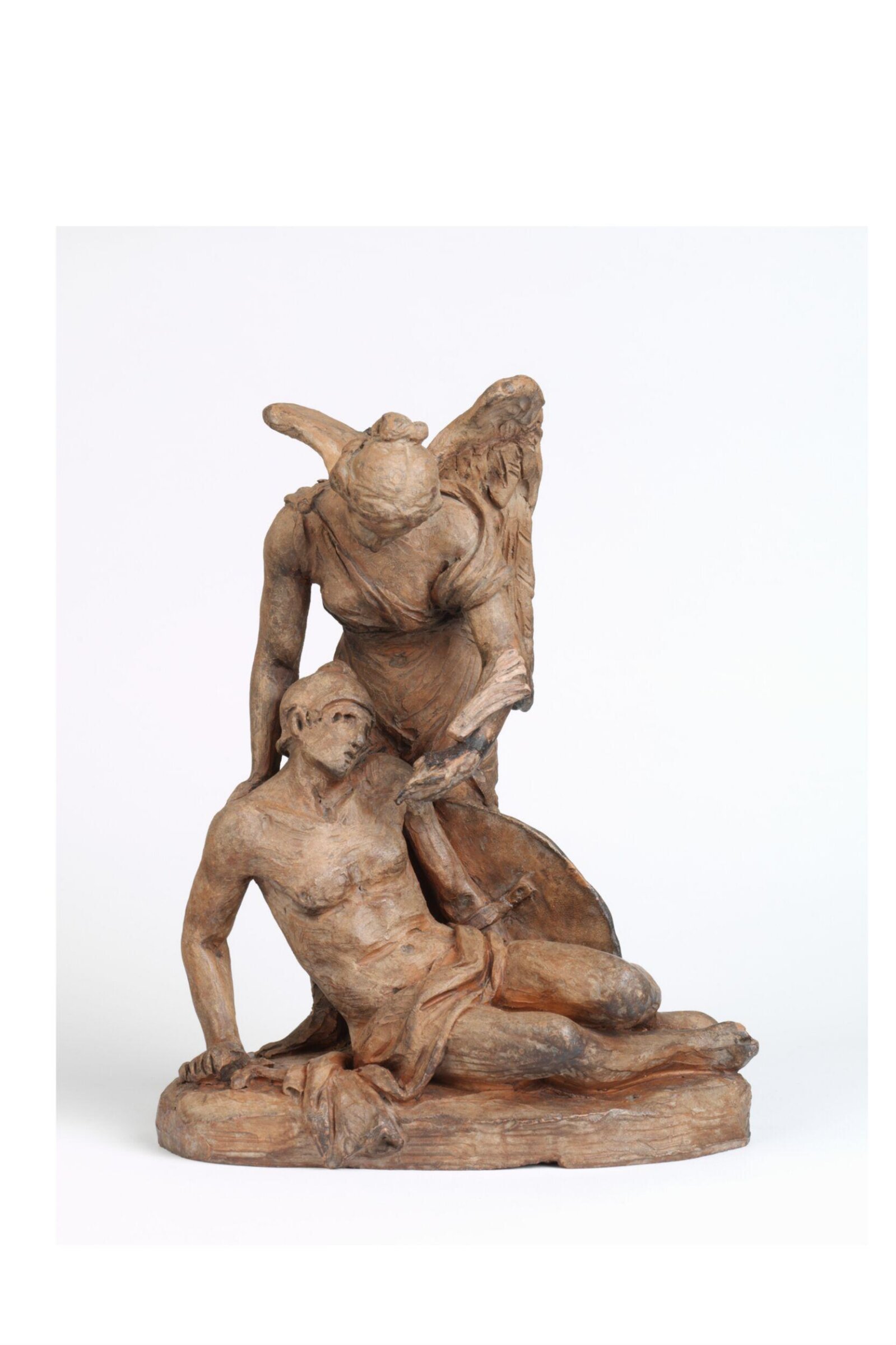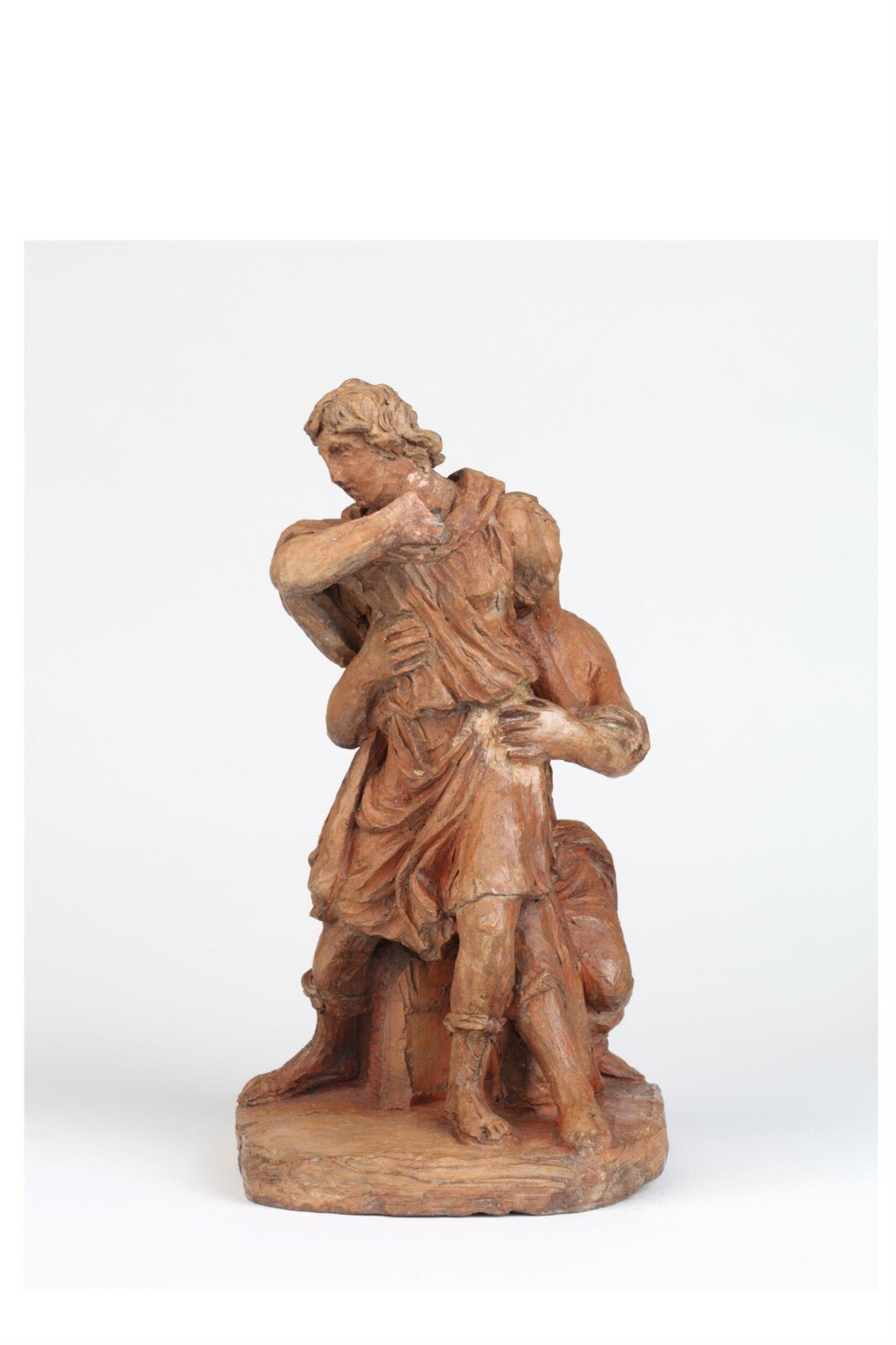
Venus and Adonis
Sobre la escultura
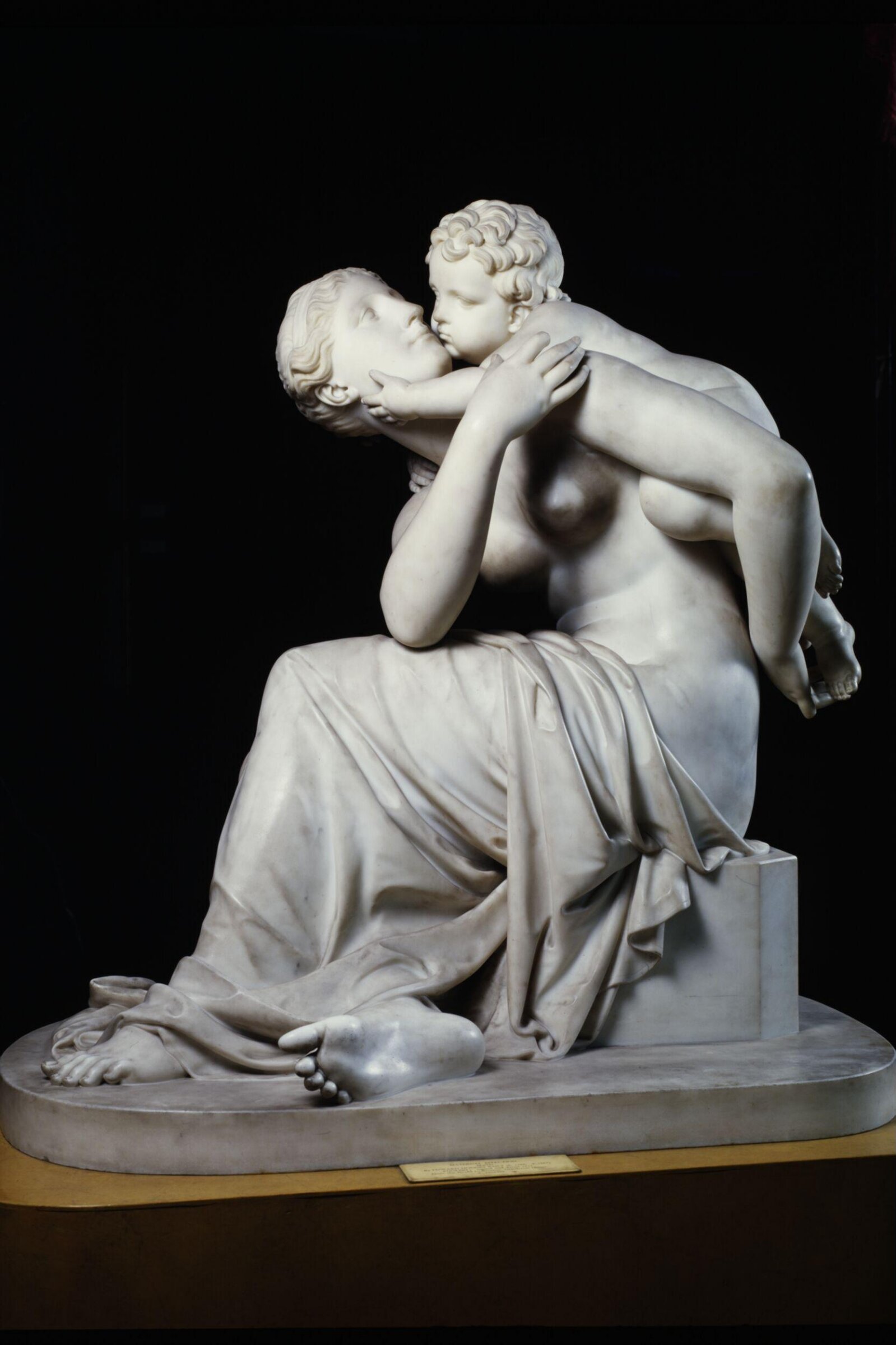
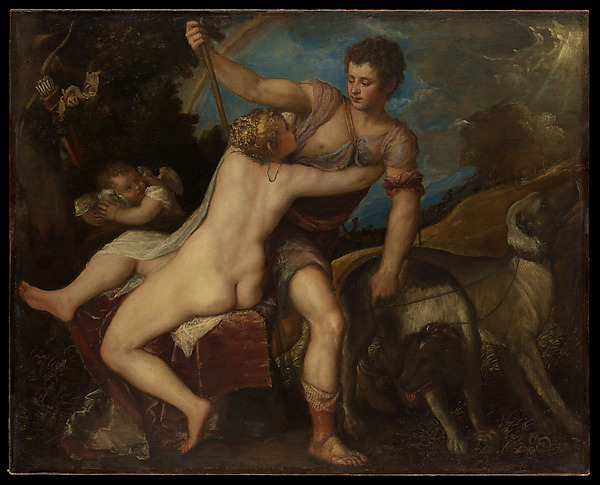
This small study shows Venus trying to persuade her lover, Adonis, not to go hunting for fear that he might be killed (as indeed he was). Venus, the Roman goddess of love and fertility and mother of Cupid, fell in love with Adonis after being accidently grazed by Cupid's arrow.
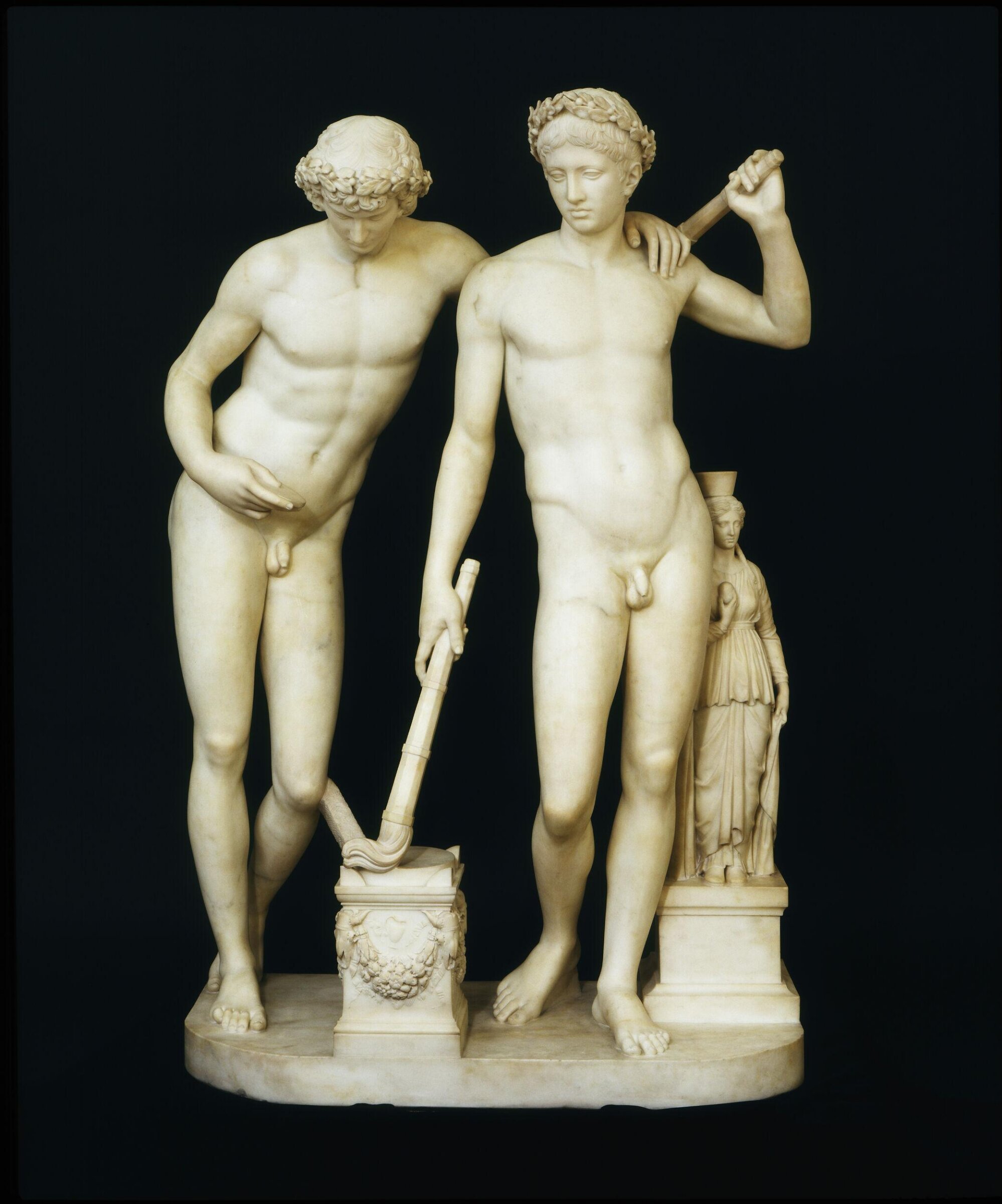
It may have been executed soon after Joseph Nollekens (1737-1823) returned to England from Rome, where he spent eight years from 1762 to 1770, working with Bartolomeo Cavaceppi restoring and copying antique marbles. One of his copies, the group of Castor and Pollux, is in the Museum's collection (Museum no. A.59-1940).
Seguir leyendo
He probably perfected his modelling of clay while he was in Rome and started to experiment in making small figures or groups. These occasionally became models for large-scale finished marbles, but many, still in his studio at his death, were simply studies in their own right, which he called pensieri (thoughts).
Museo de Victoria y Alberto

Ficha
- Número de inventario
- A.6-1944