John ConstableReino Unido, 1776–1837
Valley Farm
¿Se puede contemplar?
Se desconoce: el museo guarda silencio

National Gallery
Londres, Reino Unido
Se sabe quién es el propietario. Si hoy está expuesta, el museo no lo dice, y a adivinar no nos enseñaron.
- En este estado desde
- 29 sept 2026
- Fuente
- Los datos de colección del propio museo
About the painting
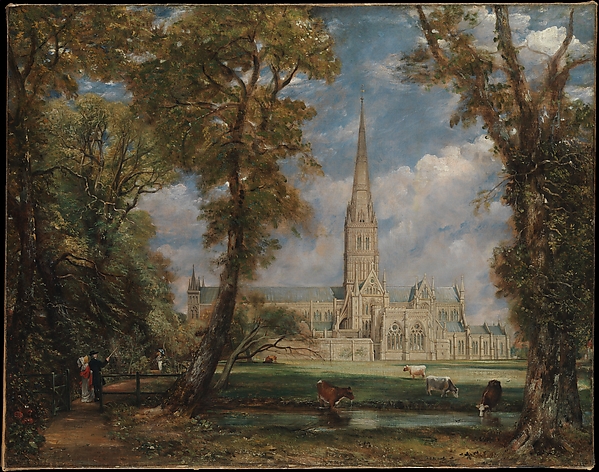
Granja en el valle es un cuadro del pintor romántico británico John Constable. Está datado en 1835. Se trata de un óleo sobre tela que mide 147,3 centímetros de alto por 125 centímetros de ancho. Actualmente se conserva en la Tate de Londres, Reino Unido.
Esta obra fue realizada por Constable y retocada varias veces, ya que no acababa de quedar satisfecho con el «granizo» y la «nieve» que cubrían el lienzo y por el que fue especialmente criticado. La nieve de Constable es una técnica usada por él que se hizo famosa, idónea para traducir los cambios atmosféricos. La expuso en la Royal Academy y después siguió trabajando en ella. Antes de ser acabada la vendió por 300 libras, la mayor cantidad que obtuvo por una obra.
Se representa aquí la casa del campesino Willy Lott en Flatford, que también aparece en La carreta de heno. Se trata de una casa en el valle del río Stour.
Read on
Es una vista romántica de un paisaje otoñal, dominado por tonos marrones y dorados. Carece de la luminosidad brillante de las obras maestras de Constable.
Ficha
- Número de inventario
- NG327
Fuentes
- Wikidata · obtenido hace 4 días
- Imagen: National Gallery — John Constable · Public domain · Wikimedia Commons
Mientras tanto, en la vida de John Constable
La vida entera1828–1837
A widower with seven children
For the rest of his life Constable dressed in black and brought up his seven children alone; according to Leslie he was “a prey to melancholy and anxious thoughts”. Several of the children also painted, notably Lionel.
1835
A last lecture to the Academy’s students
In 1835 Constable gave his last lecture to the students of the Royal Academy, praising Raphael and calling the Academy the “cradle of British art”; it was cheered most heartily.
1836
Lectures at the Royal Institution: three theses
In a series of lectures at the Royal Institution in 1836 Constable proposed three theses: landscape painting is scientific as well as poetic; imagination alone never can produce art that bears comparison with reality; and no great painter was ever self-taught.
31 March 1837
Death in the night, probably of heart failure
Constable died on the night of 31 March 1837, apparently of heart failure (another account names dyspepsia), and was buried beside Maria.
31 de marzo de 1837
Died



![Vallon à Helmingham [Helmingham Dell], Constable, John, 1e quart du XIXe siècle (peint à l'été 1823 (selon Beckett)) (1823)](https://collections.louvre.fr/media/cache/large/0000000021/0000065616/0000312650_OG.JPG)