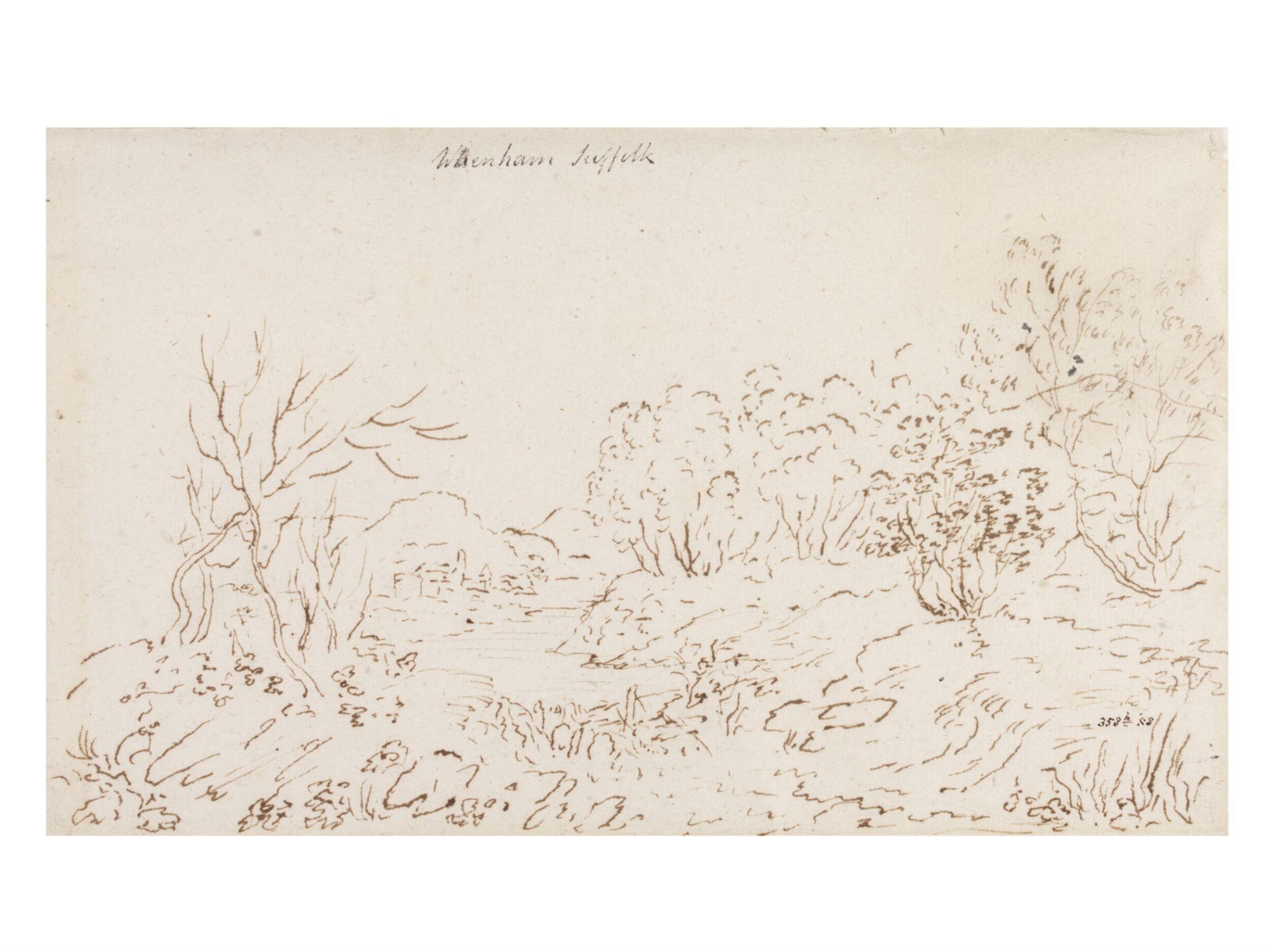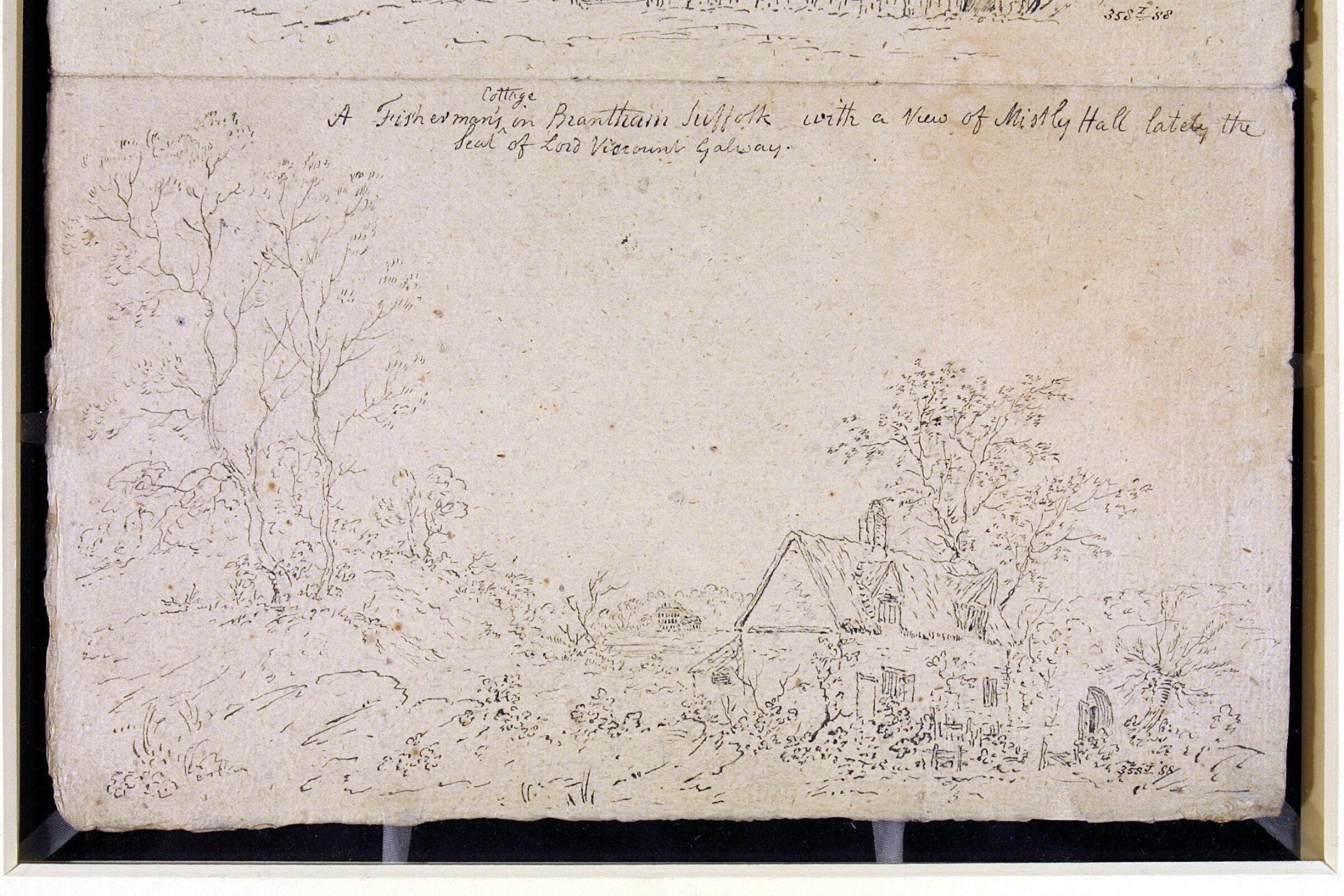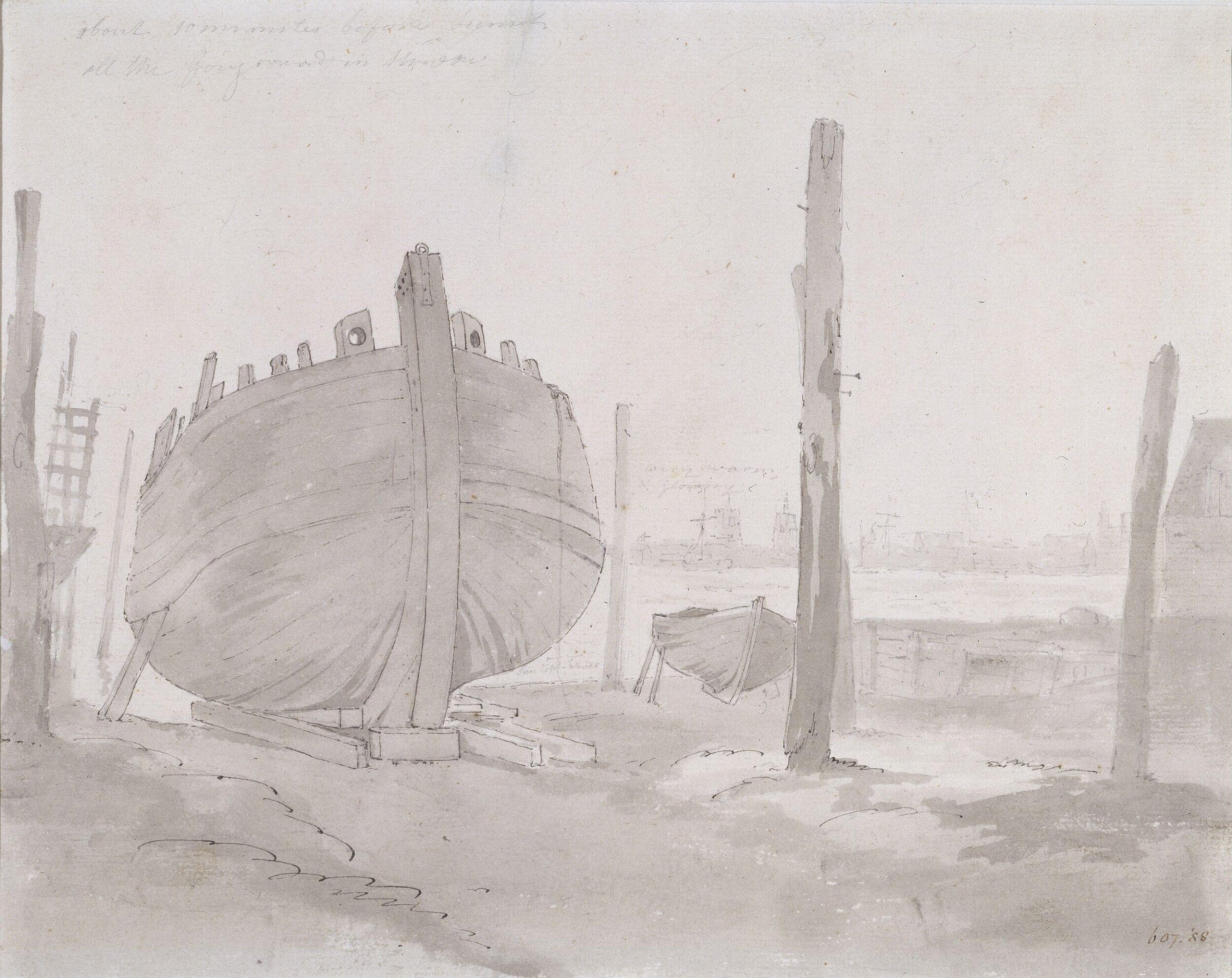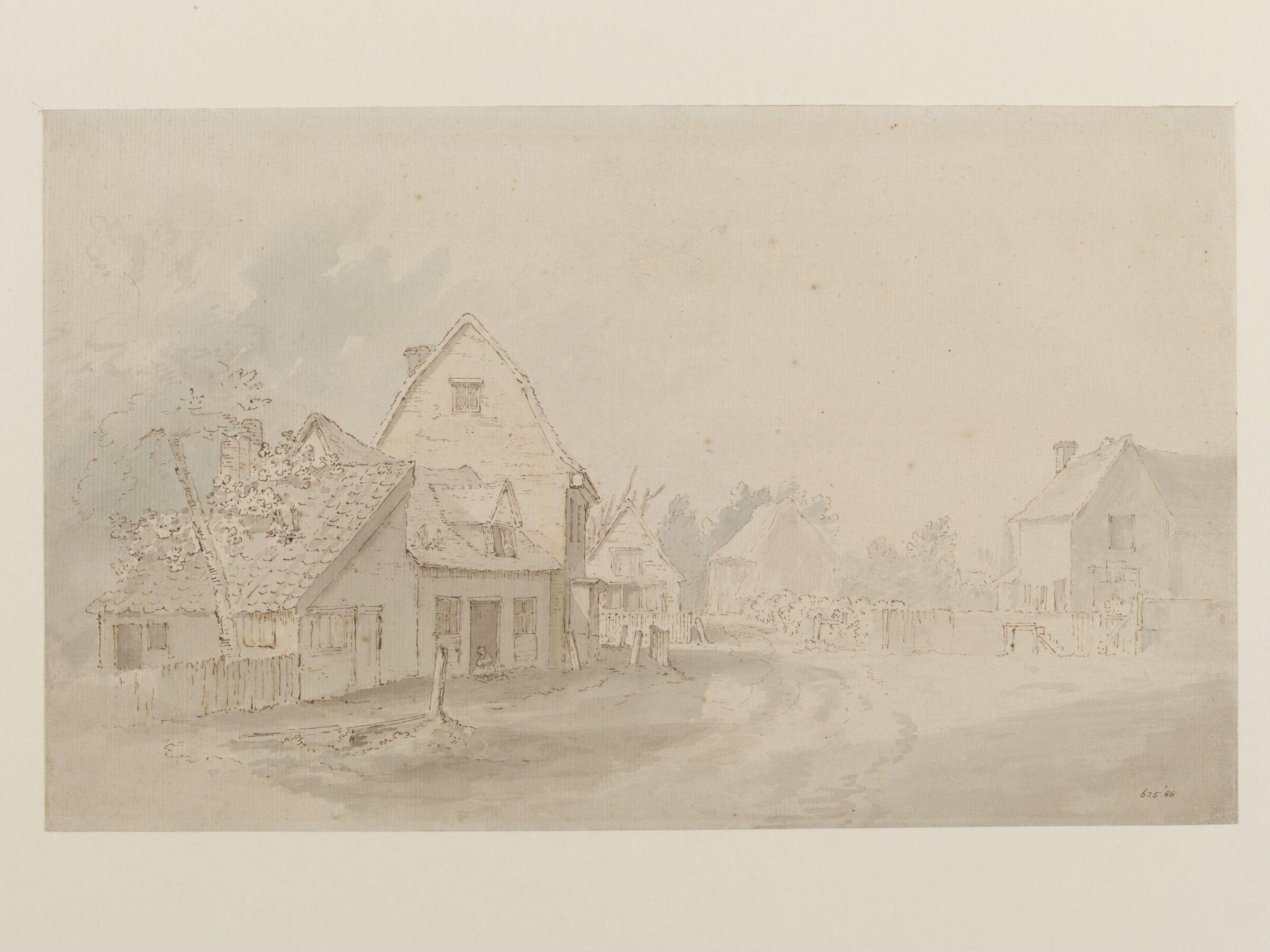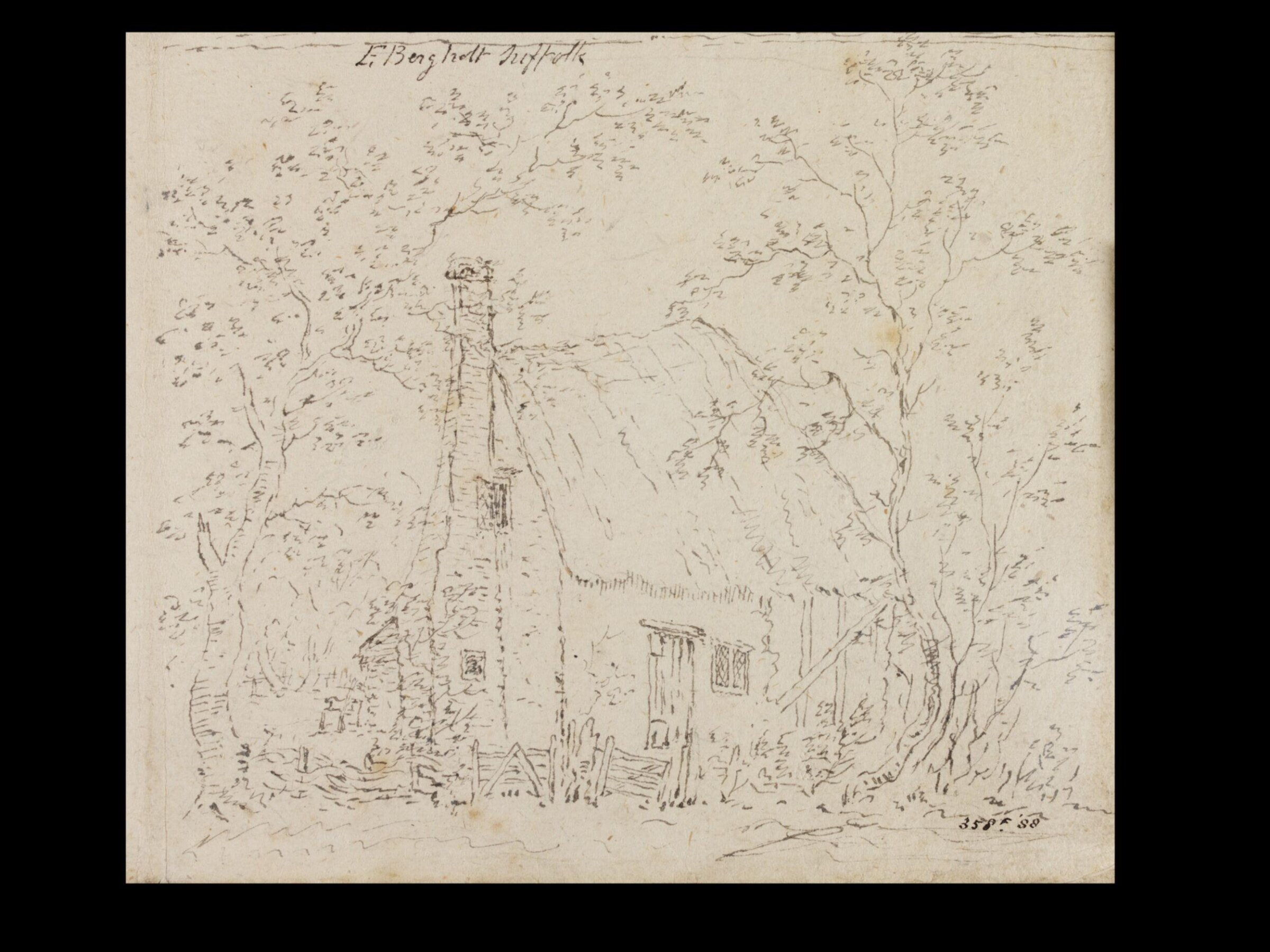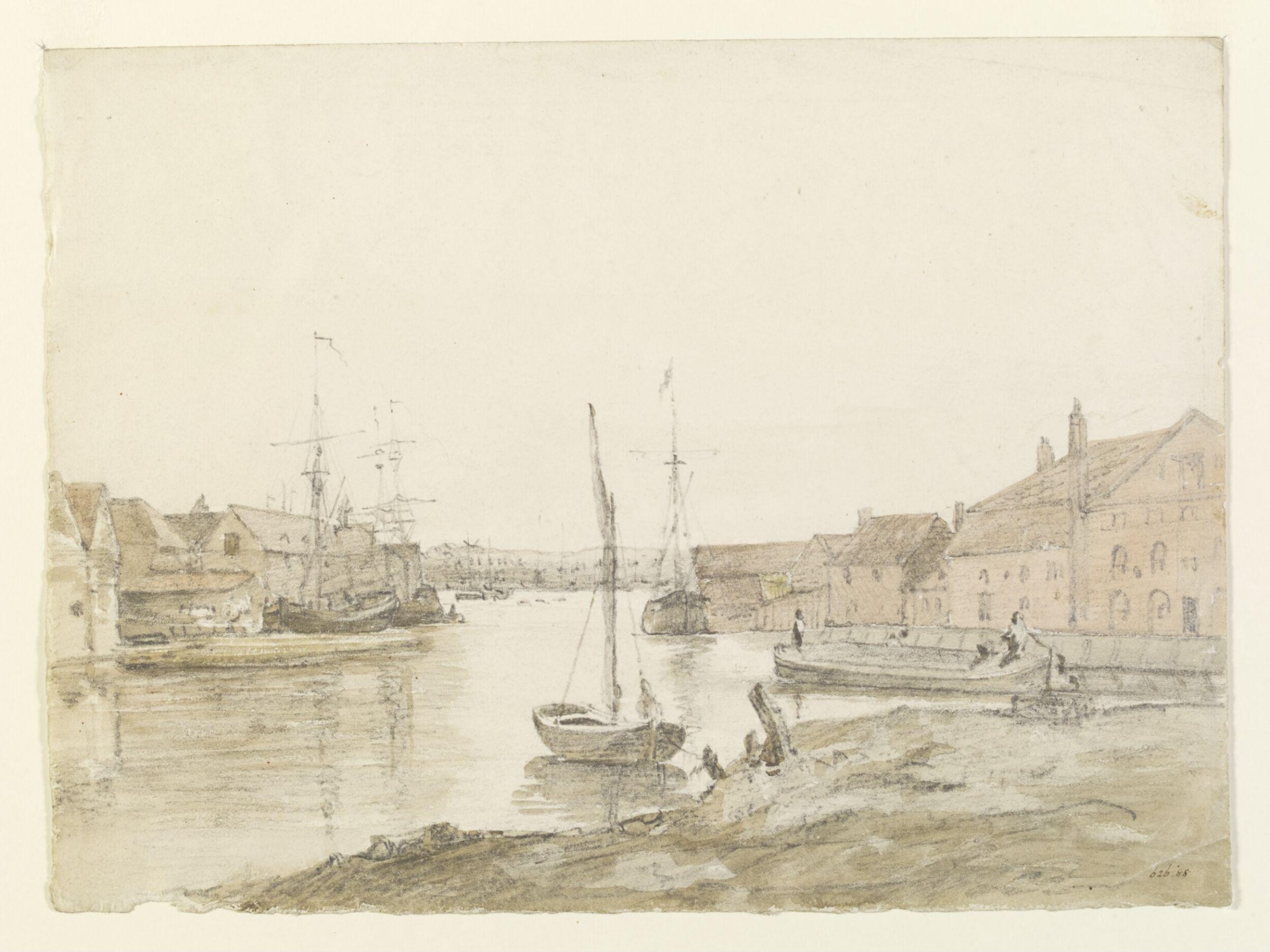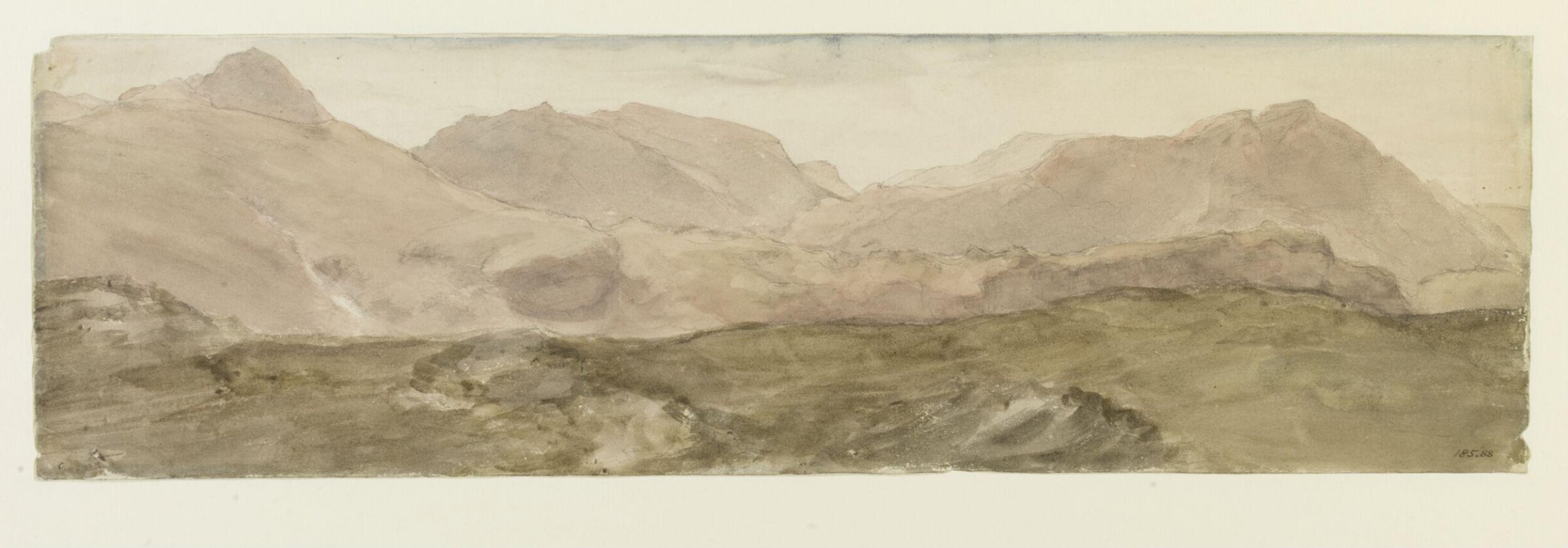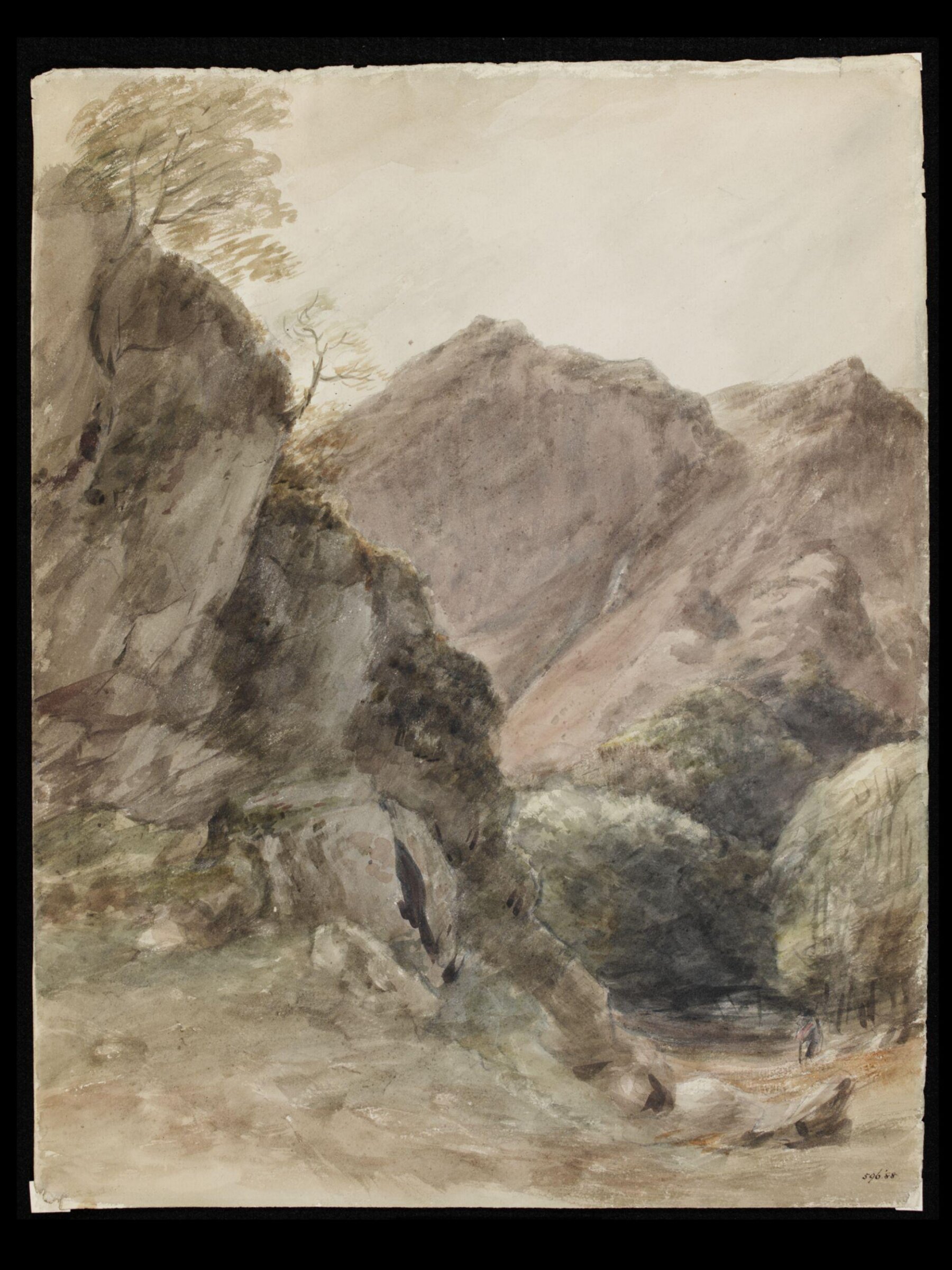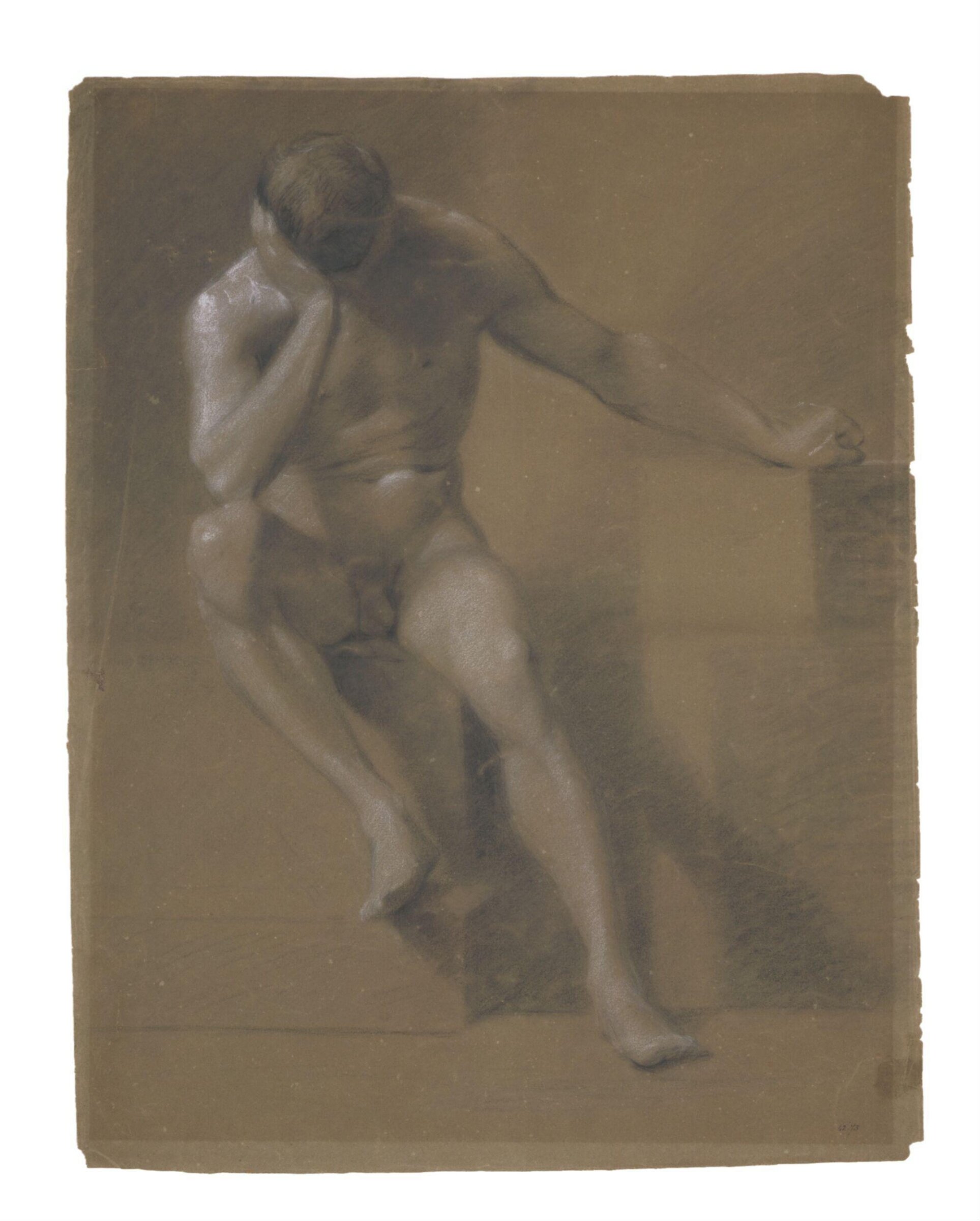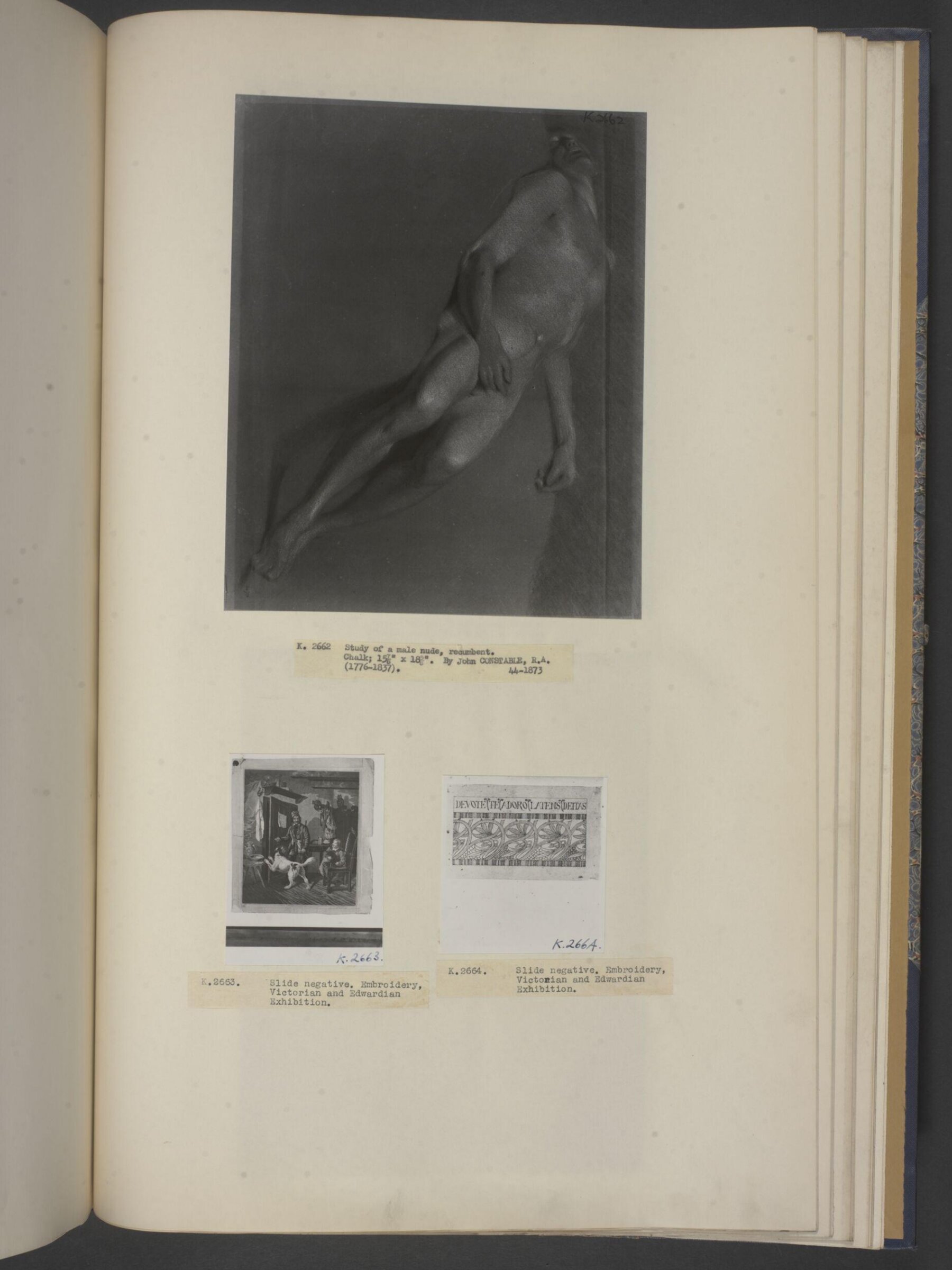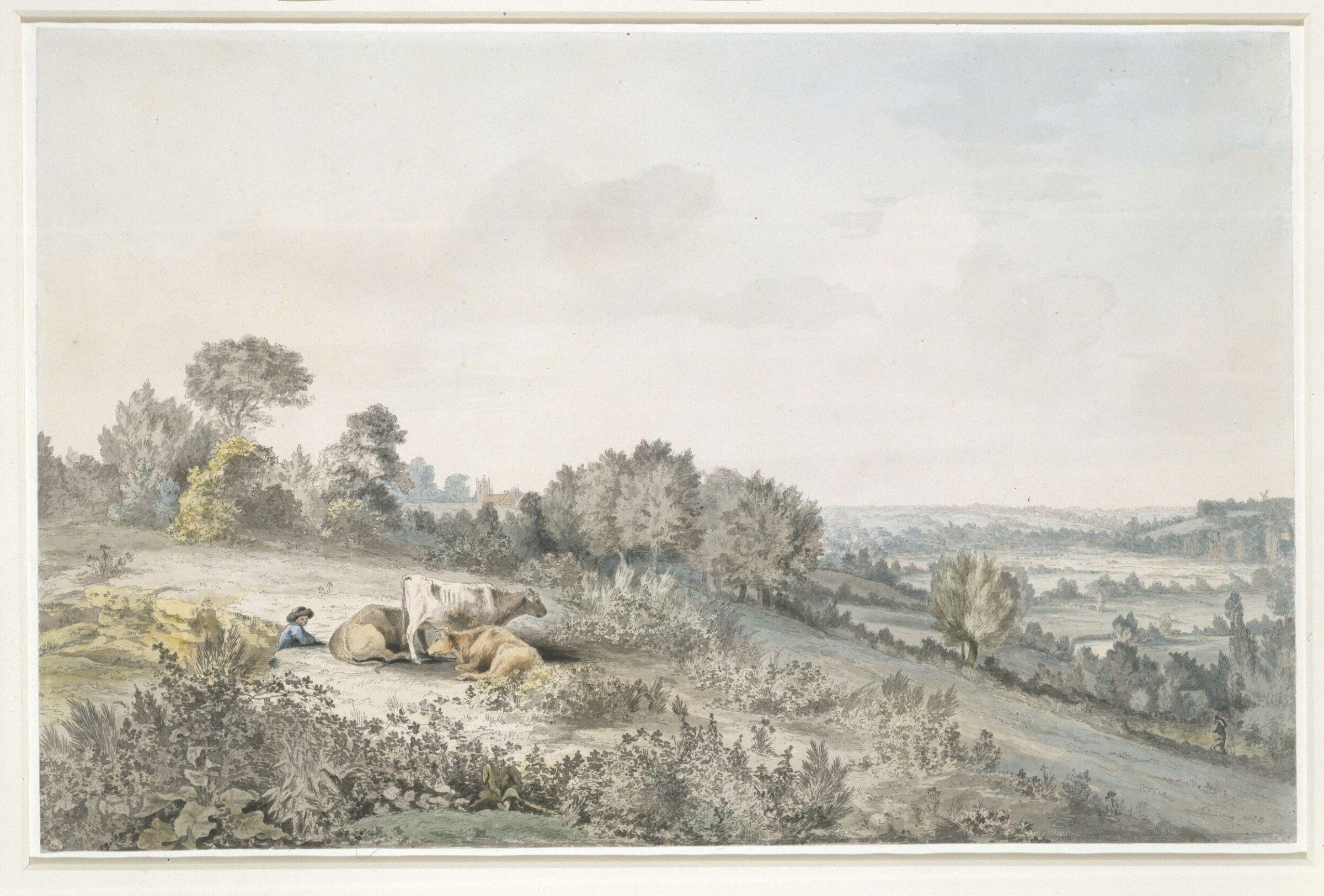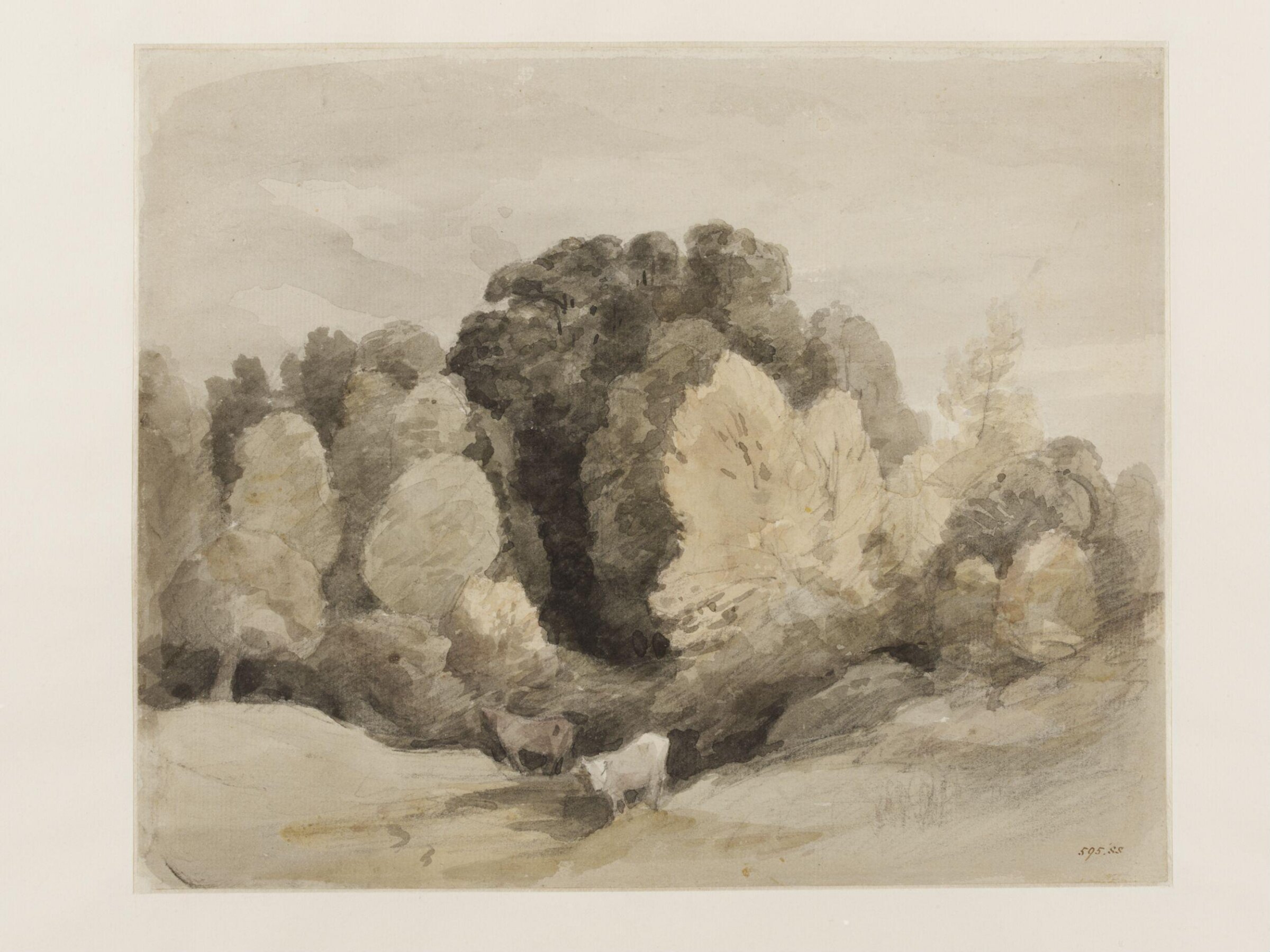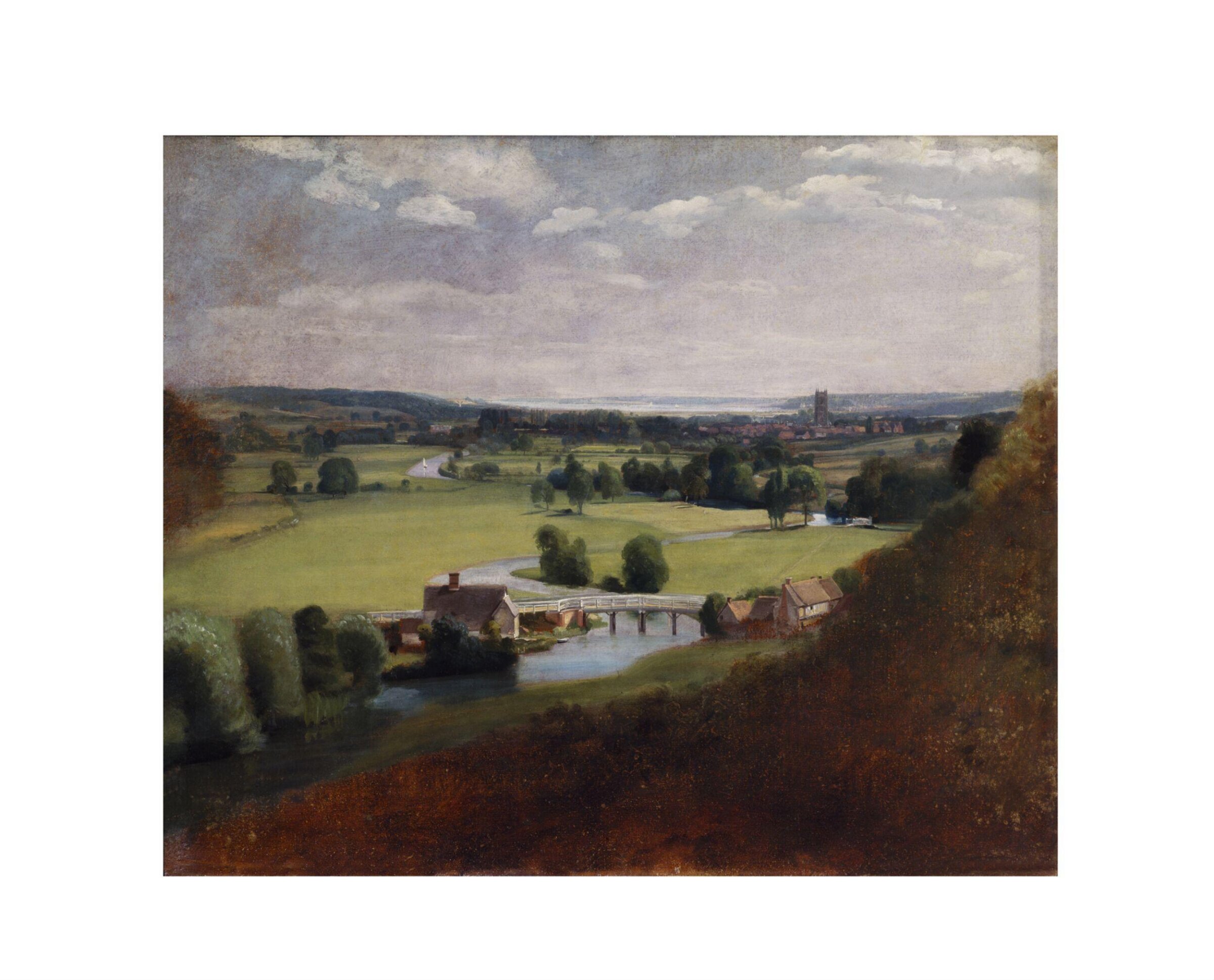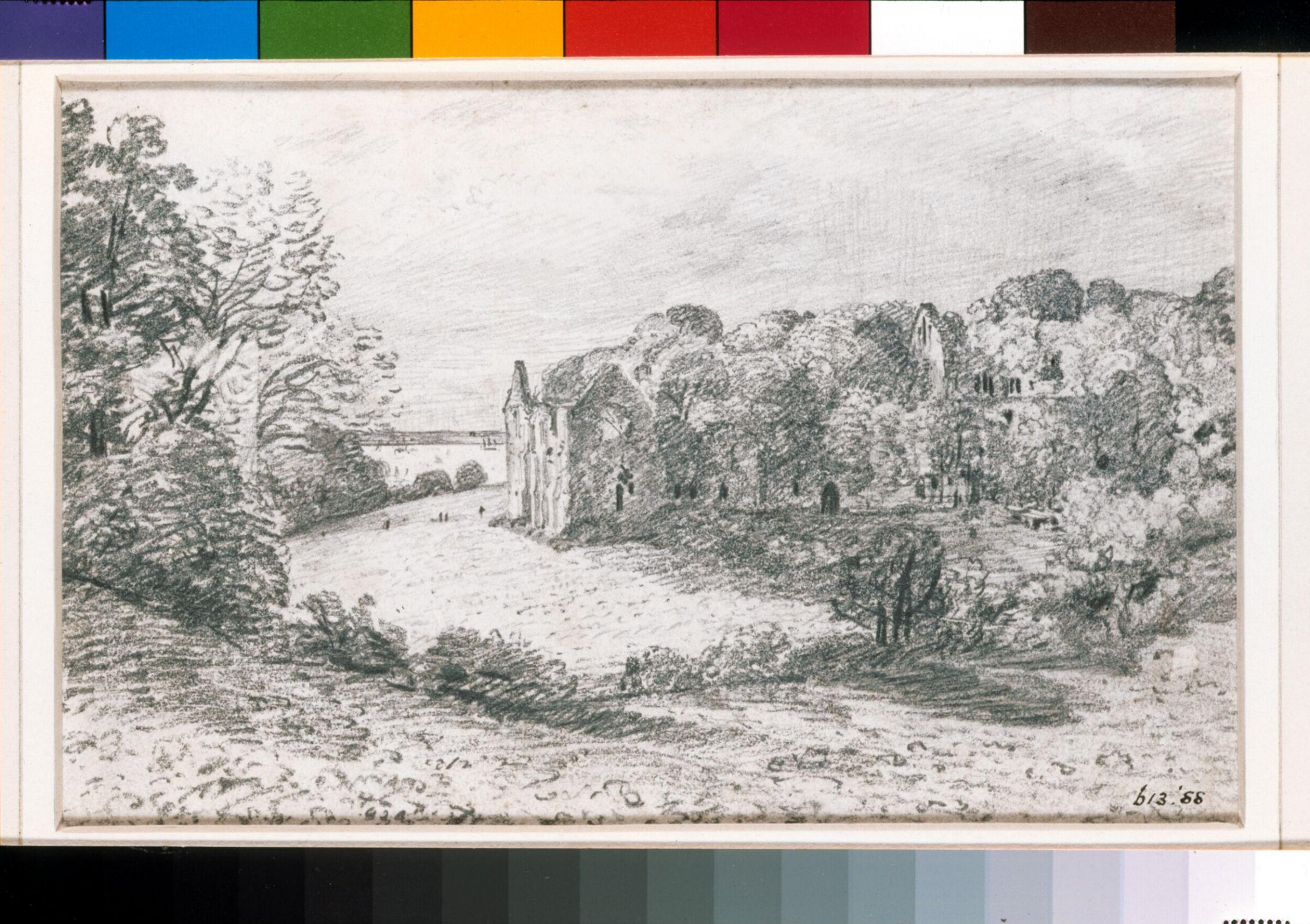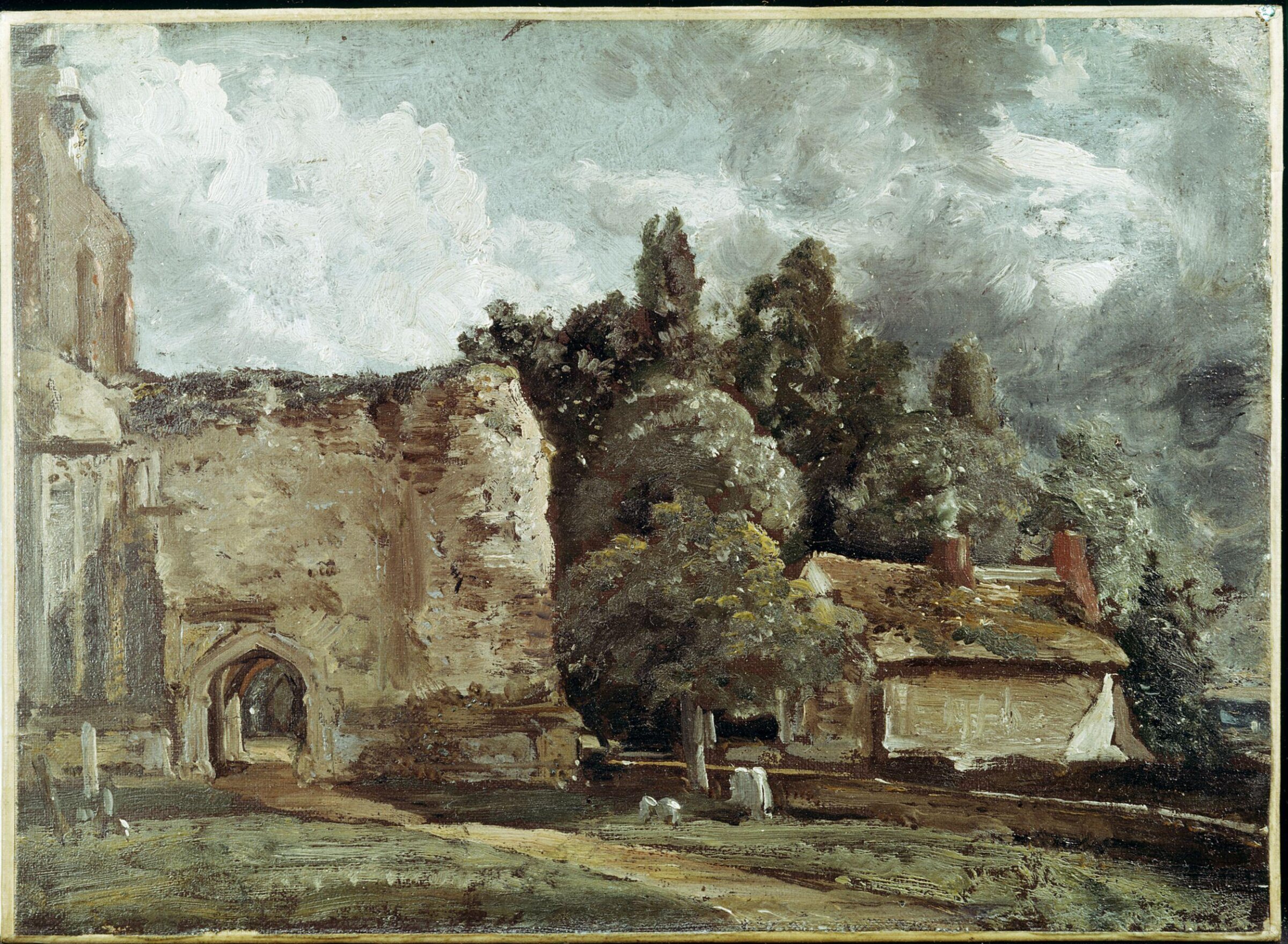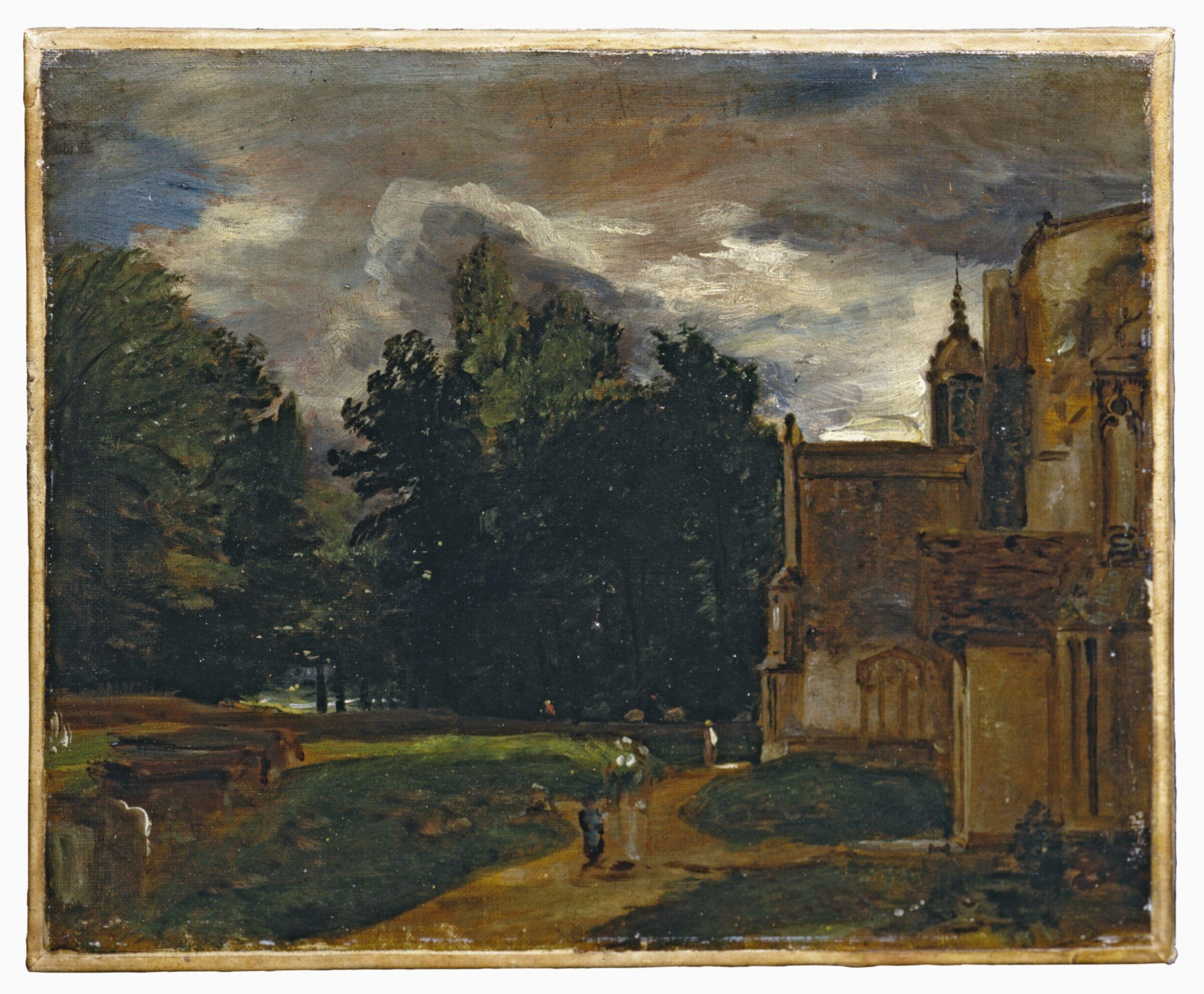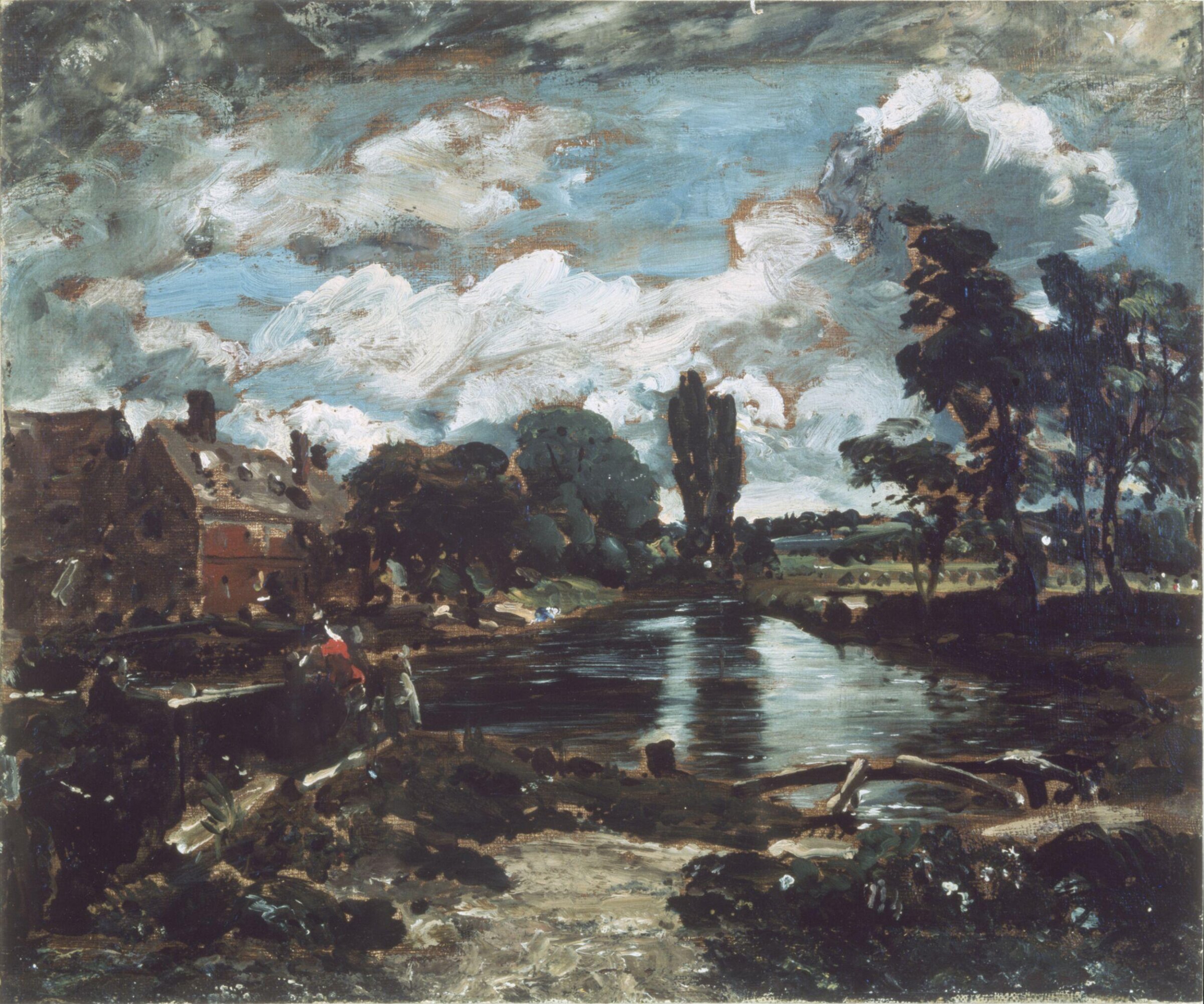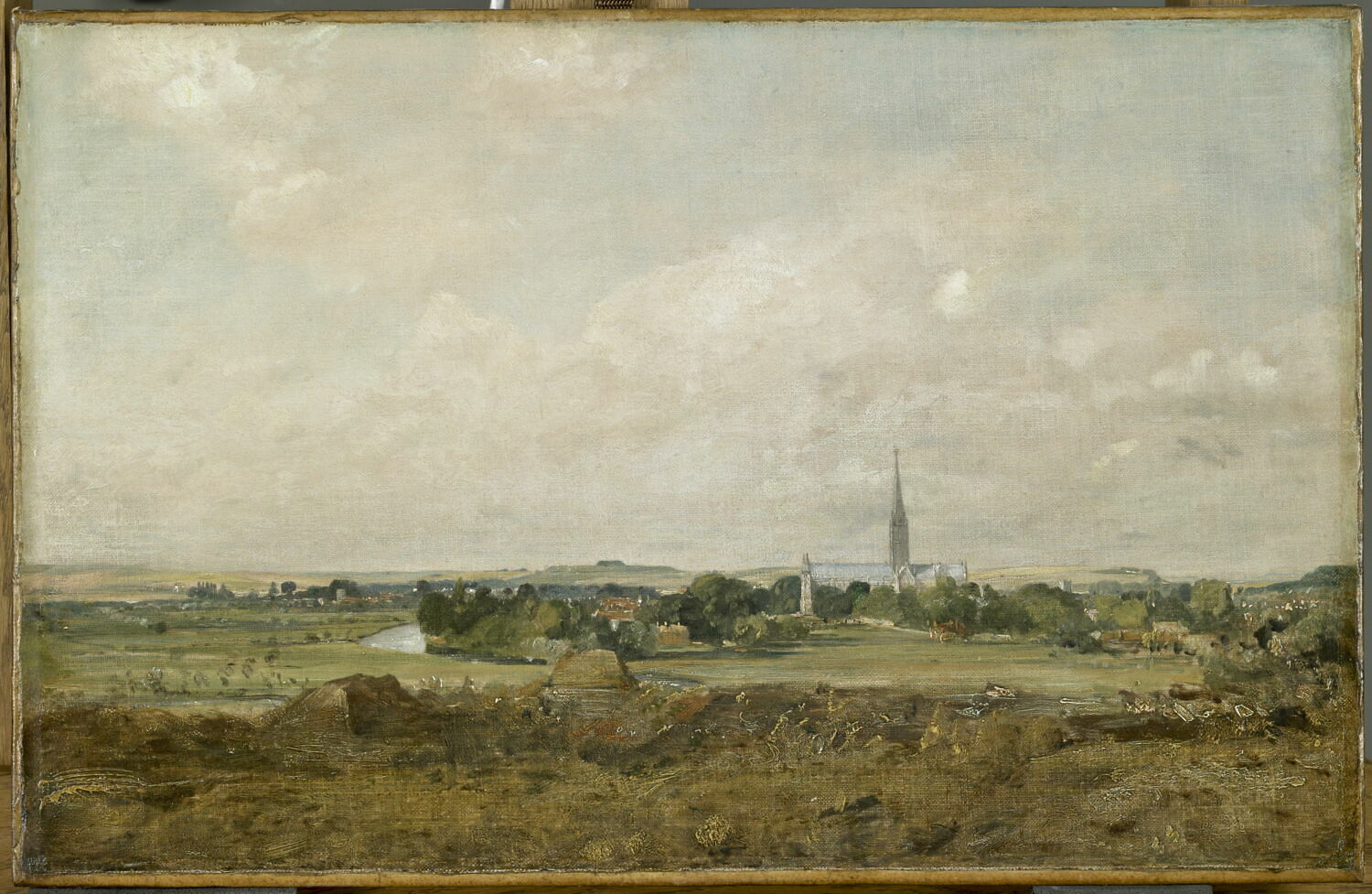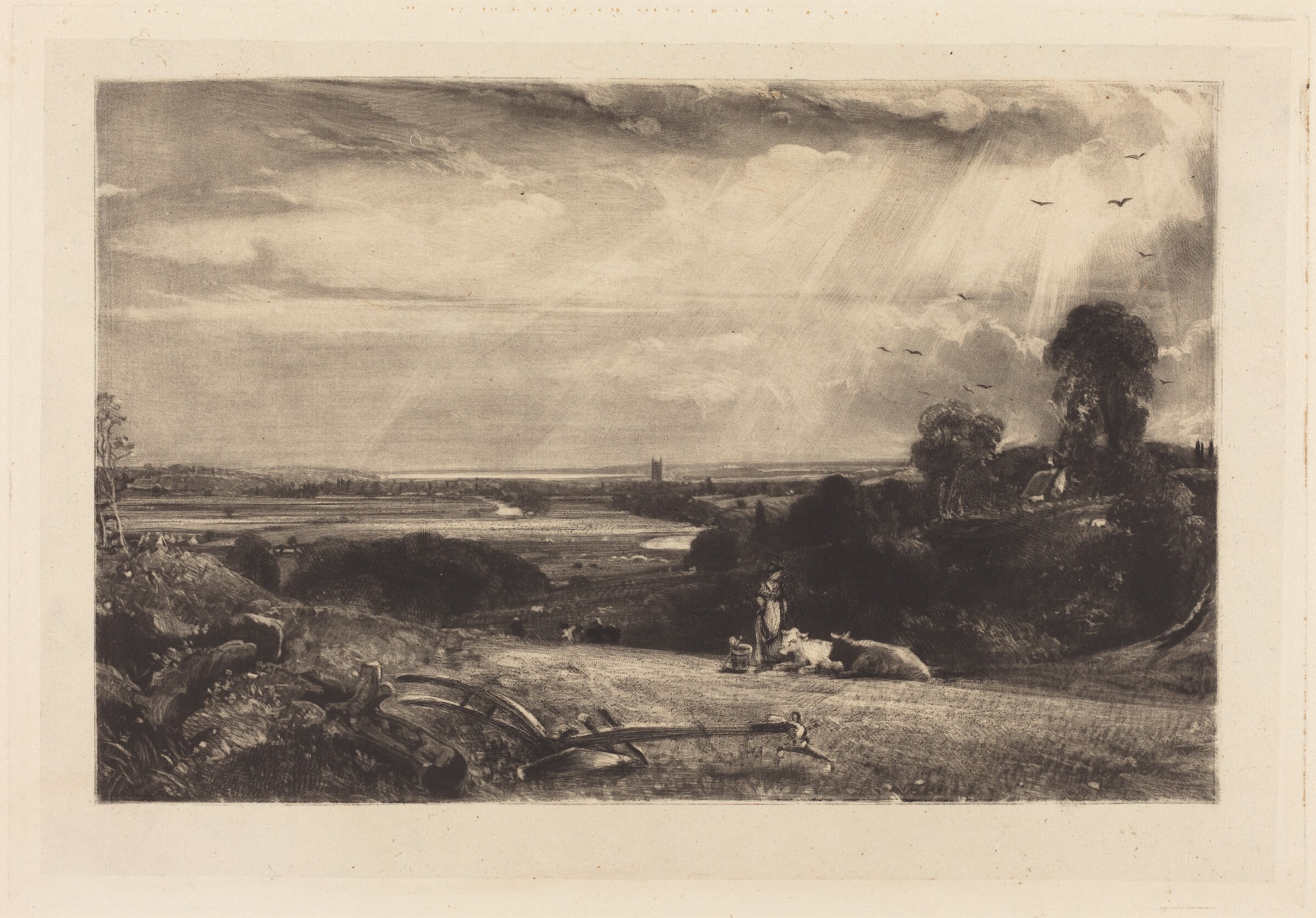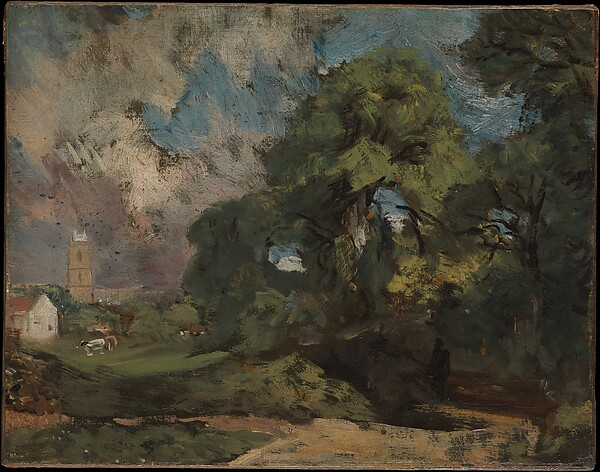
John Constable (East Bergholt, Suffolk, Inglaterra, 11 de junio de 1776 - 31 de marzo de 1837) fue un pintor inglés especializado en paisajes. El tema preferido de sus obras fue la región de Suffolk, más concretamente el Valle de Dedham, por ello dicha área es conocida como «el país de Constable». Su obra más famosa es El carro de heno.
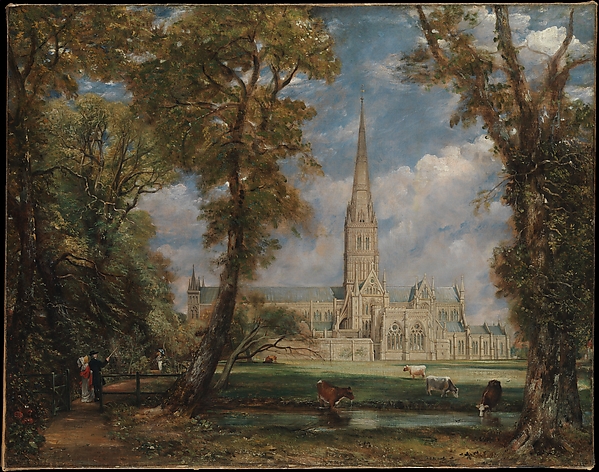
“Salisbury Cathedral from the Bishop's Grounds” (1823)
“Salisbury Cathedral from the Meadows” (1831)
Crónica
1770– 1779
1776
Nacimiento · 11 de junio de 1776
East Bergholt
Evento
A miller’s son from East Bergholt
John was the second son of Golding and Ann Constable. His father, a wealthy corn merchant who owned Flatford Mill and the small ship Telegraph, which carried grain to London, expected John to succeed him, since the elder brother was in poor health.
In 1799 Constable persuaded his father to let him pursue art and received a small allowance. He entered the Royal Academy Schools under the tutelage of Joseph Farington, attending life classes and anatomical dissections and copying old masters.
Evento · until 1799 · East Bergholt
Youth at the mill: sketches that made him a painter
After a short time at a boarding school in Lavenham and then a day school in Dedham he worked in his father’s corn business, though his younger brother Abram eventually ran the mills. As a young man he made amateur sketching trips through Suffolk and Essex; those scenes, he said, “made me a painter”.
Encuentro · until 1799
The collector Beaumont shows him Claude Lorrain
Constable was introduced to the collector George Beaumont, who showed him the pride of his collection, Claude Lorrain’s Landscape with Hagar and the Angel; the picture inspired the young painter.
Encuentro · until 1799 · Middlesex County
John Thomas Smith: draw, but stay at the mill
While visiting relatives in Middlesex, Constable met the draughtsman and engraver John Thomas Smith, who gave him advice on painting but urged him to stay in the family business rather than take up art.
Constable declined the post of drawing master at Great Marlow Military College, which Benjamin West, then head of the Academy, said would end his career. In a letter to John Dunthorne he admitted he had spent two years seeking the truth at second hand and declared his resolve to become a professional landscape painter.
Constable first showed his work in 1802, and by 1803 he was exhibiting paintings at the Royal Academy.
1803
Viaje · April 1803 · Dil
A month aboard the Coutts
Constable spent almost a month aboard the East Indiaman Coutts as it called at south-east ports on its way from London to Deal, before leaving for China.
1810– 1819
1811
Encuentro
First visit to John Fisher in Salisbury
In 1811 Constable first stayed with his friend John Fisher and his family in Salisbury, whose cathedral and surrounding landscape inspired some of his greatest paintings.
1816
Familia · East Bergholt
A marriage against the bride’s grandfather
Maria’s grandfather, Dr Rhudde, rector of East Bergholt, opposed the match: he thought the Constables his social inferiors and threatened to disinherit her. Constable’s parents approved but offered no support until he was financially secure; they died soon afterwards, and he inherited a fifth share of the family business.
Obra · Uayvenkhou
The “Wivenhoe Park” commission
Major-General Francis Slater Rebow commissioned Constable to paint his country house, Wivenhoe Park in Essex; Constable put the money towards his wedding to Maria Bicknell.
Viaje · October 1816 · Weymouth
A honeymoon by the sea
After the wedding at St Martin-in-the-Fields, conducted by Fisher, the couple stayed at Fisher’s vicarage and toured the south coast. The sea at Weymouth and Brighton pushed Constable towards brilliant colour and lively brushwork.
1820– 1829
1820
Obra
“Dedham Lock and Mill”
Obra
“Stratford Mill”: the second six-footer
The second large picture of the series was shown in 1820, and The Examiner thought it looked more exactly like nature than any picture it had seen by an Englishman. Fisher bought it for 100 guineas for his solicitor friend John Pern Tinney, who offered Constable another 100 guineas for a companion piece; the artist did not take up the offer.
The picture, shown as “Landscape: Noon”, found no buyer, but it was seen by the painter Théodore Géricault and the writer Charles Nodier. According to Delacroix, Géricault went back to France quite stunned and invited Constable to Paris, while Nodier urged French artists to look to nature rather than to trips to Rome.
Evento · Dedham
“I should paint my own places best”
In a letter to his friend John Fisher in 1821 Constable wrote that he should paint his own places best, and that painting is but another word for feeling. The Dedham Vale around his home came to be known as “Constable Country”.
In 1831 Constable was appointed a Visitor at the Royal Academy, where he was popular with the students. He then began giving public lectures on the history of landscape painting, which drew distinguished audiences.
1835
Obra
The watercolour “Stonehenge”
The almost mystical Stonehenge, with its double rainbow, painted in 1835 and shown in 1836 with a caption of the artist’s own about a monument that carries you beyond all historical records, is often counted among the greatest watercolours ever made.
In 1835 Constable gave his last lecture to the students of the Royal Academy, praising Raphael and calling the Academy the “cradle of British art”; it was cheered most heartily.
In 1804 Constable showed no pictures at all, telling his friend Joseph Farington that nothing was to be gained by setting his work against paintings extravagant in colour and in bad taste. His small canvases were easily lost on walls hung from ceiling to floor.
1806
Viaje
Two months in the Lake District
In 1806 Constable toured the Lake District for two months. The solitude of the mountains oppressed him; as his friend and biographer Leslie wrote, he needed villages, churches, farmhouses and cottages.
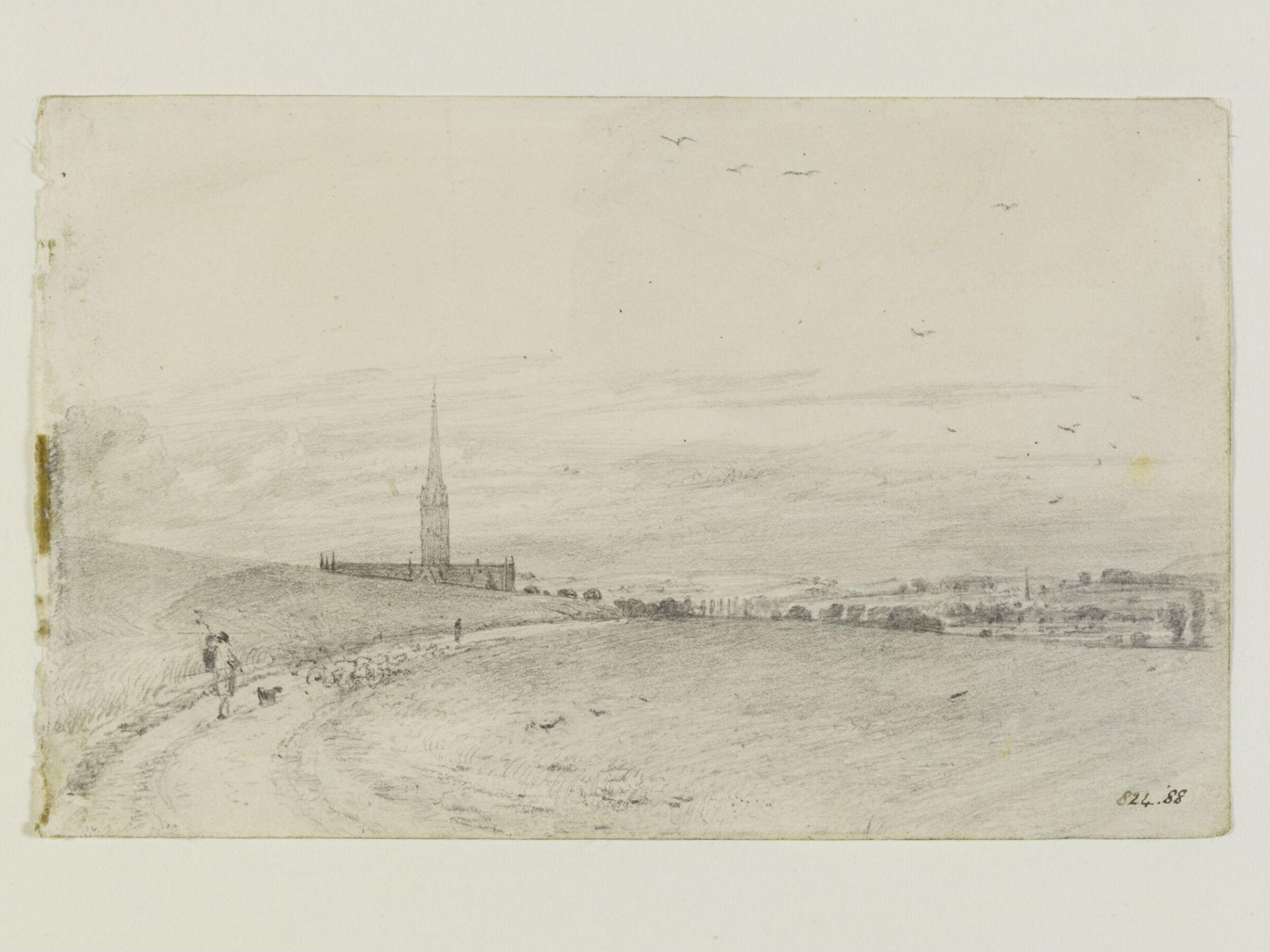
Marriage · 2 de octubre de 1816 · St Martin-in-the-Fields
Maria Bicknell
1817
Obra
“Flatford Mill”: the first big canvas
Constable began his most ambitious picture yet, Flatford Mill, the largest rural scene he had painted and the largest he would ever complete largely outdoors. It found no buyer at the Royal Academy in 1817 but drew much praise and encouraged him to go to even larger canvases.
1819
Obra
Sells “The White Horse”: the breakthrough
Constable sold his first important canvas: his friend John Fisher bought The White Horse for 100 guineas, giving him a financial freedom he had never known. Its success helped him become an associate of the Royal Academy and launched the series of monumental Stour landscapes known as the “six-footers”.
Constable wrote to Fisher that he had done a good deal of skying and was determined to conquer all the difficulties that remained. He made cloud studies, noting the weather, direction of light and time of day on the back, and held the sky to be the key note of a landscape, drawing on the meteorologist Luke Howard’s classification of clouds.
1822
Family · 1822/1823
Daughter born: Isabel Constable
1823
Obra
“Salisbury Cathedral from the Bishop's Grounds”
1824
Exposición
The Paris Salon: a gold medal
The Anglo-French dealer John Arrowsmith bought The Hay Wain and other works, and in 1824 they were shown at the Paris Salon, where they caused a sensation. The Hay Wain was awarded a gold medal by Charles X.
Residencia · 1824–1828
The family in Brighton for Maria’s health
When Maria began to show symptoms of tuberculosis, Constable took lodgings for the family in Brighton in the hope that sea air would restore her health, dividing his time between Brighton and Charlotte Street in London. He was unsure at first that Brighton suited painting, and complained to Fisher that the beach was only Piccadilly by the sea.
Delacroix repaints the background of “The Massacre at Chios”
After seeing Constable’s pictures at Arrowsmith’s gallery, Delacroix repainted the background of his Massacre at Chios, saying the paintings had done him a great deal of good. In his journal he noted that Constable’s meadow greens are a combination of many different shades.
Obra
“The Lock”: sold on the first day
The Lock was not finished in time for the 1823 exhibition and was shown in 1824, when it sold for 150 guineas on the first day, the only Constable ever to do so. It is the only upright landscape of the Stour series and the only six-footer he painted in more than one version.
Obra · c. 1824 · Brighton
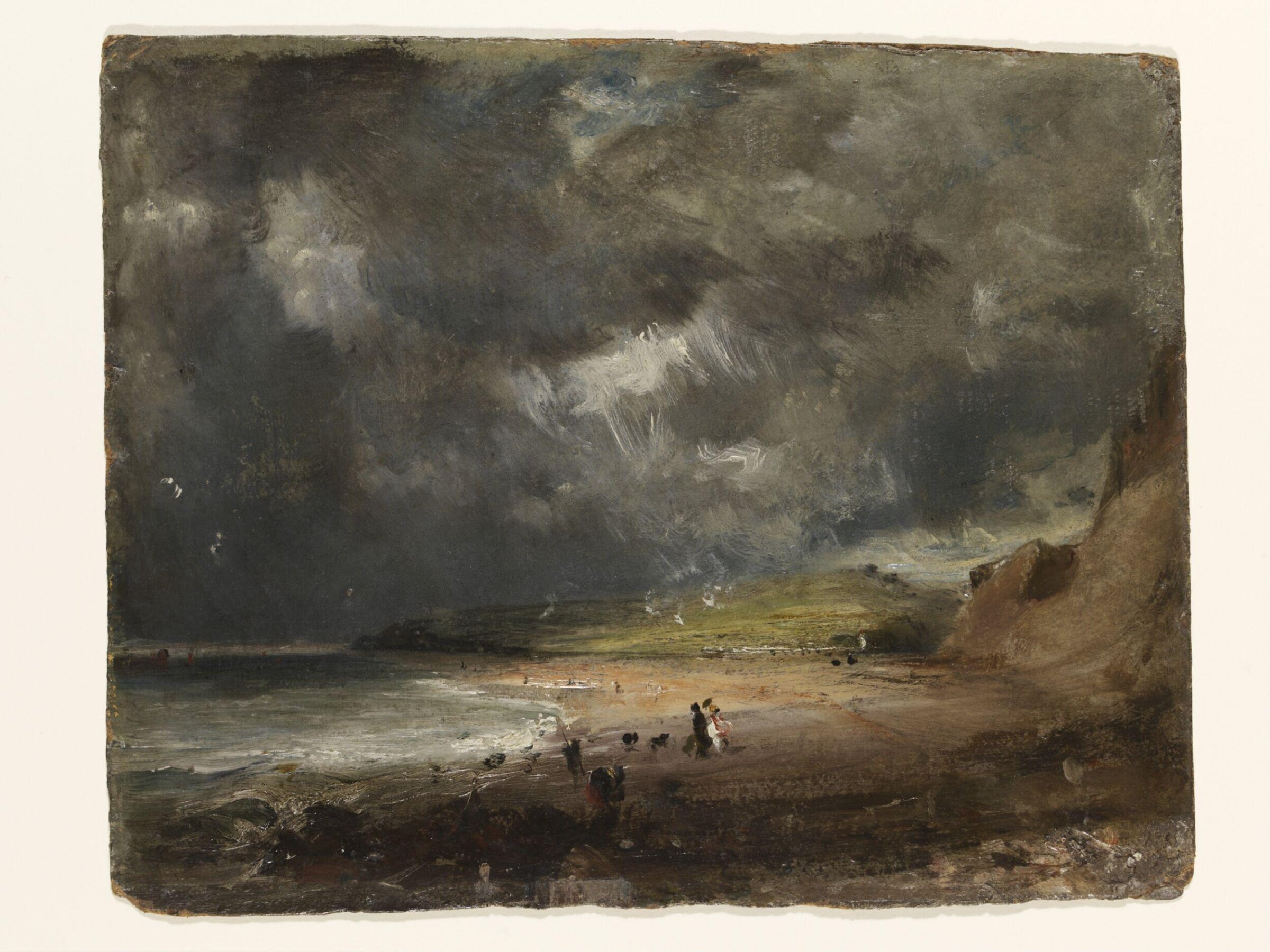
A study of a rain squall over the sea
At Brighton Constable painted one of his most powerful studies, Seascape Study with Rain Cloud; slashing dark brushstrokes capture the suddenness of a shower breaking over the sea.
1825
Evento
A quarrel with Arrowsmith: the French market is lost
In 1825 Constable quarrelled with Arrowsmith and lost his French outlet, perhaps partly from worry over his wife’s health, the uncongenial life at Brighton and the pressure of outstanding commissions. In a few years he had sold more than twenty pictures in France, more than he sold at home.
Obra
“The Leaping Horse”: the last of the six-footers
The Leaping Horse was the final picture of the big Stour series and the only one that did not sell in Constable’s lifetime. Its oil sketch, like that of The Hay Wain, has a vigour missing from the finished painting.
1827
Obra
“Chain Pier, Brighton”
Chain Pier was his only ambitious six-foot painting of a Brighton subject; shown in 1827, it so convincingly conveyed humid air that a critic wrote it almost made one wish for an umbrella.
1828
Familia · 1828–1837
A widower with seven children
For the rest of his life Constable dressed in black and brought up his seven children alone; according to Leslie he was “a prey to melancholy and anxious thoughts”. Several of the children also painted, notably Lionel.
Publicación · after 1828
Mezzotints for “English Landscape” with David Lucas
Maria’s father, who died shortly before her, left her £20,000, and Constable spent it disastrously on mezzotints after his landscapes for a planned publication. With the engraver David Lucas he made forty prints, one going through thirteen proof stages, but too few subscribers came forward and the venture lost money.
After the birth of their seventh child the family returned to Hampstead, where Maria died of tuberculosis at the age of 41. “Hourly do I feel the loss of my departed Angel,” Constable wrote to his brother.
1829
Obra
“Hadleigh Castle”: turmoil in paint
After Maria’s death his art moved from the serenity of its earlier phase to a more broken and accented style. The turmoil and distress of his mind show clearly in the late six-foot paintings Hadleigh Castle (1829) and Salisbury Cathedral from the Meadows (1831), among his most expressive.
In a series of lectures at the Royal Institution in 1836 Constable proposed three theses: landscape painting is scientific as well as poetic; imagination alone never can produce art that bears comparison with reality; and no great painter was ever self-taught.