Willem de KooningEstados Unidos, 1904–1997
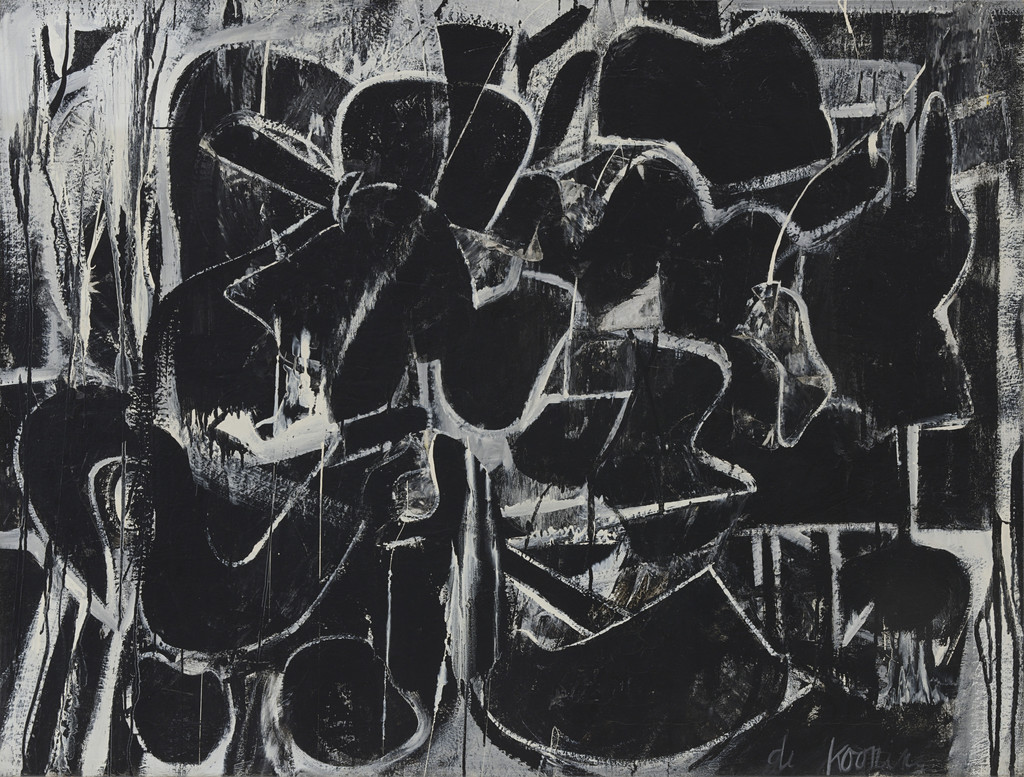
Untitled
¿Se puede contemplar?
Por ahora no recibe

Chicago, Estados Unidos
Pertenece a la colección, pero ahora mismo no está expuesta.
- Comprobado
- En este estado desde
- Fuente
- El museo
Sobre el cuadro
Willem de Kooning established his reputation as a key figure in the Abstract Expressionist movement with a series of black-and-white paintings that he created in the late 1940s using household enamels and paper. With their lyrical brushwork and biometric shapes, these works marked the artist's shift from a representational or figurative drawing style to the new gestural tendencies of the New York School. Once he eliminated color from his palette, de Kooning became more spontaneous with his application of paint, pushing his compositions to the edge of the paper. The resulting works embodied the physical act of painting, a defining characteristic of what would later become termed “action painting.”
Instituto de Arte de ChicagoCC BY 4.0
Ficha
- Número de inventario
- 1981.260
Lo que muestra
En el catálogo
Fuentes
- Instituto de Arte de Chicago
- Imagen: Instituto de Arte de Chicago — © the artist or rights holder
Mientras tanto, en la vida de Willem de Kooning
La vida entera1940s
Meets Franz Kline
De Kooning met the younger painter Franz Kline, who was also working in the figurative style of American realism and had been drawn to monochrome. Kline, who died young, became one of De Kooning’s closest artist friends; his influence is evident in De Kooning’s calligraphic black images of this period.
1943–1957
An “open” marriage with Elaine
Willem and Elaine’s marriage was later called an open marriage: both were casual about sex and about each other’s affairs. Elaine had affairs with men who helped further Willem’s career, such as the art critic Harold Rosenberg, the ARTnews editor Thomas B. Hess and Charles Egan, owner of the Charles Egan Gallery.
1948
First solo exhibition at the Charles Egan Gallery
In 1948 De Kooning had his first one-man show at the Charles Egan Gallery in New York City, consisting largely of black-and-white works, though a few pieces had passages of bright colour. By then he had already acquired a formidable underground reputation.
1948–1966
Fourteen solo exhibitions
From 1948 to 1966 De Kooning had 14 solo exhibitions, many in New York but also nationally and internationally, among them the Egan Gallery, the Sidney Janis Gallery, the Martha Jackson Gallery, the Allan Stone Gallery and museums such as the Museum of Fine Arts, Boston and the Smith College Museum of Art. There were two a year in 1953, 1964 and 1965.
1950s
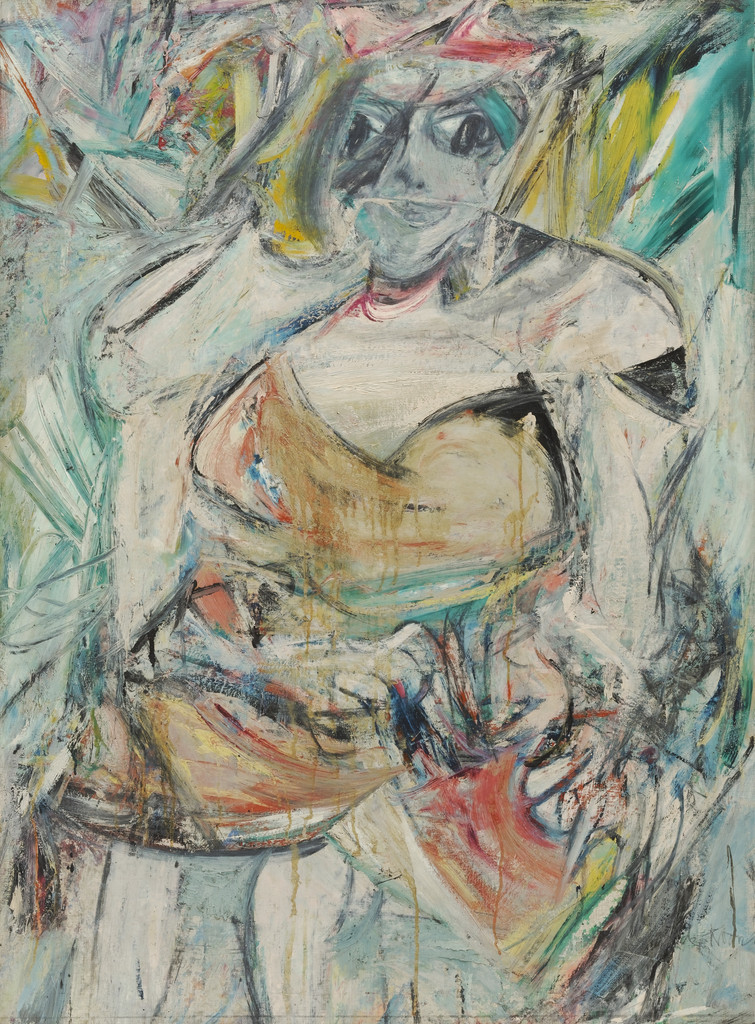
The path of “figurative abstractions”
In the 1950s De Kooning followed a path of primitivisation and developed so-called “figurative abstractions”: a solitary female figure, under furious, pasty “blow-like” brushstrokes, turns into a painterly totem open to radical Freudian readings.