László Moholy-NagyEstados Unidos, 1895–1946
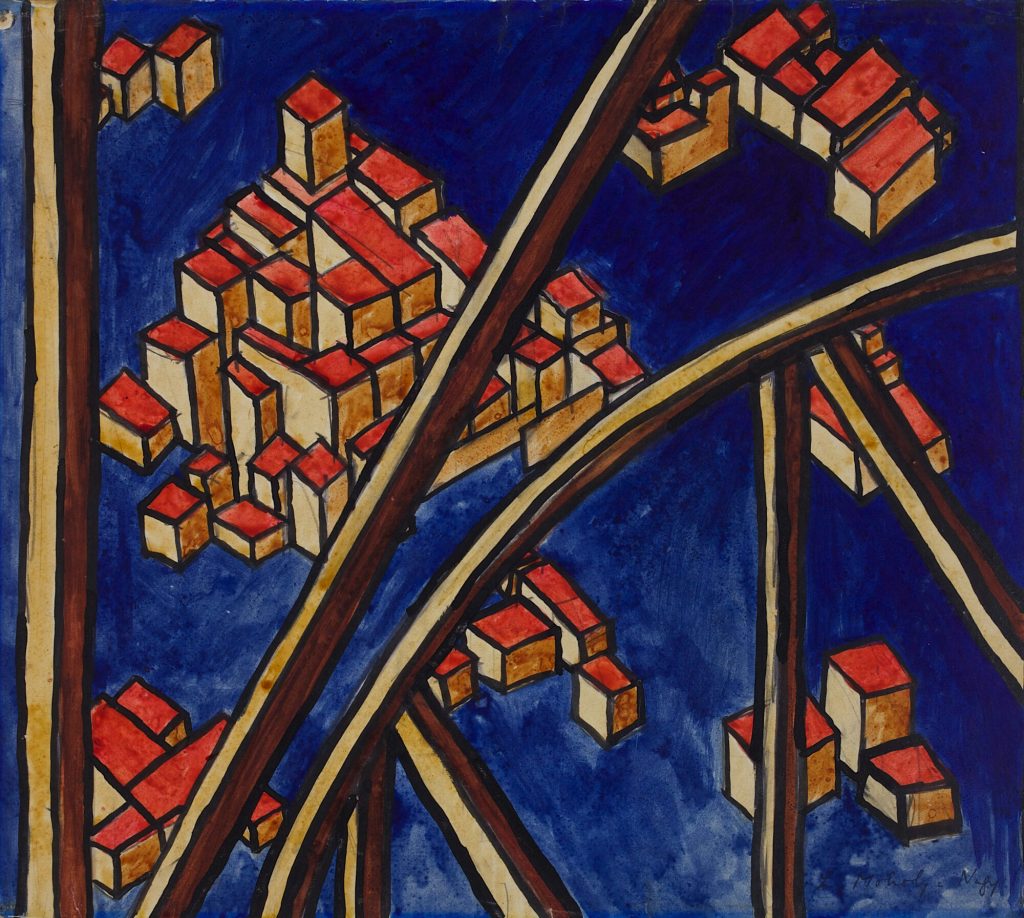
Untitled
¿Se puede contemplar?
Por ahora no recibe

Instituto de Arte de Chicago
Chicago, Estados Unidos
Pertenece a la colección, pero ahora mismo no está expuesta.
- Comprobado
- hace 7 horas
- En este estado desde
- 19 ago 2026
- Fuente
- Los datos de colección del propio museo
Sobre la obra
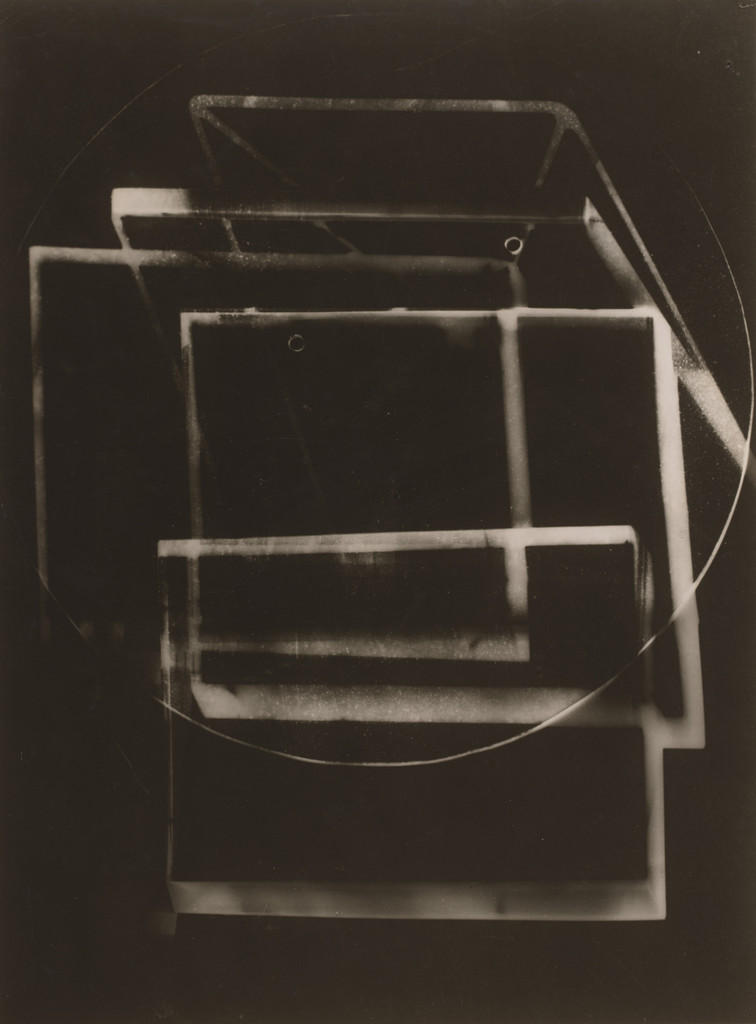
László Moholy-Nagy was one of the foremost proponents of the photogram in the modern era. He made his very first photograms, including this one, on postcard stock. The green and pink iridescent sheen of the glossy surface and the warm image tone are characteristic of collodion printing-out paper. Printing-out paper darkens when exposed to light and does so relatively slowly, unlike developing-out paper, which yields a visible image immediately when immersed in developer. Thus Moholy-Nagy was able to check on his elaborate composition as he was creating it.
Instituto de Arte de ChicagoCC BY 4.0
Ficha
- Número de inventario
- 1979.81
En el catálogo
Fuentes
- Instituto de Arte de Chicago: the museum's own open data · obtenido hace 6 días
- Imagen: Instituto de Arte de Chicago — © the artist or rights holder
Mientras tanto, en la vida de László Moholy-Nagy
La vida entera1919–1920 · Residencia
Vienna
1920–1933 · Residencia
Berlin
1921
Married: Lucia Moholy
1922
Show at Der Sturm; meeting Gropius
At a joint exhibition with his fellow Hungarian Peter Laszlo Peri at Der Sturm, László met Walter Gropius. Herwarth Walden showed his works alongside Peri's in 1922–1924.
summer 1922
Summer on the Rhône: first photograms
On holiday with Lucia on the Rhône, László learned from her to make photograms on light-sensitive paper — photography became one of his main pursuits, with his wife at first his technical guide. That summer he also began sketching ideas for what would become the Light-Space Modulator.
1923
Gropius brings him to the Bauhaus
László took over Johannes Itten's role co-teaching the foundation course with Josef Albers and replaced Paul Klee as head of the metal workshop. This effectively ended the school's Expressionist leanings and moved it back towards its original aims of design and integration with industry. Other accounts count Albers among his students.