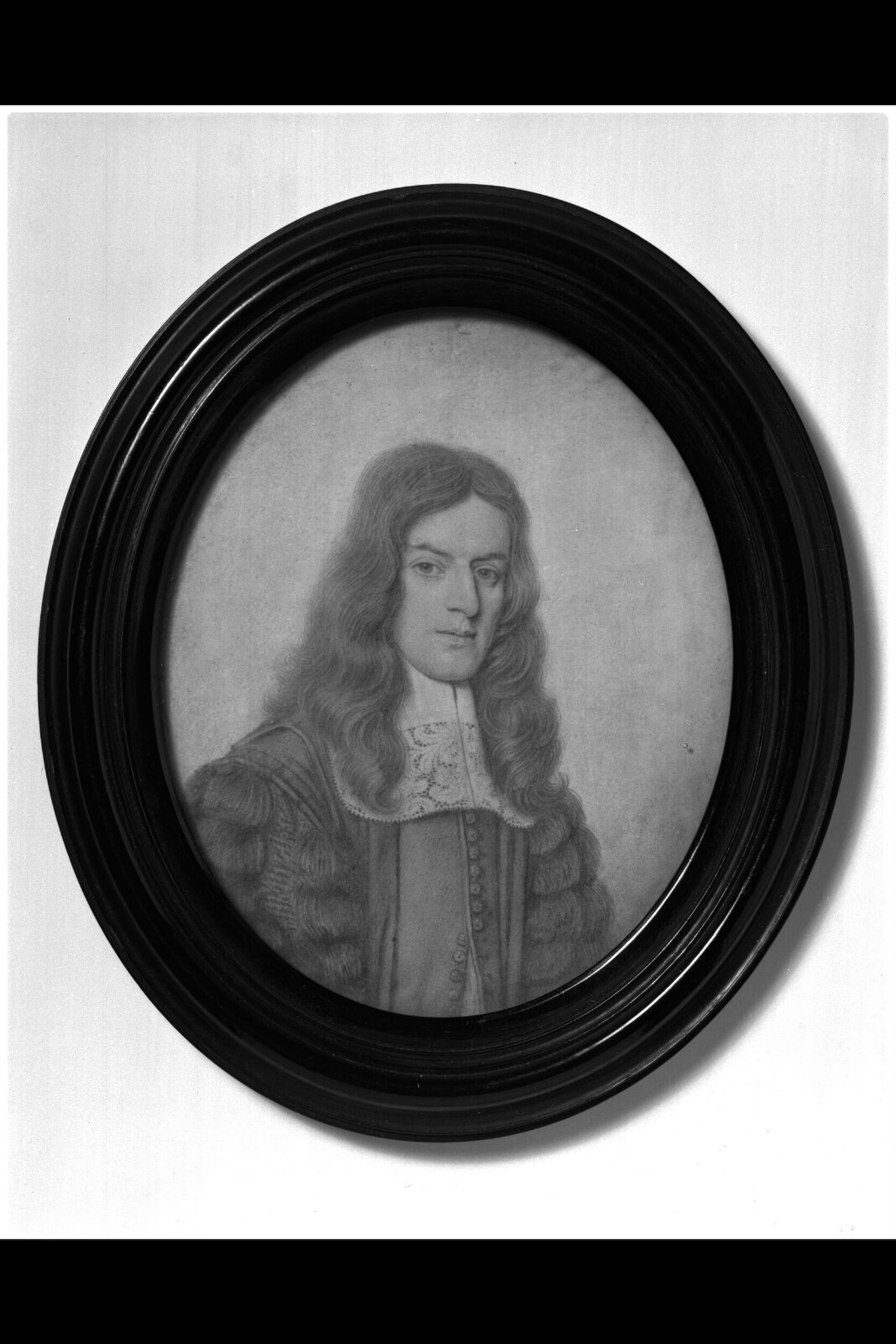
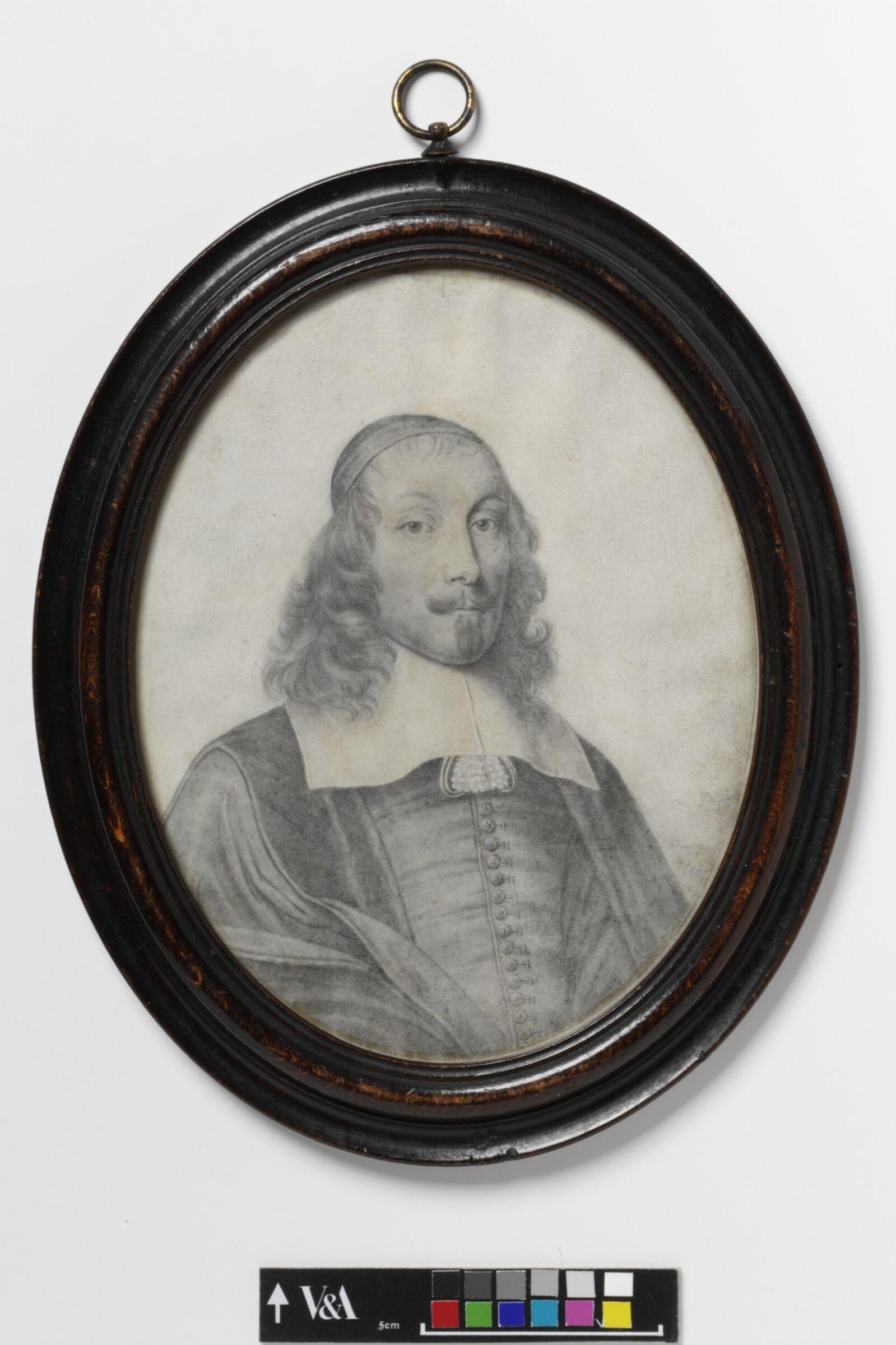
In the last decades of the 17th century, a new form of small portraiture developed to challenge the dominance of the watercolour miniature portrait painted on vellum (fine animal skin). These small portraits became known as ‘plumbagos’ (plumbago is black lead), but the medium was in fact graphite. This delicate black-and-white portrait art originated in the print and book trades of the Netherlands in the late 16th century. Originally intended as preparatory drawings for prints, ‘plumbago’ drawings also demonstrated a printmaker's graphic skill, and they became desirable in their own right. Working on vellum rather than the more perishable paper, print-makers such as David Loggan offered works with the stature of miniature painting, but at a lower cost. Additionally, ‘plumbagos’ were more easily translatable into print form, providing the client with almost exact reproductions.