Willem de KooningEstados Unidos, 1904–1997
Two Women's Torsos
¿Puedo verla?
No expuesta por ahora
¿Dónde está «Two Women's Torsos» hoy? Colección: Instituto de Arte de Chicago, Chicago. No expuesta por ahora. Comprobado 29 de septiembre de 2026.

Chicago, Estados Unidos
Pertenece a la colección, pero ahora mismo no está expuesta.
- Comprobado
- En este estado desde
- Fuente
- El museo
Sobre la obra
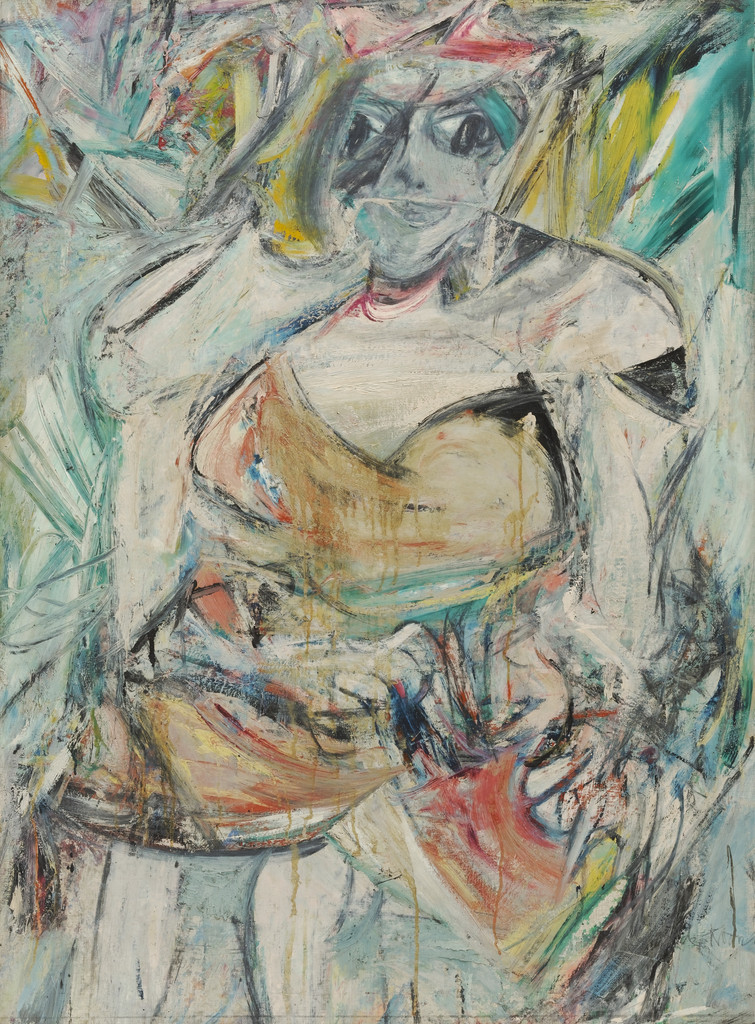
A pioneer of Abstract Expressionism, Willem de Kooning experimented with the human form throughout his career, which reached its apex in the early 1950s with his celebrated Woman series. Two Women’s Torsos was created during an intense campaign in which the artist focused on drawings related to his Woman paintings, which were exhibited together with this and other drawings at the Sidney Janis Gallery, New York, in 1953.
Leer más
De Kooning’s drawings are admired for their number and variety as well as for the artist’s expressive technique, exemplified here by his gestural use of pastel in concert with charcoal. This drawing’s velvety texture and almost violently animated surface are characteristic of the approximately one hundred sheets that remain from his intense work on the woman theme in 1952 and 1953. Also typical of de Kooning’s art is the way in which Two Women’s Torsos references aspects of related paintings but stands alone as an independent work. As the artist tried to jettison traditional modes of composition, he used drawing as a primary vehicle for the sequential development of his most important early body of work.
Instituto de Arte de ChicagoCC BY 4.0
Ficha
- Número de inventario
- 1955.637
Lo que muestra
En el catálogo
Fuentes
- Instituto de Arte de Chicago
- Imagen: Instituto de Arte de Chicago — © the artist or rights holder
En la vida de Willem de Kooning
La vida entera1943–1957
An “open” marriage with Elaine
Willem and Elaine’s marriage was later called an open marriage: both were casual about sex and about each other’s affairs. Elaine had affairs with men who helped further Willem’s career, such as the art critic Harold Rosenberg, the ARTnews editor Thomas B. Hess and Charles Egan, owner of the Charles Egan Gallery.
1948–1966
Fourteen solo exhibitions
From 1948 to 1966 De Kooning had 14 solo exhibitions, many in New York but also nationally and internationally, among them the Egan Gallery, the Sidney Janis Gallery, the Martha Jackson Gallery, the Allan Stone Gallery and museums such as the Museum of Fine Arts, Boston and the Smith College Museum of Art. There were two a year in 1953, 1964 and 1965.
1950s
The path of “figurative abstractions”
In the 1950s De Kooning followed a path of primitivisation and developed so-called “figurative abstractions”: a solitary female figure, under furious, pasty “blow-like” brushstrokes, turns into a painterly totem open to radical Freudian readings.
1951 · Distinción
Logan Medal of the Arts