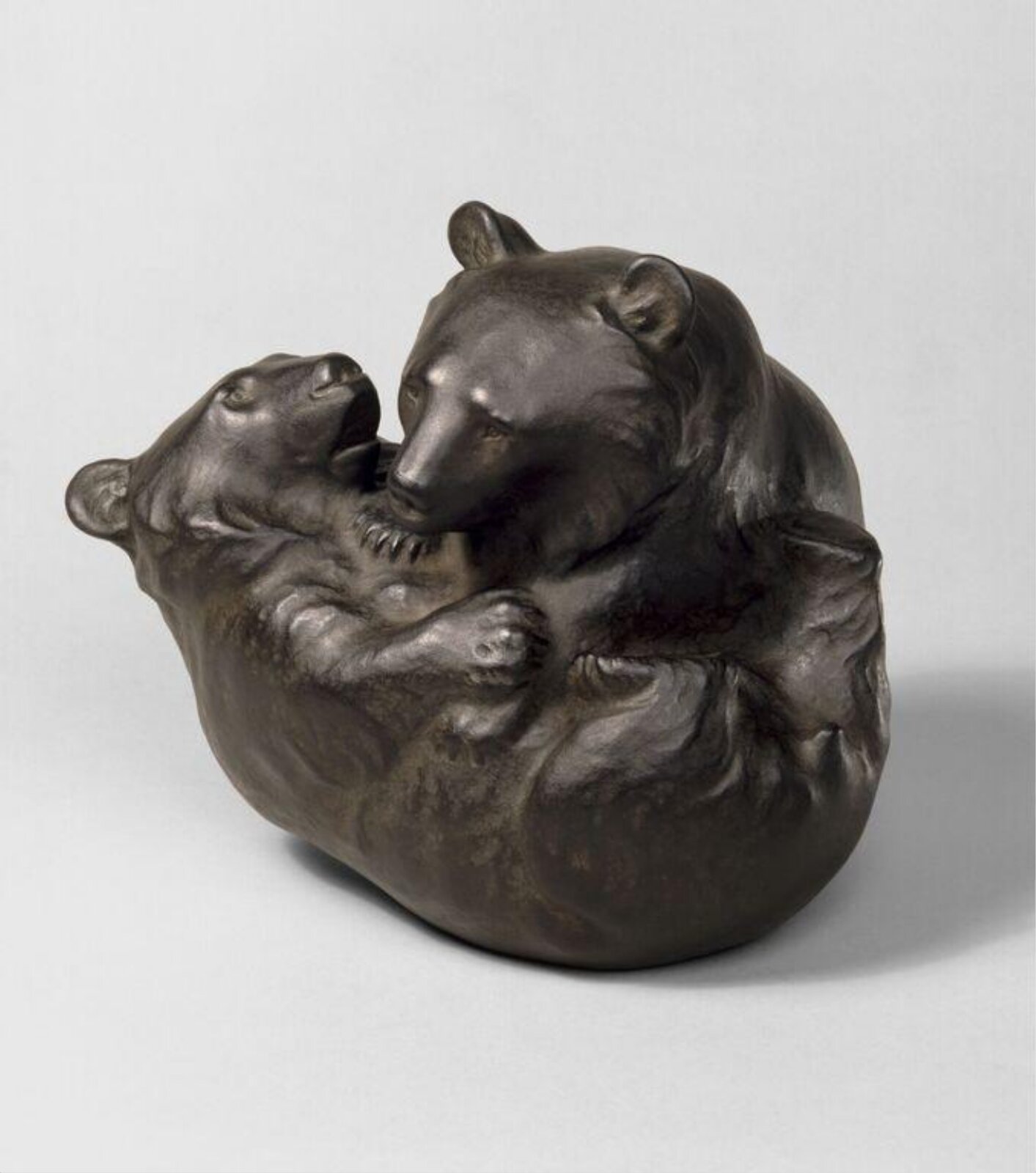
Two bear cubs at play
¿Puedo verla?
No expuesta por ahora
¿Dónde está «Two bear cubs at play» hoy? Colección: Museo de Victoria y Alberto, Londres. No expuesta por ahora. Comprobado 25 de septiembre de 2026.

Londres, Reino Unido
Pertenece a la colección, pero ahora mismo no está expuesta.
- Comprobado
- En este estado desde
- Fuente
- El museo
Sobre la escultura
Representational sculpture of animals and insects had been known in Japan from the middle of the Edo period (1600-1868), when bronze figures had been made for display in the tokonoma, the alcove in a Japanese house where works of art were displayed. These items were produced by traditional armour makers, or by those who made the decorative fittings for swords.
With the fall of the Tokugawa Shogunate and the restoration of the Meiji Emperor in 1868 there came a ban in 1876 on the wearing of swords by non-military personnel. This edict resulted in metalworkers seeking new outlets for their traditional crafts. They found a new expression in ornamental works, which they began to produce in considerable numbers for export to the West.
Leer más
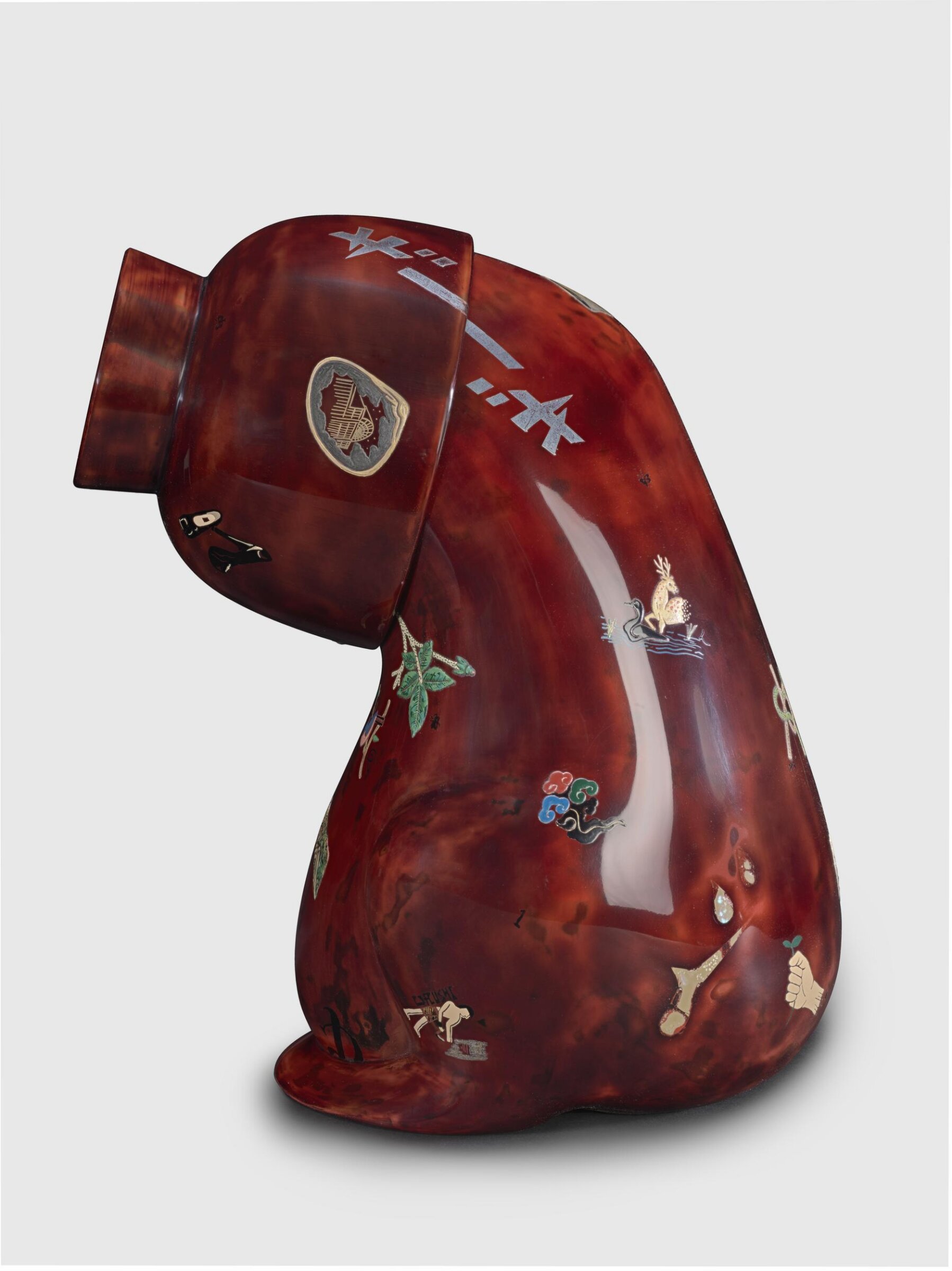
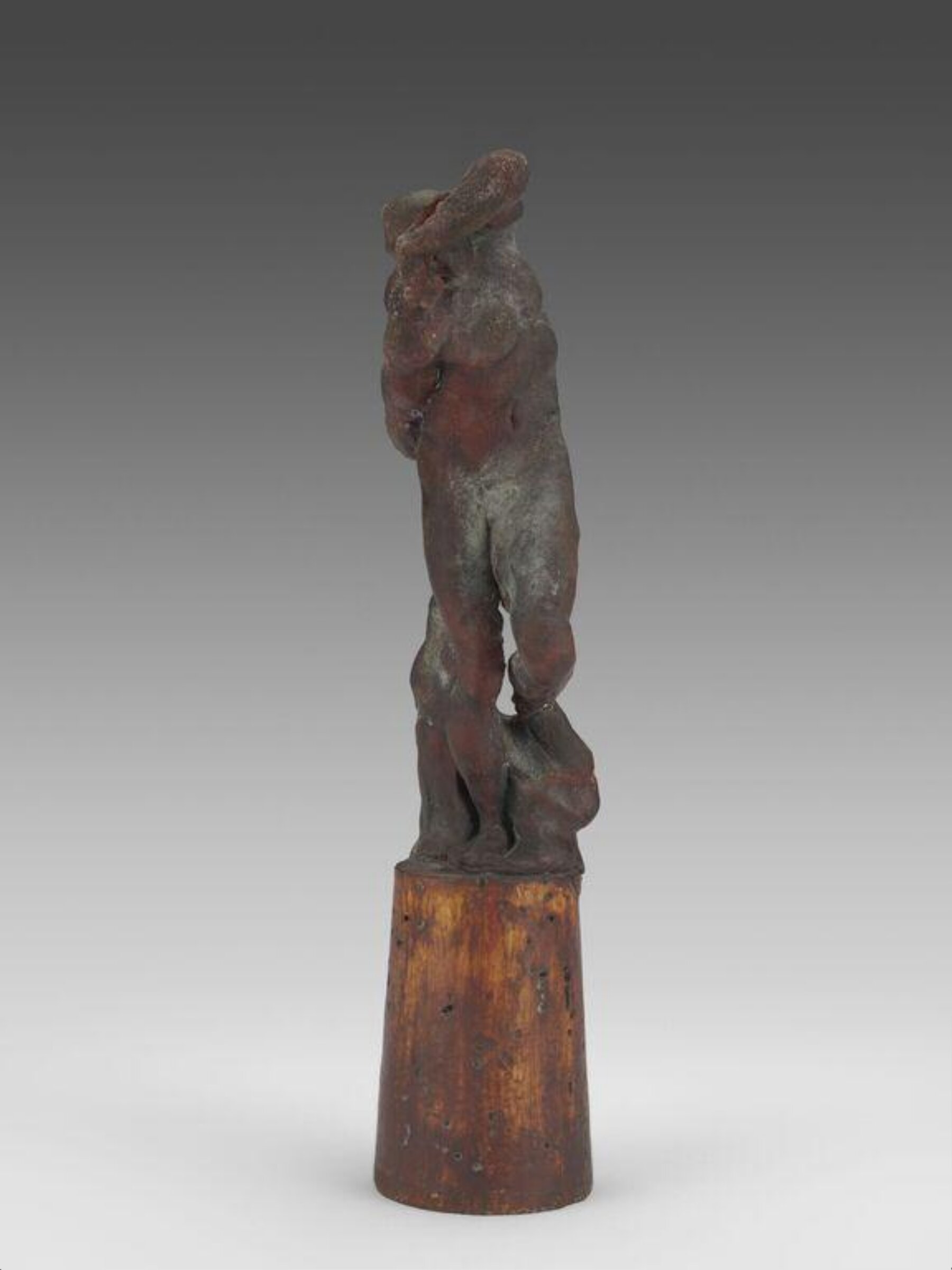
Another technique that was used to even greater effect was repoussé work. This method of tooling sheet metal from the back is well demonstrated in this small hammered iron study of two bear cubs at play by Muneyoshi. The technique that usually involved hammering the design over two pitch moulds and then soldering or welding the two halves together with an almost invisible seam has been abandoned for this study. The bears have been hammered from a single piece of iron, carefully worked to produce a sensitively detailed naturalistic study. They were exhibited at the 1910 Anglo-Japanese Exhibition at White City, London. Interestingly, the V&A also has an unfinished, almost unrecognisable, preparatory study for these bears. Muneyoshi claimed lineage from the Myochin family, traditional armour makers since the Muromachi period.
Writing in 1911, Professor Jiro Harada refers to Muneyoshi as being the ninth of the line, and calls him 'the greatest artist in hammered metalwork that Japan has seen in recent times'. Certainly some of his other works, notably a large study of an eagle now in the Tokyo National Museum, justify this title. There are also descriptions of a sculpture of a pair of lions, over 120 cm in height and hammered from a single piece of iron, which were also exhibited at the Anglo-Japanese exhibition of 1910.
Museo de Victoria y Alberto
Ficha
- Número de inventario
- M.47-1919
En el catálogo
Fuentes
- Museo de Victoria y Alberto
- Imagen: Museo de Victoria y Alberto — © Victoria and Albert Museum, London