 Alfred StevensReino Unido, 1817–1875
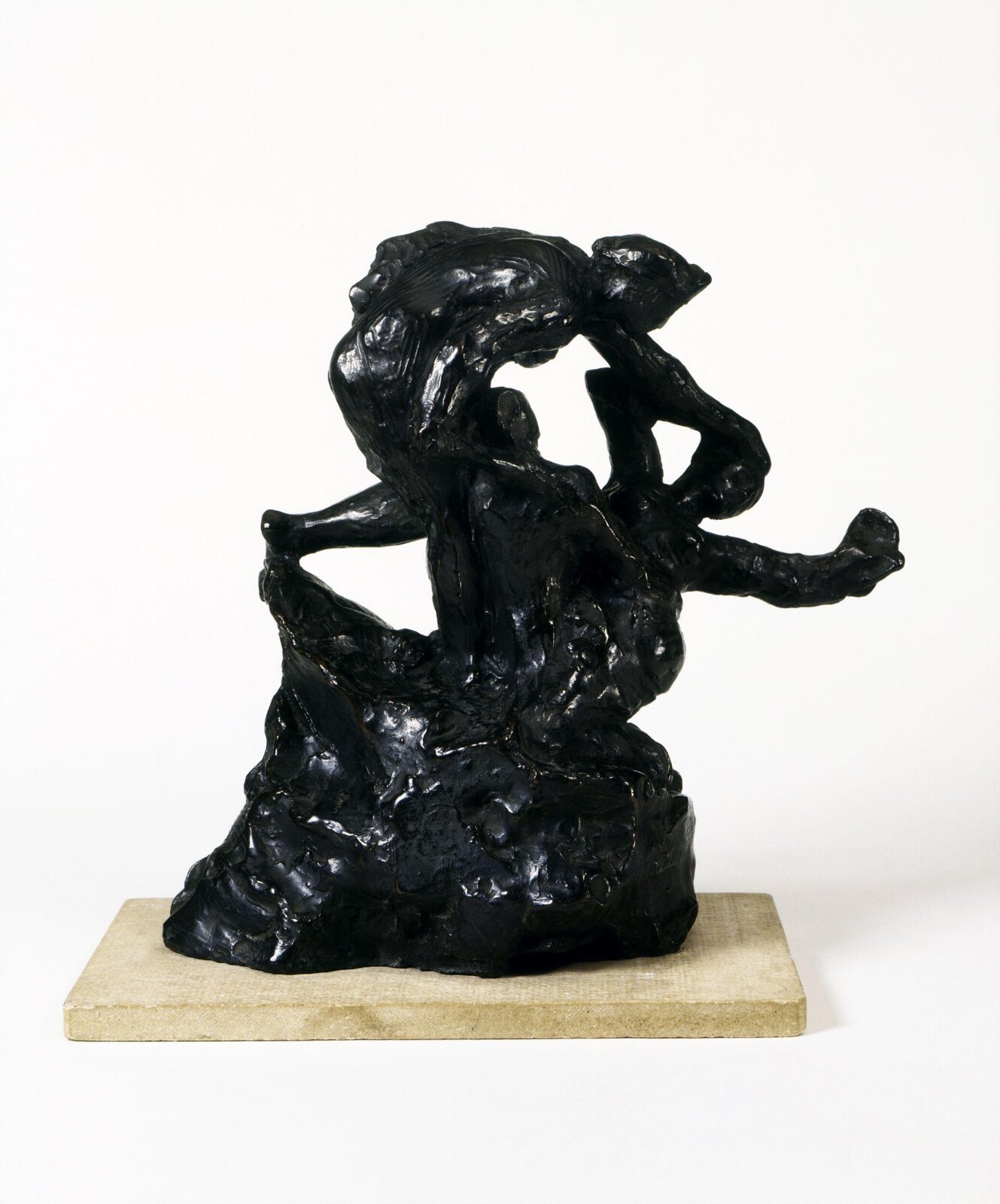
Three struggling figures
¿Se puede contemplar?
Por ahora no recibe

Museo de Victoria y Alberto
Londres, Reino Unido
Pertenece a la colección, pero ahora mismo no está expuesta.
- Comprobado
- En este estado desde
- Fuente
- Los datos de colección del propio museo
Sobre la escultura
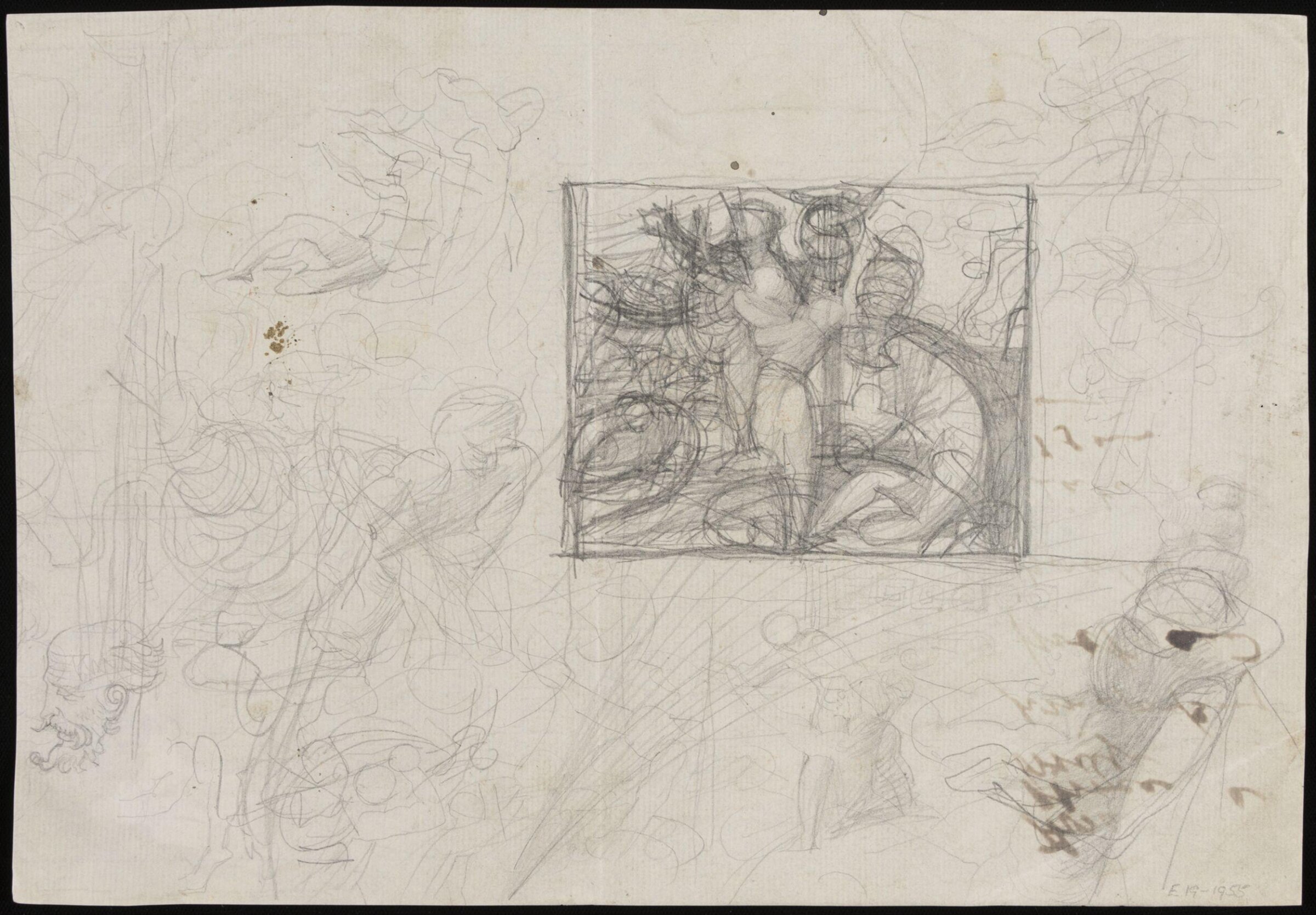
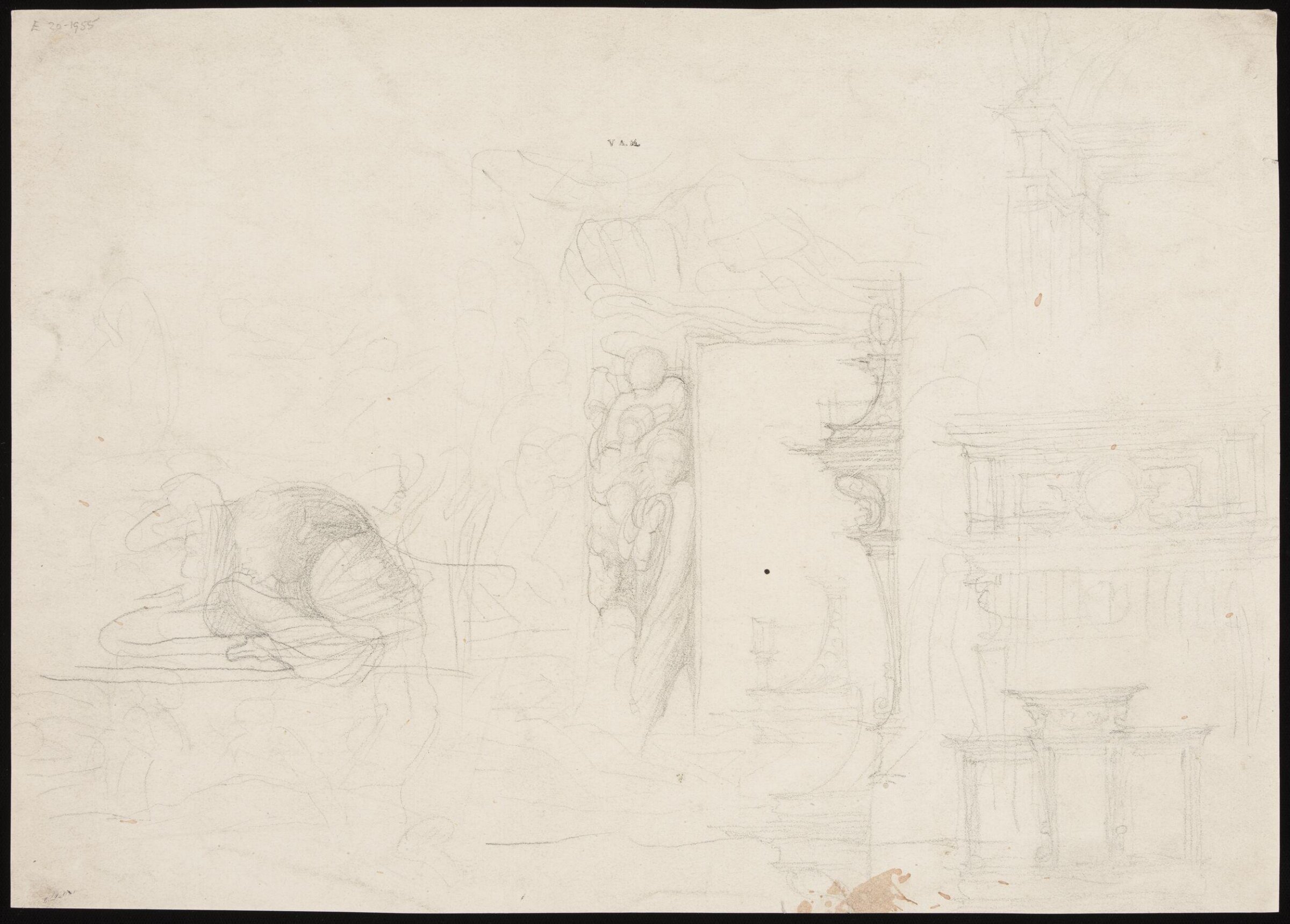
This composition of three struggling figures was conceived by Stevens in about 1844, although the purpose, or indeed exact subject, remains unknown. The plaster from which this bronze was cast in about 1912 was given to the Museum in 1912 by the artist Charles Ricketts (1866-1931). Various titles have been proposed for the composition, including The Massacre of the Innocents, but it is possible that Stevens, like Auguste Rodin after him, favoured experimenting with dynamic groups, which were not always related to a particular subject, or with a specific context in mind. Stevens is the best represented British sculptor in the V&A's collection, and one of the leading figures in nineteenth-century design and art in Britain. This group vividly demonstrates his sense of the human body and the integral power of the composition, regardless of subject. Its unfinished quality is perhaps especially appealing to twenty-first century viewers.
Seguir leyendo
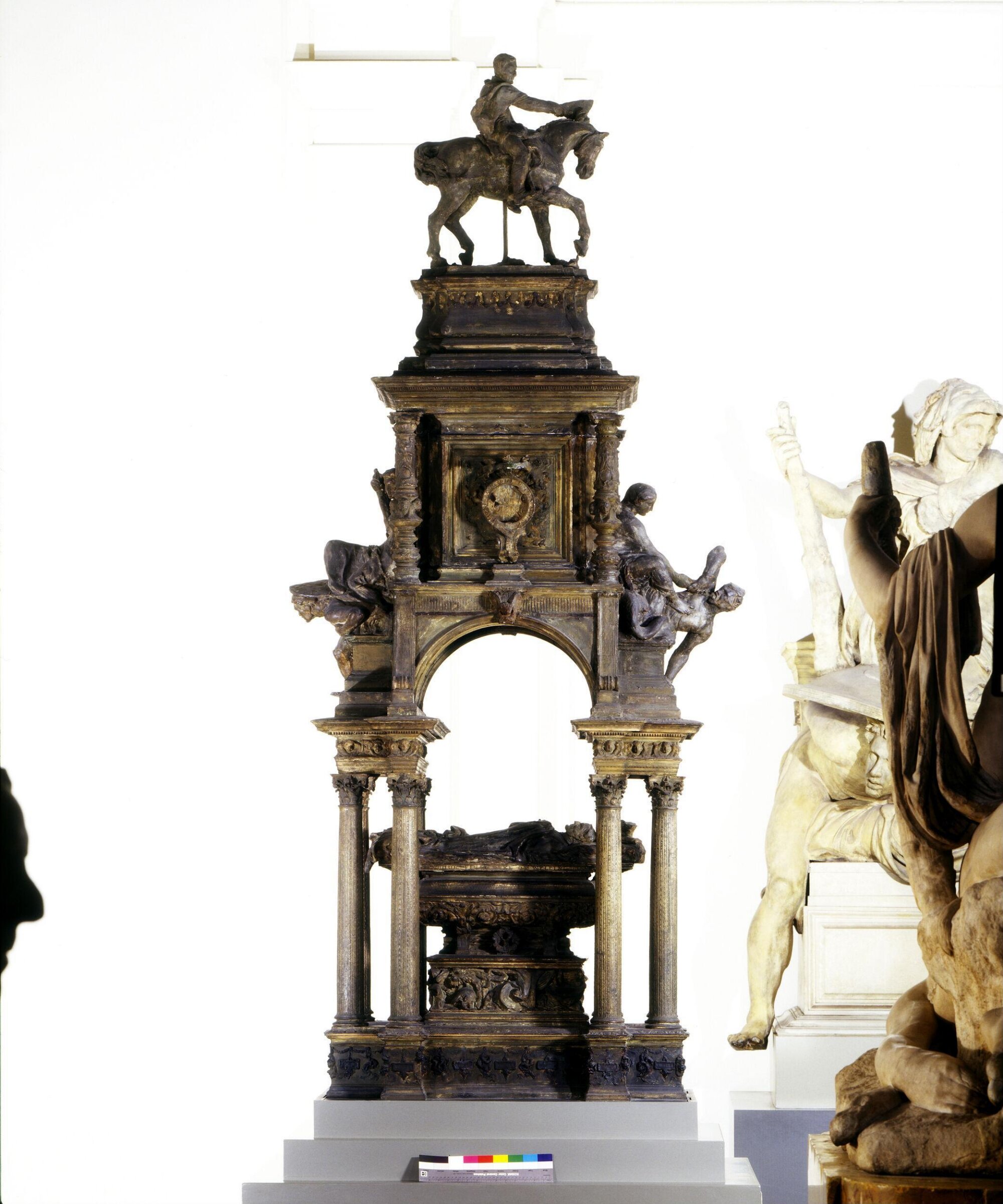
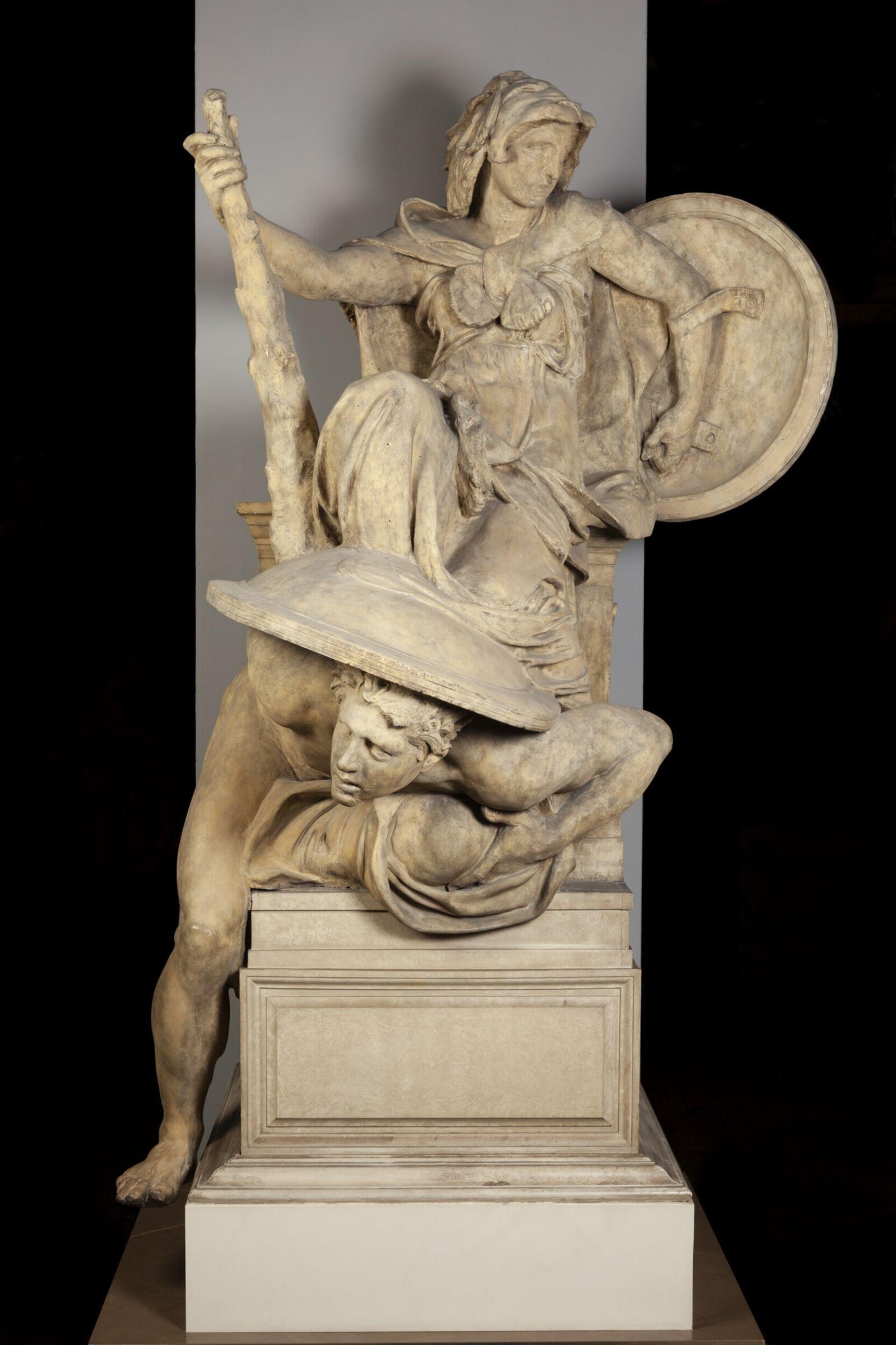
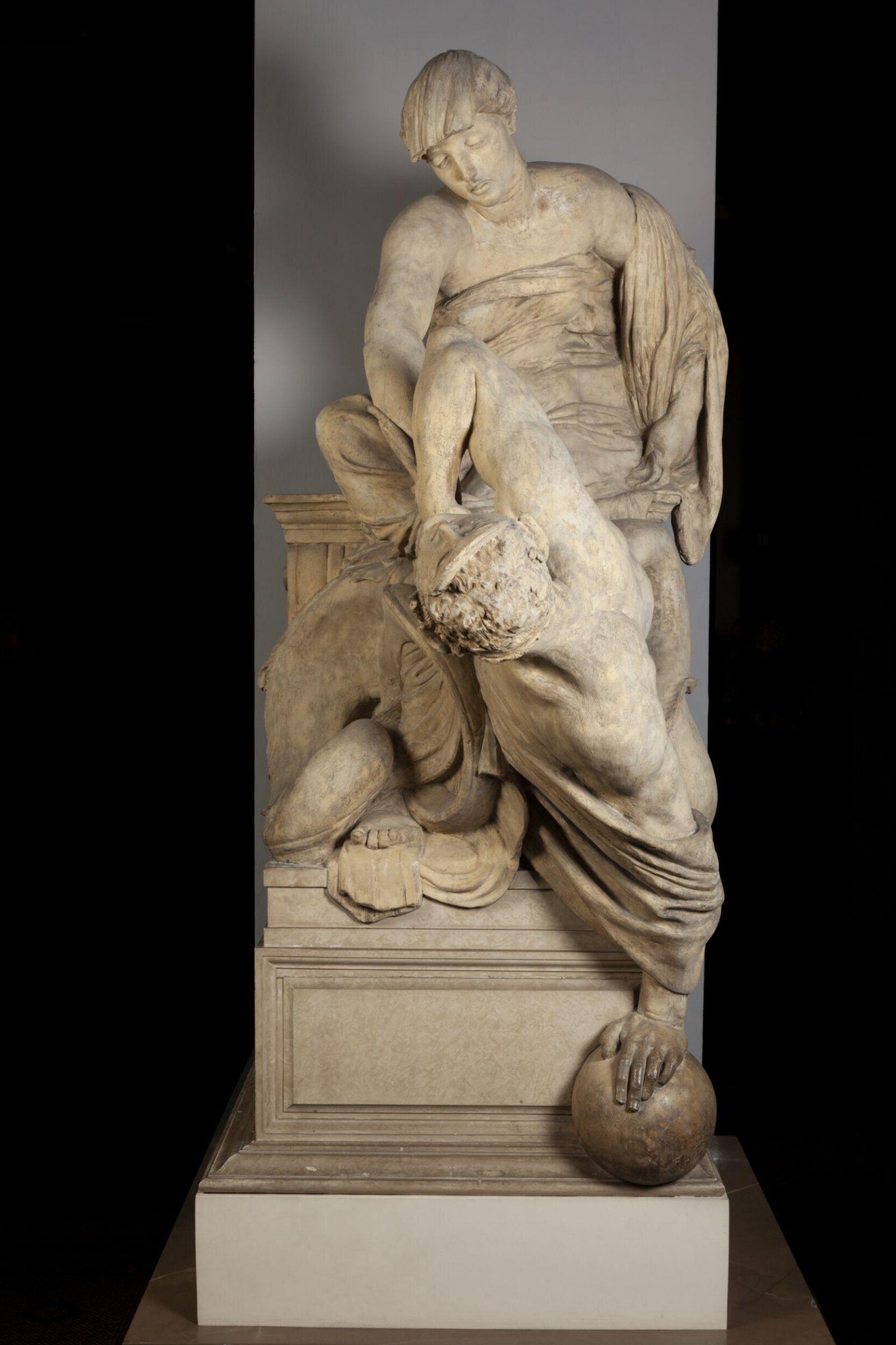
A sculptor, designer and painter, Alfred Stevens (1817/18-1875) rejected contemporary distinctions between fine art and design. From 1850 to 1857 he was chief designer to Hoole & Co., Sheffield, where he produced award-winning designs for metalwork, majolica, terracotta ornaments and chimney-pieces. Perhaps his two greatest works were the decorations for the dining-room at Dorchester House, London (about 1856), for which he made countless drawings inspired by the Italian High Renaissance style, in particular the work of Michelangelo and the monument to the Duke of Wellington for St Paul's Cathedral, London, which was completed after his death. The two allegorical groups from this monument made a lasting impact on the New Sculpture movement.
The influence of the Italian Renaissance is evident in much of Steven's work, and is perhaps best reflected in the Wellington monument.
Museo de Victoria y Alberto
Ficha
- Número de inventario
- A.13-1975
En el catálogo
Fuentes
- Museo de Victoria y Alberto: los datos abiertos del museo · obtenido hace 12 días
- Imagen: Museo de Victoria y Alberto — © Victoria and Albert Museum, London