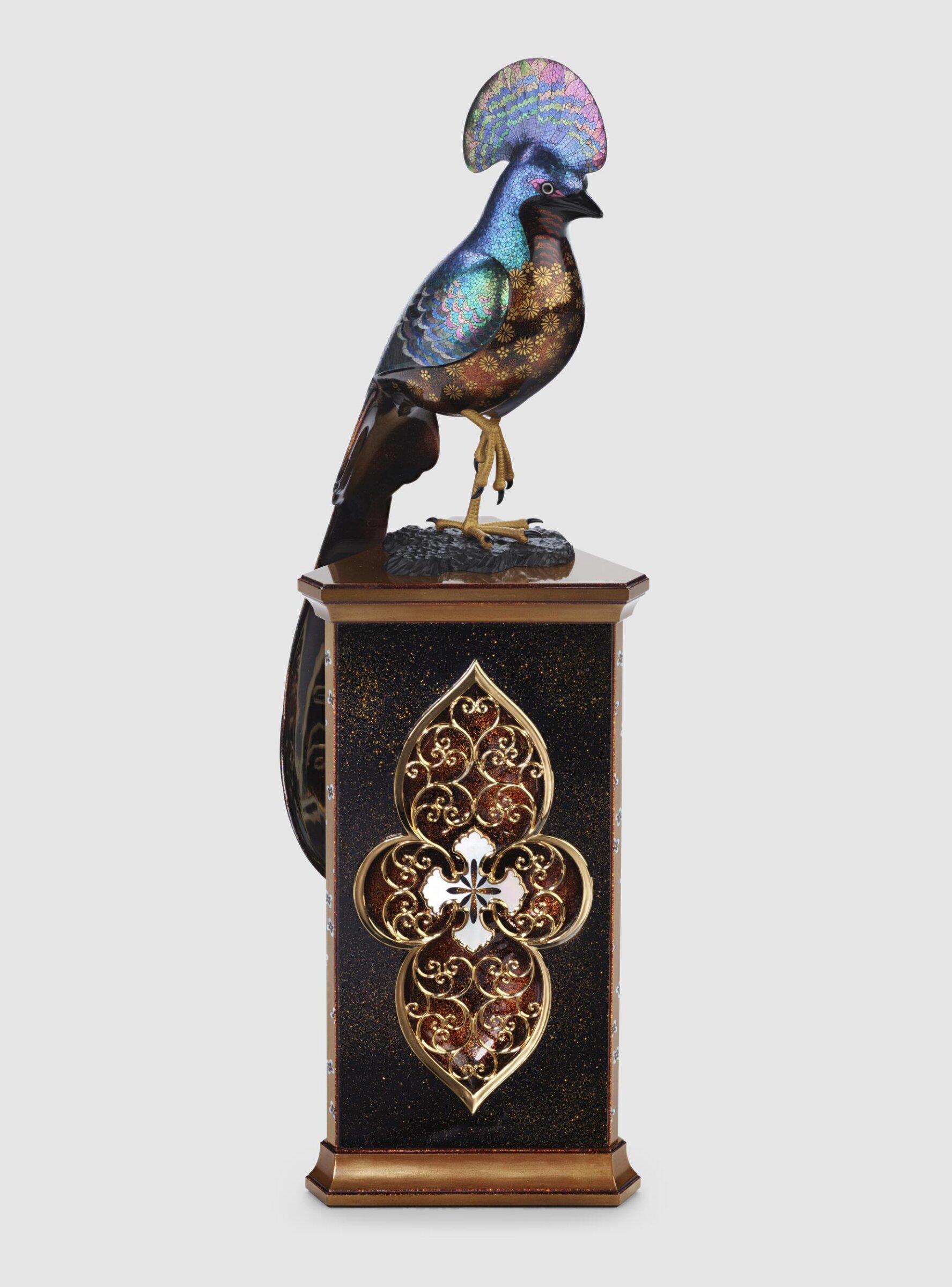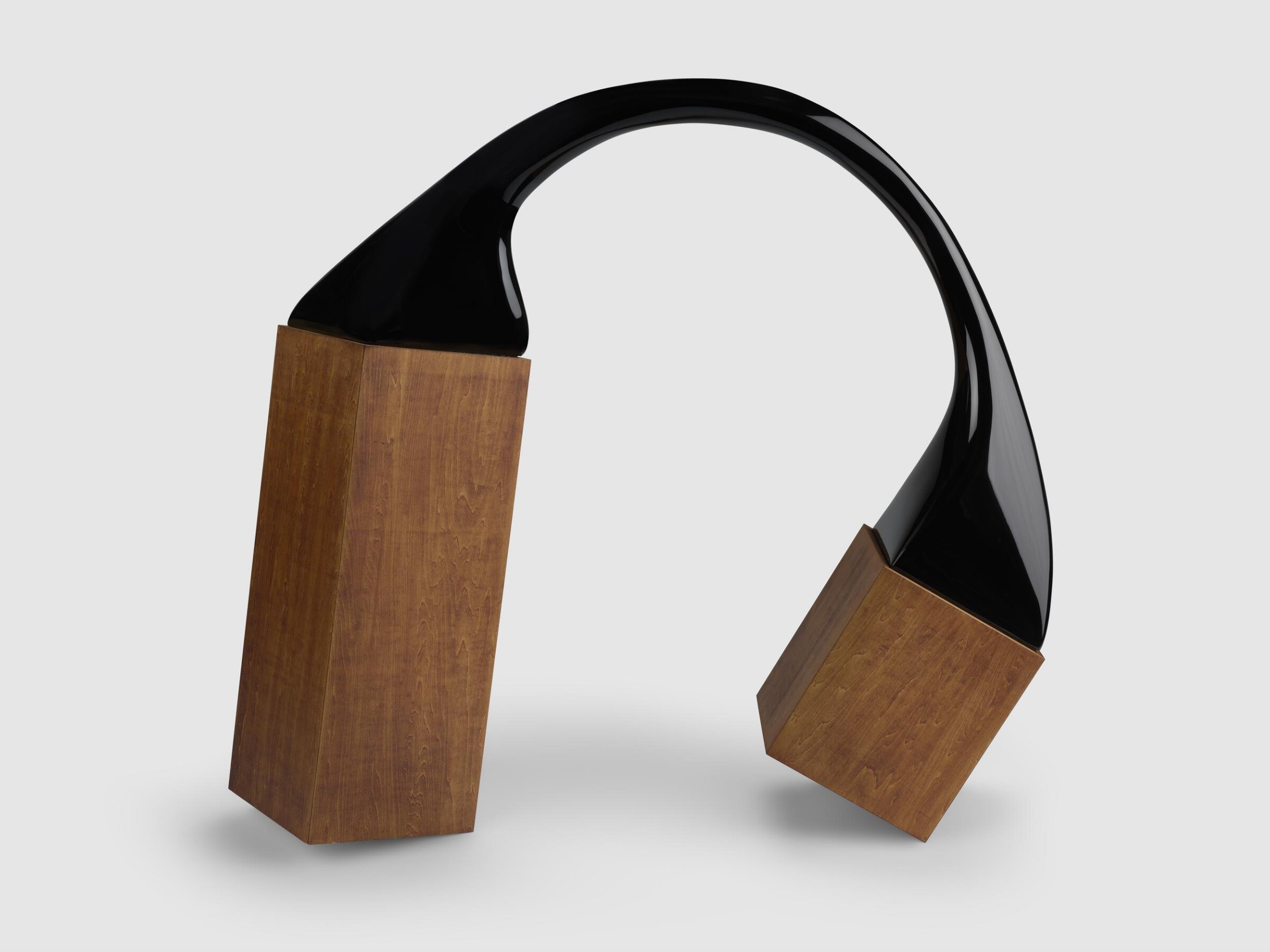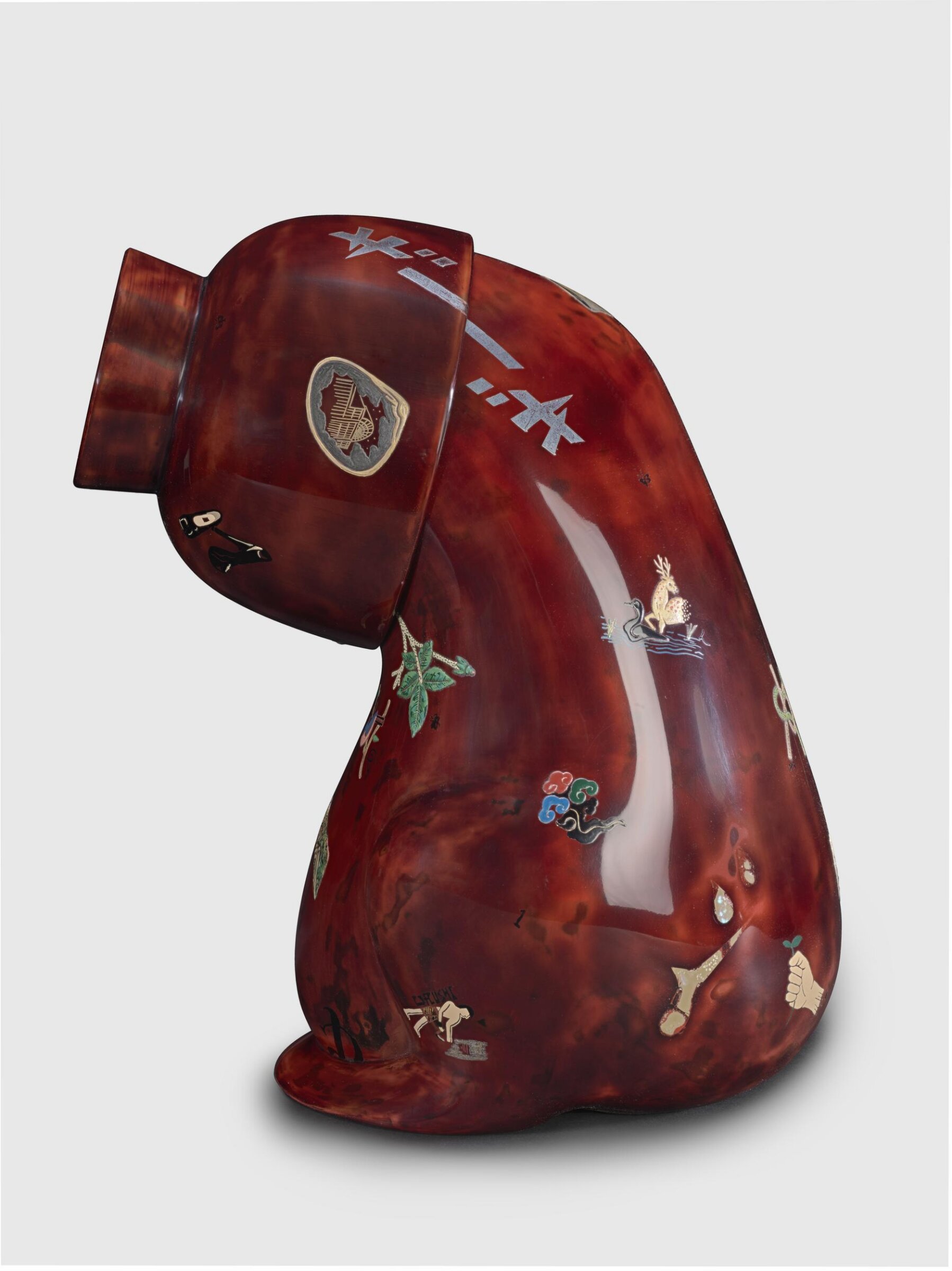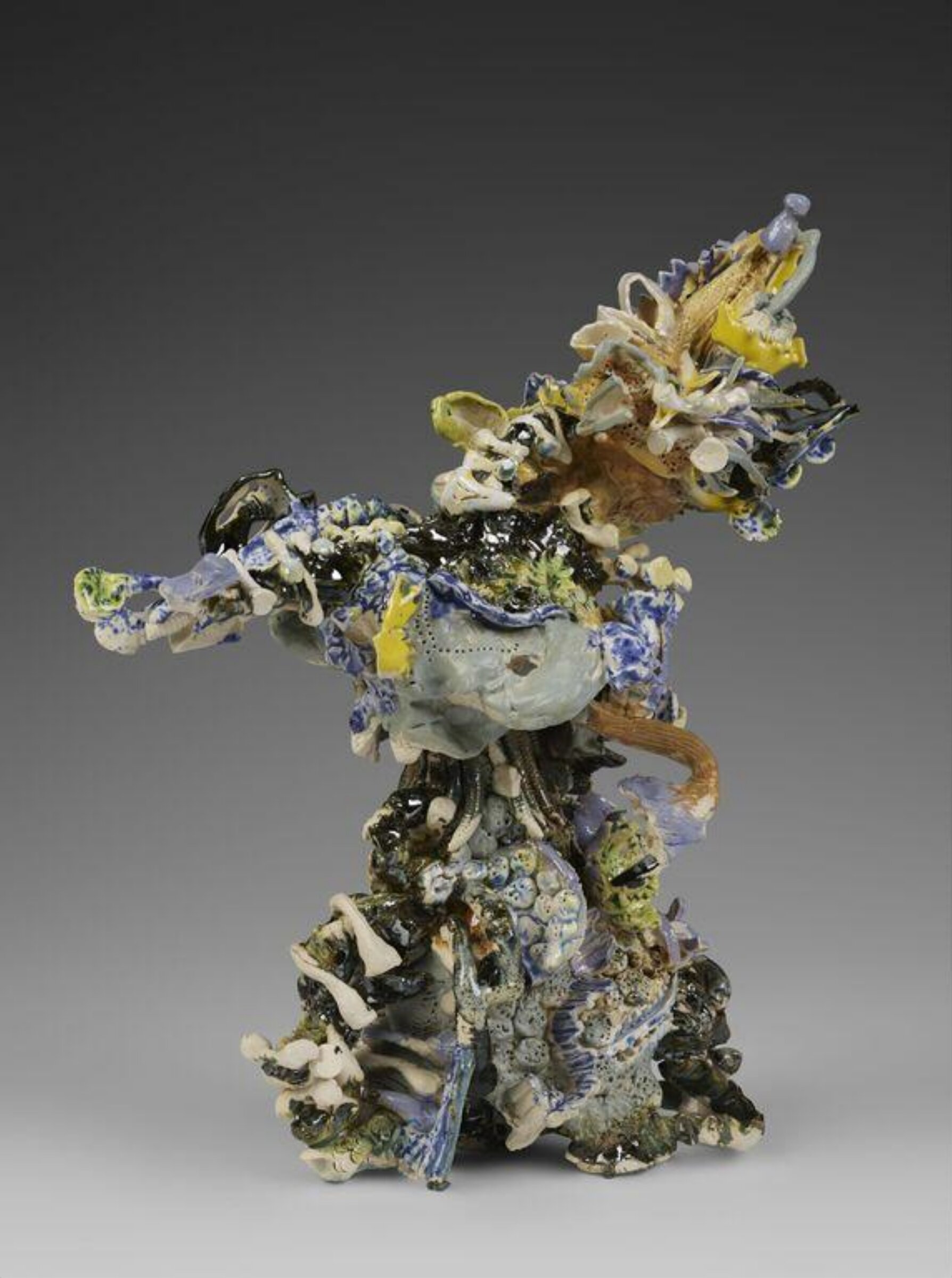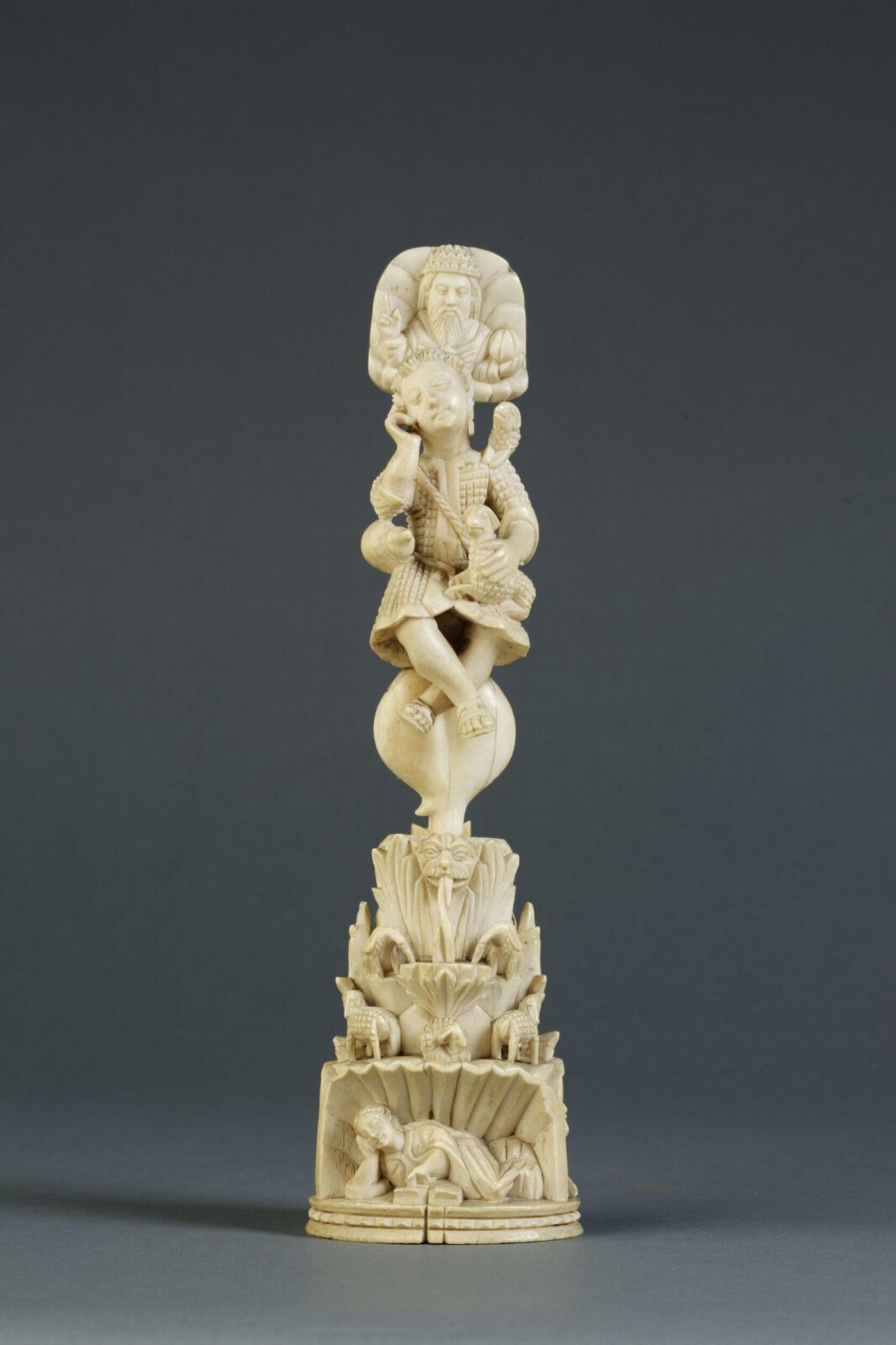
The Good Shepherd
¿Se puede contemplar?
Por ahora no recibe

Museo de Victoria y Alberto
Londres, Reino Unido
Pertenece a la colección, pero ahora mismo no está expuesta.
- Comprobado
- hace 8 días
- En este estado desde
- 25 sept 2026
- Fuente
- Los datos de colección del propio museo
About the sculpture
This object was created in the Portuguese colony of Goa in about 1650. Similar ivories are to be found in most large collections and there are several exemplars in the V&A. 'The Mount of Christ as the Good Shepherd' is a common subject in Indo-Portuguese ivories, and seems to be unique to Goa. The figure of God the Father, carved in relief above the Christ Child, represents the Holy Spirit.
Read on
Although the precise parallels and/or sources in Indian are uncertain, this distinctive composition recurs again and again in Goan ivories, and the combination of the Christ Child in the guise of the shepherd with saints, a fountain, vegetation and animals suggest the richness of the natural world, in conjunction with Christian imagery. His seated pose, asleep, recalls images of the Buddha in Indian art. Ivory carving had a long tradition on the Indian subcontinent, and elaborate works of art were made, particularly as diplomatic gifts, often presented to Western rulers. Most of the ivory would have been exported from Mozambique in East Africa.
Museo de Victoria y Alberto
Ficha
- Número de inventario
- A.38-1921
What it shows
En el catálogo
Fuentes
- Museo de Victoria y Alberto: the museum's own open data · obtenido hace 8 días
- Imagen: Museo de Victoria y Alberto — © Victoria and Albert Museum, London