Alfred StieglitzEstados Unidos, 1864–1946
The Flatiron
¿Se puede contemplar?
Por ahora no recibe

Instituto de Arte de Chicago
Chicago, Estados Unidos
Pertenece a la colección, pero ahora mismo no está expuesta.
- Comprobado
- En este estado desde
- Fuente
- Los datos de colección del propio museo
Sobre la obra
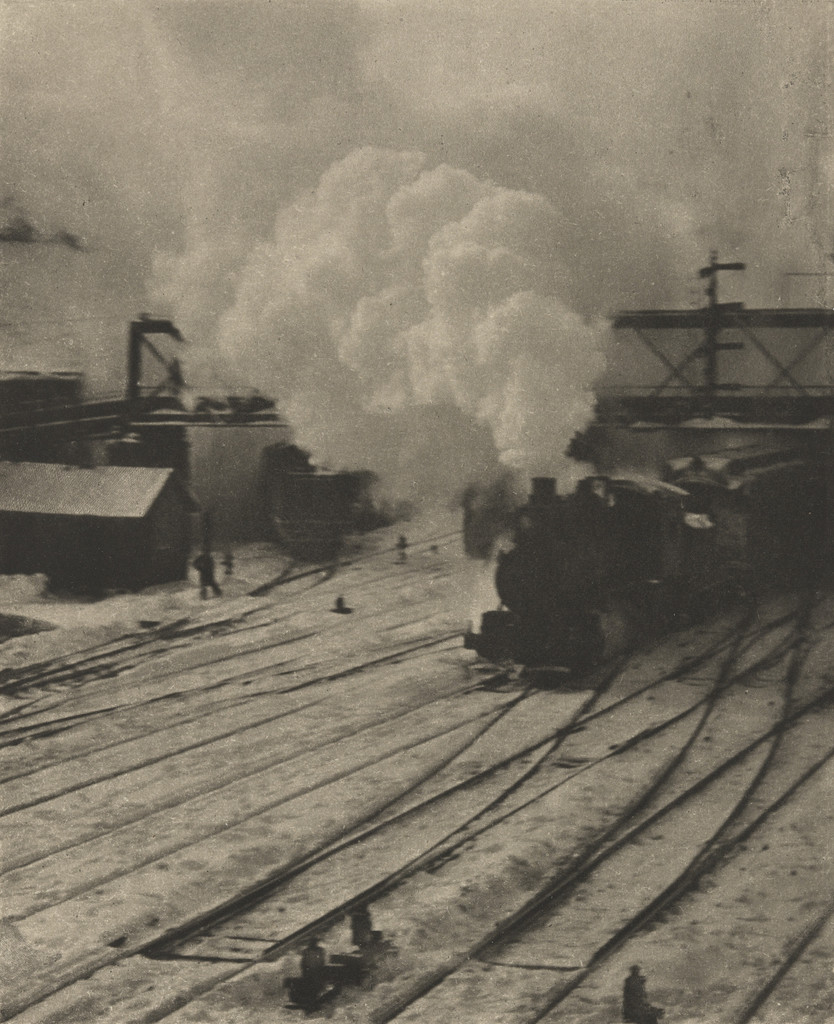
In an article in 1946, Stieglitz recalled photographing the newly erected Flatiron Building on the day of a great snowstorm. “I suddenly saw the Flat-Iron Building as I had never seen it before. It looked, from where I stood, as if it were moving toward me like the bow of a monster ocean steamer, a picture of the new America which was in the making.”
For more on the Alfred Stieglitz collection at the Art Institute, along with in-depth object information, please visit the website: The Alfred Stieglitz Collection.
Instituto de Arte de ChicagoCC BY 4.0
Ficha
- Número de inventario
- 1949.707
Lo que muestra
En el catálogo
Fuentes
- Instituto de Arte de Chicago: los datos abiertos del museo · obtenido hace 8 días
- Imagen: Instituto de Arte de Chicago — CC0
Mientras tanto, en la vida de Alfred Stieglitz
La vida entera1901
Breakdown and resignation from Camera Notes
Worn down by the strain of managing the Camera Club, in 1901 Stieglitz collapsed in the first of several mental breakdowns and spent much of the summer recuperating at Oaklawn, the family home on Lake George. Back in New York, he announced his resignation as editor of Camera Notes.
1902
Founds the Photo-Secession
In December 1901 Charles DeKay of the National Arts Club invited Stieglitz to put together an exhibition with “full power to follow his own inclinations”. Within two months he had assembled prints from a close circle of friends and, in homage to the Munich photographers, called the group the Photo-Secession, a secession not only from the artistic restrictions of the era but from the official oversight of the Camera Club.
25 November 1905
The 291 gallery opens on Fifth Avenue
On November 25, 1905, the Little Galleries of the Photo-Secession opened at 291 Fifth Avenue with one hundred prints by thirty-nine photographers; Edward Steichen had encouraged Stieglitz to lease the three rooms across from his own apartment. The gallery was an instant success, with almost fifteen thousand visitors in its first season and print sales of nearly $2,800, more than half of them Steichen's work.
1907
Paris: Gertrude Stein and a turn to painting
In Paris in 1907 Stieglitz met Gertrude Stein and was captivated by Rodin, Matisse, Toulouse-Lautrec, Cézanne and Rousseau. He decided to turn his photography gallery into a full art gallery to introduce the conservative American public to the newest European art.
January – May 1916
Meets Georgia O'Keeffe
In January 1916 the suffragist Anita Pollitzer showed Stieglitz a set of charcoal drawings by Georgia O'Keeffe, and he decided to exhibit them at 291 without meeting her or asking her permission. In late May O'Keeffe heard of it from a friend and came to the gallery to chastise him, which is how they met; by the summer of 1917 they were writing each other their most private thoughts.
June 1918
O'Keeffe comes to New York; he leaves his family
In early June 1918 O'Keeffe moved to New York from Texas after Stieglitz promised her a quiet studio. Within a month his wife Emmy came home during one of the first nude photography sessions in the family apartment and told him to stop seeing O'Keeffe or get out; Stieglitz left and immediately found a place in the city where he and O'Keeffe could live together.