ART WIKI32.963 en sala
MapaColecciónArtistasMuseosExposicionesRevista
Acceder

ART WIKI

Dónde cuelga la obra maestra y cuándo le dejan pasar.

Colecciones: Galería Nacional de Arte, Galería Nacional de Dinamarca, Galería Nacional de Retratos, Galería Tretiakov, Harvard Art Museums, Instituto de Arte de Chicago, Instituto de Artes de Mineápolis, MoMA, Museo de Arte de Cleveland, Museo de Victoria y Alberto, Museo del Hermitage, Museo del Louvre, Museo Estatal Ruso, Museo Hirshhorn y Jardín de Esculturas, Museo J. Paul Getty, Museo Metropolitano de Arte, Museo Pushkin, Museo Smithsoniano de Arte Americano, Museo Whitney de Arte Estadounidense, National Museum of Asian Art, Rijksmuseum, Villa Getty, Catálogo Estatal del Fondo Museístico de Rusia (274 museos), Europeana (19 museos), Wikidata (6 museos), Paris Musées (12 museos) y Joconde, la base de museos del Ministerio de Cultura de Francia (495 museos). Las imágenes pertenecen a sus titulares de derechos.

Secciones

  • Mapa
  • Búsqueda
  • Colección
  • Obras maestras
  • Expuestas ahora
  • Artistas

Más

  • Museos y galerías
  • Exposiciones
  • Revista
  • De dónde salen los datos
  • Privacidad y cookies
InicioMapaCatálogo
  1. Colección/
  2. Museo de Arte de Cleveland/
  3. The Duck
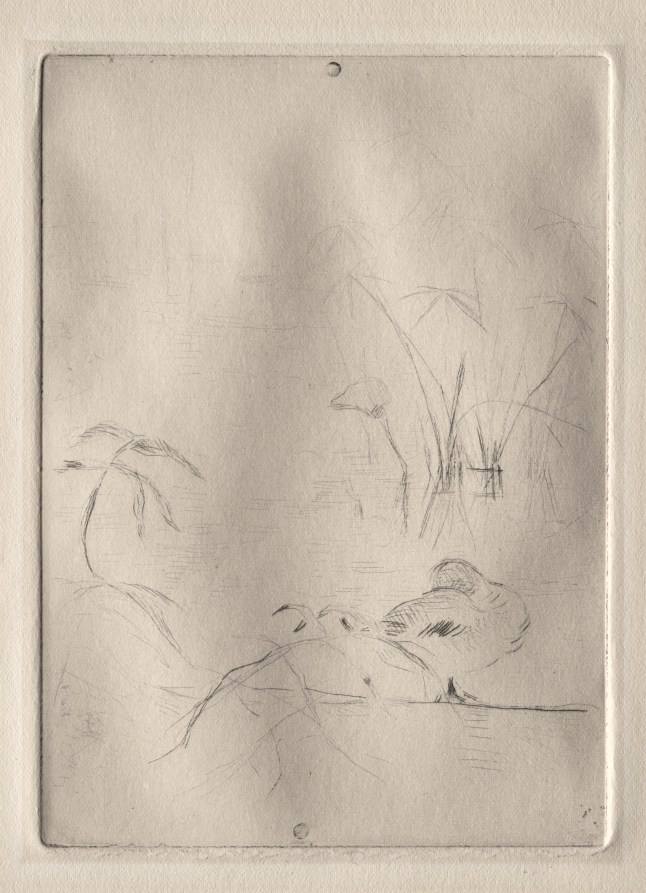
The Duck, Berthe Morisot, 1888–90
Berthe Morisot, retratoBerthe MorisotFrancia, 1841–1895

The Duck

1888–90 · Print

¿Se puede contemplar?

Por ahora no recibe

Museo de Arte de Cleveland

Cleveland, Estados Unidos

Pertenece a la colección, pero ahora mismo no está expuesta.

Comprobado
hace 3 días
En este estado desde
19 ago 2026
Fuente
El museo
En el mapaPágina del museo

Ficha

1888–90 · a los 47 años
18411895
Número de inventario
1998.377

En el catálogo

EstampasAguafuerteImpresionismoSiglo XIXFrance, 19th century

Fuentes

  • Museo de Arte de Cleveland
  • Imagen: Museo de Arte de Cleveland — Museum open access

Mientras tanto, en la vida de Berthe Morisot

La vida entera
  1. 1885–1887

    A turn to drawing: line and form

    After 1885 drawing begins to dominate Morisot's work: she experiments with charcoal and coloured pencils and clarifies form and line, influenced by photography and Japonism. Like the Japanese prints of the time, she places objects away from the centre of the composition.

  2. 1887–1895

    Squaring and tracing paper: the synthesis of her last years

    Morisot starts to use squaring and tracing paper to transcribe her drawings exactly onto the canvas, which lets her build compositions with more complicated interaction between figures. Her late works are distinctive for their synthesis of the Impressionist touch with broad strokes and light reflections and the graphic approach of clear lines.

  3. 1888–1889

    From short strokes to long, sinuous ones

    In 1888–89 Morisot's brushstrokes change from short, rapid ones to long, sinuous ones that define form; the outer edges of her paintings are often left unfinished, so that the canvas shows through and increases the sense of spontaneity.

  4. 1890

    “No man has ever treated a woman as an equal”

    In 1890 Morisot writes in a notebook about her struggle to be taken seriously as an artist: she does not think there has ever been a man who treated a woman as an equal, and that is all she would have asked for, since she knows she is worth as much as they are.

Más obras de Berthe Morisot

Todas las obras
Young Woman Seated on a Sofa, Berthe Morisot, ca. 1879

Young Woman Seated on a Sofa

ca. 1879 · Museo Metropolitano de Arte

The Harbor at Lorient, Berthe Morisot, 1869

The Harbor at Lorient

1869 · Galería Nacional de Arte

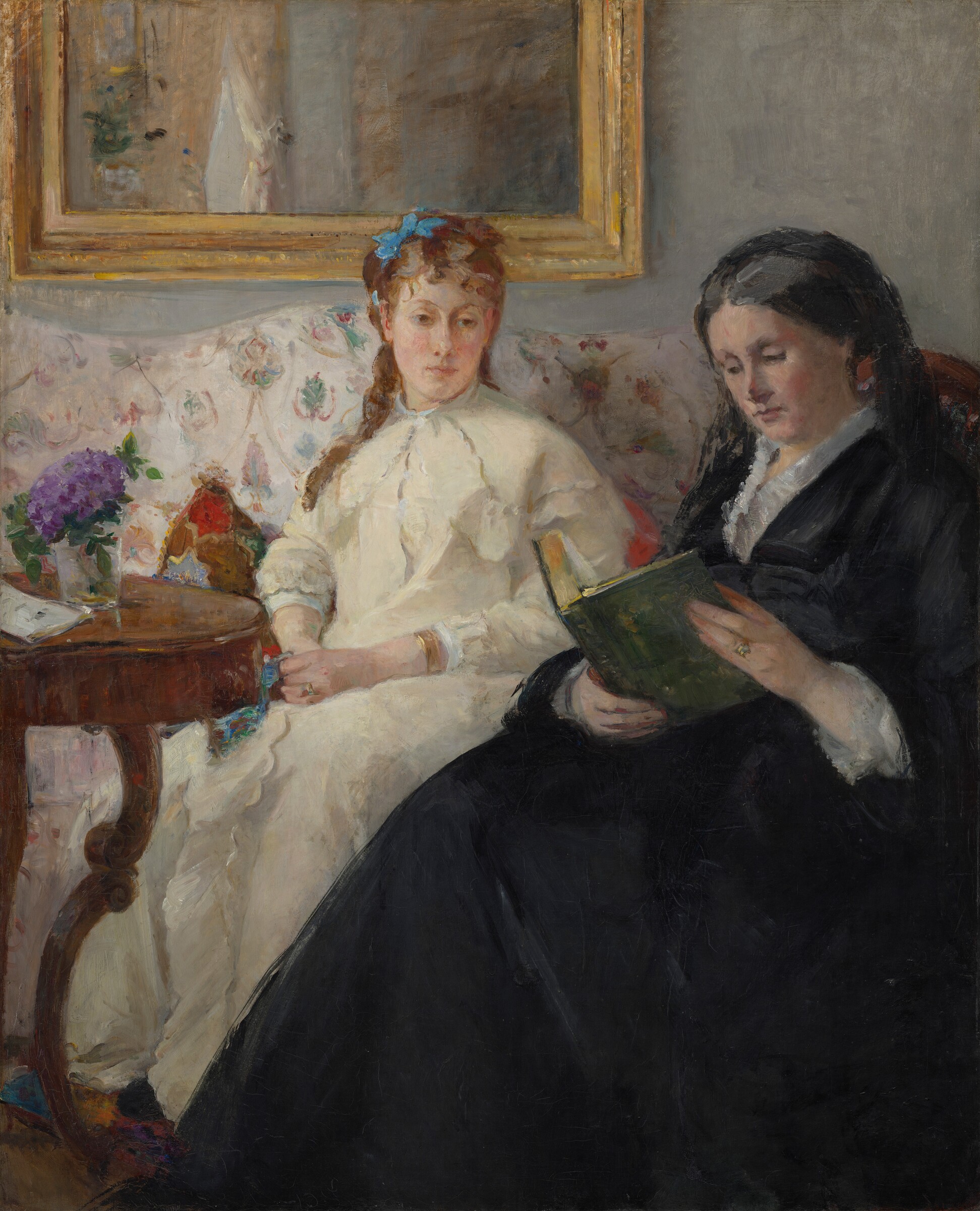
The Mother and Sister of the Artist, Berthe Morisot, 1869/1870

The Mother and Sister of the Artist

1869/1870 · Galería Nacional de Arte

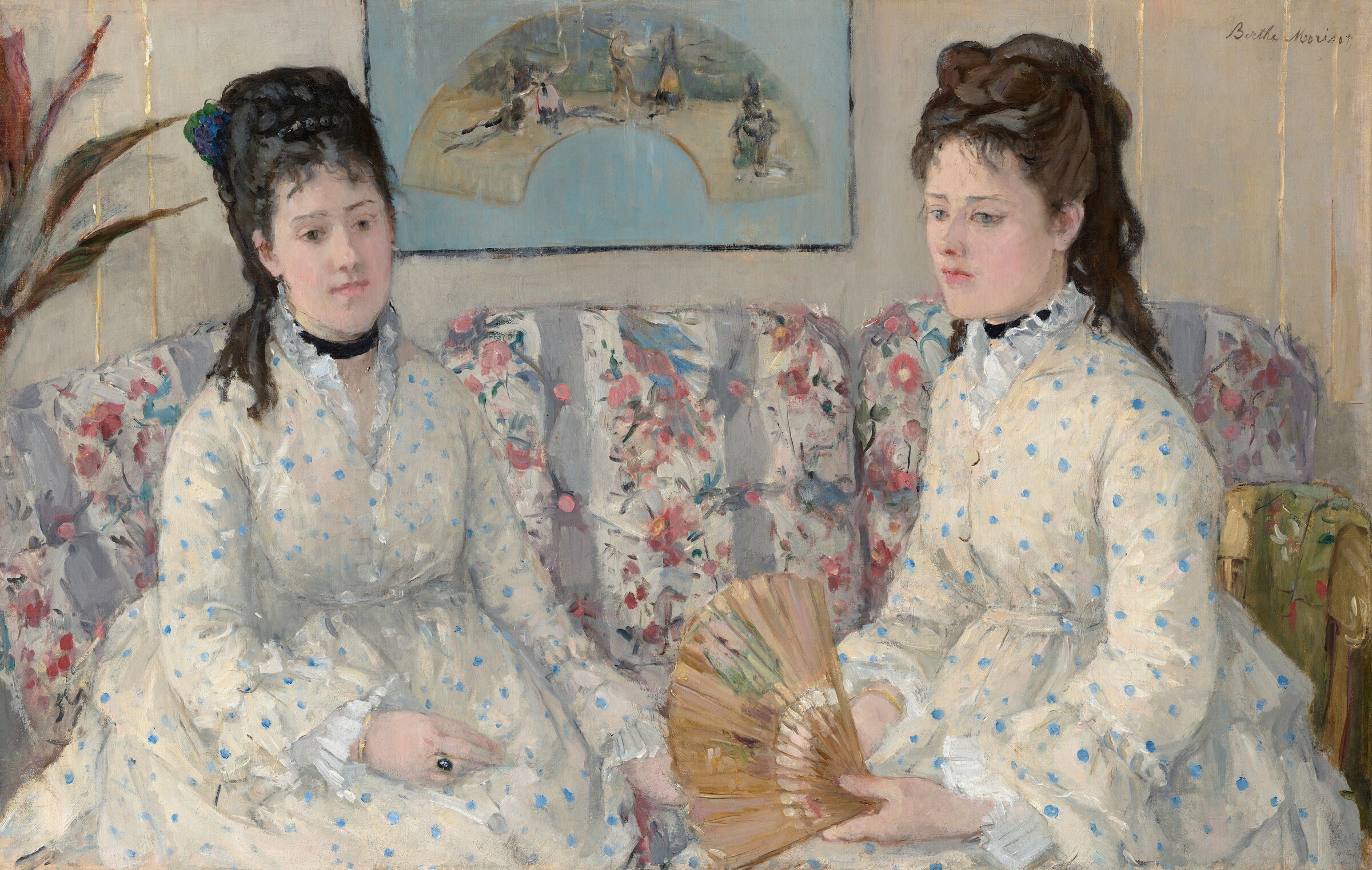
The Sisters, Berthe Morisot, 1869

The Sisters

1869 · Galería Nacional de Arte

The Artist's Sister at a Window, Berthe Morisot, 1869

The Artist's Sister at a Window

1869 · Galería Nacional de Arte

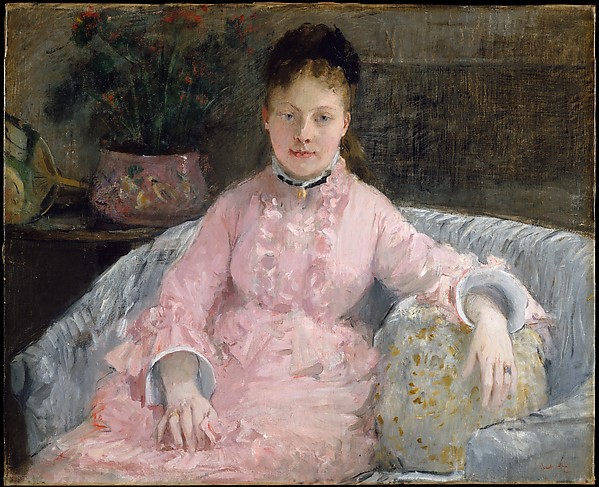
The Pink Dress (Albertie-Marguerite Carré, later Madame Ferdinand-Henri Himmes, 1854–1935), Berthe Morisot, ca. 1870

The Pink Dress (Albertie-Marguerite Carré, later Madame Ferdinand-Henri Himmes, 1854–1935)

ca. 1870 · Museo Metropolitano de Arte

In the Dining Room, Berthe Morisot, 1886

In the Dining Room

1886 · Galería Nacional de Arte

The Artist's Daughter with a Parakeet, Berthe Morisot, 1890

The Artist's Daughter with a Parakeet

1890 · Galería Nacional de Arte

Bajo el mismo techo: Museo de Arte de Cleveland

Página del museo
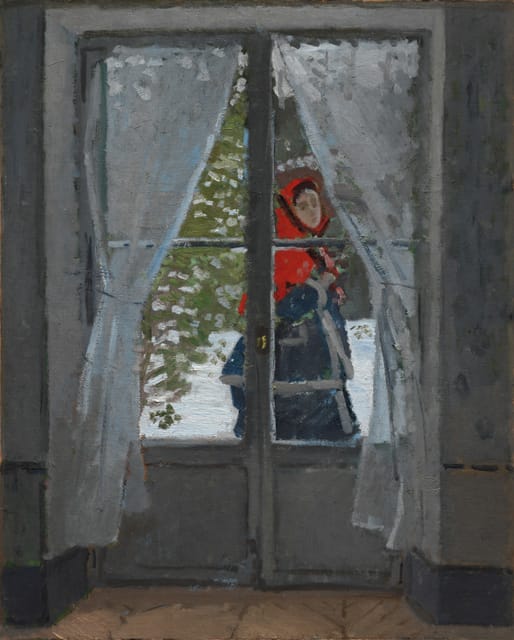
The Red Kerchief, Claude Monet, c. 1868–73

Claude Monet

The Red Kerchief, c. 1868–73

Melencolia I, Albrecht Dürer, 1514

Albrecht Dürer

Melancolía I, 1514

The Virgin and Child with the Pear, Albrecht Dürer, 1511

Albrecht Dürer

The Virgin and Child with the Pear, 1511

The Nativity, Albrecht Dürer, probably c. 1509/1510

Albrecht Dürer

The Nativity, probably c. 1509/1510

The Virgin and Child on a Crescent with a Starry Crown, Albrecht Dürer, 1508

Albrecht Dürer

The Virgin and Child on a Crescent with a Starry Crown, 1508

The Lamentation, Albrecht Dürer, 1507

Albrecht Dürer

The Lamentation, 1507

Large Horse, Albrecht Dürer, 1505

Albrecht Dürer

Large Horse, 1505

Nemesis (The Great Fortune), Albrecht Dürer, c. 1501/1502

Albrecht Dürer

Nemesis (The Great Fortune), c. 1501/1502