David HockneyReino Unido, 1937–2026
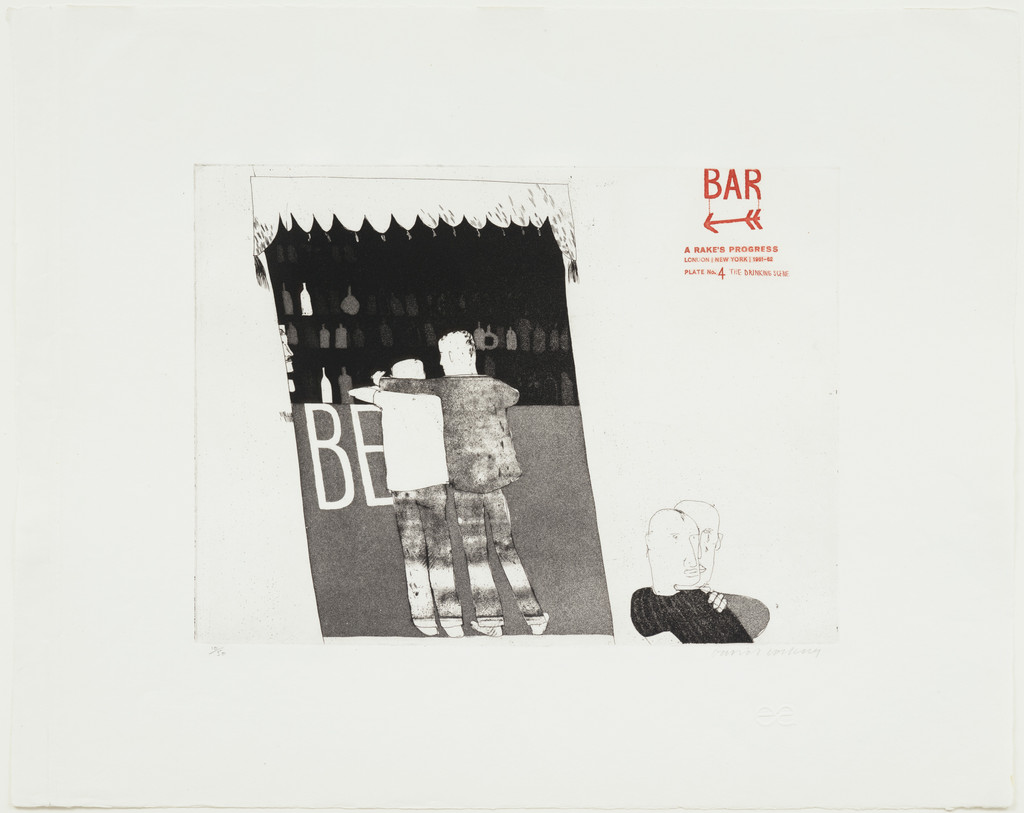
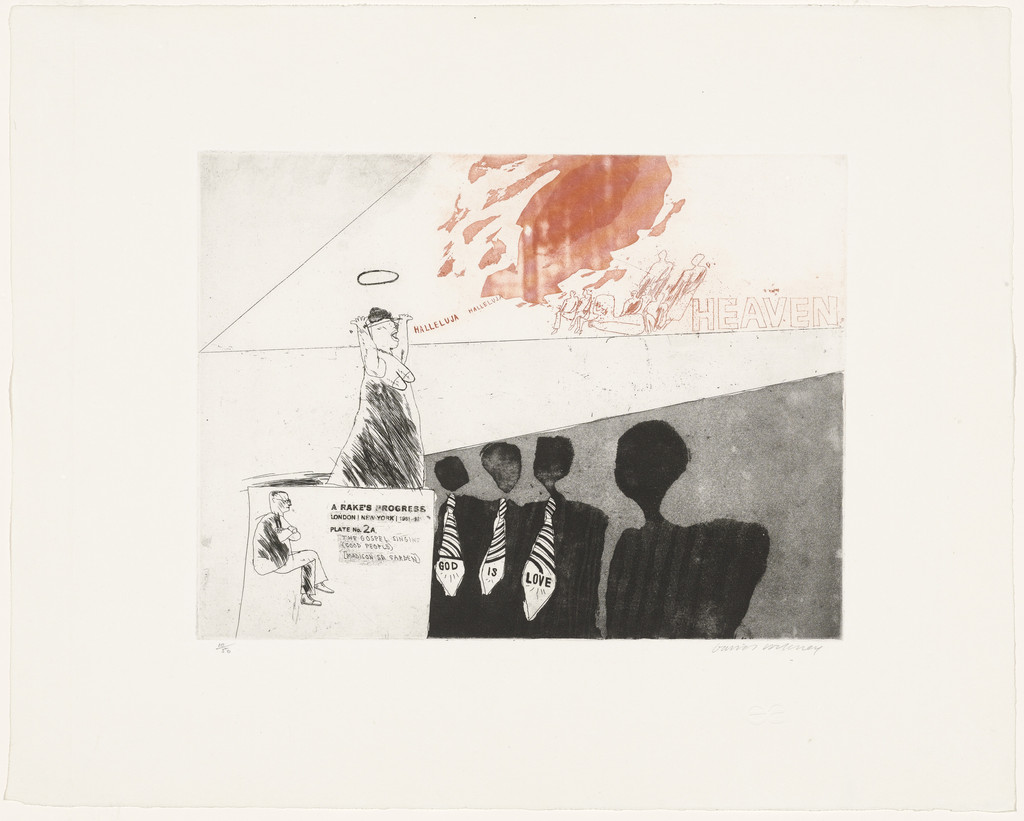
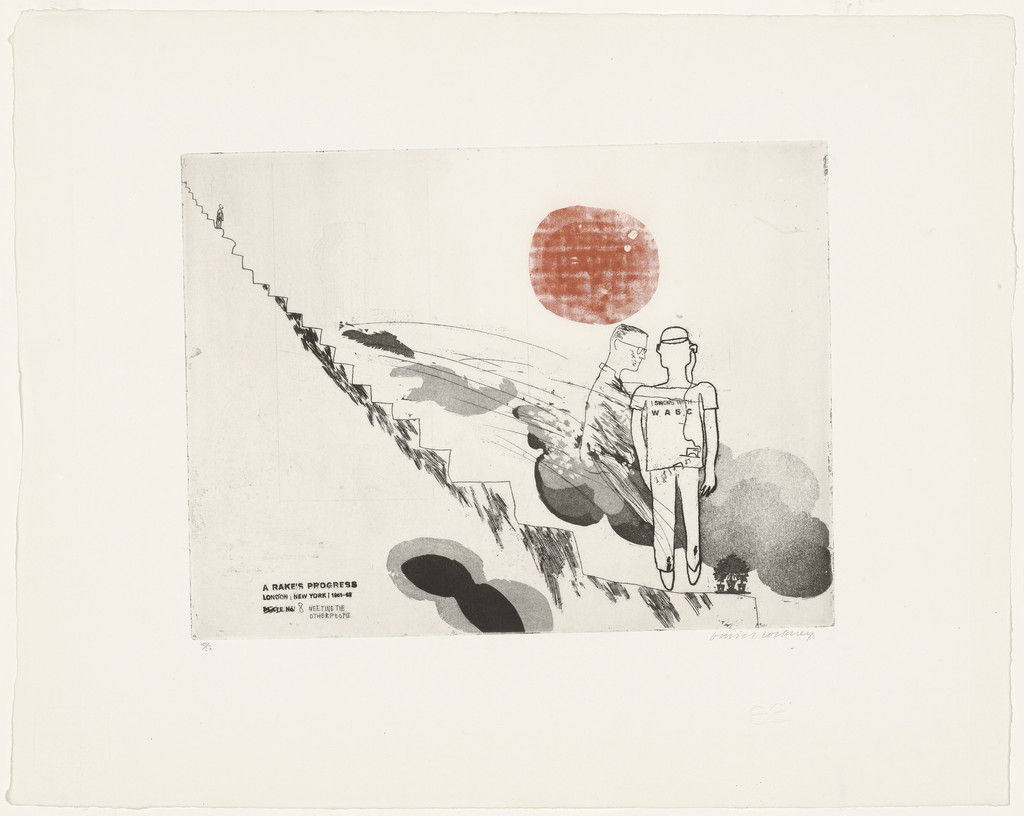
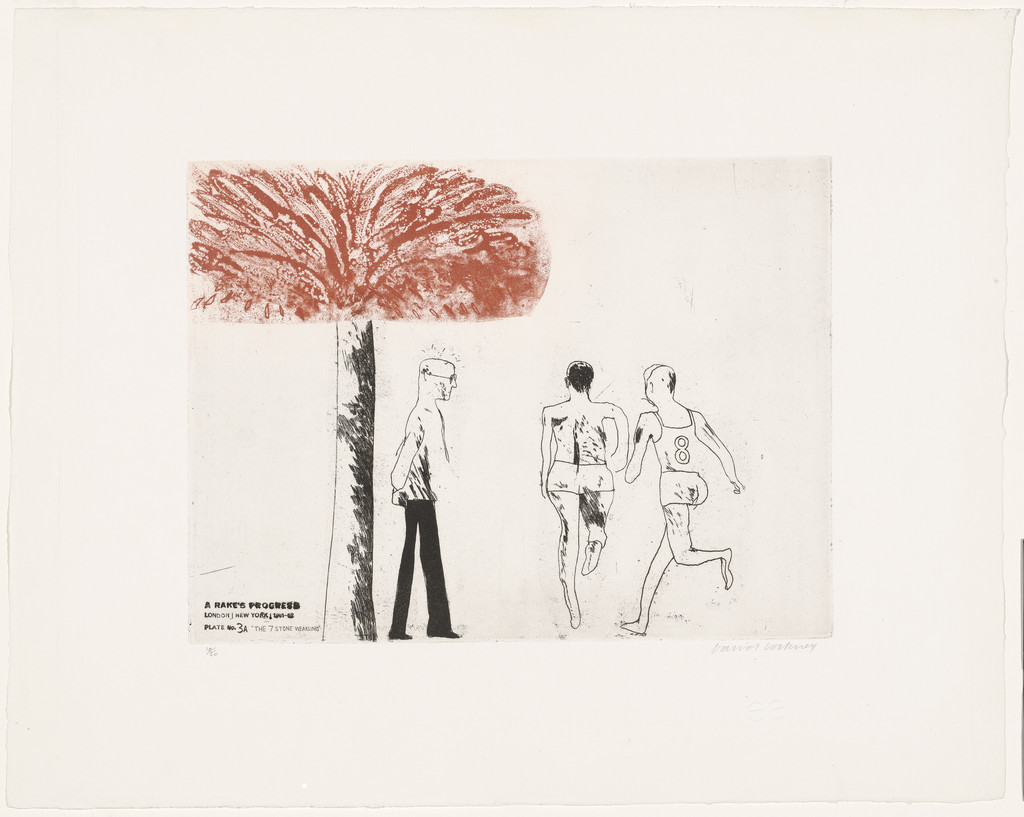
The Drinking Scene from "A rake's progress" 4
¿Se puede contemplar?
Por ahora no recibe

Chicago, Estados Unidos
Pertenece a la colección, pero ahora mismo no está expuesta.
- Comprobado
- En este estado desde
- Fuente
- El museo
Ficha
- Número de inventario
- 1964.354g
En el catálogo
Fuentes
- Instituto de Arte de Chicago
- Imagen: Instituto de Arte de Chicago — © the artist or rights holder
Mientras tanto, en la vida de David Hockney
La vida entera1957–1959
A conscientious objector working as a hospital orderly
Like his father, Hockney is a conscientious objector: during his National Service, from 1957 to 1959, he works as a medical orderly in hospitals.
1959–1962
“New Contemporaries” alongside Peter Blake
While still a student at the Royal College of Art, Hockney appears in the exhibition “New Contemporaries” alongside Peter Blake, which announced the arrival of British Pop art. He is associated with the movement, though his early works show expressionist elements similar to some of Francis Bacon’s.
1959–1962
At the Royal College: Kitaj, Bowling, Stokoe
At the Royal College of Art in London Hockney meets R. B. Kitaj, Frank Bowling and Neil Stokoe.
1960–1961
At 23 he comes out as gay
While still studying at the Royal College of Art, Hockney comes out as gay — seven years before the Sexual Offences Act 1967 decriminalised homosexual acts between men over 21 in England and Wales.
1963
First solo exhibition at Kasmin Limited
At twenty-six Hockney has his first one-man show at Kasmin Limited.
1963–1964
Moving to Los Angeles
Hockney moves from Britain to Los Angeles, in 1964 by some accounts, in 1963 by others; the move is attributed to a more liberal political climate. There he is inspired to paint a series of swimming pools in vibrant acrylic, then a comparatively new medium.