Robert RauschenbergEstados Unidos, 1925–2008
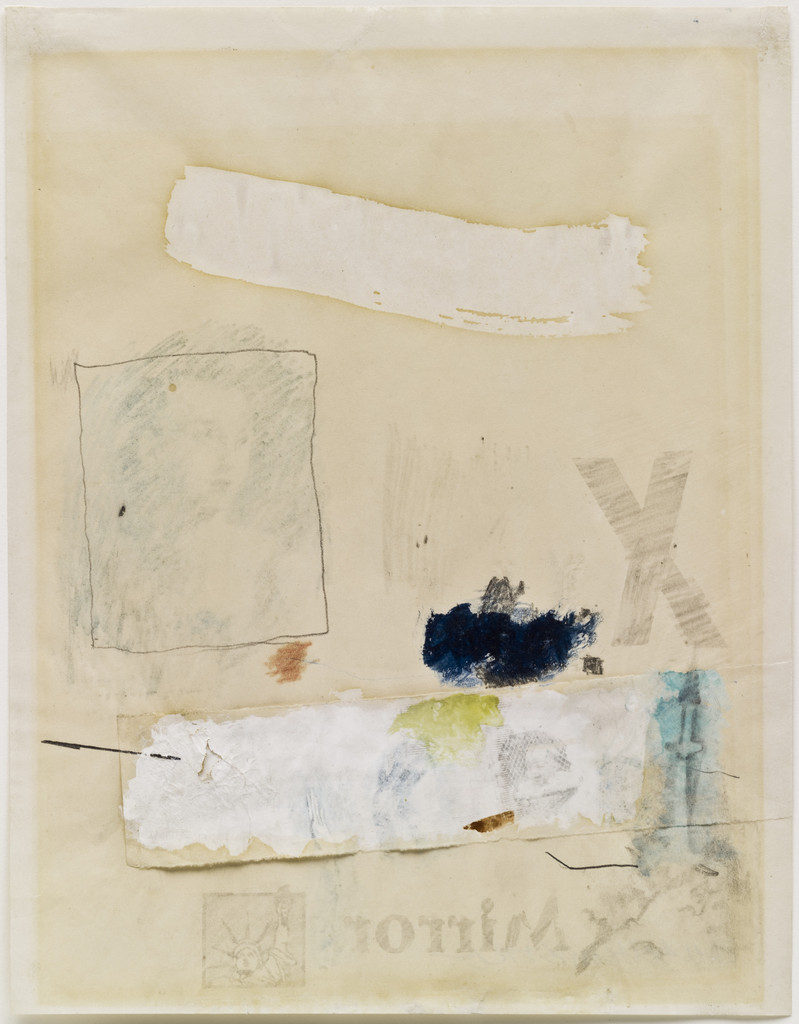
Tanya
¿Se puede contemplar?
Por ahora no recibe

Instituto de Arte de Chicago
Chicago, Estados Unidos
Pertenece a la colección, pero ahora mismo no está expuesta.
- Comprobado
- En este estado desde
- Fuente
- Los datos de colección del propio museo
Sobre la obra
After Russian-born Tatyana Grosman and her artist husband, Maurice, moved from New York City to a small cottage in the town of West Islip on Long Island in 1955, the couple decided to earn their living by creating silk-screen reproductions of paintings by artists such as Grandma Moses and Marc Chagall. They soon changed their focus, however, and dedicated themselves to original works of art following a visit to William Lieberman, who was then a curator at the Museum of Modern Art. Inspired by her love of books, Tatyana decided to bring to America the French tradition of livre d’artistes (artists’ books). She purchased an old lithographic press for fifteen dollars, found two lithographic stones in her front yard, and thus was born the print studio known as Universal Limited Art Editions (ULAE).
Read on
Working with artists like Larry Rivers, Jasper Johns, Robert Rauschenberg, Helen Frankenthaler, Robert Motherwell, Barnett Newman, and Cy Twombly, to name just a new, Tatyana Grosman and the staff of ULAE created an environment in which artists could experiment with lithography, and later with intaglio methods. Edwin Schlossberg, recalled of Tatyana Grosman, “She seemed to reach and recognize exactly the you that you always wanted someone to know . . . to give it full range to be what it was and could be. . . . Tatyana was in love with the people with whom she worked.” It was Tatyana’s vision and tenacity that made ULAE one of the finest print publishers in the country.
Instituto de Arte de ChicagoCC BY 4.0
Ficha
- Número de inventario
- 1982.1158
En el catálogo
Fuentes
- Instituto de Arte de Chicago: the museum's own open data · obtenido hace 7 días
- Imagen: Instituto de Arte de Chicago — © the artist or rights holder
Mientras tanto, en la vida de Robert Rauschenberg
La vida entera1973
The Scull auction and the fight for artists' royalties
In 1973 the taxi baron Robert Scull sold Rauschenberg's paintings “Thaw” and “Double Feature”, bought for $900 and $2,500, for $85,000 and $90,000 at Sotheby Parke Bernet. The artist took up the fight for resale royalties for artists (droit de suite), lobbying the US Congress for a law.
1976
California passes the artists' resale royalty law
Rauschenberg's lobbying was rewarded when the California governor Jerry Brown signed the California Resale Royalty Act of 1976. The artist went on to press for nationwide resale-royalty legislation.
1976–1978
Retrospective in Washington and a US tour
A mid-career retrospective was organised by the National Collection of Fine Arts (now the Smithsonian American Art Museum) in Washington and toured the United States in 1976–1978. Other accounts date its opening to 1977; the artist showed his best-known works there.