 Jusepe de RiberaEspaña, 1591–1652
Silenus
¿Se puede contemplar?
Por ahora no recibe

Museo de Arte de Cleveland
Cleveland, Estados Unidos
Pertenece a la colección, pero ahora mismo no está expuesta.
- Comprobado
- anteayer
- En este estado desde
- 19 ago 2026
- Fuente
- Los datos de colección del propio museo
Sobre la obra
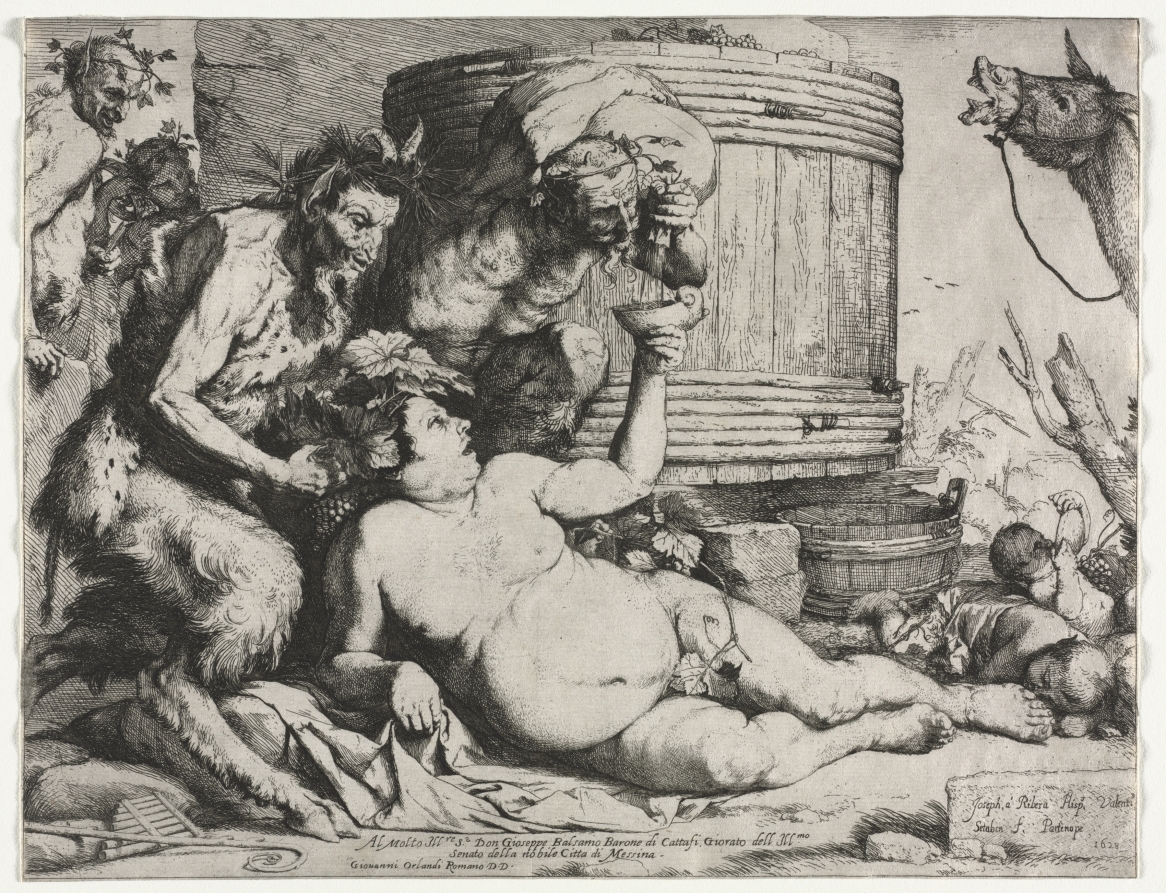
Before a large wine barrel, Silenus (Bacchus’s teacher) lies inebriated on the ground as he raises his cup to receive wine from a satyr in this print. Jusepe de Ribera included these and other details indicating that the scene was intended to be humorous. Two infants mimic Silenus, and a braying donkey adds to the chaotic setting. Pan, patron of shepherds, with his pipe and staff at his feet, crowns Silenus with grapevines. A satyr and a maenad, at upper left, contribute music as well as sexual innuendo (implied by the placement of the satyr’s flute). Ribera drew inspiration from Andrea Mantegna’s bacchanalia image but he introduced more texture and sensuality to the subject matter through his rich etching technique.
Museo de Arte de Cleveland
Ficha
- Número de inventario
- 1966.123
En el catálogo
Fuentes
- Museo de Arte de Cleveland: the museum's own open data · obtenido hace 5 días
- Imagen: Museo de Arte de Cleveland — Museum open access
Mientras tanto, en la vida de Jusepe de Ribera
La vida entera1616–1656 · Lugar de trabajo
Naples
1626
The Cross of the Order of Christ from Pope Urban VIII
In 1626 Pope Urban VIII awards Ribera the Cross of the Portuguese Order of Christ.
late 1620s
Recognised as Naples's leading painter
Ribera's career picks up in the late 1620s, and he is accepted as the leading painter in Naples thereafter; he runs a workshop with many pupils, among them Francesco Fracanzano, Luca Giordano, Bartolomeo Passante and Hendrick de Somer.
1630
Velázquez visits Ribera in Naples
In 1630 Diego Velázquez visits Ribera in Naples — evidence of how well known the master was in his homeland.
1630s
The palette brightens: from tenebrism to colour
In the 1630s Ribera's colour range changes under the influence of Anthony van Dyck, Guido Reni and others: stark tenebrism gives way to more diffused light.