 Thomas NastEstados Unidos, 1840–1902
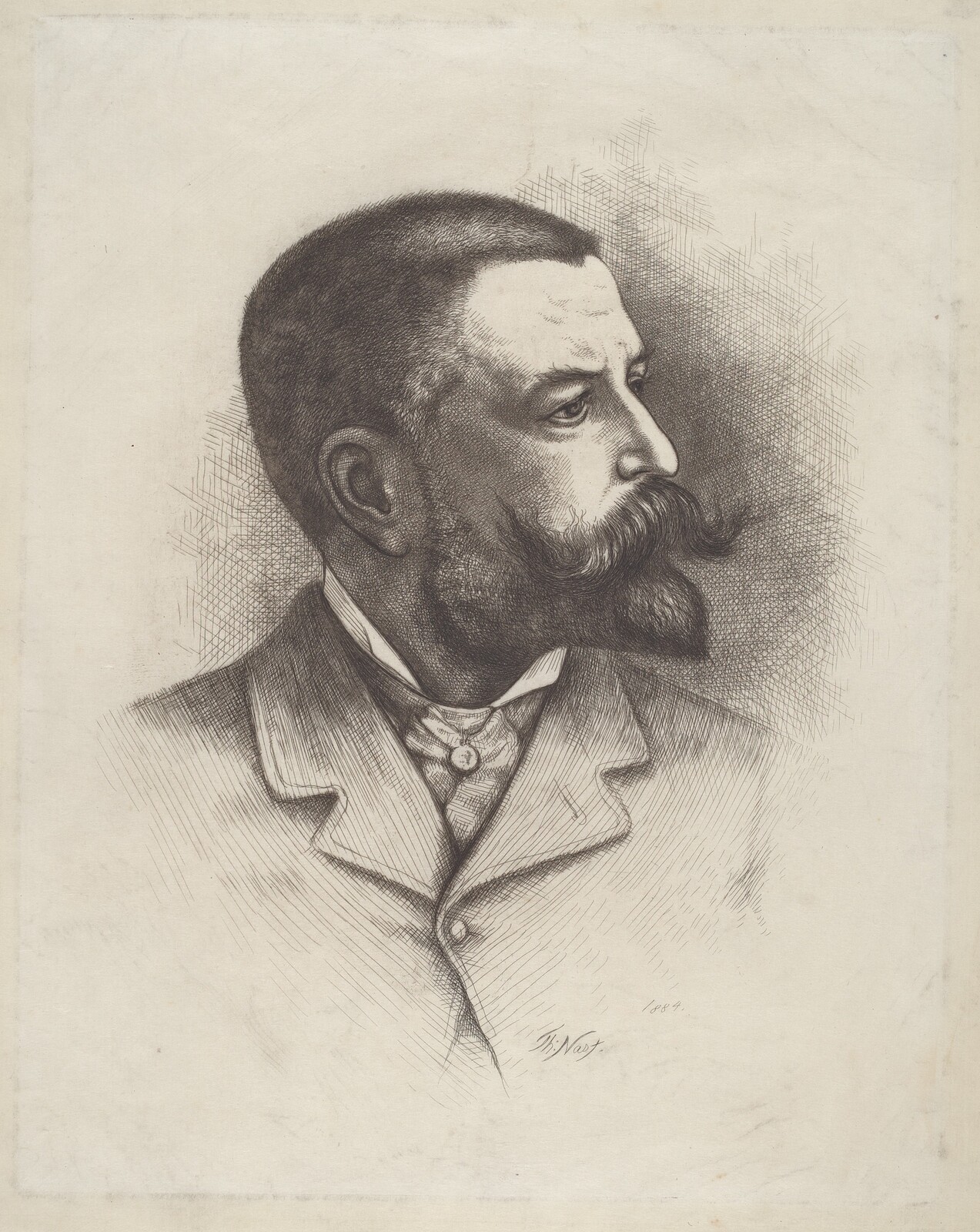
Self-Portrait
¿Puedo verla?
No expuesta por ahora
¿Dónde está «Self-Portrait» hoy? Colección: Galería Nacional de Arte, Washington D. C. No expuesta por ahora. Comprobado 16 de noviembre de 2026.

Washington D. C., Estados Unidos
Pertenece a la colección, pero ahora mismo no está expuesta.
- Comprobado
- En este estado desde
- Fuente
- El museo
Ficha
- Número de inventario
- 2008.115.3696
Lo que muestra
En el catálogo
Fuentes
- Galería Nacional de Arte
- Imagen: Galería Nacional de Arte — Museum open access
En la vida de Thomas Nast
La vida entera1873–1902 · Residencia
Thomas Nast Home
1877–1884
Drawings defending Chinese immigrants
Dozens of his drawings in favor of Chinese immigration date from this period, often implicating the Irish as instigators. He blames Senator James G. Blaine for supporting the Chinese Exclusion Act and depicts him with the same zeal used against Tweed; Nast is one of the few editorial artists who took up the cause of the Chinese in America.
1877–1884
His standing at Harper’s Weekly fades
After the death of publisher Fletcher Harper, who had always backed Nast in his disputes, Nast’s relationship with editor George William Curtis, who had differed with him since the late 1860s on the role of cartoons, changes; his cartoons appear less often and the magazine begins publishing the milder cartoons of William Allen Rogers. Puck also arrives in 1877; before it, Nast had no meaningful competition.
1884
Loses his fortune to the swindler Ward
He loses most of his fortune after investing in a banking and brokerage firm run by the swindler Ferdinand Ward. In need of income, he returns to the lecture circuit in 1884 and 1887; the tours are successful but less remunerative than the series of 1873.
1884
A Mugwump for Grover Cleveland
With Curtis, he refuses to support Republican James G. Blaine, a proponent of high tariffs and the spoils system whom they perceived as personally corrupt, and, joining the Mugwumps, backs Democrat Grover Cleveland, whose civil service reform platform appealed to them. Nast’s cartoons help Cleveland become the first Democrat elected president since 1856; in his grandson’s words, in this last national campaign Nast had “made a president.”
December 1886
Leaves Harper’s Weekly
His tenure at Harper’s Weekly ends with his Christmas illustration; in those years his cartoons helped decide five presidential elections (1864, 1868, 1872, 1876, 1884). Journalist Henry Watterson said Nast lost his forum and the magazine its political importance, though biographer Fiona Deans Halloran thinks the former true only to a certain extent and the latter unlikely.