ART WIKI32.963 en sala
MapaColecciónArtistasMuseosExposicionesRevista
Acceder

ART WIKI

Dónde cuelga la obra maestra y cuándo le dejan pasar.

Colecciones: Galería Nacional de Arte, Galería Nacional de Dinamarca, Galería Nacional de Retratos, Galería Tretiakov, Harvard Art Museums, Instituto de Arte de Chicago, Instituto de Artes de Mineápolis, MoMA, Museo de Arte de Cleveland, Museo de Victoria y Alberto, Museo del Hermitage, Museo del Louvre, Museo Estatal Ruso, Museo Hirshhorn y Jardín de Esculturas, Museo J. Paul Getty, Museo Metropolitano de Arte, Museo Pushkin, Museo Smithsoniano de Arte Americano, Museo Whitney de Arte Estadounidense, National Museum of Asian Art, Rijksmuseum, Villa Getty, Catálogo Estatal del Fondo Museístico de Rusia (274 museos), Europeana (19 museos), Wikidata (6 museos), Paris Musées (12 museos) y Joconde, la base de museos del Ministerio de Cultura de Francia (495 museos). Las imágenes pertenecen a sus titulares de derechos.

Secciones

  • Mapa
  • Búsqueda
  • Colección
  • Obras maestras
  • Expuestas ahora
  • Artistas

Más

  • Museos y galerías
  • Exposiciones
  • Revista
  • De dónde salen los datos
  • Privacidad y cookies
InicioMapaCatálogo
  1. Colección/
  2. Galería Nacional de Arte/
  3. Green Wheat Fields, Auvers
Green Wheat Fields, Auvers, Vincent van Gogh, 1890

Green Wheat Fields, Auvers

1890 · Painting

Ficha

1890 · a los 37 años
18531890
Número de inventario
2013.122.1

Mientras tanto, en la vida de Vincent van Gogh

La vida entera
  1. February 1888

    To Arles, dreaming of a “Studio of the South”

    The public still neither accepted nor bought his paintings, and in February 1888 Van Gogh left for Arles in the south of France to found a “Studio of the South”, a brotherhood of like-minded artists in which he gave Gauguin the leading role. Theo backed the plan with money.

  2. 23 October 1888

    Gauguin arrives in Arles

    After much pleading Gauguin arrived in Arles, and in November the two painted together: Gauguin portrayed Van Gogh in “The Painter of Sunflowers”, and their first joint outing was to the Alyscamps. At Gauguin's suggestion Vincent painted from memory, producing “Memory of the Garden at Etten”.

  3. 23 December 1888

    The severed ear

    After an altercation on the evening of 23 December, Van Gogh, seemingly hearing voices, severed his left ear, wholly or in part, with a razor and delivered it, wrapped in paper, to a woman at a brothel. Next morning a policeman found him unconscious; in hospital he was diagnosed with “acute mania with generalised delirium”.

  4. May 1889

    Voluntarily into the Saint-Paul asylum

    Van Gogh left Arles and voluntarily entered the Saint-Paul-de-Mausole asylum, a former monastery in Saint-Rémy-de-Provence, accompanied by the Protestant clergyman Frédéric Salles. Of his two cells with barred windows one became a studio, and the clinic and its garden became the main subjects of his paintings.

  5. 27 July 1890

Más obras de Vincent van Gogh

Todas las obras

En la misma sala · M-083, Galería Nacional de Arte

Página del museo

A fatal wound: a revolver shot

Out painting, Van Gogh shot himself in the chest with a revolver he had bought to scare off birds while working outdoors; the bullet passed below his heart, and he made his own way back to his room at the inn. Theo arrived the next day and stayed with him to the end; according to Theo, Vincent's last words were: “The sadness will last forever.”

  • 29 de julio de 1890

    Died

  • Vincent van Gogh, retratoVincent van GoghPaíses Bajos, 1853–1890

    ¿Se puede contemplar?

    Sí, recibe visitas

    Galería Nacional de Arte

    Washington D. C., Estados Unidos

    Sala83 · Edificio Oeste, planta principal

    Expuesta al público. Quién lo avala figura más abajo.

    Comprobado
    hace 3 días
    En este estado desde
    19 ago 2026
    Fuente
    El museo
    En el mapaPágina del museo

    Lo que muestra

    AuversLandscapeWheat fields

    En el catálogo

    PinturaÓleoPintura neerlandesaImpresionismoSiglo XIXPost-impressionismExpresionismoPintura del paisaje

    Fuentes

    • Galería Nacional de Arte
    • Imagen: Galería Nacional de Arte — Museum open access
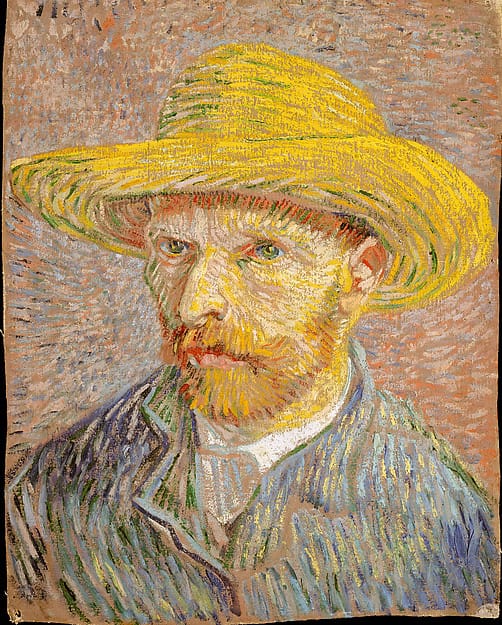
    Self-Portrait with a Straw Hat (obverse: The Potato Peeler), Vincent van Gogh, 1887

    Self-Portrait with a Straw Hat (obverse: The Potato Peeler)

    1887 · Museo Metropolitano de Arte

    Self-portrait, Vincent van Gogh, 1887

    Self-portrait

    1887 · Rijksmuseum

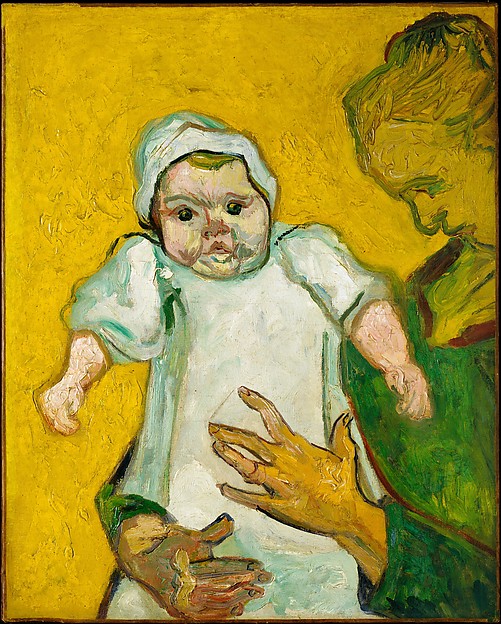
    Madame Roulin and Her Baby, Vincent van Gogh, 1888

    Madame Roulin and Her Baby

    1888 · Museo Metropolitano de Arte

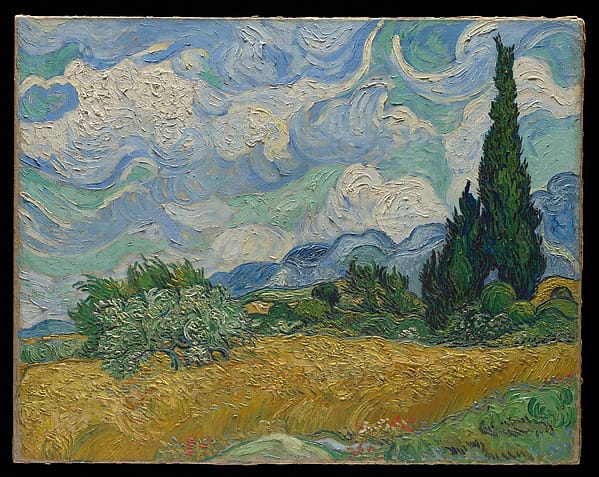
    Wheat Field with Cypresses, Vincent van Gogh, 1889

    Wheat Field with Cypresses

    1889 · Museo Metropolitano de Arte

    Olive Trees, Vincent van Gogh, 1889

    Olive Trees

    1889 · Instituto de Artes de Mineápolis

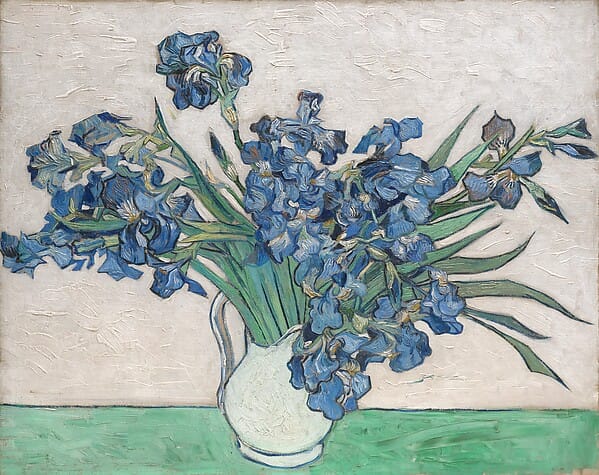
    Irises, Vincent van Gogh, 1890

    Irises

    1890 · Museo Metropolitano de Arte

    Het Singel bij de Lutherse Kerk te Amsterdam, Vincent van Gogh, 1885

    Het Singel bij de Lutherse Kerk te Amsterdam

    1885 · Rijksmuseum

    The Potato Peeler (reverse: Self-Portrait with a Straw Hat), Vincent van Gogh, 1885

    The Potato Peeler (reverse: Self-Portrait with a Straw Hat)

    1885 · Museo Metropolitano de Arte

    Girl in White, Vincent van Gogh, 1890

    Vincent van Gogh

    Chica en blanco, 1890

    Roses, Vincent van Gogh, 1890

    Vincent van Gogh

    Roses, 1890

    Self-Portrait, Vincent van Gogh, 1889

    Vincent van Gogh

    Self-Portrait, 1889

    Farmhouse in Provence, Vincent van Gogh, 1888

    Vincent van Gogh

    Granja en Provenza, 1888

    La Mousmé, Vincent van Gogh, 1888

    Vincent van Gogh

    La Mousmé, 1888

    Te Pape Nave Nave (Delectable Waters), Paul Gauguin, 1898

    Paul Gauguin

    Te Pape Nave Nave (Delectable Waters), 1898

    Parau na te Varua ino (Words of the Devil), Paul Gauguin, 1892

    Paul Gauguin

    Parau na te Varua ino (Words of the Devil), 1892

    Fatata te Miti (By the Sea), Paul Gauguin, 1892

    Paul Gauguin

    Cerca del mar, 1892