William Simpson
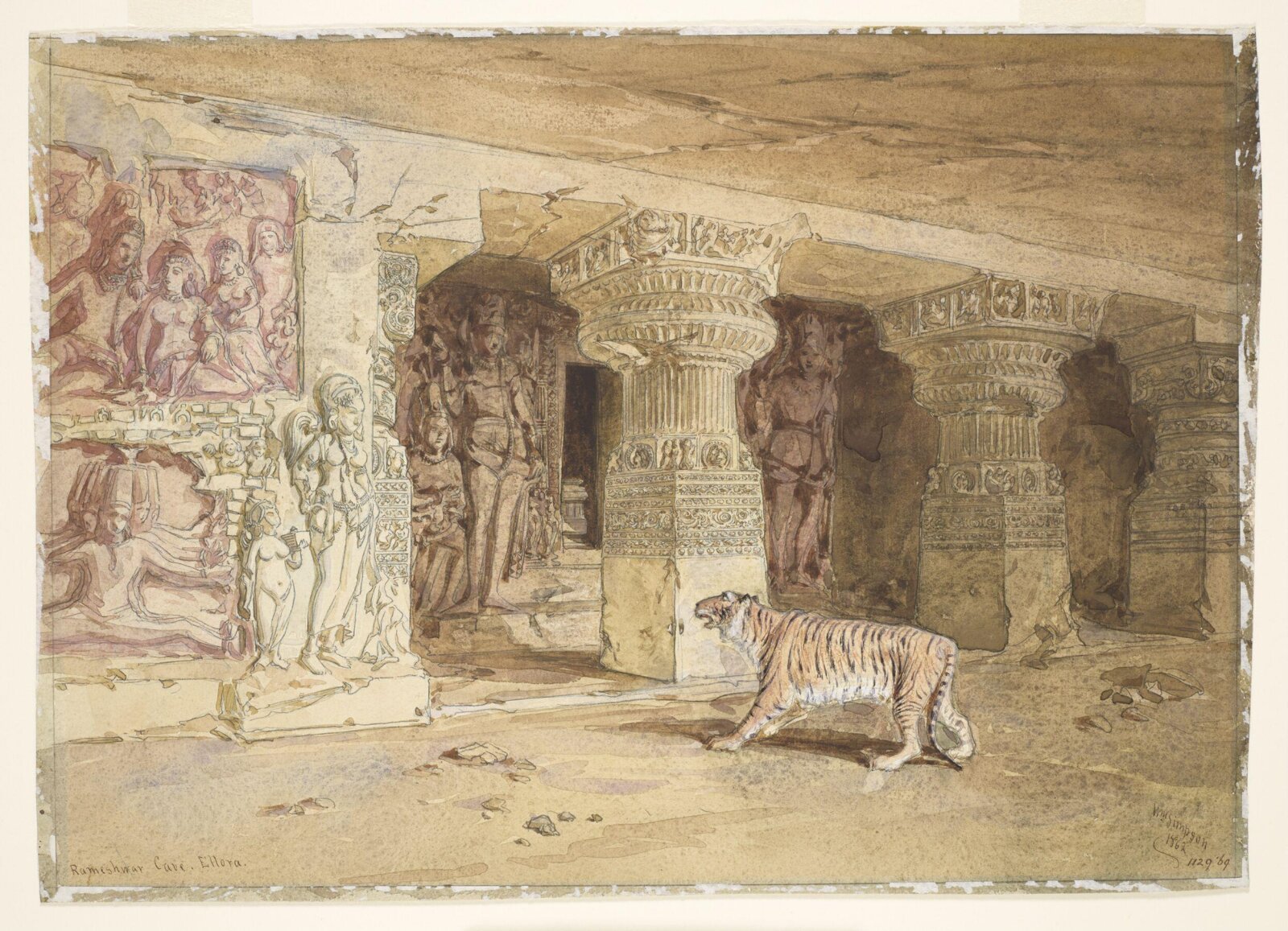
Rameshwar cave, Ellora
¿Se puede contemplar?
Por ahora no recibe

Museo de Victoria y Alberto
Londres, Reino Unido
Pertenece a la colección, pero ahora mismo no está expuesta.
- Comprobado
- hace 9 días
- En este estado desde
- 25 sept 2026
- Fuente
- Los datos de colección del propio museo
About the painting
William Simpson, born on 28 October 1823 in Glasgow, was a distinguished watercolourist and war artist. Following a seven-year apprenticeship with a specialist lithographic firm, he moved to London in February 1851 and found employment with Day and Sons. The firm commissioned him to go to India and record places associated with the events of the Indian Mutiny of 1857.
Simpson arrived in Calcutta (Kolkata) at the end of October 1859 and travelled extensively. Throughout his life, he kept careful diaries, and his hundreds of sketches and pictures themselves formed an authentic record of his travels. In India, he planned to produce four large volumes with approximately 250 plates to be lithographed as illustrations. He spent seven years on the project – three years making preparatory works and the rest in London working his sketches into finished paintings.
Read on
Simpson’s observations in India resulted in detailed and evocative interpretations in his work. The tiger in this painting stares, almost in reverence, at a female dvarpala (doorway guardian). On the left, a rectangular bas-relief panel shows Shiva and Parvati seated above Mount Kailasa. Ravana, the ten-headed king of demons, tries to disrupt the gods from beneath. The tiger’s presence in the colonnaded grand hall animates and romanticises the architectural scene.
While Simpson was away, Day and Son had been drifting into debt. In 1867, before it finally went into liquidation at the end of the year, he was made a company shareholder as part of payment. Two years later, his collection of 250 watercolours was sold as bankrupt stock.
Museo de Victoria y Alberto
Ficha
- Número de inventario
- 1129-1869
En el catálogo
Fuentes
- Museo de Victoria y Alberto: the museum's own open data · obtenido hace 9 días
- Imagen: Museo de Victoria y Alberto — © Victoria and Albert Museum, London