ART WIKI32.963 en sala
MapaColecciónArtistasMuseosExposicionesRevista
Acceder

ART WIKI

Dónde cuelga la obra maestra y cuándo le dejan pasar.

Colecciones: Galería Nacional de Arte, Galería Nacional de Dinamarca, Galería Nacional de Retratos, Galería Tretiakov, Harvard Art Museums, Instituto de Arte de Chicago, Instituto de Artes de Mineápolis, MoMA, Museo de Arte de Cleveland, Museo de Victoria y Alberto, Museo del Hermitage, Museo del Louvre, Museo Estatal Ruso, Museo Hirshhorn y Jardín de Esculturas, Museo J. Paul Getty, Museo Metropolitano de Arte, Museo Pushkin, Museo Smithsoniano de Arte Americano, Museo Whitney de Arte Estadounidense, National Museum of Asian Art, Rijksmuseum, Villa Getty, Catálogo Estatal del Fondo Museístico de Rusia (274 museos), Europeana (19 museos), Wikidata (6 museos), Paris Musées (12 museos) y Joconde, la base de museos del Ministerio de Cultura de Francia (495 museos). Las imágenes pertenecen a sus titulares de derechos.

Secciones

  • Mapa
  • Búsqueda
  • Colección
  • Obras maestras
  • Expuestas ahora
  • Artistas

Más

  • Museos y galerías
  • Exposiciones
  • Revista
  • De dónde salen los datos
  • Privacidad y cookies
InicioMapaCatálogo
  1. Colección/
  2. Museo de Arte de Cleveland/
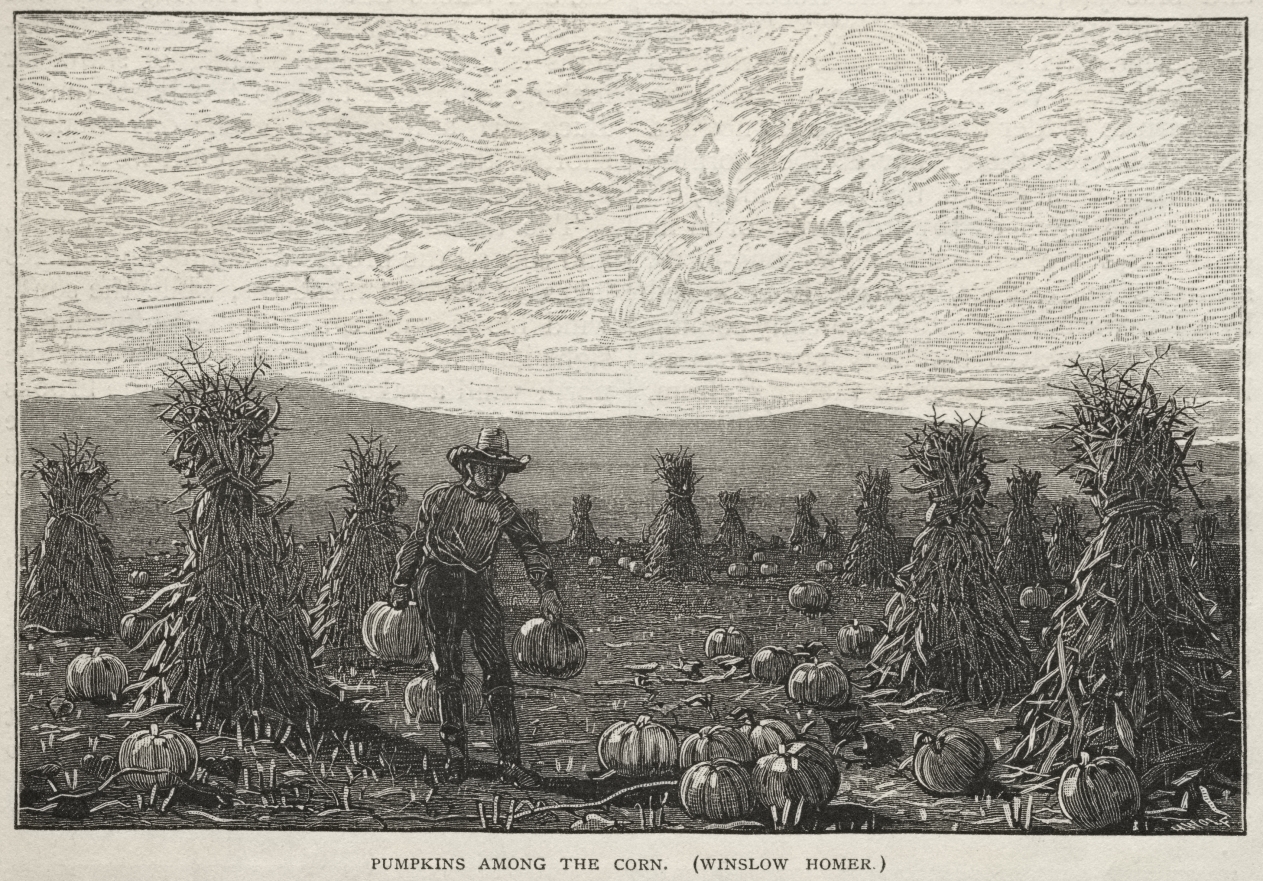
  3. Pumpkins Among the Corn
Pumpkins Among the Corn, Winslow Homer, 1878
Winslow Homer, retratoWinslow HomerEstados Unidos, 1836–1910

Pumpkins Among the Corn

1878 · Print

¿Se puede contemplar?

Por ahora no recibe

Museo de Arte de Cleveland

Cleveland, Estados Unidos

Pertenece a la colección, pero ahora mismo no está expuesta.

Comprobado
anteayer
En este estado desde
19 ago 2026
Fuente
Los datos de colección del propio museo
En el mapaPágina del museo

Ficha

1878 · a los 42 años
18361910
Número de inventario
1942.1431

En el catálogo

EstampasXilografíaRealismoImpresionismoSiglo XIXAmérica

Fuentes

  • Museo de Arte de Cleveland: los datos abiertos del museo · obtenido hace 8 días
  • Imagen: Museo de Arte de Cleveland — Museum open access

Mientras tanto, en la vida de Winslow Homer

La vida entera
  1. 1876

    The Centennial Exposition in Philadelphia

    “Snap the Whip” and “Breezing Up” were shown at the Centennial Exposition; the New York Tribune wrote that it could not remember a picture in any exhibition that could be named alongside “Breezing Up”. Henry James confessed that he detested Homer's subjects of the time, yet “to reward his audacity, he has incontestably succeeded”.

  2. c. 1876

    Visits to Virginia

    Around 1876 Homer visited Petersburg, Virginia (apparently to see what had become of the lives of former slaves), and painted rural African American life, the most unaffected views of it at the time, such as “Dressing for the Carnival” (1877).

  3. 1877

    First show at the Boston Art Club

    In 1877 Homer exhibited at the Boston Art Club for the first time, with the oil painting “An Afternoon Sun”; from then until 1909 he showed there often.

  4. late 1870s

    A recluse in Gloucester

    In the late 1870s, whether from disappointments with women or some other emotional turmoil, Homer became reclusive, abandoned urban social life and lived instead in Gloucester, for a while even in the secluded Eastern Point Lighthouse with the keeper's family. Watching the fishermen, the sea and the marine weather, he rediscovered his love of the sea and found a rich source of themes in it.

  5. 1878

    A productive year at Valentine's farm

    Homer spent 1878 as the guest of the industrialist Lawson Valentine at Houghton Farm, his property in the Adirondack Mountains, and it proved a particularly productive year. Valentine, whose paint company employed the artist's brother Charles as a chemist, was an early and important collector of Homer's work and later gave him a studio at the farm.

  6. 1878

    Fireplaces and the Tile Club

    In 1878 Homer made an enamel fireplace surround. For a short time he designed fireplace tiles as a member of the Tile Club, a group of artists and writers who nicknamed him “The Obtuse Bard” and included William Merritt Chase and the sculptor Augustus Saint-Gaudens.
Más obras de Winslow Homer

Todas las obras
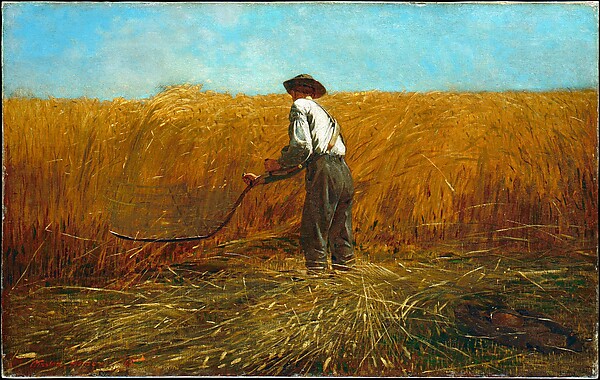
The Veteran in a New Field, Winslow Homer, 1865

The Veteran in a New Field

1865 · Museo Metropolitano de Arte

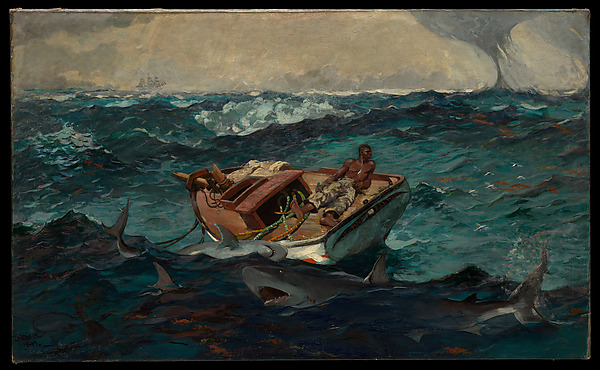
The Gulf Stream, Winslow Homer, 1899; reworked by 1906

The Gulf Stream

1899; reworked by 1906 · Museo Metropolitano de Arte

Home, Sweet Home, Winslow Homer, c. 1863

Home, Sweet Home

c. 1863 · Galería Nacional de Arte

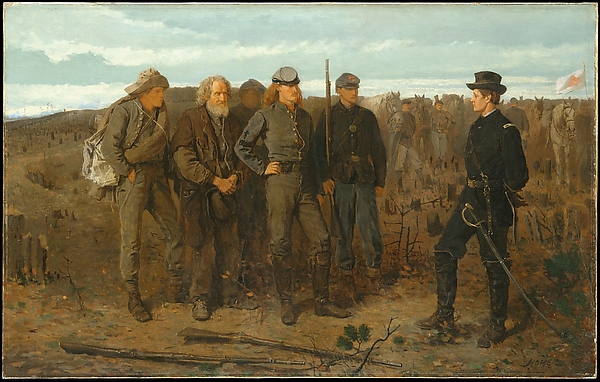
Prisoners from the Front, Winslow Homer, 1866

Prisoners from the Front

1866 · Museo Metropolitano de Arte

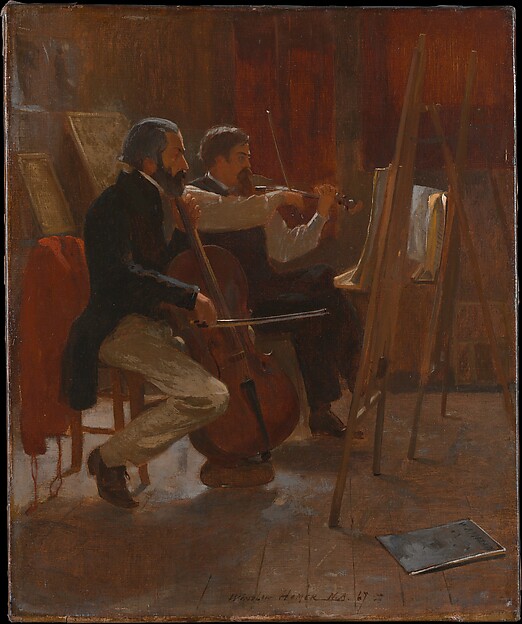
The Studio, Winslow Homer, 1867

The Studio

1867 · Museo Metropolitano de Arte

Coming through the Rye, Winslow Homer, 1867

Coming through the Rye

1867 · Museo Metropolitano de Arte

The Dinner Horn (Blowing the Horn at Seaside), Winslow Homer, 1870

The Dinner Horn (Blowing the Horn at Seaside)

1870 · Galería Nacional de Arte

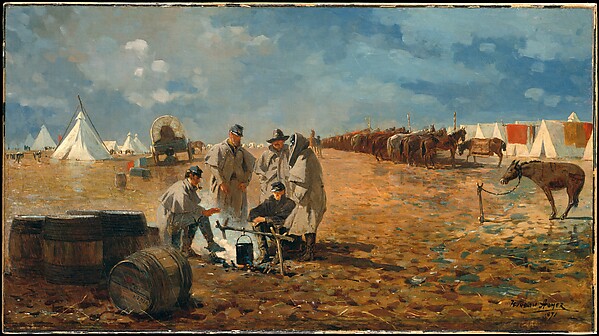
Rainy Day in Camp, Winslow Homer, 1871

Rainy Day in Camp

1871 · Museo Metropolitano de Arte

Bajo el mismo techo: Museo de Arte de Cleveland

Página del museo
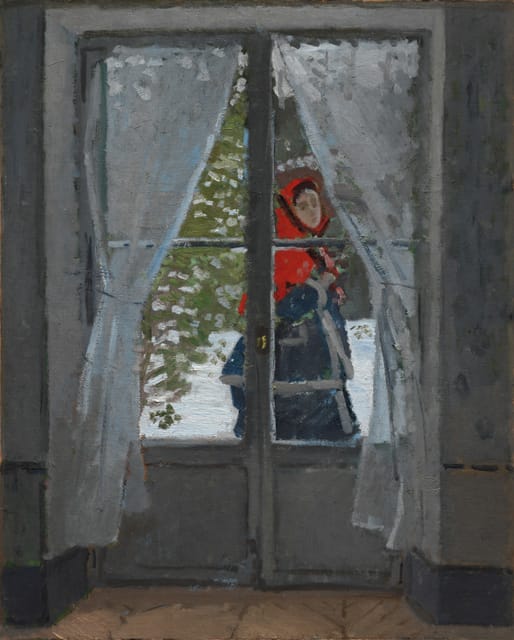
The Red Kerchief, Claude Monet, c. 1868–73

Claude Monet

The Red Kerchief, c. 1868–73

Melencolia I, Albrecht Dürer, 1514

Albrecht Dürer

Melancolía I, 1514

The Virgin and Child with the Pear, Albrecht Dürer, 1511

Albrecht Dürer

The Virgin and Child with the Pear, 1511

The Nativity, Albrecht Dürer, probably c. 1509/1510

Albrecht Dürer

The Nativity, probably c. 1509/1510

The Virgin and Child on a Crescent with a Starry Crown, Albrecht Dürer, 1508

Albrecht Dürer

The Virgin and Child on a Crescent with a Starry Crown, 1508

The Lamentation, Albrecht Dürer, 1507

Albrecht Dürer

The Lamentation, 1507

Large Horse, Albrecht Dürer, 1505

Albrecht Dürer

Large Horse, 1505

Nemesis (The Great Fortune), Albrecht Dürer, c. 1501/1502

Albrecht Dürer

Nemesis (The Great Fortune), c. 1501/1502