Kesav Kalan
Prince Salim
¿Se puede contemplar?
Por ahora no recibe

Museo de Victoria y Alberto
Londres, Reino Unido
Pertenece a la colección, pero ahora mismo no está expuesta.
- Comprobado
- En este estado desde
- Fuente
- El museo
Sobre el cuadro
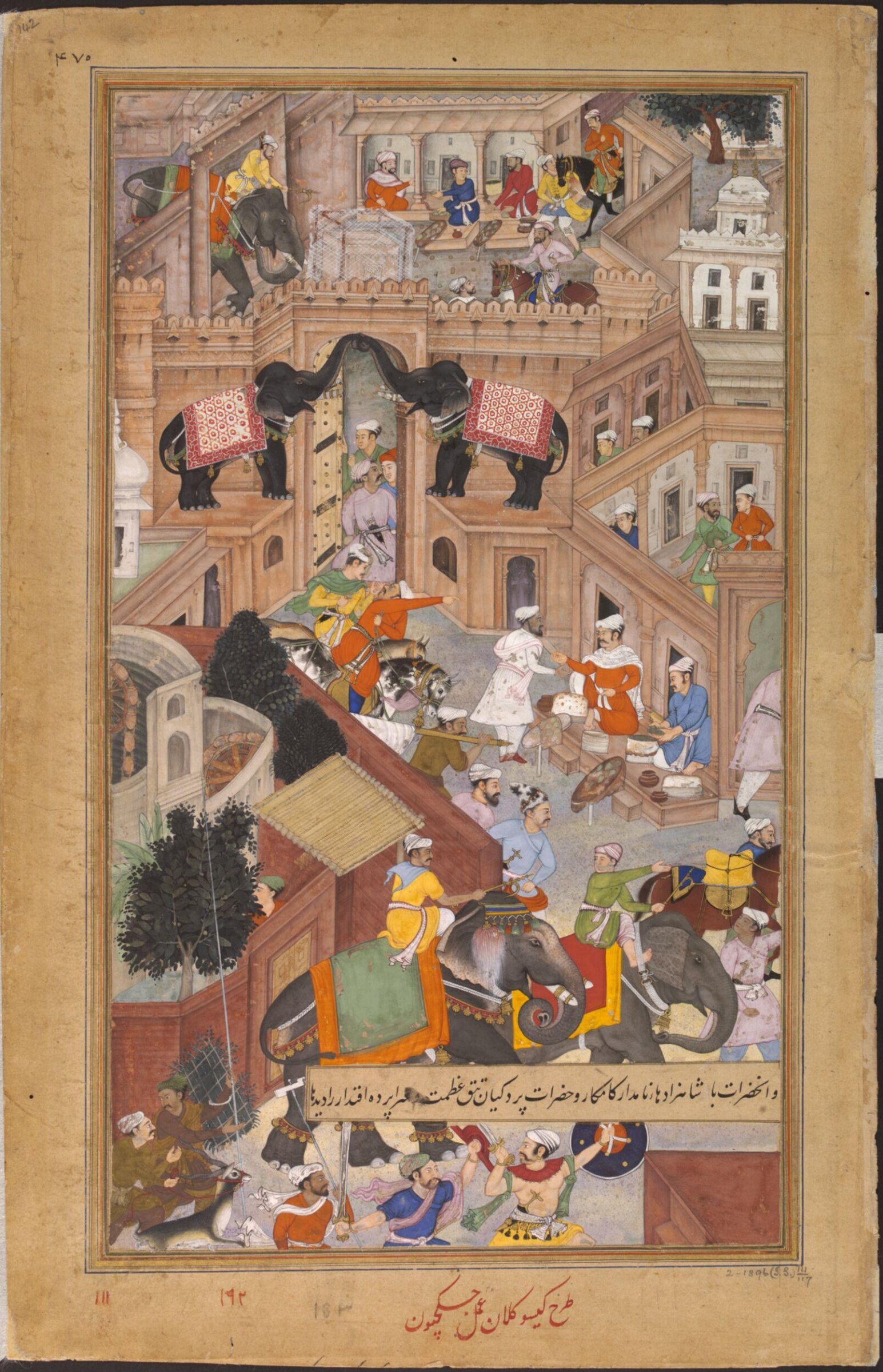
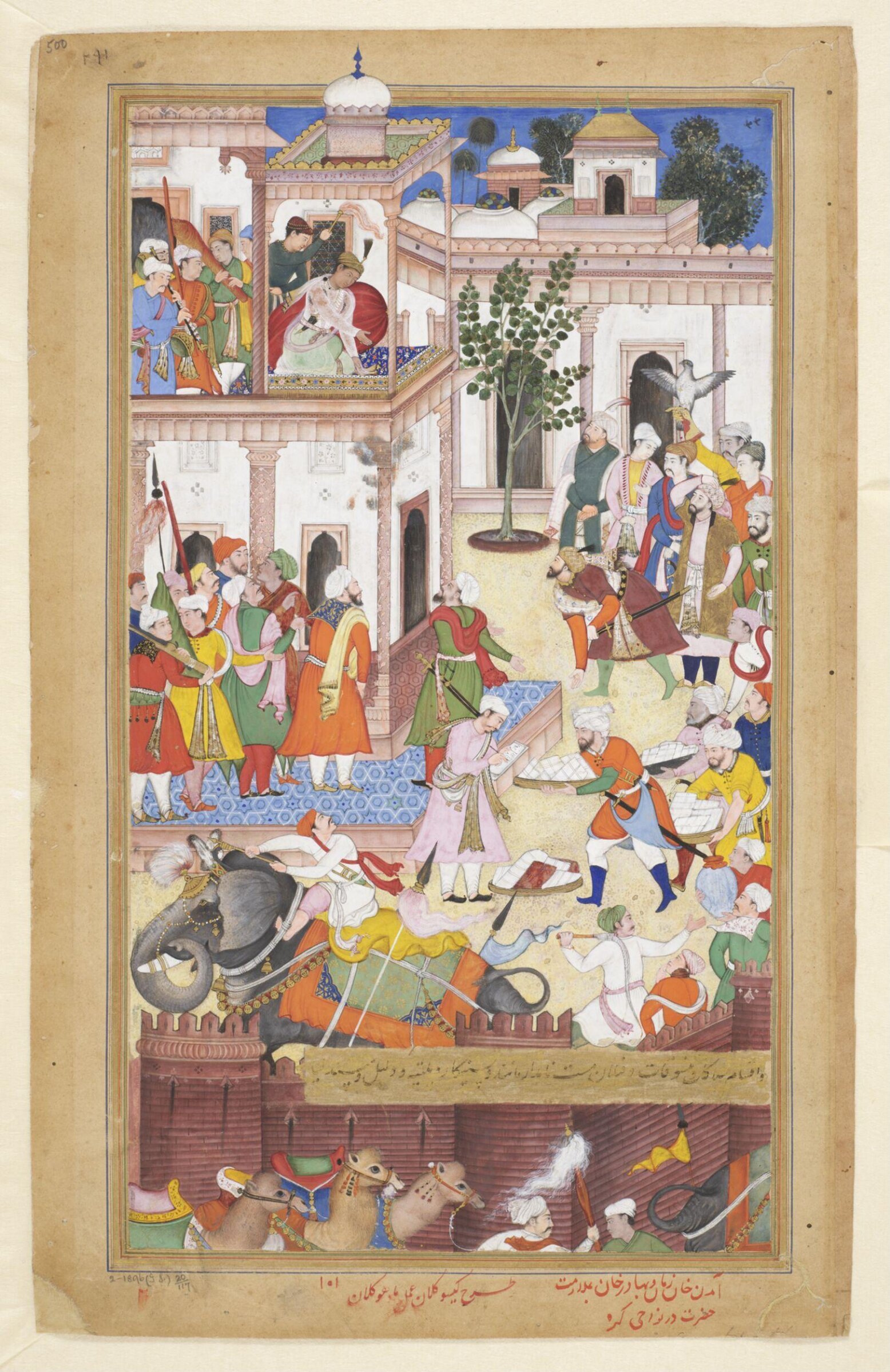
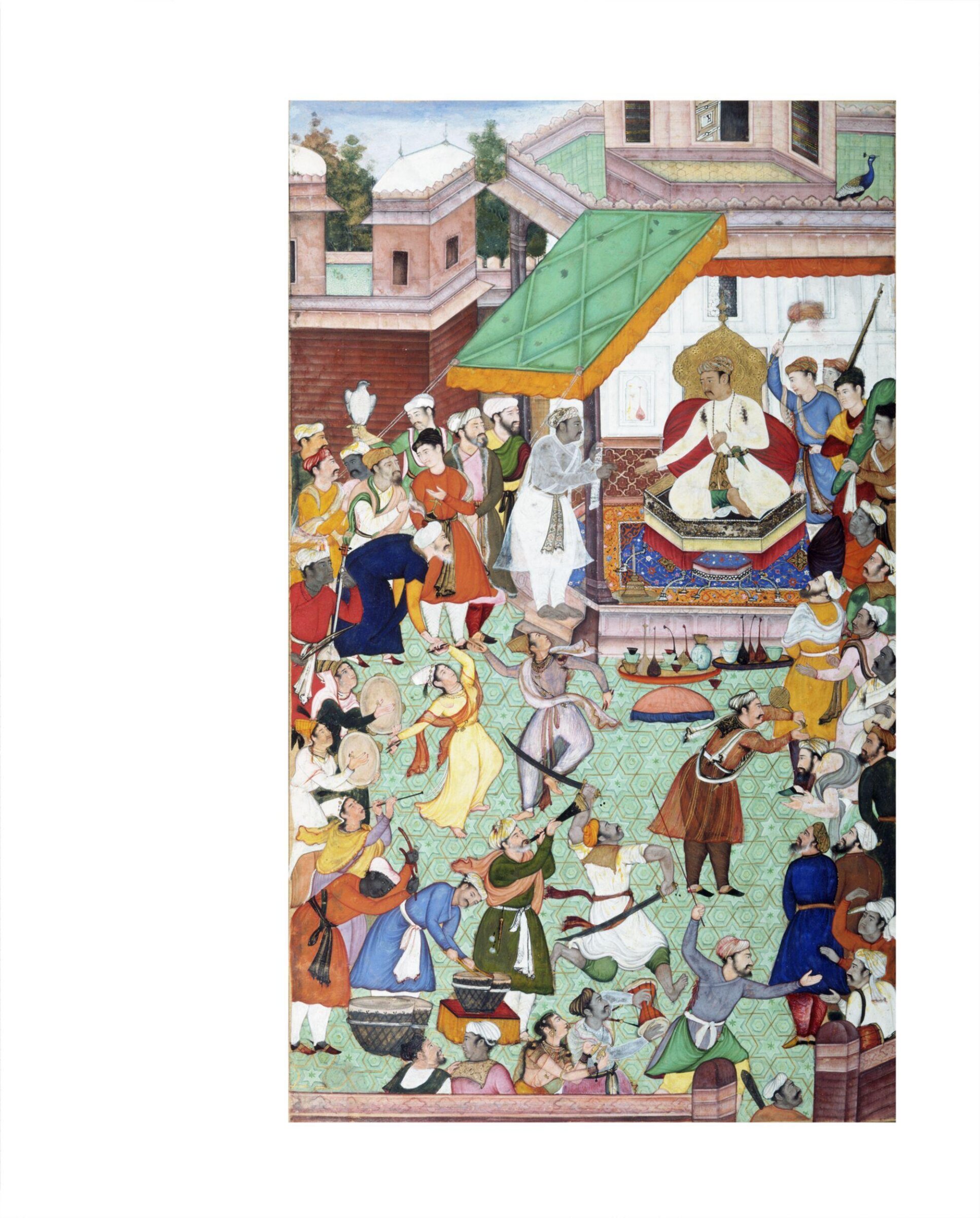
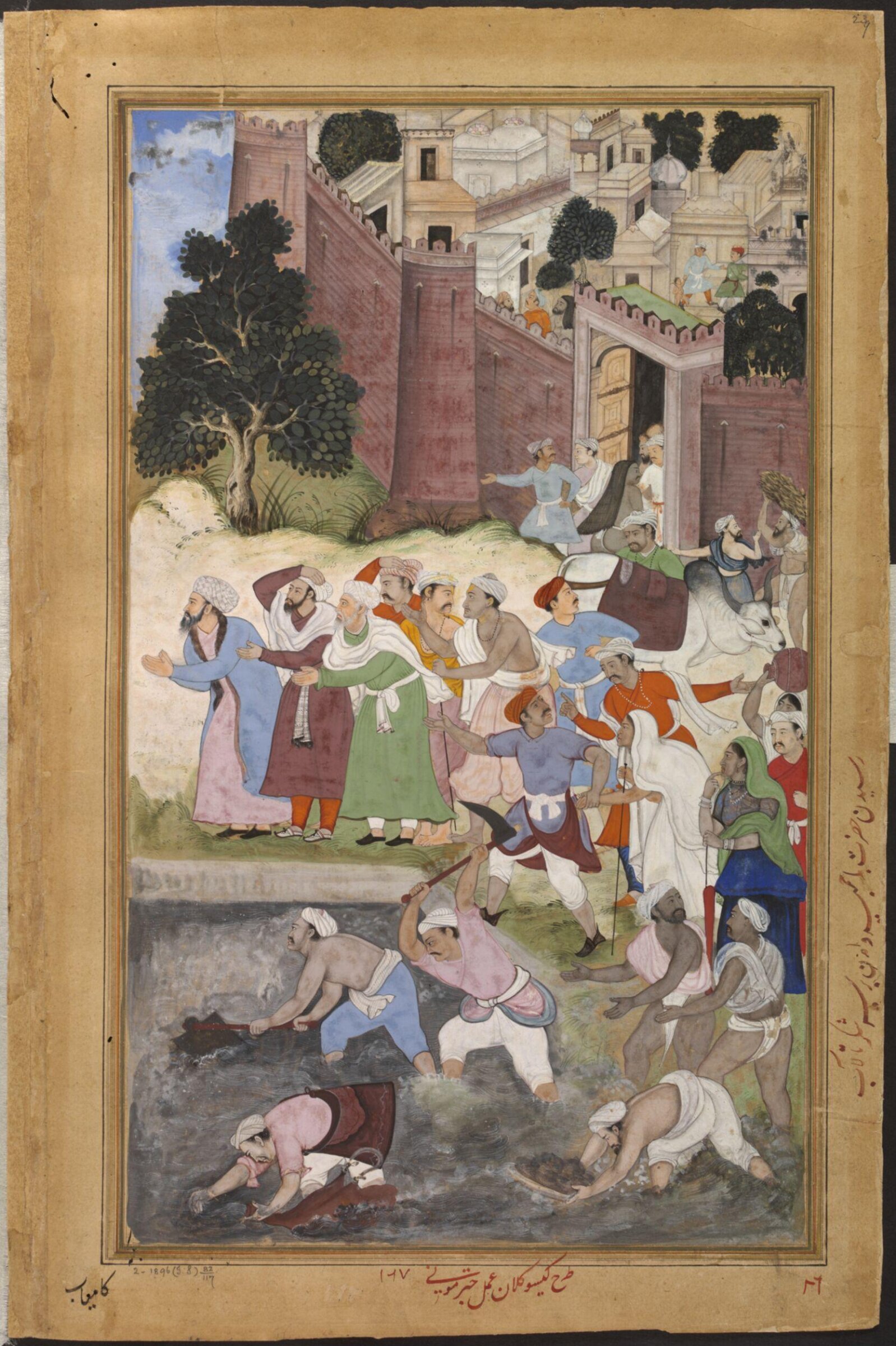
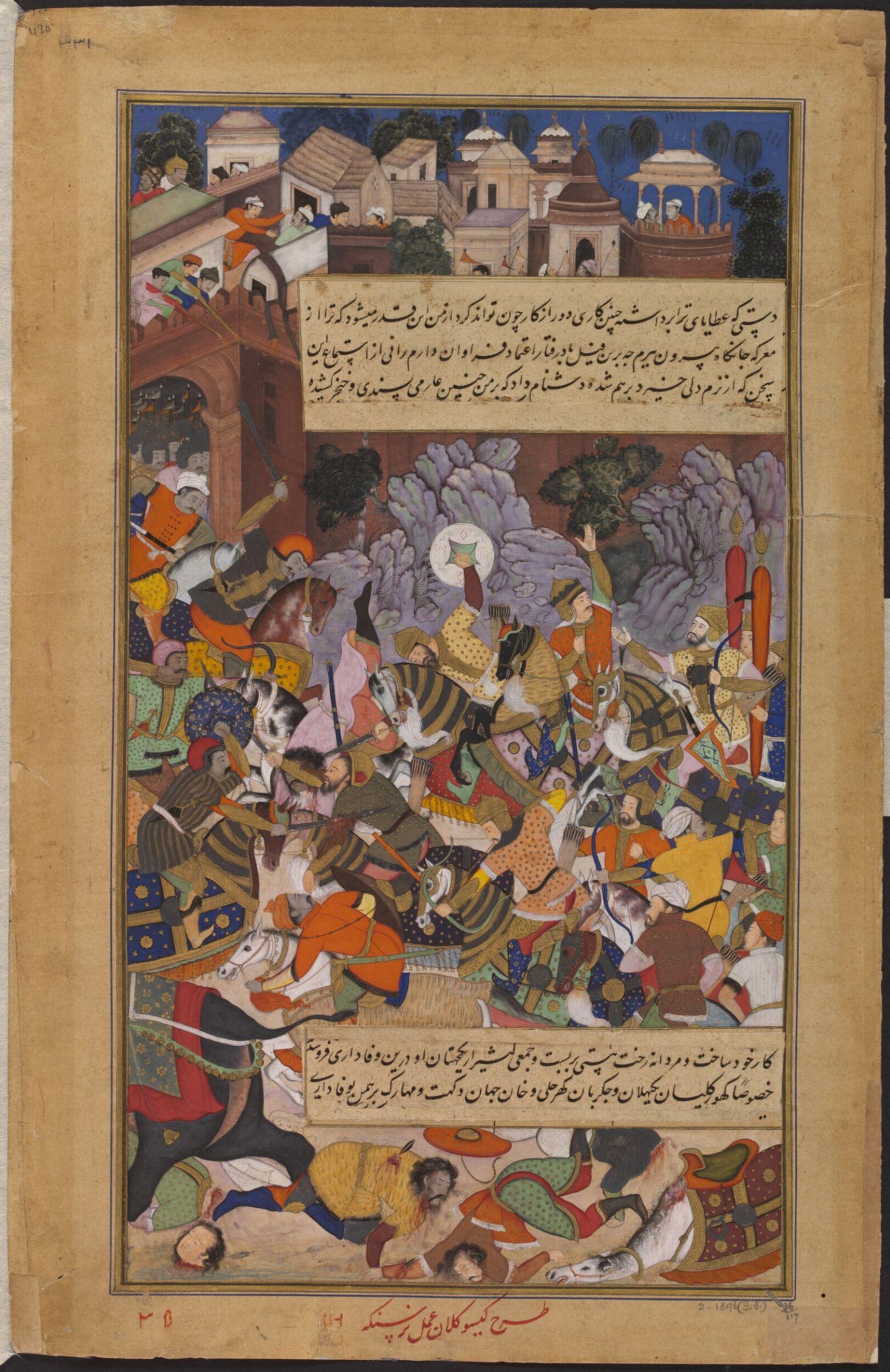
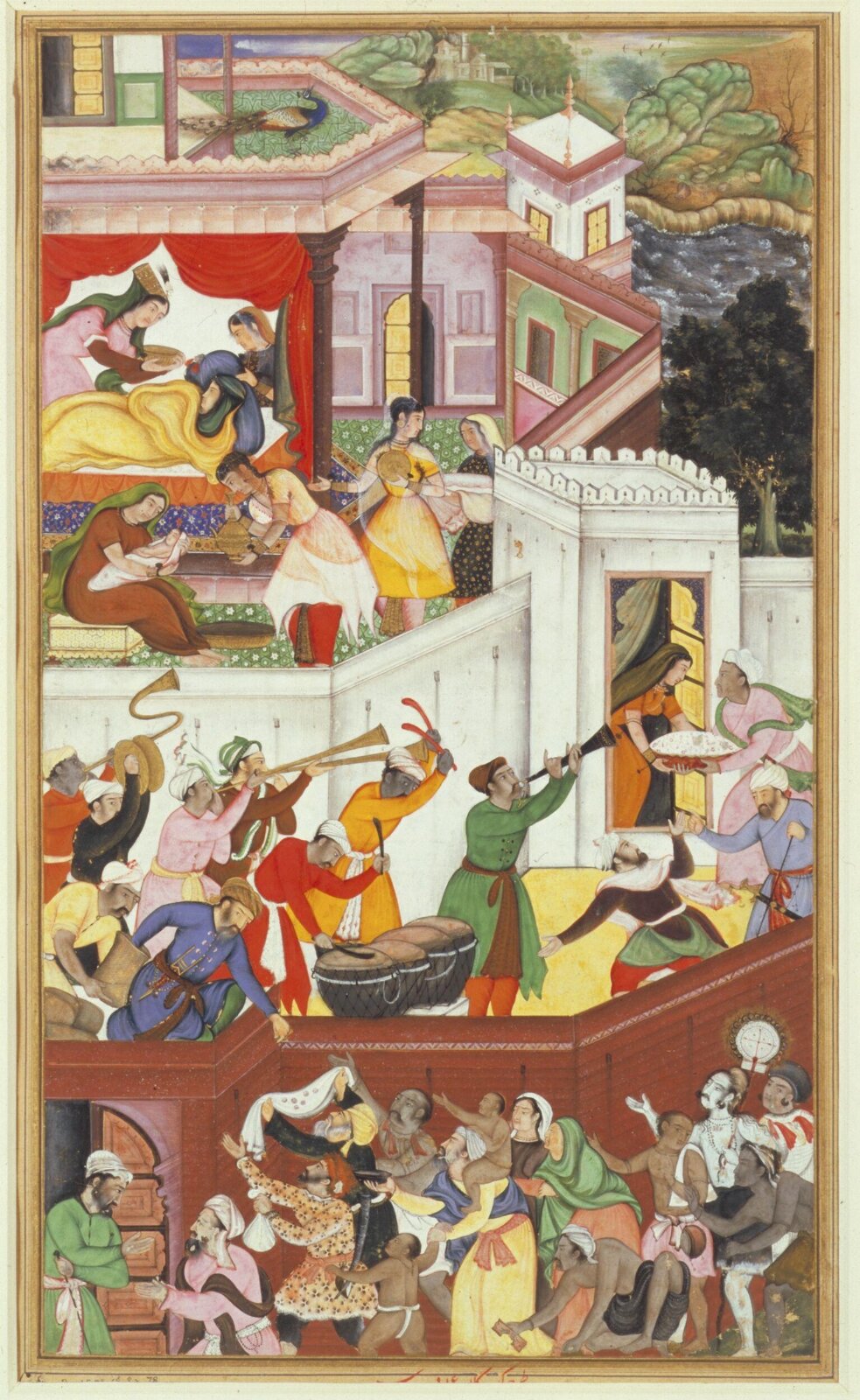
This illustration from the Akbarnama depicts the rejoicing upon the birth of Prince Salim.
In 1564, one of Akbar’s wives had given birth to twin sons, but they both died after a month and the emperor began to despair of producing a male heir. He visited the Sufi Shaikh Salim Chishti at Sikri, who assured him that his prayers would be answered. Early in 1569, a Hindu wife of Akbar was found to be pregnant. She moved to Sikri and gave birth there to a son, named Salim after the shaikh. When Akbar heard the news in Agra, he decided to follow an ancient custom of Hindustan and delay seeing such a long-awaited baby. The painting provides a glimpse of the concealed world of the zanana, and the joyous tumult greeting a royal birth. Shortly afterwards, Akbar ordered a new city to be built at Sikri which became known as Fatehpur, or City of Victory.
Seguir leyendo
[Akbarnama, English translation: Beveridge, vol. II, pp. 502-8]
at the imperial city of Fatehpur Sikri. The image shows an aerial view of the zenana and birth chamber. While musicians perform in the central courtyard, alms are distributed to beggars outside the wall.
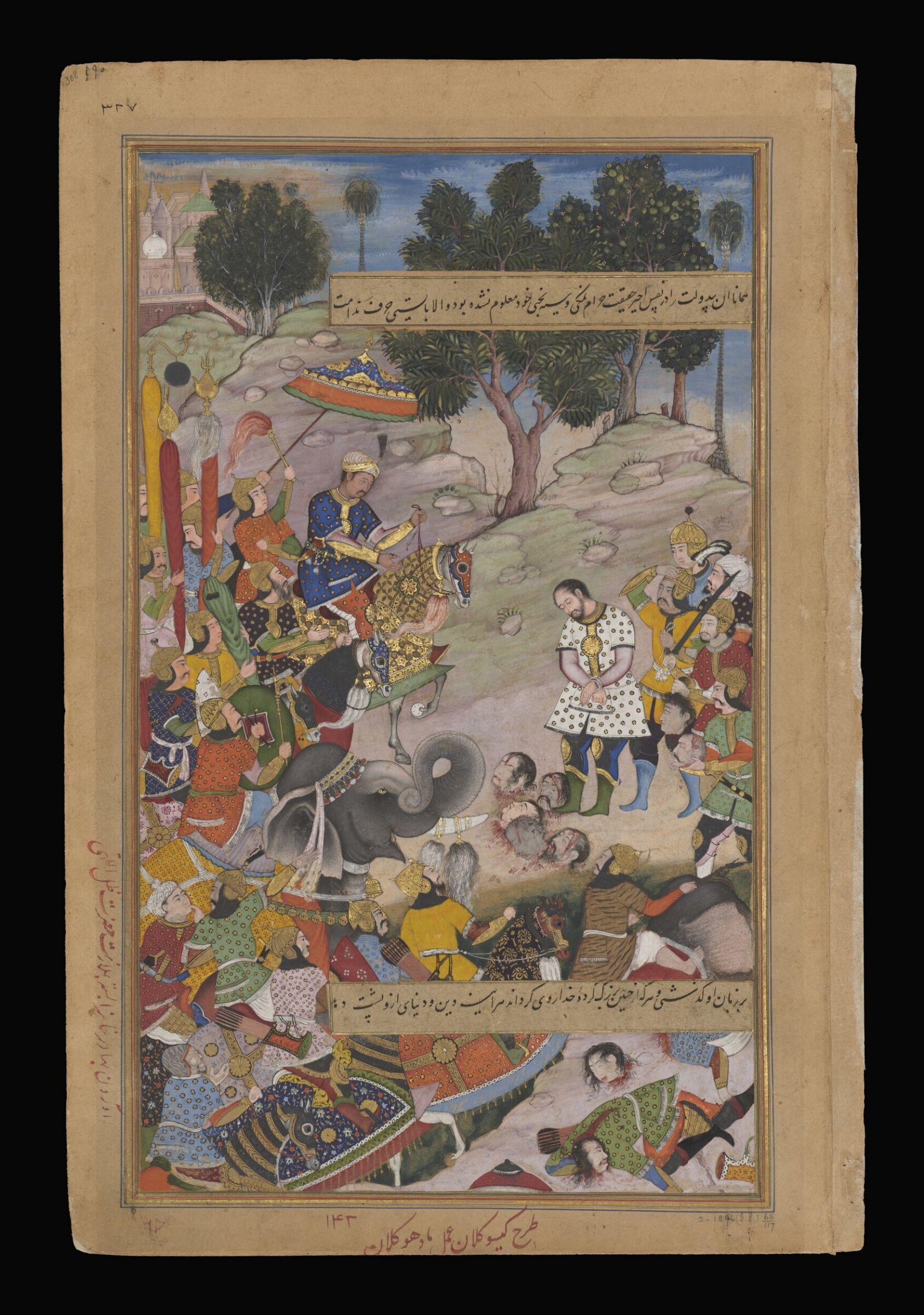
The Akbarnama was commissioned by the emperor Akbar as the official chronicle of his reign. It was written by his court historian and biographer Abu'l Fazl between 1590 and 1596 and is thought to have been illustrated between about 1592 and 1594 by at least 49 different artists from Akbar's studio. After Akbar's death in 1605, the manuscript remained in the library of his son, Jahangir (r. 1605-1627) and later Shah Jahan (r.1628-1658). The Victoria and Albert Museum purchased it in 1896 from Mrs Frances Clarke, the widow of Major-General John Clarke, who bought it in India while serving as Commissioner of Oudh between 1858 and 1862.
Museo de Victoria y Alberto
Ficha
- Número de inventario
- IS.2:78-1896
Lo que muestra
En el catálogo
Fuentes
- Museo de Victoria y Alberto
- Imagen: Museo de Victoria y Alberto — © Victoria and Albert Museum, London