 Camille CorotFrancia, 1796–1875
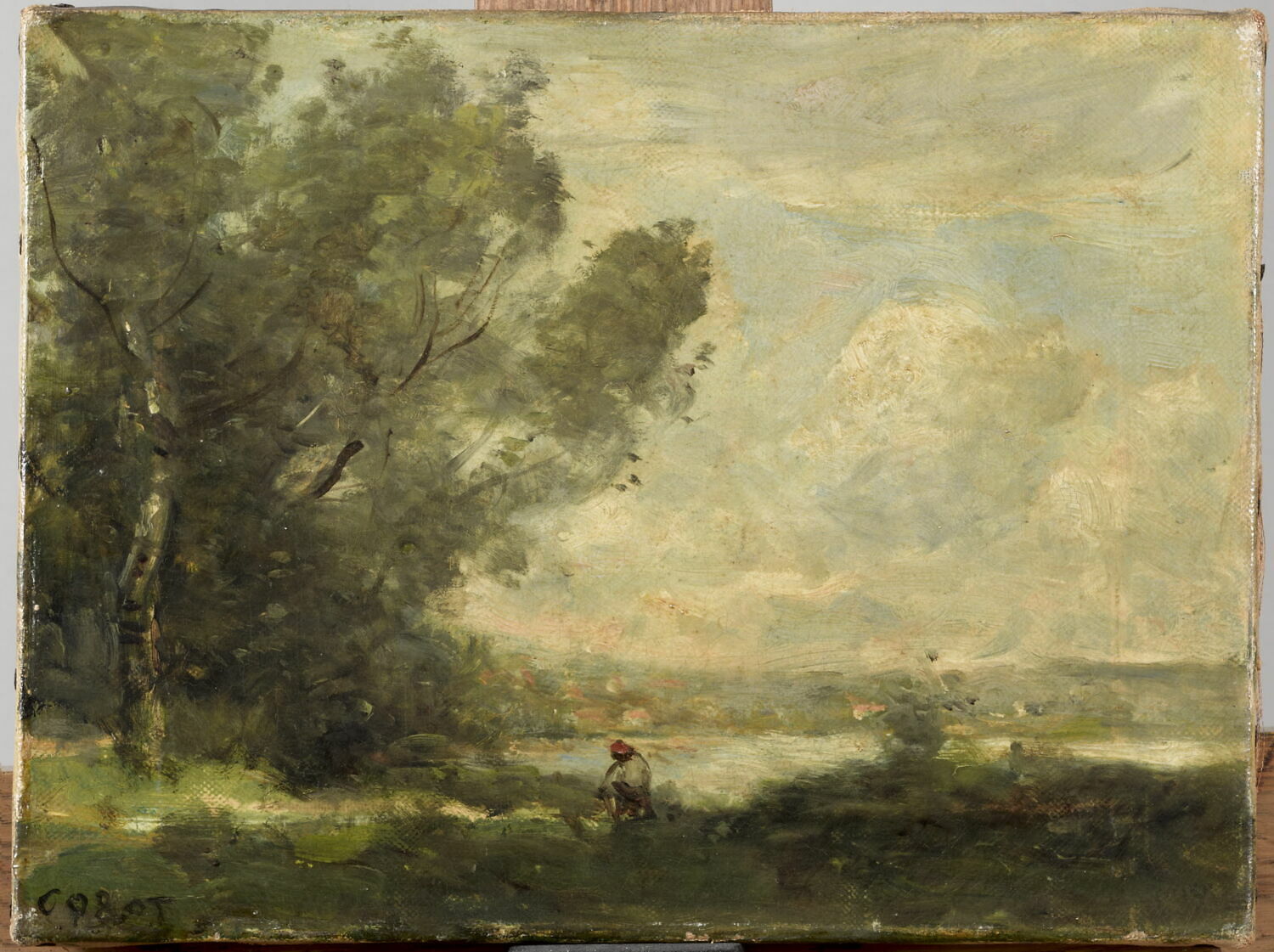
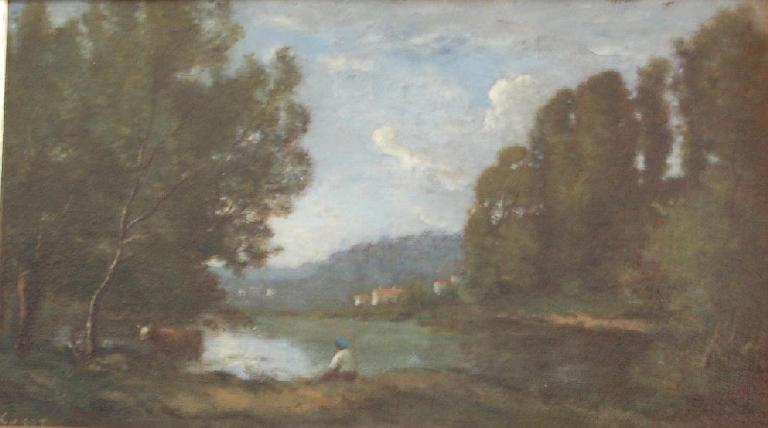
Paysage
¿Puedo verla?
Se desconoce
¿Dónde está «Paysage» hoy? Colección: Musée d'Art moderne Richard-Anacréon, Granville. Se desconoce.
Granville, Francia
Se conoce el propietario; no se sabe si hoy está expuesta.
- En este estado desde
- Fuente
- El museo
Ficha
- Número de inventario
- Dépôt 1987
Lo que muestra
En el catálogo
Fuentes
- Musée d'Art moderne Richard-Anacréon
- Imagen: Musée d'Art moderne Richard-Anacréon — © Granville, musée Richard Anacréon, © Direction des musées de France, 2006; Ministère de la Culture (France), base Joconde
En la vida de Camille Corot
La vida entera1807–1812 · Formación
Lycée Pierre-Corneille
1822
His father consents to an artist's career
At 26 Corot won his father's consent to adopt the profession of art; he later recalled telling his father that business and he were simply incompatible and that he was getting a divorce.
1825–1828
First trip to Italy
With his parents' support Corot went to Italy to study the Renaissance masters and draw the crumbling monuments of antiquity; his parents' condition was that he paint a self-portrait for them, his first. In three years he completed over 200 drawings and 150 paintings, worked and travelled with several young French painters, and spent most of his time around Rome and in the Italian countryside.
1827
Salon debut: “View at Narni”
In 1827 Corot sent his first painting to the Salon, “View at Narni”. He transformed a quick study of a ruined Roman aqueduct in bright sun into an idyllic pastoral setting with giant shade trees and green lawns, a conversion meant to appeal to the Neoclassical jurors.
1835
A sensation at the Salon: “Hagar in the Wilderness”
In 1835 Corot created a sensation at the Salon with his biblical painting “Hagar in the Wilderness”, showing Hagar and the child Ishmael dying of thirst until saved by an angel; his bold, fresh statement of the Neoclassical ideal succeeded with the critics. The biblical and mythological subjects that followed did not succeed as well, as the critics found him wanting in comparison with Poussin.
22 de febrero de 1875
Died