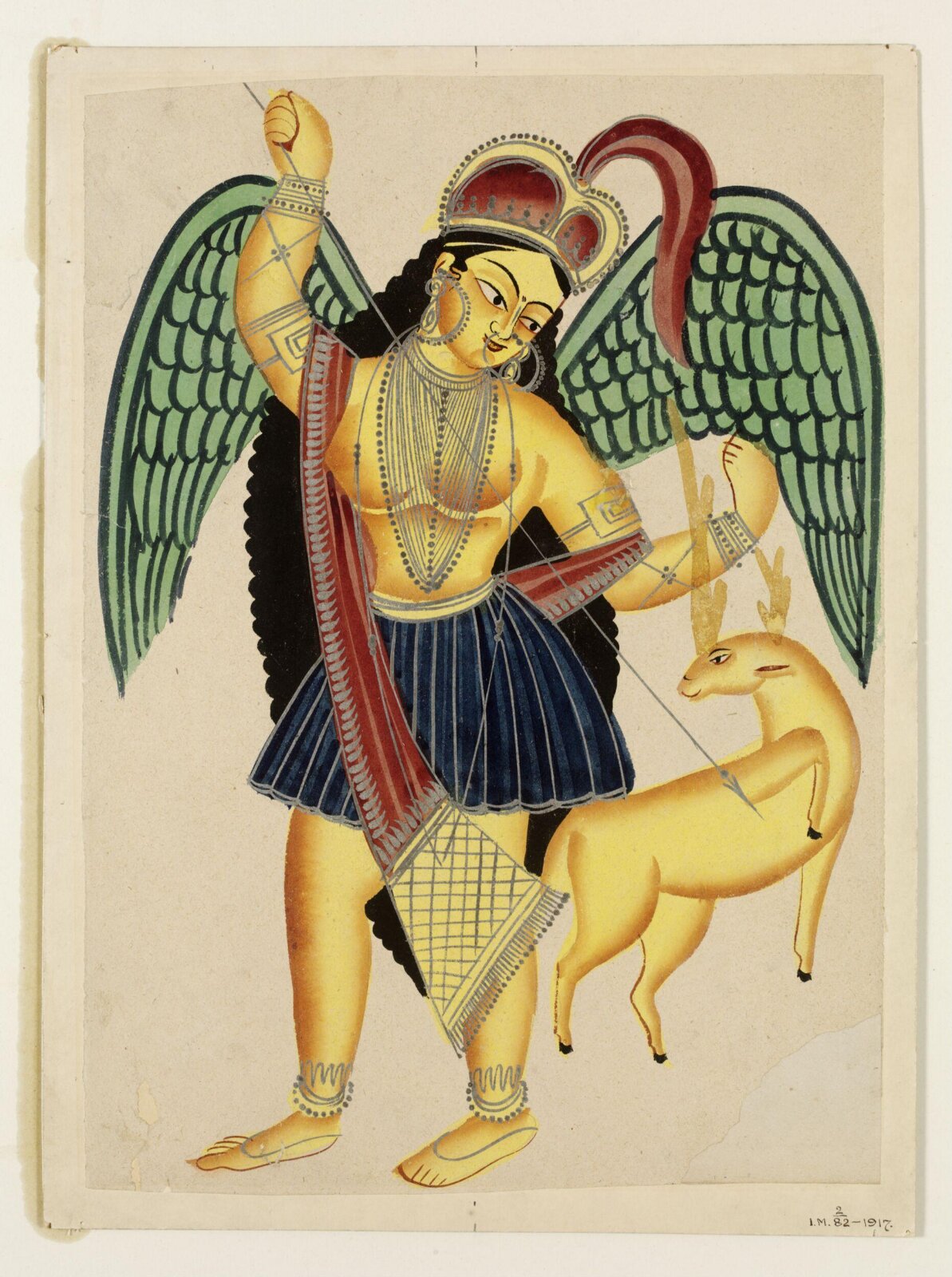
Painting
¿Se puede contemplar?
Por ahora no recibe

Museo de Victoria y Alberto
Londres, Reino Unido
Pertenece a la colección, pero ahora mismo no está expuesta.
- Comprobado
- hace 8 días
- En este estado desde
- 25 sept 2026
- Fuente
- Los datos de colección del propio museo
About the painting
The temple of Kali had been built at Kalighat in the seventeenth century at the location where Sati's toes were supposed to have fallen, a 'Pithasthan', on the east bank of the 'Adi-Ganga', an original course of the Ganges. The present temple was completed in 1809 and rapidly became a place of pilgrimage. It became customary for pilgrims to visit the Kalighat temple throughout the year. Its location, south of Calcutta, encouraged a small settlement to grow up. Eventually a brisk trade developed at Kalighat in pilgrims' souvenirs such as wooden dolls and terracotta figures. In the early 19th century 'patuas' (folk painters) were drawn from the surrounding areas into the city. They situated themselves around the temple producing souvenirs of watercolour 'patas' (pictures) depicting mainly religious and mythological subjects.
Read on
Over time the local style developed and the subject matter grew to include social satire and study in natural history. As a popular art form, the Kalighat artists are recognised for their brilliant colours, simplified images and bold brushstrokes. This style of painting fell into decline in the 1930s, however a few artists have revived the tradition and continue to produce paintings reflecting contemporary themes.
Museo de Victoria y Alberto
Ficha
- Número de inventario
- IM.2:82-1917
What it shows
En el catálogo
Fuentes
- Museo de Victoria y Alberto: the museum's own open data · obtenido hace 8 días
- Imagen: Museo de Victoria y Alberto — © Victoria and Albert Museum, London