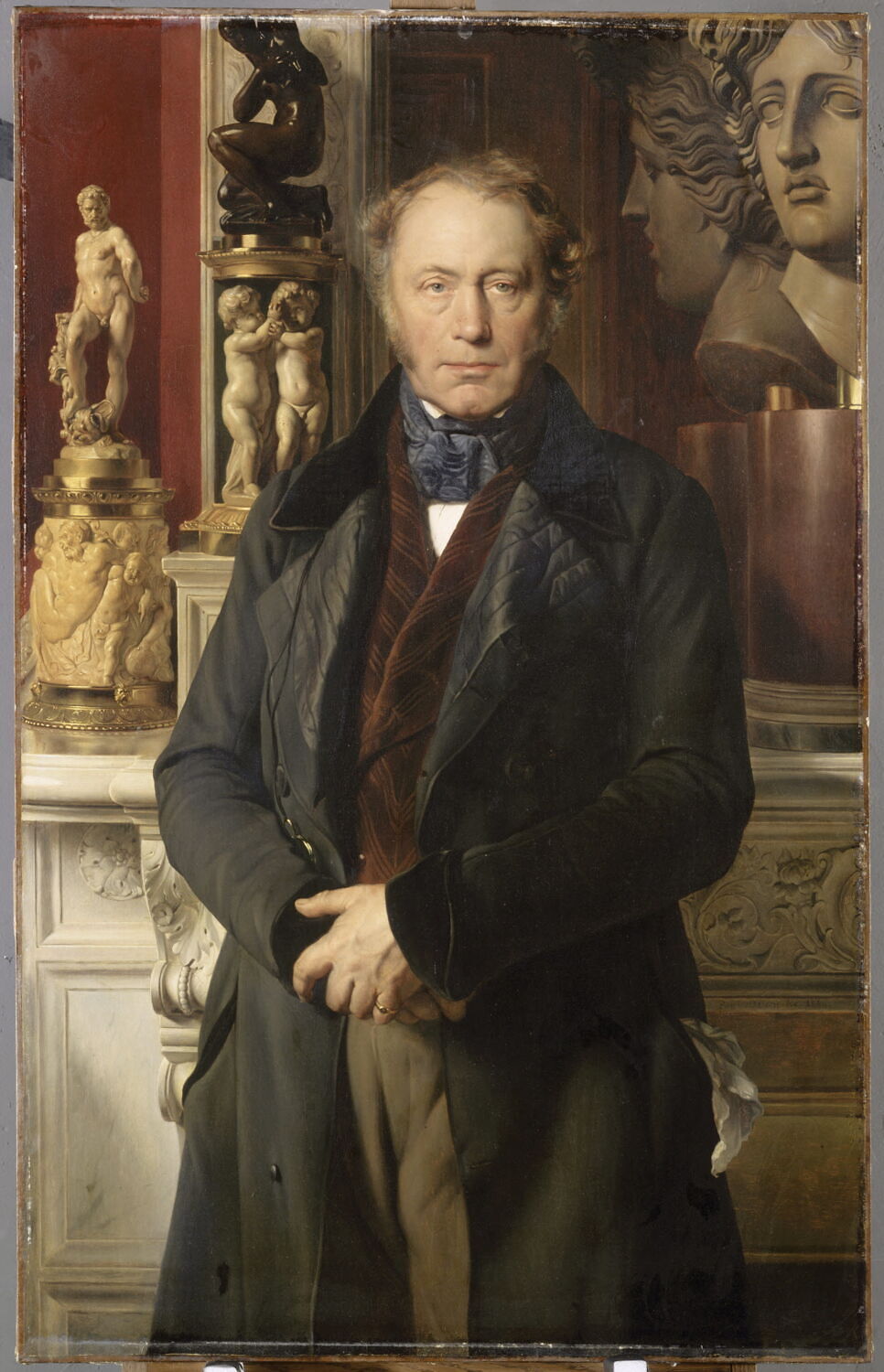
 Paul DelarocheFrancia, 1797–1856
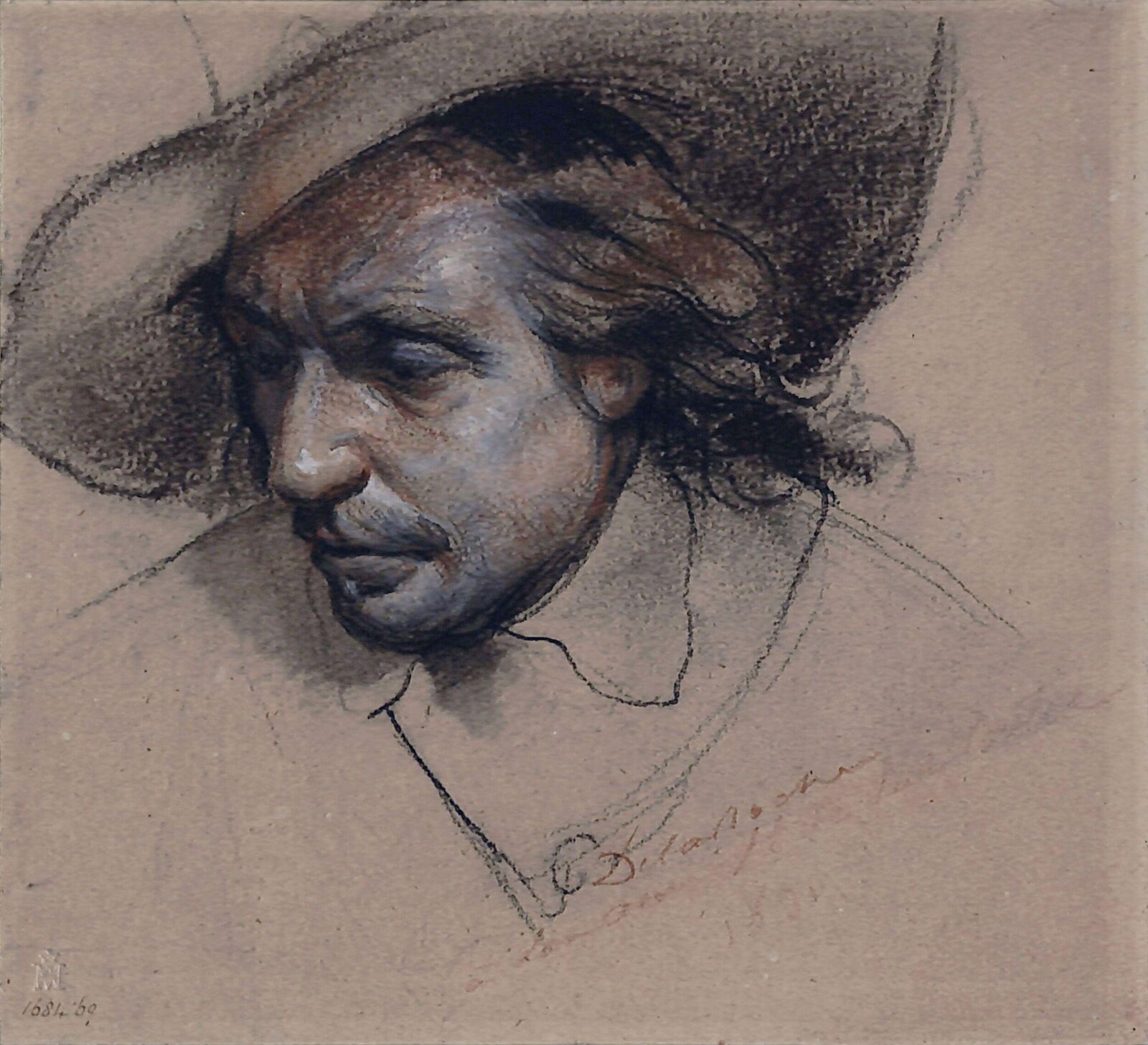
Oliver Cromwell
¿Se puede contemplar?
Por ahora no recibe

Londres, Reino Unido
Pertenece a la colección, pero ahora mismo no está expuesta.
- Comprobado
- En este estado desde
- Fuente
- El museo
Ficha
- Número de inventario
- 1684-1869
Lo que muestra
En el catálogo
Fuentes
- Museo de Victoria y Alberto
- Imagen: Museo de Victoria y Alberto — © Victoria and Albert Museum, London
Mientras tanto, en la vida de Paul Delaroche
La vida entera1832
Elected to the Académie des Beaux-Arts
Already known as a history painter, he is elected to the Académie des Beaux-Arts of the Institut de France in the painting section, taking seat no. 13.
1833
Becomes a professor at the École des Beaux-Arts
A year after his election to the Académie, he takes up a professorship at the school where he himself once studied. His pupils include Jean-Léon Gérôme, Jean-François Millet and Thomas Couture.
1835
Marries Louise Vernet
Marries, in Italy, Louise, daughter of the battle painter Horace Vernet, director of the French Academy in Rome.
after 1837
Stops exhibiting at the Salons
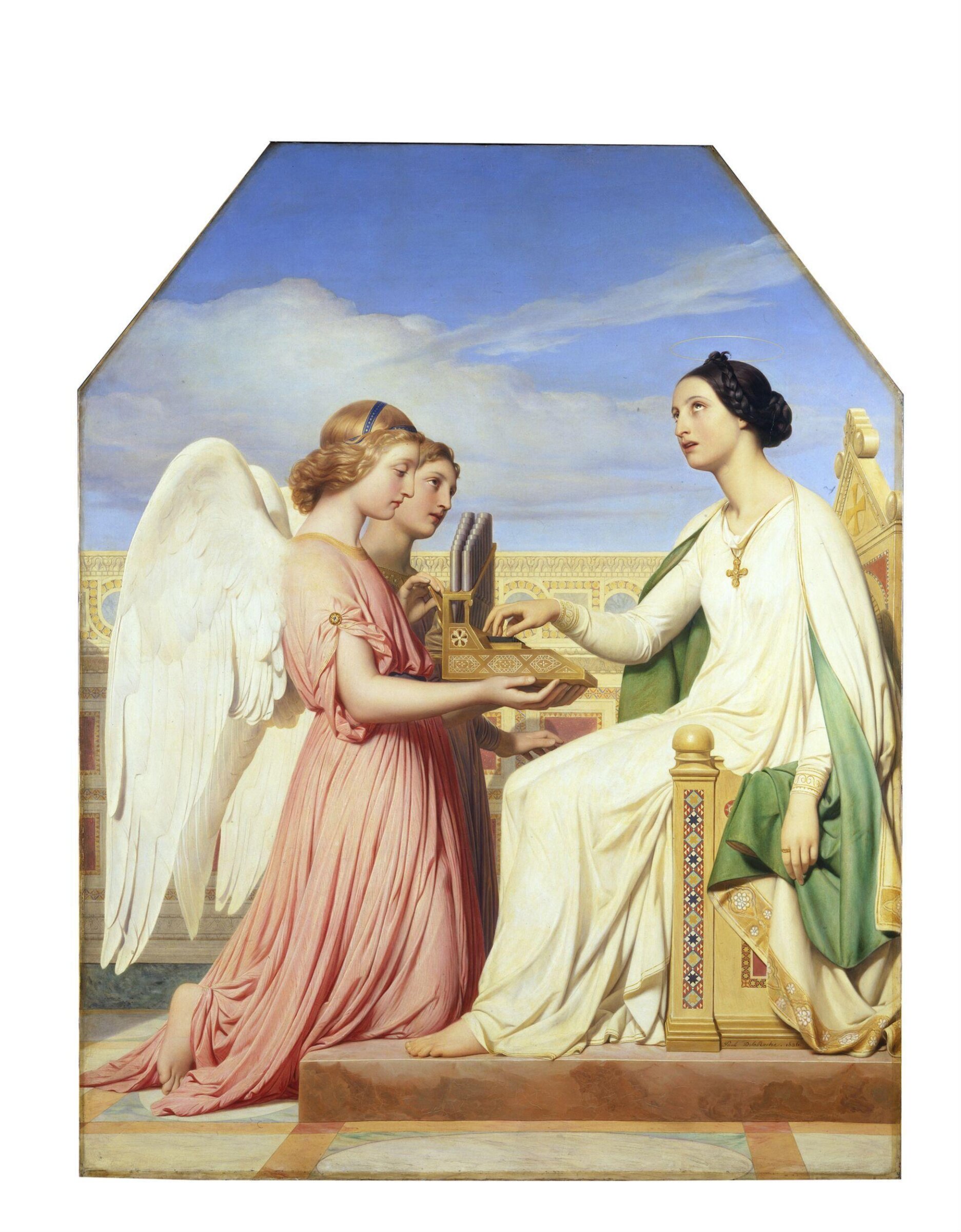
After “St. Cecilia” he stops showing his work altogether: the cool reception of the painting, together with his rejection of Davidian values in French society and government, leads to a self-imposed exile from the state-sponsored Salons.
1837
Receives the commission for “The Hemicycle”
The École’s architect, Félix Duban, entrusts him with a monumental mural for the school’s ceremonial hall, later known as the Hémicycle. Four of his pupils assist him.
1845
Death of his wife Louise
Louise dies at thirty-one; it is said that Delaroche never recovered from the shock. After the loss he produces a series of small, elaborate pictures of the Passion, centred on its human drama: in one, Saint John escorts Mary home after her son’s death.