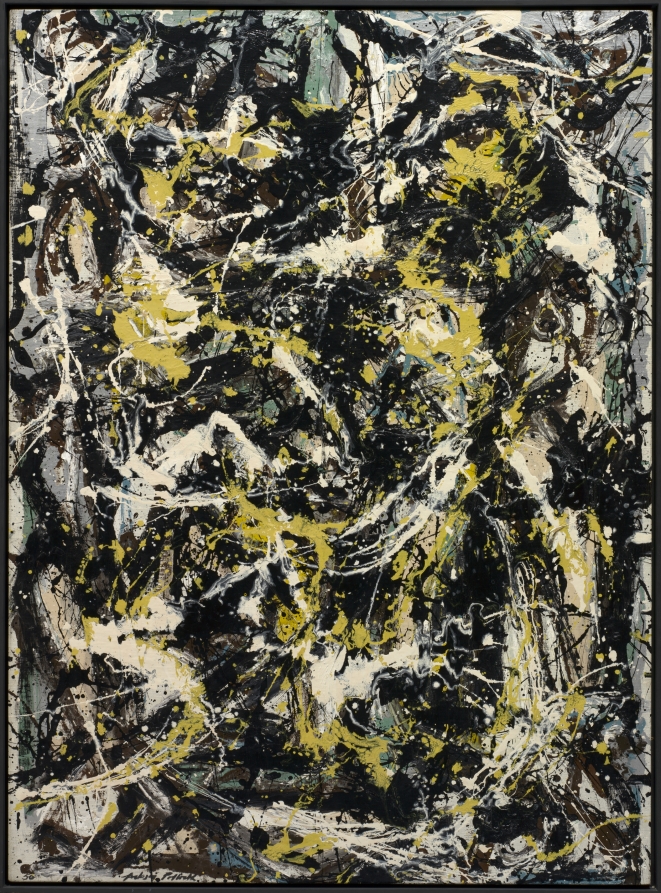
 Jackson PollockEstados Unidos, 1912–1956
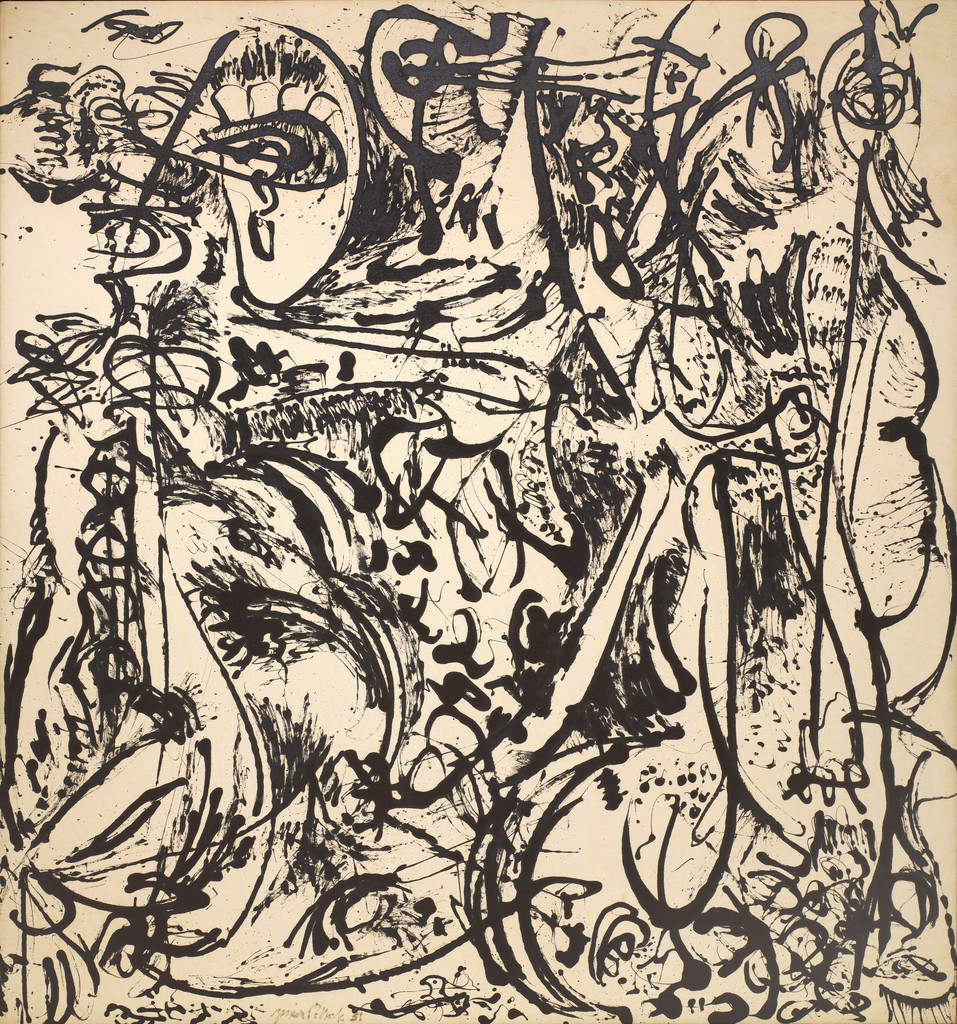
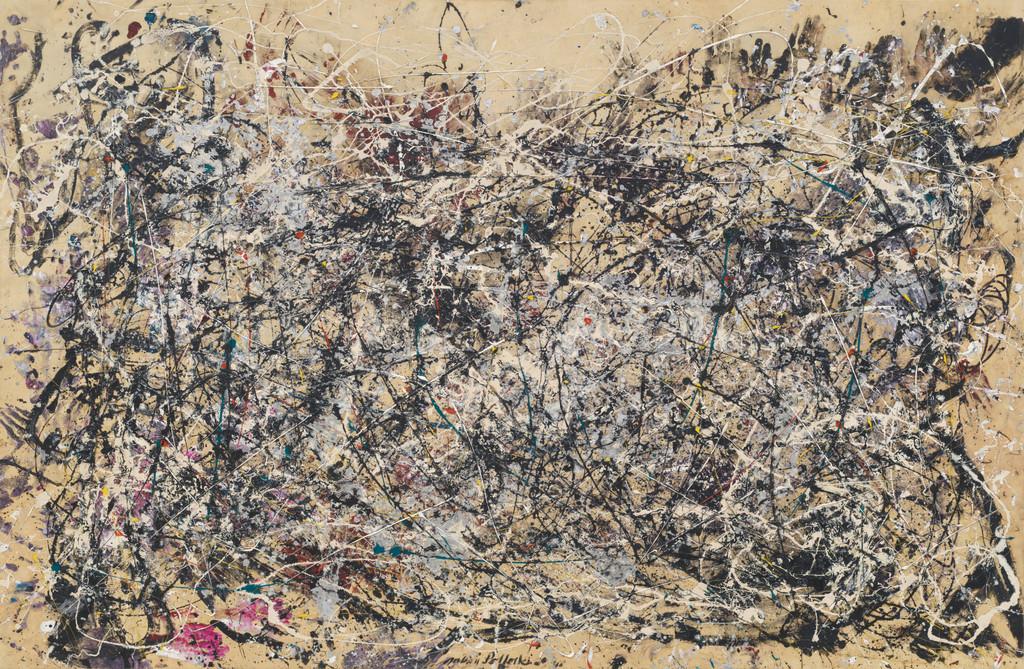
Number 1A, 1948
¿Se puede contemplar?
Sí, recibe visitas

Expuesta al público. Quién lo avala figura más abajo.
- Comprobado
- hace 13 días
- Fuente
- Los datos de colección del propio museo
Ficha
- Número de inventario
- 77.1950
Fuentes
- MoMA: the museum's own open data · obtenido hace 13 días
- Imagen: MoMA — © the artist or rights holder
Mientras tanto, en la vida de Jackson Pollock
La vida entera1946
Sees the work of Janet Sobel
In 1946 Pollock and the critic Clement Greenberg saw Janet Sobel's paintings at Guggenheim's gallery Art of This Century. Greenberg later wrote that Pollock admitted these pictures had made an impression on him.
1947
The start of “drip painting”
In 1947 Pollock began working on huge canvases laid out on the floor, splashing paint from brushes without touching the surface. He himself preferred the term “pouring technique”.
1948
A sensational show at Betty Parsons
Pollock's 1948 exhibition at the Betty Parsons Gallery was a sensation and a financial success. He was then able to get a larger studio.
8 August 1949
Life asks if he is the greatest living US painter
On 8 August 1949 Life published an article on Pollock under a headline asking whether he was the greatest living painter in the United States.
1950
Hans Namuth photographs and films Pollock at work
In 1950 the young photographer Hans Namuth photographed and filmed Pollock at work. Pollock had promised to start a new painting for the session but said it was already finished — then, as if realising it was not, he flung paint onto the canvas for about half an hour in an almost dancelike movement.
1950
“No. 12, 1949” at the Venice Biennale
Pollock's “No. 12, 1949”, a medium-sized drip painting, was shown in the United States Pavilion at the 1950 Venice Biennale.