Thomas ColeEstados Unidos, 1801–1848
New England Scenery
¿Se puede contemplar?
Por ahora no recibe

Instituto de Arte de Chicago
Chicago, Estados Unidos
Pertenece a la colección, pero ahora mismo no está expuesta.
- Comprobado
- En este estado desde
- Fuente
- El museo
Sobre el cuadro
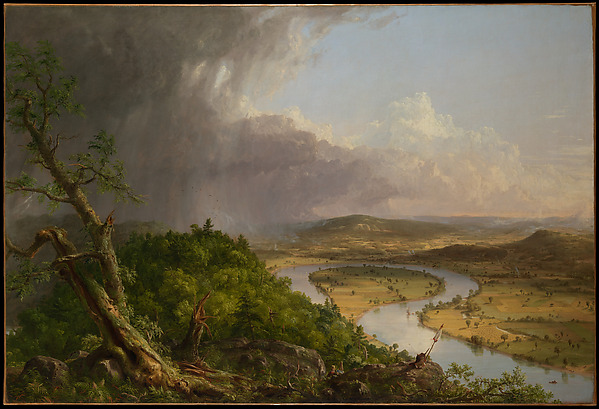
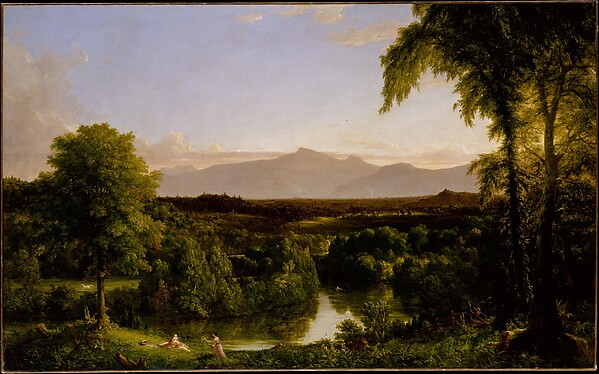
Although Thomas Cole is best known for his scenes of the American wilderness, he also rendered pastoral vistas of cultivated landscapes. This work depicts New Hampshire’s White Mountains, an area that Cole traveled to and painted on numerous occasions, as did other 19th-century landscape artists. The prominent church spire at middle distance emphasizes the role of religion in agrarian society and the glow of the low sun expresses a sense of optimism for a rural America. The painting conveys an ideal that was increasingly far from reality, however, as the United States was then being transformed by rapid urbanization and the Industrial Revolution.
Instituto de Arte de ChicagoCC BY 4.0
Ficha
- Número de inventario
- 1900.558
Lo que muestra
En el catálogo
Fuentes
- Instituto de Arte de Chicago
- Imagen: Instituto de Arte de Chicago — CC0
Mientras tanto, en la vida de Thomas Cole
La vida entera1825–1848
89 paintings at the National Academy of Design
From the founding of the National Academy of Design in 1825 until Cole's death, 89 of his paintings were shown at its exhibitions.
1838
Third place in the Ohio Statehouse competition
Cole wrote poetry and dabbled in architecture: he took third place in the competition to design the Ohio Statehouse in Columbus, and many contend that the finished building, a composite of the three winning entries, closely resembles his design.
1841–1842
Second journey: the Grand Tour and Etna
Cole was in Europe again, mainly in England and Italy, and in 1842 set out on the Grand Tour to study the Old Masters. Mount Etna struck him most: he made several sketches and at least six paintings of it, the best known being “A View of Mount Etna from Taormina”.