ART WIKI32.963 en sala
MapaColecciónArtistasMuseosExposicionesRevista
Acceder

ART WIKI

Dónde cuelga la obra maestra y cuándo le dejan pasar.

Colecciones: Galería Nacional de Arte, Galería Nacional de Dinamarca, Galería Nacional de Retratos, Galería Tretiakov, Harvard Art Museums, Instituto de Arte de Chicago, Instituto de Artes de Mineápolis, MoMA, Museo de Arte de Cleveland, Museo de Victoria y Alberto, Museo del Hermitage, Museo del Louvre, Museo Estatal Ruso, Museo Hirshhorn y Jardín de Esculturas, Museo J. Paul Getty, Museo Metropolitano de Arte, Museo Pushkin, Museo Smithsoniano de Arte Americano, Museo Whitney de Arte Estadounidense, National Museum of Asian Art, Rijksmuseum, Villa Getty, Catálogo Estatal del Fondo Museístico de Rusia (274 museos), Europeana (19 museos), Wikidata (6 museos), Paris Musées (12 museos) y Joconde, la base de museos del Ministerio de Cultura de Francia (495 museos). Las imágenes pertenecen a sus titulares de derechos.

Secciones

  • Mapa
  • Búsqueda
  • Colección
  • Obras maestras
  • Expuestas ahora
  • Artistas

Más

  • Museos y galerías
  • Exposiciones
  • Revista
  • De dónde salen los datos
  • Privacidad y cookies
InicioMapaCatálogo
  1. Colección/
  2. Rijksmuseum/
  3. Maria
Maria, Elisabetta Sirani, 1648 - 1665
Elisabetta Sirani, retratoElisabetta SiraniItalia, 1638–1665

Maria

1648 - 1665 · Print

¿Se puede contemplar?

Se desconoce

Rijksmuseum

Amsterdam, Países Bajos

Se conoce el propietario; no se sabe si hoy está expuesta.

Fuente
El museo
En el mapaPágina del museo

Sobre la obra

En palabras del museo — en neerlandés

Buste van Maria, haar handen gekruist op haar borst.

Rijksmuseum

Ficha

1648 - 1665
16381665
Número de inventario
RP-P-OB-38.752

Lo que muestra

Mary (without the Christ-child)

En el catálogo

EstampasBarrocoSiglo XVII

Fuentes

  • Rijksmuseum
  • Imagen: Rijksmuseum — public domain

Mientras tanto, en la vida de Elisabetta Sirani

La vida entera
  1. c. 1650

    Begins to paint at the age of twelve

    The daughter of the painter and art dealer Giovanni Andrea Sirani, a favourite assistant of Guido Reni, she begins to paint. The art historian Carlo Cesare Malvasia, an acquaintance of the family, claimed that it was he who recognised her talent and persuaded her father to train her, although he was probably exaggerating his role.

  2. by 1654

    Takes over the family workshop

    By 1654 her father is incapacitated by gout and can no longer work, and Elisabetta takes over the running of the workshop: she becomes the family’s main breadwinner, living on teaching fees and portrait commissions. The studio thrives, helped by the progressive atmosphere of Bologna, where women artists were accepted and celebrated; her sisters Barbara and Anna Maria serve as her assistants.

  3. 28 February 1657

    First major public commission

    At nineteen she receives her first major public commission, from Daniele Granchi, prior of the Carthusian church of the Certosa di Bologna; she will go on to paint at least thirteen public altarpieces.

  4. 1660

    Opens a painting school for women

    She opens a school — the first school of painting for women in Europe outside a convent, open regardless of the women’s artistic and social connections; besides her younger sisters Barbara and Anna Maria she trains at least twelve young women, among them the wood-engraver Veronica Fontana, Caterina Pepoli, Maria Elena Panzacchi, Camelia Lanteri, Lucretia Forni, Veronica Franchi and Ginevra Cantofoli, who was portrayed as Sirani’s rival.

  5. August 1665

    Sudden illness and suspicions of poisoning

    She falls suddenly ill; only days earlier the maidservant Lucia Tolomelli had asked to leave the family’s service, and suspicion of poisoning fell on her, though the charges were soon withdrawn. The likely cause is peritonitis after a ruptured ulcer, perhaps brought on by the strain of providing for the whole household.

  6. 28 de agosto de 1665

    Died

Más obras de Elisabetta Sirani

Todas las obras
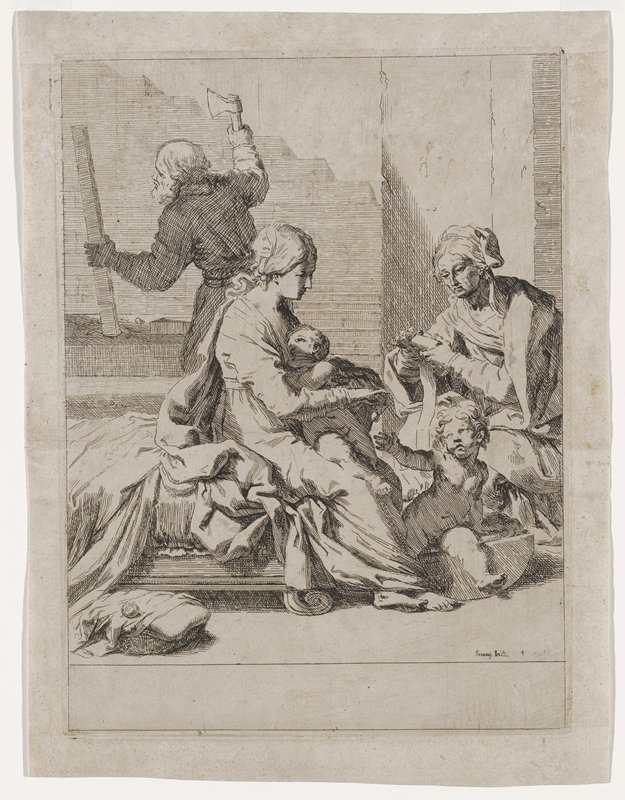
The Holy Family with St. Elizabeth and the Infant St. John the Baptist, Elisabetta Sirani, 1655–65

The Holy Family with St. Elizabeth and the Infant St. John the Baptist

1655–65 · Instituto de Artes de Mineápolis

Amur The Winner, Elisabetta Sirani, mid-17th century

Amur The Winner

mid-17th century · No expuesta · Museo del Hermitage

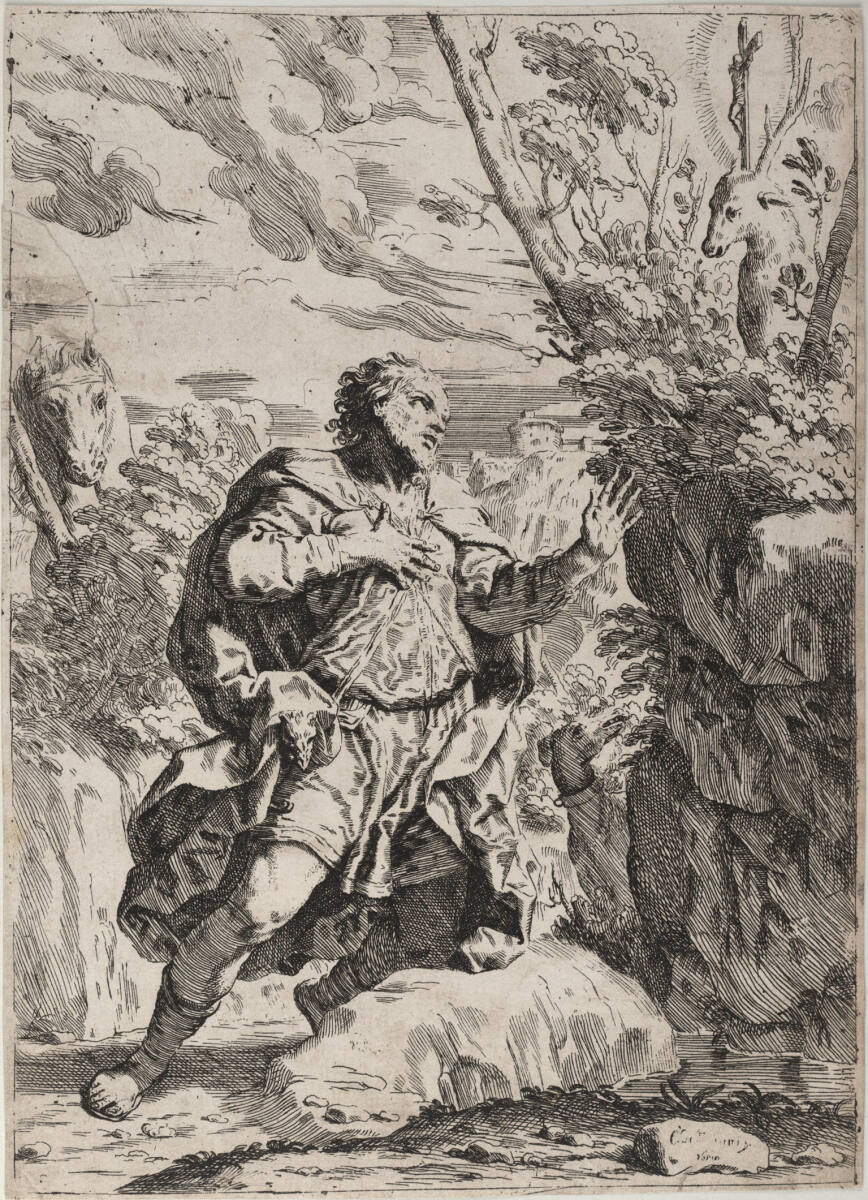
Heiliger Eustachius, Elisabetta Sirani

Heiliger Eustachius

Albertina

Ruhe auf der Flucht nach Ägypten, Elisabetta Sirani

Ruhe auf der Flucht nach Ägypten

Kupferstich-Kabinett

Omphale, Elisabetta Sirani

Omphale

Galería de Pinturas de los Maestros Antiguos

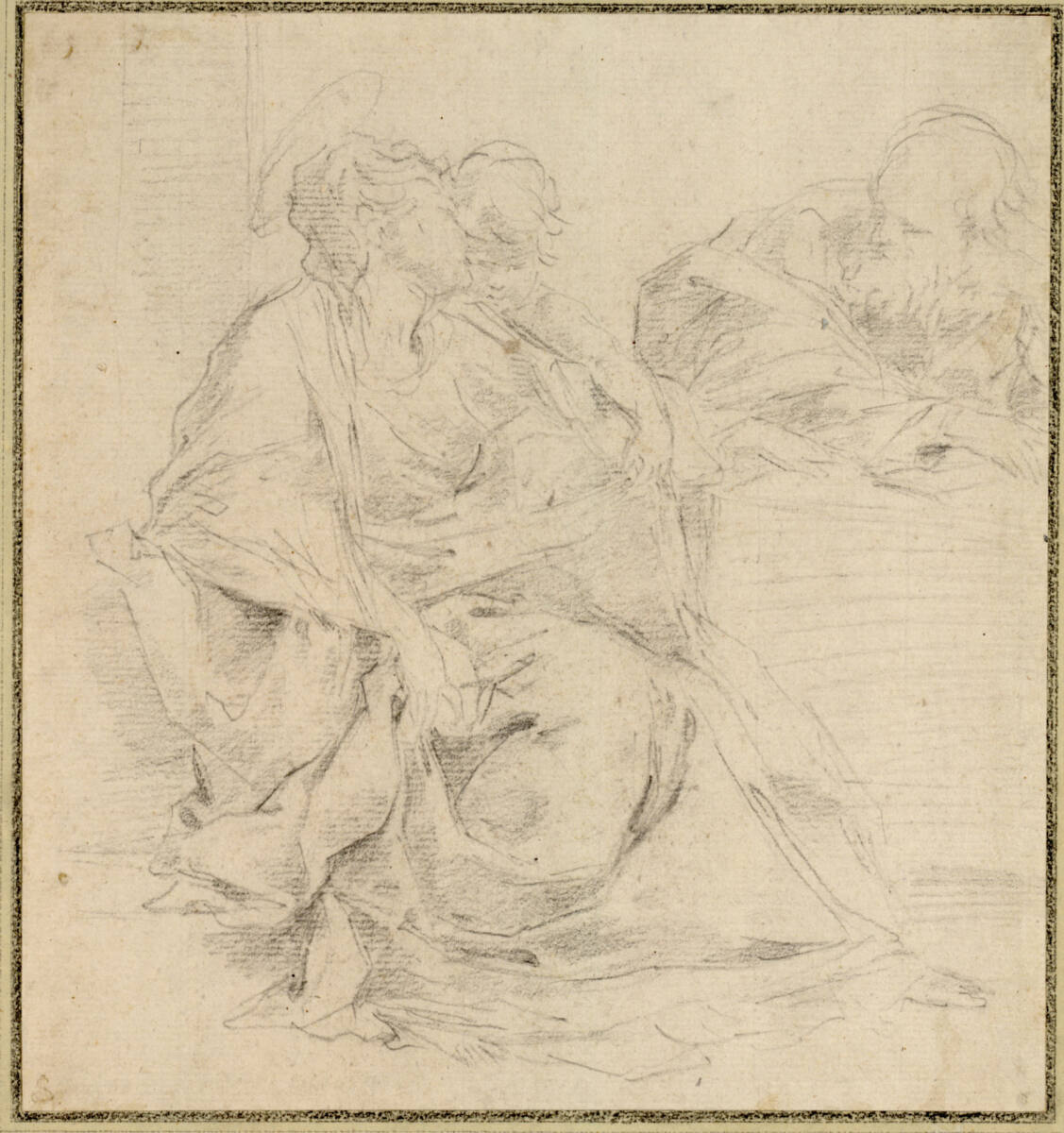
Die heilige Familie. Das Kind steht hinter der sitzenden Maria, die ihm den Kopf zuwendet; Joseph sitzt an einem Tisch, die Rechte auf einem offenen Buch ruhend, Elisabetta Sirani

Die heilige Familie. Das Kind steht hinter der sitzenden Maria, die ihm den Kopf zuwendet; Joseph sitzt an einem Tisch, die Rechte auf einem offenen Buch ruhend

Albertina

Ruhe auf der Flucht nach Ägypten, Elisabetta Sirani

Ruhe auf der Flucht nach Ägypten

Kupferstich-Kabinett

Die Heilige Familie mit Elisabeth und dem Johannesknaben, Elisabetta Sirani

Die Heilige Familie mit Elisabeth und dem Johannesknaben

Kupferstich-Kabinett

Bajo el mismo techo: Rijksmuseum

Página del museo
Self-portrait, Vincent van Gogh, 1887

Vincent van Gogh

Self-portrait, 1887

La Corniche near Monaco, Claude Monet, 1884

Claude Monet

La Corniche bij Monaco, 1884

De Nachtwacht, Rembrandt van Rijn, 1642

Rembrandt van Rijn

La ronda de noche, 1642

Portrait of a Woman, Probably Maria Trip (1619-1683), Rembrandt van Rijn, 1639

Rembrandt van Rijn

Retrato de Maria Trip, 1639

Still Life with Peacocks, Rembrandt van Rijn, c. 1639

Rembrandt van Rijn

Still Life with Peacocks, c. 1639

Landscape with a Stone Bridge, Rembrandt van Rijn, c. 1638

Rembrandt van Rijn

El puente de piedra, c. 1638

Man in Oriental Dress, Rembrandt van Rijn, 1635

Rembrandt van Rijn

Man in Oriental Dress, 1635

Portrait of Haesje Jacobsdr van Cleyburg, Rembrandt van Rijn, 1634

Rembrandt van Rijn

Portrait of Haesje Jacobsdr van Cleyburg, 1634