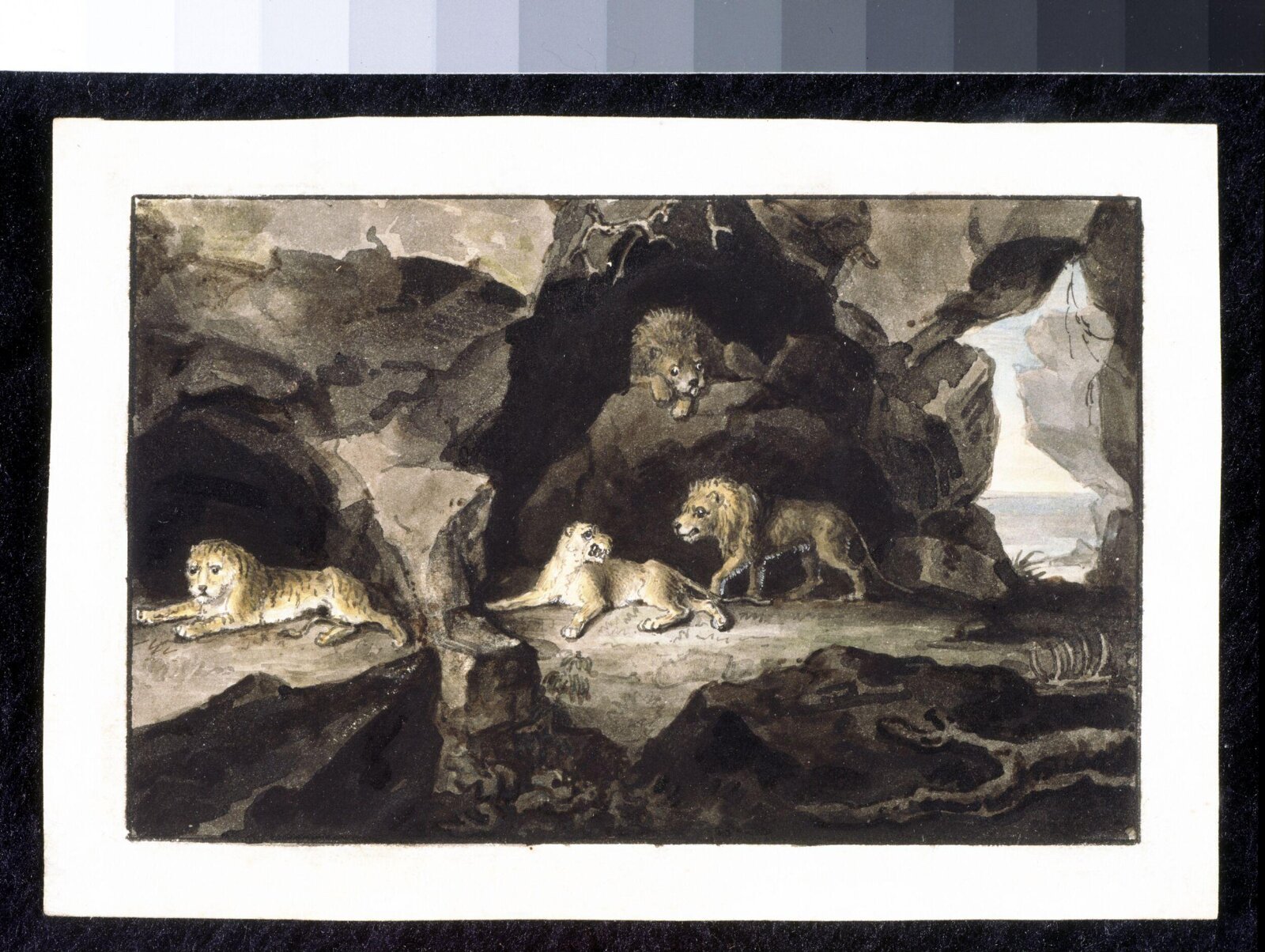
Lions and Lionesses
¿Se puede contemplar?
Sí, recibe visitas

Museo de Victoria y Alberto
Londres, Reino Unido
SalaBritish Galleries, Room 120, The Wolfson Galleries
Expuesta al público. Quién lo avala figura más abajo.
- Comprobado
- En este estado desde
- Fuente
- Los datos de colección del propio museo
Sobre la obra
Object Type
The purpose behind this rather amateurish watercolour is not now known, except that it was a copy of a famous work that many people had seen. It may have been some kind of souvenir.
People
Read on
Mary Linwood's copies of old master paintings in crewel wool (named from the crewel or worsted wool used), in which the brush strokes were rendered by stitches, achieved great fame from the time of her first London exhibition in 1787. On one occasion her copy of a painting by the Italian artist Salvator Rosa (1615-1673) was sold for more than the original. Her exhibition in Leicester Square, London, was the first art show to be illuminated by gaslight. The first commissioned work of the landscape artist John Constable (1776-1837) was to paint the background details in one of her works. Linwood's portrait of Napoleon, said to have been done from life, was bequeathed to the V&A at the same time as this picture.
Subjects Depicted
One of the most striking exhibits in Mary Linwood's Gallery was her large crewel-work picture based on a painting by George Stubbs (1724-1806), known variously as Lions and Lionesses or The Cave of Lions. Stubbs, the animal painter, was famous for his pictures of horses and dogs. In the 1770s he began to produce a number of images of leopards, lions and lionesses, usually seen in or at the mouths of caves. He depicted the big cats with great naturalism, but often set them in a particular English landscape, at Creswell, near Welbeck Abbey, in Nottinghamshire. The Creswell Crags are a spectacular rock formation with a system of caves.
Museo de Victoria y Alberto
Ficha
- Número de inventario
- P.6A-1985
What it shows
En el catálogo
Fuentes
- Museo de Victoria y Alberto: the museum's own open data · obtenido hace 10 días
- Imagen: Museo de Victoria y Alberto — © Victoria and Albert Museum, London







