Paul SignacFrancia, 1863–1935
Les Andelys
¿Puedo verla?
Se desconoce
¿Dónde está «Les Andelys» hoy? Colección: Museo de Orsay, París. Se desconoce.

París, Francia
Se conoce el propietario; no se sabe si hoy está expuesta.
- En este estado desde
- Fuente
- El museo
Ficha
- Número de inventario
- RF 1996 6
En el catálogo
Fuentes
- Wikidata
- Imagen: Museo de Orsay — Paul Signac · Public domain · Wikimedia Commons
En la vida de Paul Signac
La vida entera1884
Meeting Georges Seurat
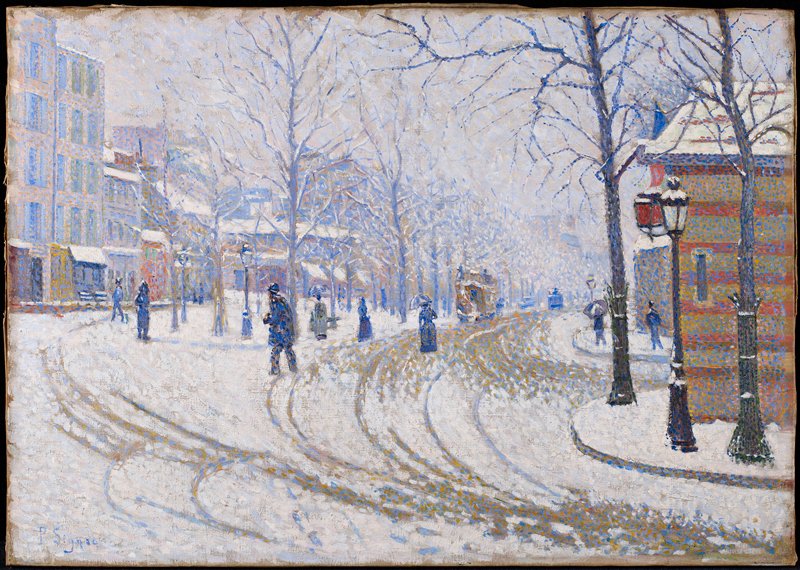
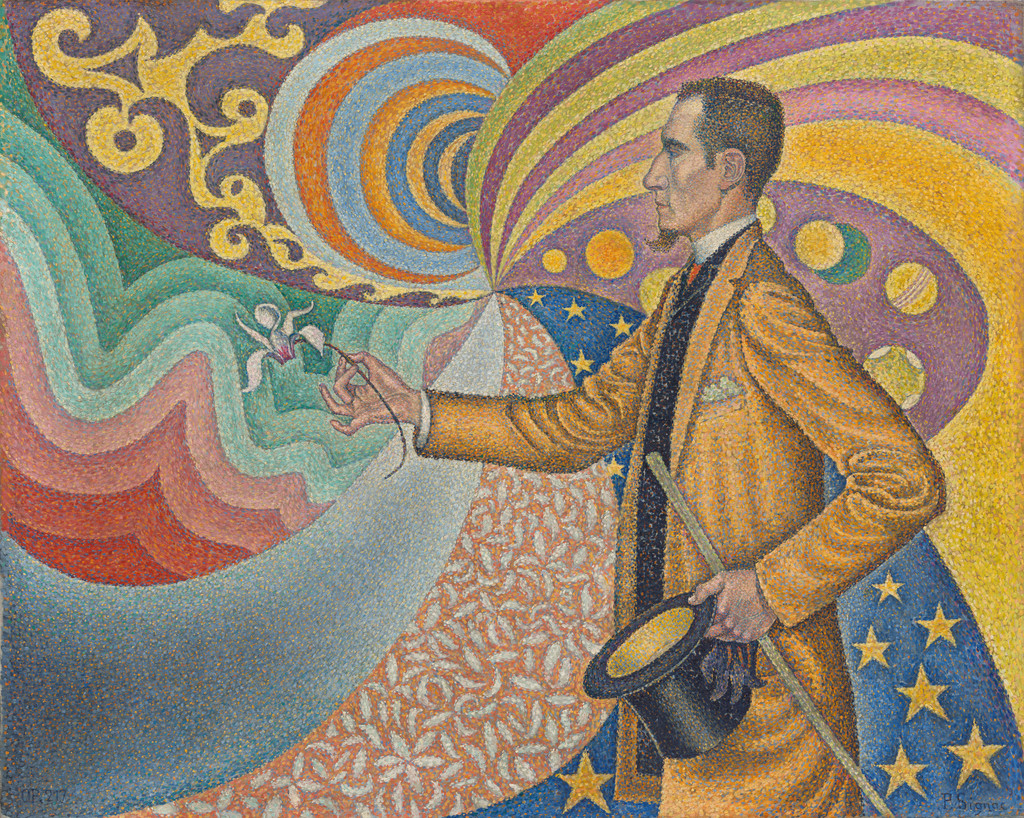
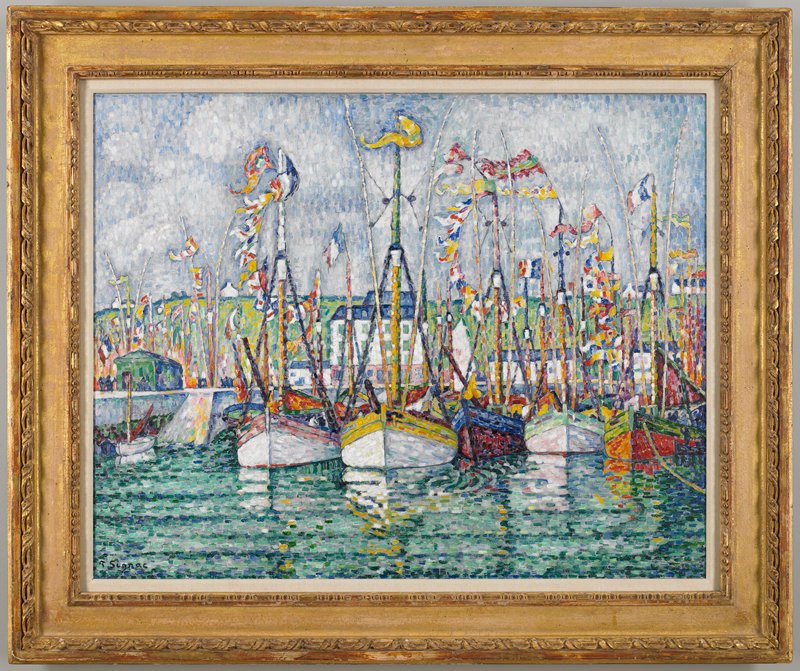
In 1884 Signac meets Georges Seurat: he is struck by Seurat's systematic working methods and his theory of colors, and becomes his faithful supporter, friend and heir. Under Seurat's influence Signac abandons the short brushstrokes of Impressionism for scientifically juxtaposed small dots of pure color, meant to combine and blend not on the canvas but in the viewer's eye.
29 July 1884
Founding the Société des Artistes Indépendants
On July 29, 1884 the Société des Artistes Indépendants begins in Paris — among its founders are Signac, Albert Dubois-Pillet, Odilon Redon and Georges Seurat — with the motto “Neither jury nor awards.” Its annual exhibitions flourish for the next three decades and set the trends in the art of the early twentieth century, and Signac remains a guiding force in the Society.
1886
Meeting Van Gogh in Paris
In 1886 Signac meets Vincent van Gogh in Paris, and also Toulouse-Lautrec, a friend of Van Gogh. At first Van Gogh admires above all Signac's free painting technique.
1886
Three months at Les Andelys
In 1886 Signac spends three months at Les Andelys; the visit crystallised his theories around Pointillism.
1887
To Asnières-sur-Seine with Van Gogh
In 1887 Signac and Van Gogh regularly travel together to Asnières-sur-Seine, where they paint river landscapes and cafés.
1888
Discovering anarchist ideas
In 1888 Signac discovers anarchist ideas by reading Élisée Reclus, Kropotkin and Jean Grave; with his friends Charles Angrand, Henri-Edmond Cross, Maximilien Luce and Camille Pissarro he contributes to Grave's paper, Les Temps Nouveaux (New Times). Politically he remains an anarchist, as were many of his friends, among them Félix Fénéon.