William BlakeReino Unido, 1757–1827
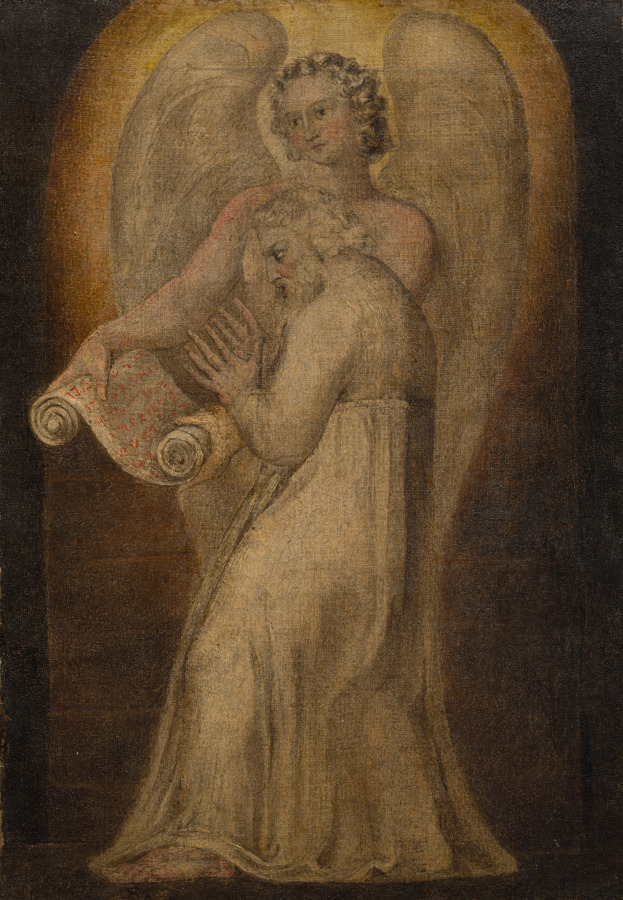
Lear and Cordelia
¿Puedo verla?
No expuesta por ahora
¿Dónde está «Lear and Cordelia» hoy? Colección: Galería Nacional de Arte, Washington D. C. No expuesta por ahora. Comprobado 29 de septiembre de 2026.

Washington D. C., Estados Unidos
Pertenece a la colección, pero ahora mismo no está expuesta.
- Comprobado
- En este estado desde
- Fuente
- El museo
Ficha
- Número de inventario
- 1943.3.8976
Lo que muestra
En el catálogo
Fuentes
- Galería Nacional de Arte
- Imagen: Galería Nacional de Arte — Museum open access
En la vida de William Blake
La vida entera1780–1808
Exhibits six times at the Royal Academy
Despite his antagonism towards Reynolds, Blake submitted works to the Royal Academy on six occasions between 1780 and 1808.
octubre de 1803 – 1820 · Residencia
South Molton Street
1804
Returns to London and begins “Jerusalem”
In 1804 Blake returned to London and began to write and illustrate “Jerusalem: The Emanation of the Giant Albion” (1804–20), his most ambitious work.
after 1804
Cromek cheats Blake; Stothard gets the commission
Having conceived the idea of portraying the characters of Chaucer's “Canterbury Tales”, Blake approached the dealer Robert Cromek with a view to marketing an engraving; Cromek, thinking Blake too eccentric to produce a popular work, promptly commissioned Blake's friend Thomas Stothard instead. When Blake learned he had been cheated, he broke off contact with Stothard.
c. 1808
Polemical annotations to Reynolds's “Discourses”
Around 1808 Blake gave vigorous expression to his views on art in an extensive series of polemical annotations to Sir Joshua Reynolds's “Discourses”, denouncing the Royal Academy as a fraud and proclaiming that to generalise is to be an idiot.
1809
An exhibition in his brother's shop: nothing sold
Blake set up an independent exhibition in his brother's haberdashery shop at 27 Broad Street in Soho to market his version of “The Canterbury Pilgrims” along with other works. It was very poorly attended, sold none of the temperas or watercolours, and its only review, in The Examiner, was hostile.



![Ginevra de' Benci [obverse], Leonardo da Vinci, c. 1474/1478](https://api.nga.gov/iiif/8f29e3c9-a289-4d53-abf0-31a66e9e98fa/full/!2400,2400/0/default.jpg)
![Wreath of Laurel, Palm, and Juniper with a Scroll inscribed Virtutem Forma Decorat [reverse], Leonardo da Vinci, c. 1474/1478](https://api.nga.gov/iiif/ff62e8d0-45c4-498f-ad36-6358de827e04/full/!2400,2400/0/default.jpg)