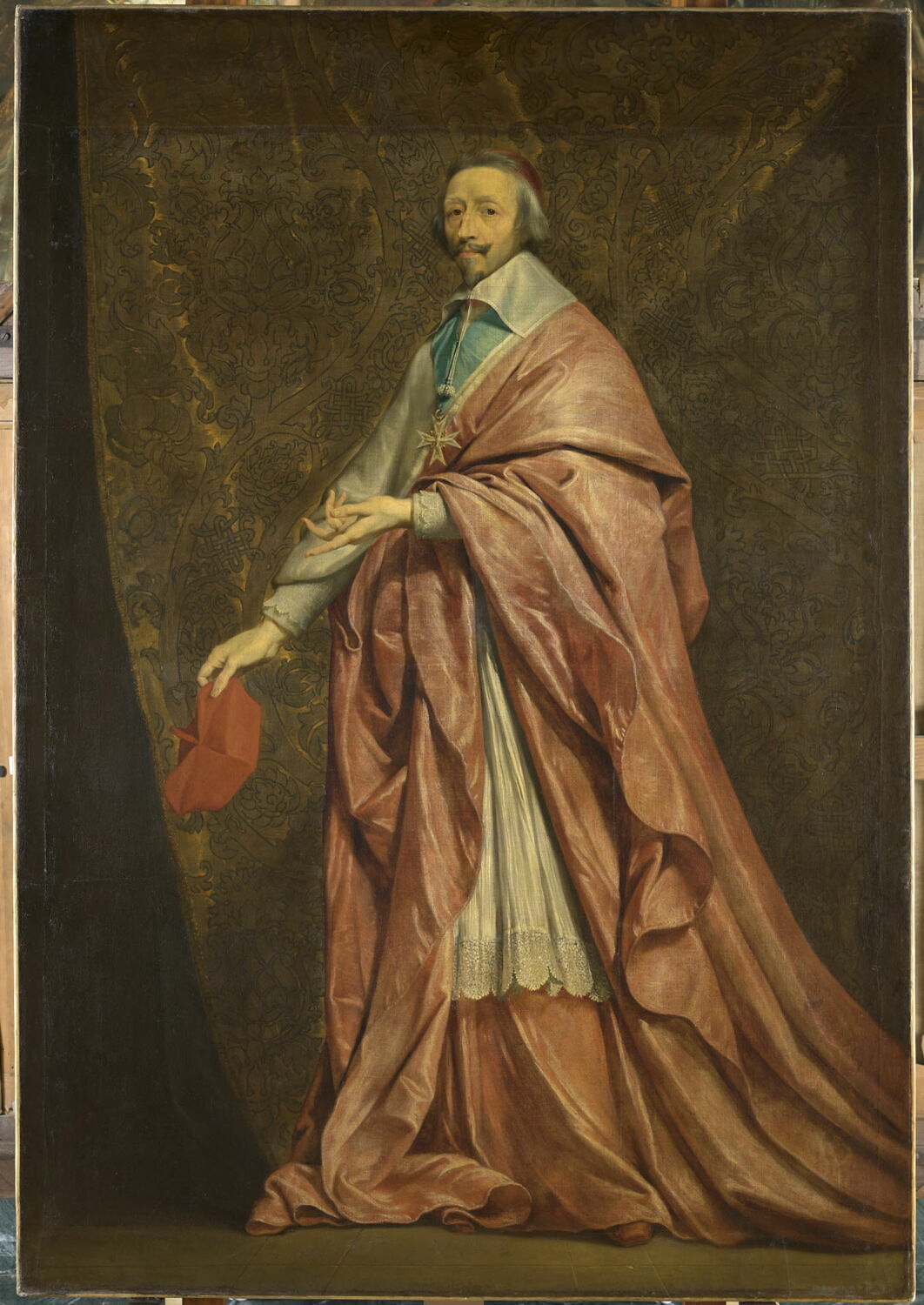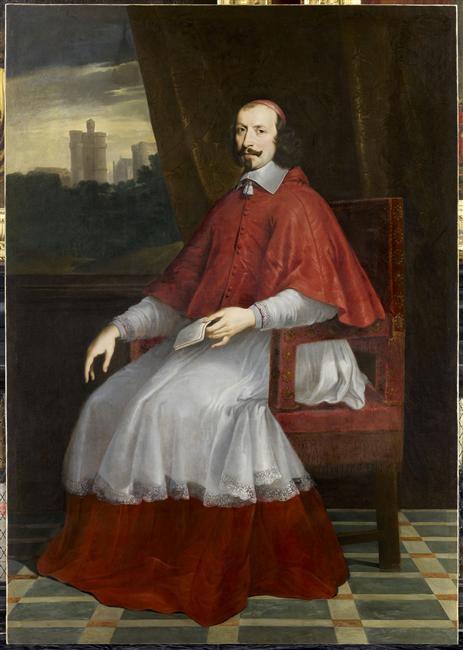
 Philippe de ChampaigneFrancia, 1602–1674
LE CARDINAL MAZARIN
¿Se puede contemplar?
Se desconoce
Chantilly, Francia
Se conoce el propietario; no se sabe si hoy está expuesta.
- En este estado desde
- Fuente
- El museo
Ficha
- Número de inventario
- PE 309
Lo que muestra
En el catálogo
Fuentes
- Museo Condé
- Imagen: Museo Condé — Harry Bréjat ; Réunion des musées nationaux - utilisation soumise à autorisation; Ministère de la Culture (France), base Joconde
Mientras tanto, en la vida de Philippe de Champaigne
La vida entera1648
A founder of the Royal Academy
Champaigne was one of the founding members of the Académie royale de peinture et de sculpture, the premier art institution of Ancien Régime France.
1654
Rivalry with Charles Le Brun
From 1654 Champaigne competed with the king's First Painter, Charles Le Brun, and took part in decorating the Tuileries Palace under his direction.
1660s
Academy lectures recorded by Félibien
Champaigne left no printed writings, but his lectures and commentaries were recorded in the 1660s by André Félibien. In his last years he taught a great deal at the Academy; after his only son died young, his nephew Jean-Baptiste de Champaigne was brought from Brussels to become his main pupil.
c. 1662
His daughter's miraculous cure at Port-Royal
The artist's paralyzed daughter, who lived at the convent of Port-Royal, was reportedly cured by a miracle. Champaigne then painted the atypical votive picture “Ex-Voto de 1662” (Louvre), showing his daughter with Mother Superior Agnès Arnauld.
1673
Exhibits “The Supper at Emmaus”
Champaigne worked almost until his death: in 1673, a year before he died, he exhibited a “Supper at Emmaus”. In his last period he painted mainly religious subjects and members of his family.
12 de agosto de 1674
Died