Jack WhittenEstados Unidos, 1939–2018
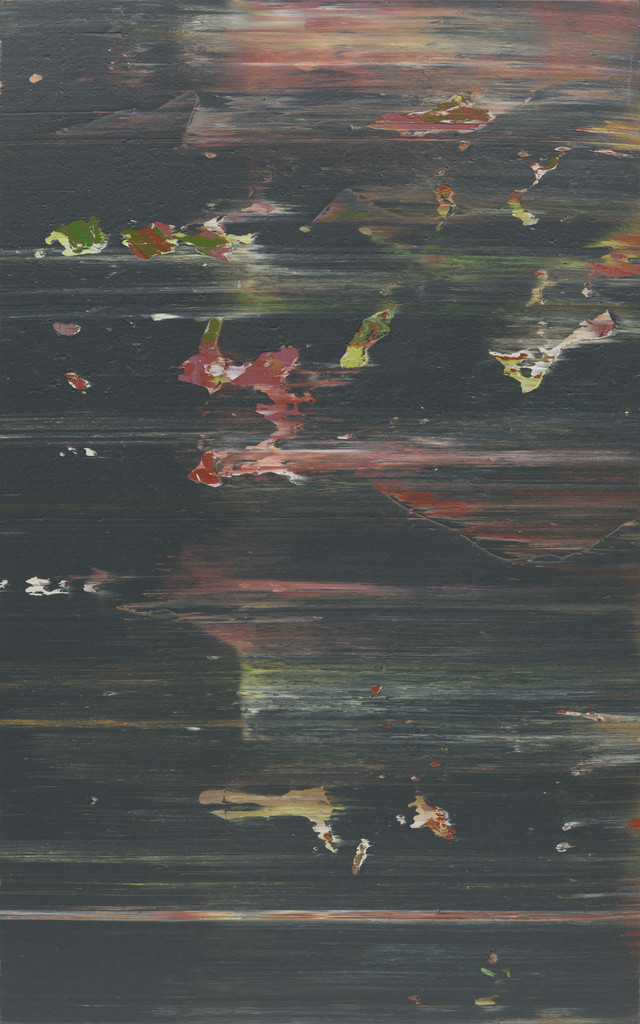
Khee II
¿Puedo verla?
No expuesta por ahora
¿Dónde está «Khee II» hoy? Colección: Instituto de Arte de Chicago, Chicago. No expuesta por ahora. Comprobado 23 de noviembre de 2026.

Chicago, Estados Unidos
Pertenece a la colección, pero ahora mismo no está expuesta.
- Comprobado
- En este estado desde
- Fuente
- El museo
Sobre el cuadro
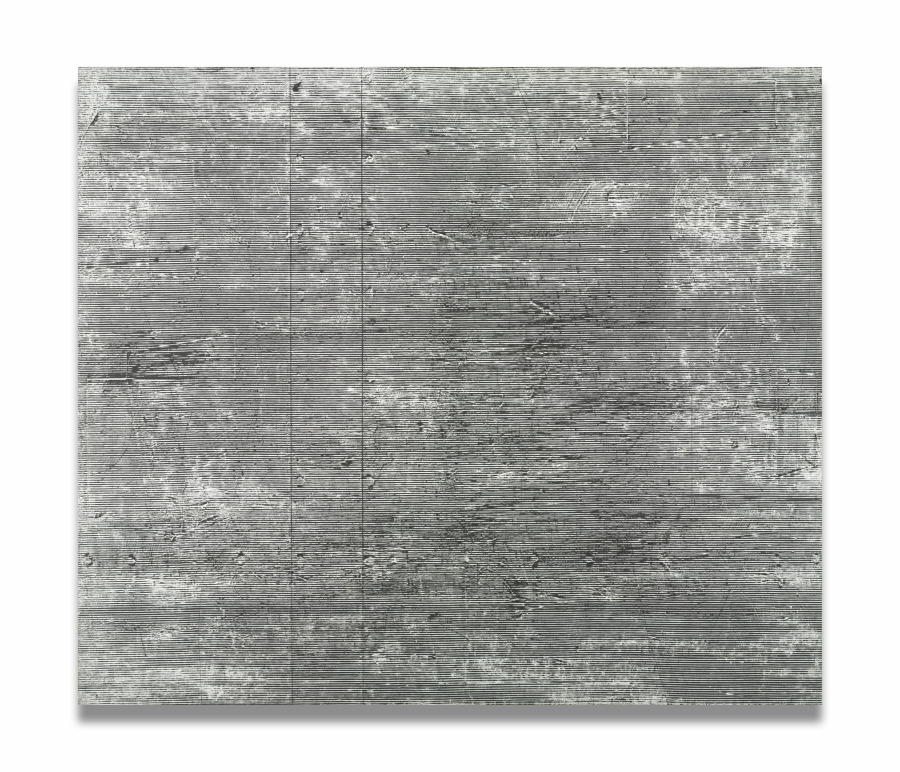
Jack Whitten made Khee II in 1978 through a process of pressure and dissolving paper; it is at the Art Institute of Chicago, Chicago. He put flat objects beneath the canvas, coated its surface with gesso and added sheets of coloured Japanese rice paper. As the paper dissolved, pigment remained. A rake or another notched implement dragged across the top pressed the hidden shapes into the canvas and spread the colour. Faint images emerge among alternating coloured bands. Whitten called his tool a developer, borrowing a term from photography.
En palabras del museo
In the early 1960s, as a young student in New York, Jack Whitten established ties with an older generation of black artists that included Romare Bearden and Jacob Lawrence, as well as with leading Abstract Expressionists such as Willem de Kooning, Ad Reinhardt, and Franz Kline. During the second half of the decade, Whitten began working toward an entirely unique relationship to painting that he described in this way: “About 1965 I wrote on my studio wall one day, the image is photographic; I must photograph my thoughts.” By 1970 the artist had eliminated both expressive color and figuration from his work, launching a ten-year series of paintings that capture, like a camera, the often chance-based immediacies of his dynamic studio process.
Leer más
Khee II exhibits all the hallmarks of Whitten’s mature process-derived paintings. As with other works from this period, the artist placed a variety of flat, shaped objects beneath the canvas. After preparing the surface with gesso, he layered it with thin sheets of colored Japanese rice paper. The rice paper dissolved, leaving behind pure pigment. Whitten then pulled a rake or other notched tool—which he calls a “developer,” in obvious reference to a photographer’s chemicals—across the work’s surface. This served both to impress the shapes from below, effectively embossing the canvas, and to disperse color on top of it. The result is a series of ghostlike images and alternating rows of color that vibrate with subtle luminosity. This is a glowing evocative abstract painting that is also a layer-by-layer document of its own making.
Instituto de Arte de ChicagoCC BY 4.0
Ficha
- Número de inventario
- 2013.123
Lo que muestra
En el catálogo
Fuentes
- Instituto de Arte de Chicago
- Imagen: Instituto de Arte de Chicago — © the artist or rights holder