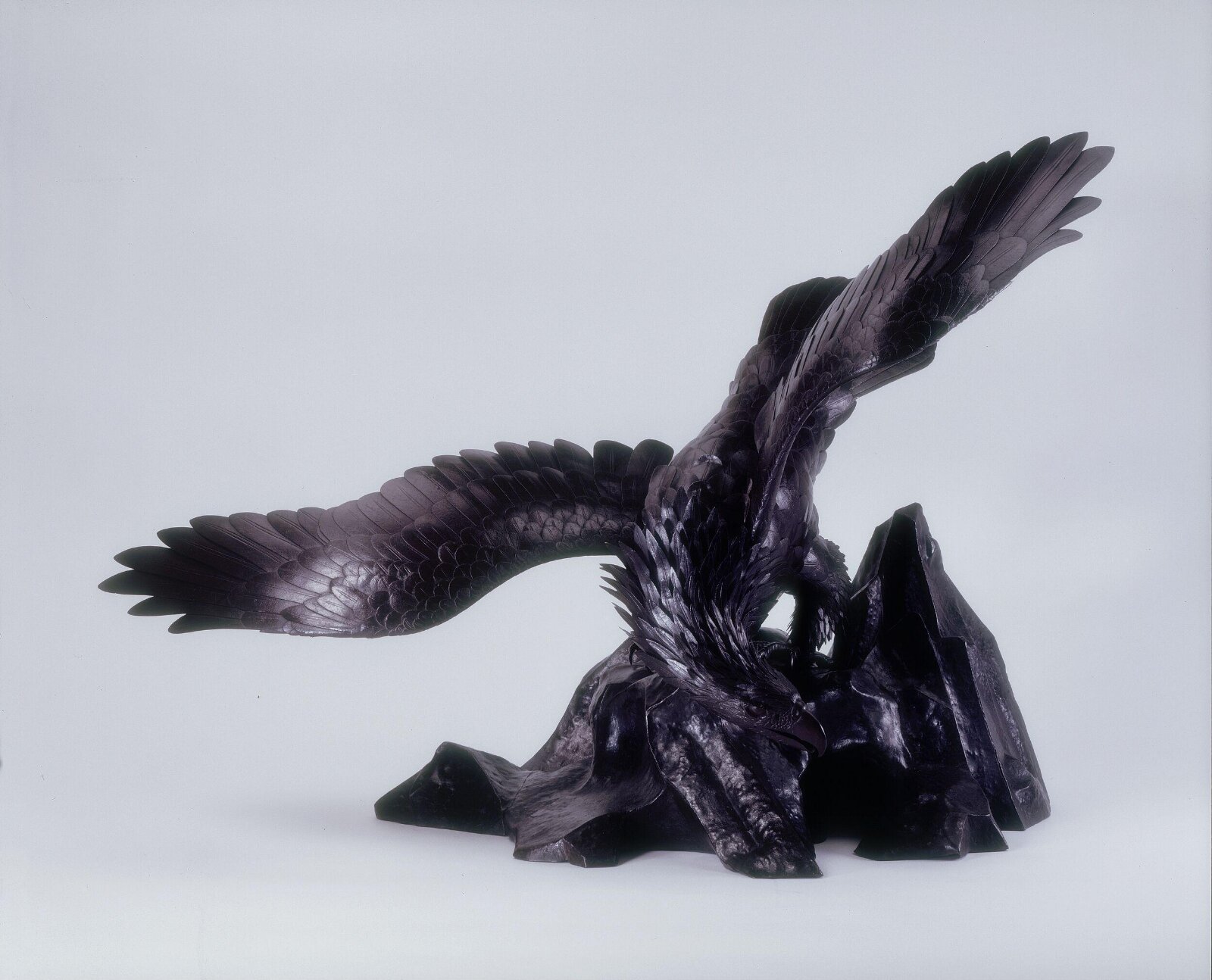
Incense burner
¿Se puede contemplar?
Por ahora no recibe

Museo de Victoria y Alberto
Londres, Reino Unido
Pertenece a la colección, pero ahora mismo no está expuesta.
- Comprobado
- hace 9 días
- En este estado desde
- 25 sept 2026
- Fuente
- Los datos de colección del propio museo
About the sculpture
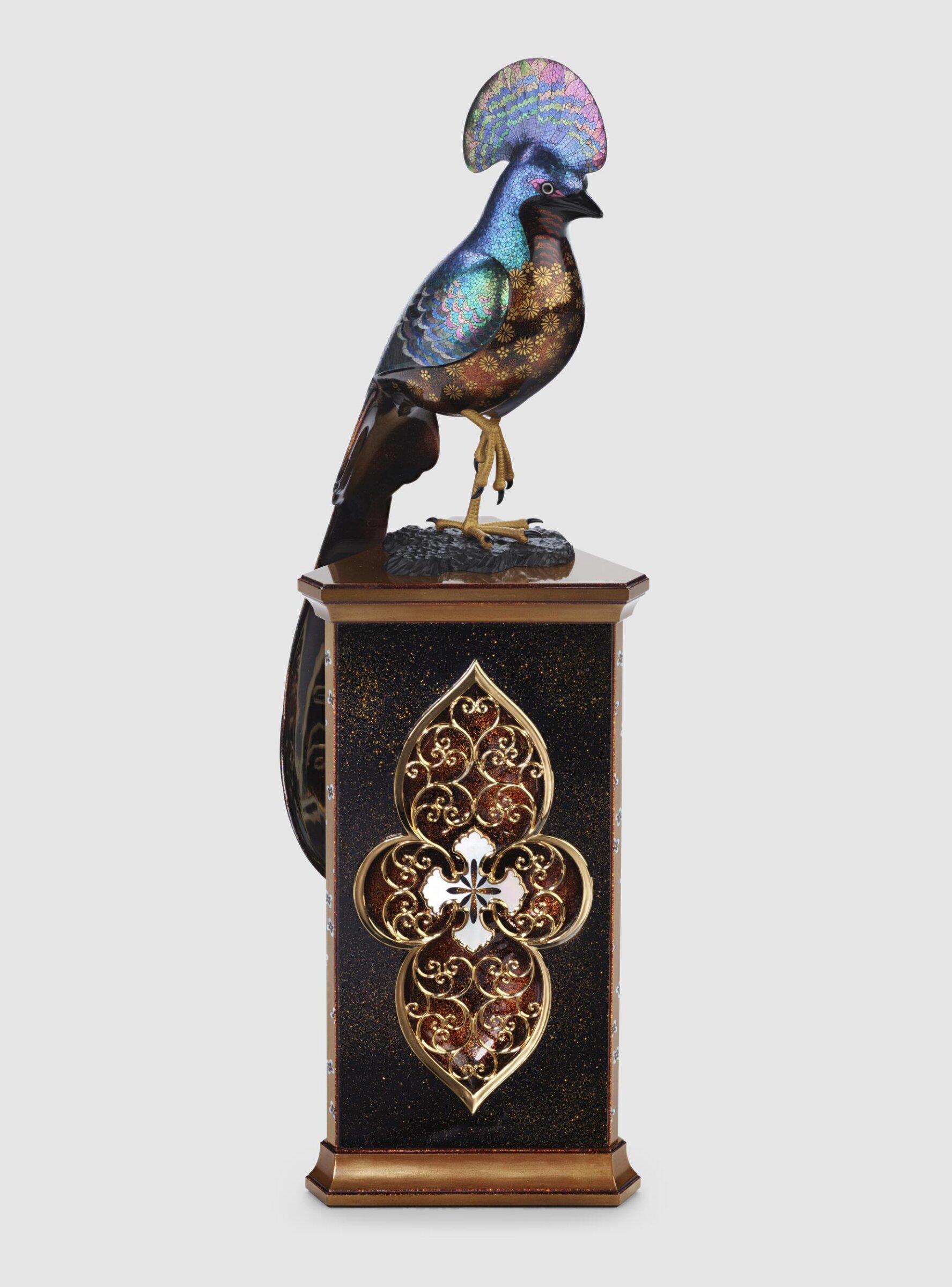
This figure, described in the original Museum register entry as a 'model of a Sea-eagle, or osprey', is a finely modelled, naturalistic representation and represents an excellent example of the craftsmanship of the Japanese metalworker. The bird's back conceals the copper holder for incense, and a pierced plate (which continues the design of feathers) that allows the smoke to escape. This decorative yet functional object illustrates the changing production of metalwork that emerged in 19th-century Japan as the power of the ruling military class declined. When acquired, the eagle was described as 'the work of Myochin Muneharu, a celebrated native worker in metal, Japanese, sixteenth century.' The attribution is intriguing, for there is no evidence of a signature, and the eagle is stylistically of the 19th century.
Read on
The maker is indeed most likely from the Myochin family of armour manufacturers (who had a long if somewhat questionable genealogy). There is no listed 16th-century craftsman named Muneharu, but there were five makers using this name in the latter part of the Edo period (1615-1868).
The cost of this object to the V&A amounted to some 13% of the Museum's total annual purchases for 1875. This price is comparable with the high values commanded by nineteenth century Japanese works at this time, rather than for earlier works which could be had more cheaply. The eagle was purchased from A B Mitford (later Lord Redesdale), Secretary of the British Legation in Japan from 1866-1870. We can assume that the eagle was acquired at this period as there is no evidence that Mitford collected Japanese art subsequent to his return to Britain as an impoverished, but ambitious young diplomat. At the time of acquisition, the western mania for Japan was at its height and this object became a centrepiece of the Museum's display of Japanese art.
Only a week after the Museum acquired the eagle, the The Building News and Architectural Review of 21 May 1875 described the eagle in glowing words, and perpetuated the myth of the sixteenth century maker as follows: "a Japanese artist ... whose name is so revered by his countrymen that, in a native biographical dictionary, he is mentioned in the following terms:- Under Heaven there never was a smith the equal of Myochin Muneharu.". This is seemingly a reference to the Japanese honourific title of "Tenka Ichi" (First under Heaven) given to outstanding craftsmen.
In 1881, Professor J J Rein of the University of Bonn visited the Museum "with a learned Japanese ... and with the permission of the directors undertook an examination of the origin and age of the Japanese metal articles. ... we found no inscription, name or sign which would indicate its (the eagle's) origin. We have also not been able to trace the history of this remarkable piece of art-industry.". So, from soon after its acquisition, this remarkable object has been something of an enigma, with an aspiring ancient attribution, yet in reality an excellent example of nineteenth century metalwork.
Museo de Victoria y Alberto
Ficha
- Número de inventario
- 603-1875
What it shows
En el catálogo
Fuentes
- Museo de Victoria y Alberto: the museum's own open data · obtenido hace 9 días
- Imagen: Museo de Victoria y Alberto — © Victoria and Albert Museum, London