ART WIKI32.979 en sala
MapaColecciónArtistasMuseosExposicionesRevista
Acceder

ART WIKI

Dónde cuelga la obra maestra y cuándo le dejan pasar.

Colecciones: Galería Nacional de Arte, Galería Nacional de Dinamarca, Galería Nacional de Retratos, Galería Tretiakov, Harvard Art Museums, Instituto de Arte de Chicago, Instituto de Artes de Mineápolis, MoMA, Museo de Arte de Cleveland, Museo de Victoria y Alberto, Museo del Hermitage, Museo del Louvre, Museo Estatal Ruso, Museo Hirshhorn y Jardín de Esculturas, Museo J. Paul Getty, Museo Metropolitano de Arte, Museo Pushkin, Museo Smithsoniano de Arte Americano, Museo Whitney de Arte Estadounidense, National Museum of Asian Art, Rijksmuseum, Villa Getty, Catálogo Estatal del Fondo Museístico de Rusia (274 museos), Europeana (19 museos), Wikidata (6 museos), Paris Musées (12 museos) y Joconde, la base de museos del Ministerio de Cultura de Francia (495 museos). Las imágenes pertenecen a sus titulares de derechos.

Secciones

  • Mapa
  • Búsqueda
  • Colección
  • Obras maestras
  • Expuestas ahora
  • Artistas

Más

  • Museos y galerías
  • Exposiciones
  • Revista
  • De dónde salen los datos
  • Privacidad y cookies
InicioMapaCatálogo
  1. Colección/
  2. Instituto de Arte de Chicago/
  3. Goldweight Depicting a Catfish
Goldweight Depicting a Catfish, Asante, Early 18th/early 20th century
AAsante

Goldweight Depicting a Catfish

Early 18th/early 20th century · Sculpture

¿Se puede contemplar?

Por ahora no recibe

Instituto de Arte de Chicago

Chicago, Estados Unidos

Pertenece a la colección, pero ahora mismo no está expuesta.

Comprobado
hace 3 días
En este estado desde
19 ago 2026
Fuente
El museo
En el mapaPágina del museo

Sobre la escultura

The Akan used the lost-wax technique to create brass-cast weights for economic transactions involving gold. Although it is not clear when the convention of weights was first introduced, there is evidence that the Akan people traded gold with Islamized merchants from the West African interior grasslands many centuries before the arrival of Europeans. Some goldweights correspond to the Islamic weight system of North Africa, and appear to be fundamentally linked to the trans-Saharan trade, in which Arabs were deeply involved.

Seguir leyendo

Stylistic studies of goldweights have yielded relative dates for these works that can be divided broadly into early and late periods. Abstract goldweights are assigned to sometime between 1500 and 1720. Akan artists also employed an assortment of figurative motifs in executing such miniature brass castings. These forms, which are less common than the abstract weights and are remarkably ornate, appear to have been modeled in the period of hegemony of the Asante kingdom, from 1700 through 1874. Regardless of weather the figures are single or part of a larger composition, their intention seems to have been to communicate a message of a collective or personal nature.

This catfish goldweight may evoke the following saying: “If the catfish [mudfish] in the stream grows fat, it does so to the benefit of the crocodile,” which means the master always stands to benefit from the servant’s prosperity. However, given the fact that here the catfish is depicted alone and not with the crocodile, another meaning may have been intended. The well-known capacity of this fish type to survive the most arid conditions may suggests its symbolic implications for longevity.

—Revised from Nii Otokunor Quarcoopome, “Art of the Akan,” African Art at the Art Institute of Chicago, Museum Studies, 23, no. 2 (1997), p. 144.

Instituto de Arte de Chicago · CC BY 4.0

Ficha

Número de inventario
1966.82

En el catálogo

EsculturaMetalImpresionismoModernismoSiglo XXAsanteArts of AfricaAkanAfrican ArtCoastal West AfricaGhana

Fuentes

  • Instituto de Arte de Chicago
  • Imagen: Instituto de Arte de Chicago — © the artist or rights holder

Más obras de Asante

Todas las obras
Stool with Cocoa-Pod Harvester, Asante, 20th century

Stool with Cocoa-Pod Harvester

20th century · No expuesta · Instituto de Arte de Chicago

Goldweight: Seated Figure, Asante, Mid–19th/mid–20th century

Goldweight: Seated Figure

Mid–19th/mid–20th century · No expuesta · Instituto de Arte de Chicago

Standing Female Figure (Akua'ba), Asante, Mid–20th century

Standing Female Figure (Akua'ba)

Mid–20th century · No expuesta · Instituto de Arte de Chicago

Bajo el mismo techo: Instituto de Arte de Chicago

Página del museo
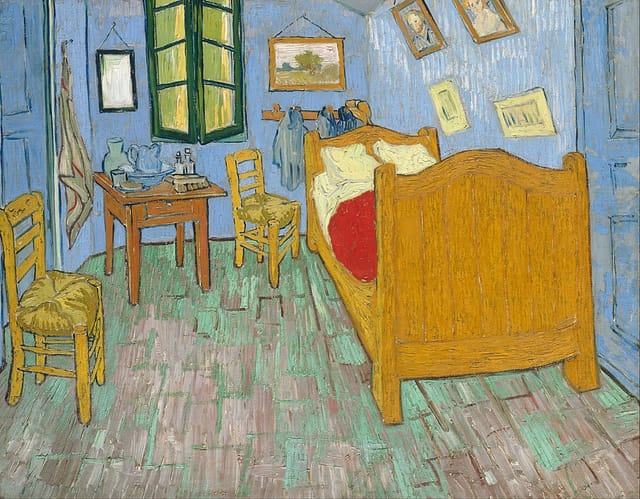
The Bedroom, Vincent van Gogh, 1889

Vincent van Gogh

The Bedroom, 1889

A Sunday on La Grande Jatte — 1884, Georges Seurat, 1884–86, border added 1888–89

Georges Seurat

Tarde de domingo en la isla de la Grande Jatte, 1884–86, border added 1888–89

Paris Street; Rainy Day, Gustave Caillebotte, 1877

Gustave Caillebotte

Calle de Paris, dia de lluvia, 1877

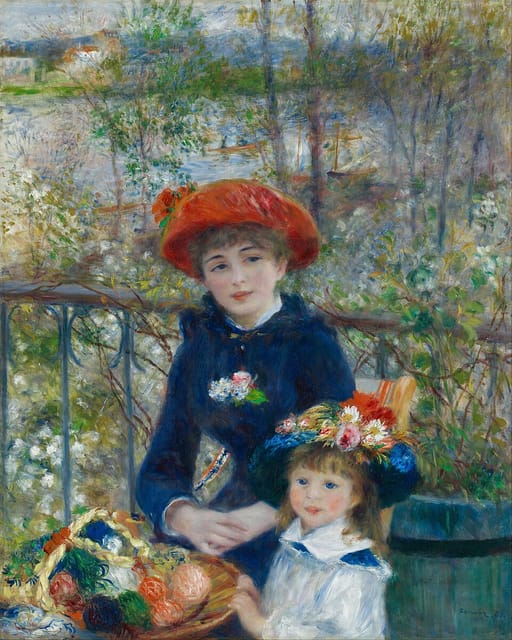
Two Sisters (On the Terrace), Pierre-Auguste Renoir, 1881

Pierre-Auguste Renoir

En la terraza, 1881

The Basket of Apples, Paul Cézanne, c. 1893

Paul Cézanne

Cesto de manzanas, c. 1893

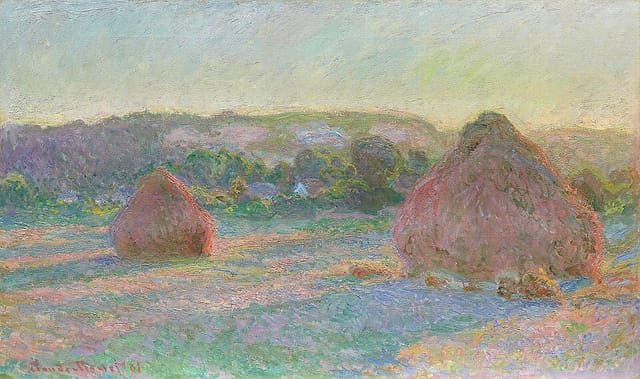
Stacks of Wheat (End of Summer), Claude Monet, 1890–91

Claude Monet

Stacks of Wheat (End of Summer), 1890–91

American Gothic, Grant Wood, 1930

Grant Wood

American Gothic, 1930

Nighthawks, Edward Hopper, 1942

Edward Hopper

Noctámbulos, 1942