 Constantin BrancusiRumania, 1876–1957
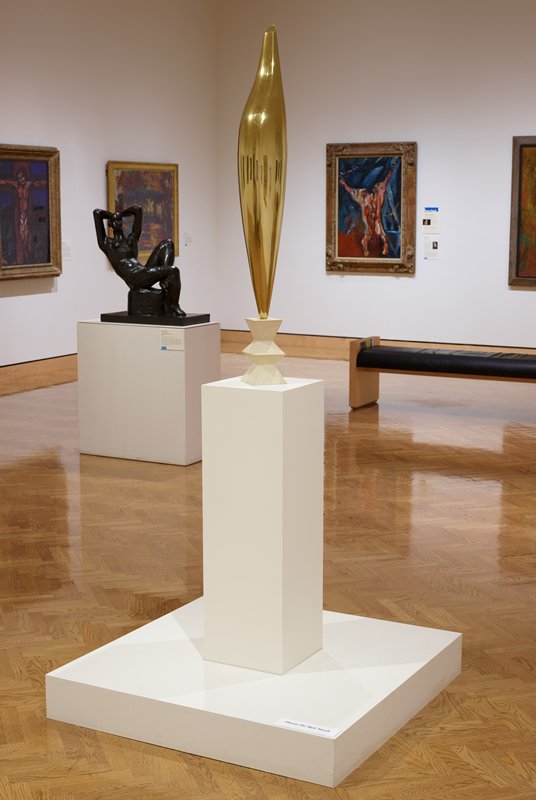
Golden Bird
¿Se puede contemplar?
Sí, recibe visitas

Instituto de Artes de Mineápolis
SalaG377Minneapolis, Estados Unidos
Expuesta al público. Quién lo avala figura más abajo.
- Comprobado
- En este estado desde
- Fuente
- El museo
Sobre la escultura
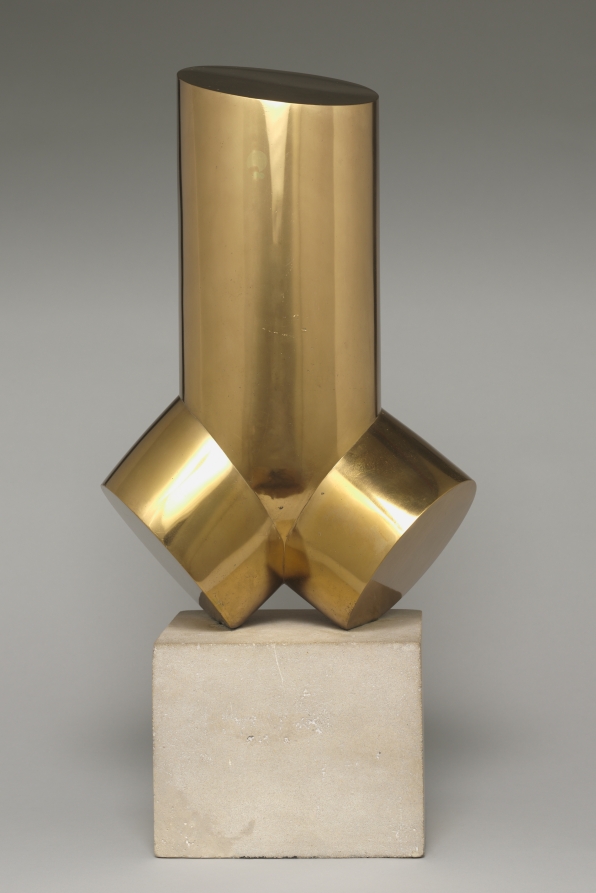
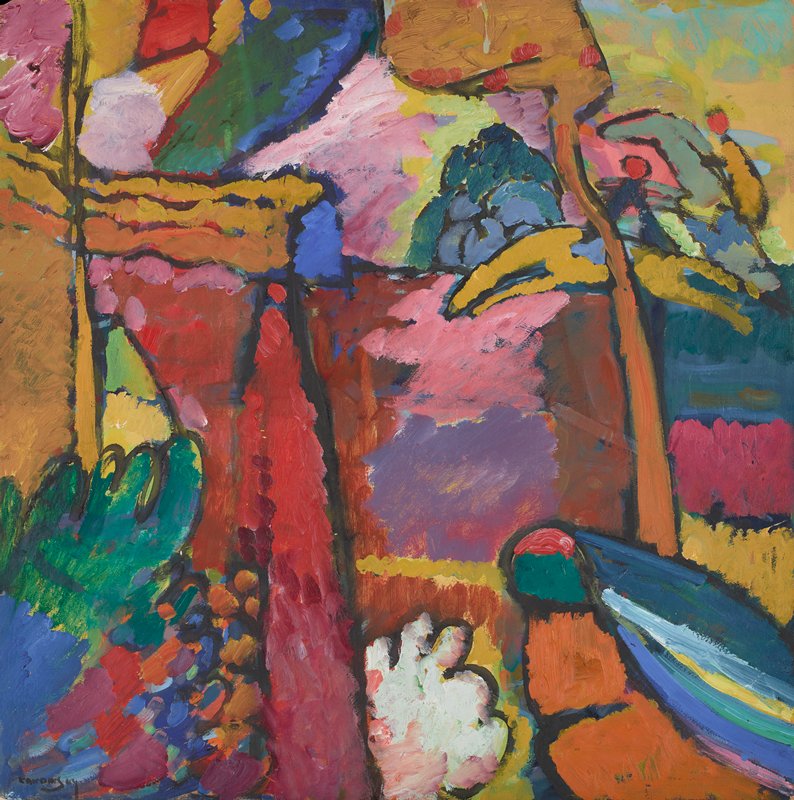
Constantin Brancusi began making abstract sculptures at about the same time Wassily Kandinsky, his contemporary was exploring abstraction in painting. Kandinsky eventually chose to obscure the natural objects that provided the starting point for his abstractions, whereas Brancusi took natural forms to an extreme of simplification but never completely excluded them from his work. Golden Bird belongs to a series of twenty-eight marbles and bronzes exploring the theme of birds and their flight, which Brancusi executed between 1910 and the early 1950s. His inspiration for these sculptures was a Romanian folktale about a dazzling golden bird called the Maiastra, whose magical song restored sight to the blind and youth to the aged. The shiny polished bronze of Golden Bird recalls the Maiastra's brilliant plumage, and the vertical thrust of the neck suggests open-throated song.
Instituto de Artes de Mineápolis
Ficha
- Número de inventario
- 55.39
En el catálogo
Fuentes
- Instituto de Artes de Mineápolis
- Imagen: Instituto de Artes de Mineápolis — © Artists Rights Society (ARS), New York / ADAGP, Paris
Mientras tanto, en la vida de Constantin Brancusi
La vida entera1910s
“Mobile groups”: rearranging the sculptures
During the 1910s Brâncuși arranges sculptures and pedestals in changing compositions that he calls “mobile groups”: he moves the works and watches how each change alters the space around them. When he sells a sculpture he often puts a plaster version in the same position, and by the 1920s the studio is also an exhibition space whose arrangement forms part of the work.
1915–1917
The First World War: a refusal to serve
Brâncuși stays in Paris after the outbreak of World War I; in 1915 he donates works to an exhibition at Bernheim-Jeune that raises money for Polish artists affected by the war. As a Romanian citizen he remains liable for military service, but he refuses to serve in 1916 and receives a permanent exemption on 8 November 1917.
November 1919
Meeting Erik Satie
The writer Henri-Pierre Roché brings the composer Erik Satie, exactly ten years older than Brâncuși, to his studio together with Marcel Duchamp, beginning a friendship that lasts from 1919 to 1925. After dinner Brâncuși plays the violin for his guest, and Satie, in Roché’s words, teaches him verbal fencing, self-belief and clarity of thought.
January 1920
“Princess X” excluded from the Salon des Indépendants
In January 1920 the organizers of the Salon des Indépendants exclude “Princess X” (1915–1916) because they regard its shape as phallic. Fernand Léger and other friends of Brâncuși protest, the sculpture is returned to the exhibition, and the dispute leads to the manifesto “Pour l’indépendance de l’art”, signed by more than seventy artists and writers; Erik Satie signed the protest petition on 25 February 1920.
1921
Man Ray and the darkroom
Brâncuși, who has photographed his work since the 1910s, meets Man Ray in 1921, who helps him buy equipment, set up a darkroom and improve his developing methods. He photographs the sculptures under changing light, alters his framing and documents the relationships between the works and the surrounding space; he also films his studio and sculptures mounted on rotating bases.
September 1921
A Brâncuși issue of “The Little Review”
In September 1921 the American magazine “The Little Review” publishes an issue devoted to Brâncuși, with an essay by Ezra Pound and 24 photographic plates showing sculptures and views of the studio.