Caspar David FriedrichAlemania, 1774–1840
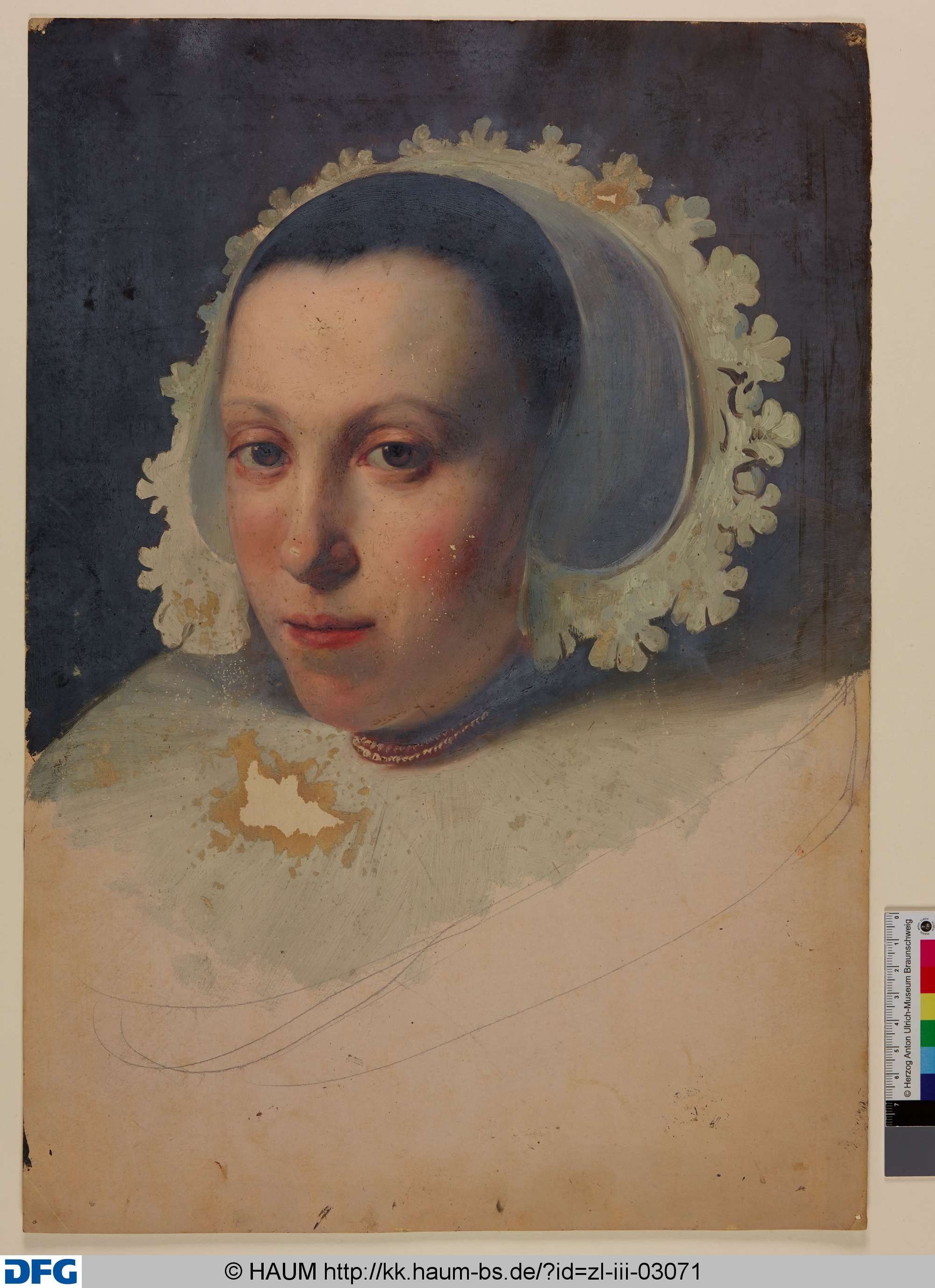
Entwurf eines Engelspfeilers
¿Puedo verla?
Se desconoce
¿Dónde está «Entwurf eines Engelspfeilers» hoy? Colección: Museo Herzog Anton Ulrich, Brunswick. Se desconoce.

Brunswick, Alemania
Se conoce el propietario; no se sabe si hoy está expuesta.
- En este estado desde
- Fuente
- El museo
Ficha
Lo que muestra
En el catálogo
Fuentes
- Museo Herzog Anton Ulrich
- Imagen: Museo Herzog Anton Ulrich — CC BY-NC-SA 4.0
En la vida de Caspar David Friedrich
La vida entera1816
Applies for Saxon citizenship
Wishing to distance himself from Prussian authority, Friedrich applies for Saxon citizenship in June 1816. The move is unexpected, since the Saxon government is pro-French and his paintings are seen as patriotic and distinctly anti-French, but with the help of his Dresden friend Graf Vitzthum von Eckstädt he obtains it.
1818
The Saxon Academy — but no professorship
In 1818 Friedrich becomes a member of the Saxon Academy with a yearly dividend of 150 thalers. He had hoped for a full professorship, but it is never awarded: his painting is felt to be too personal, and his point of view too individual, to serve as a fruitful example to students.
21 January 1818
Marries Caroline Bommer
Friedrich marries Caroline Bommer, the twenty-five-year-old daughter of a Dresden dyer. According to Carl Gustav Carus the marriage did not significantly change his life or personality, yet the canvases of this period, including “Chalk Cliffs on Rügen”, painted after his honeymoon, show a new levity and a brighter palette, and human figures appear ever more often.
1820
Grand Duke Nikolai Pavlovich in his studio
At the behest of his wife Alexandra Feodorovna, Grand Duke Nikolai Pavlovich visits Friedrich’s studio and returns to Saint Petersburg with a number of paintings, beginning a patronage that continues for many years.
by 1820
A recluse, “the most solitary of the solitary”
By 1820 Friedrich is living as a recluse, described by friends as the most solitary of the solitary.
1820
The birth of his daughter Emma
The Friedrichs’ first child, a daughter named Emma, is born; they will have three children. The third, Gustav Adolf, is named after the Swedish king Gustavus Adolphus and becomes a notable painter in his own right.