Frantisek KupkaRepública Checa, 1871–1957
Dynamism
¿Se puede contemplar?
Por ahora no recibe

Instituto de Arte de Chicago
Chicago, Estados Unidos
Pertenece a la colección, pero ahora mismo no está expuesta.
- Comprobado
- hace 9 horas
- En este estado desde
- 19 ago 2026
- Fuente
- Los datos de colección del propio museo
Sobre la obra
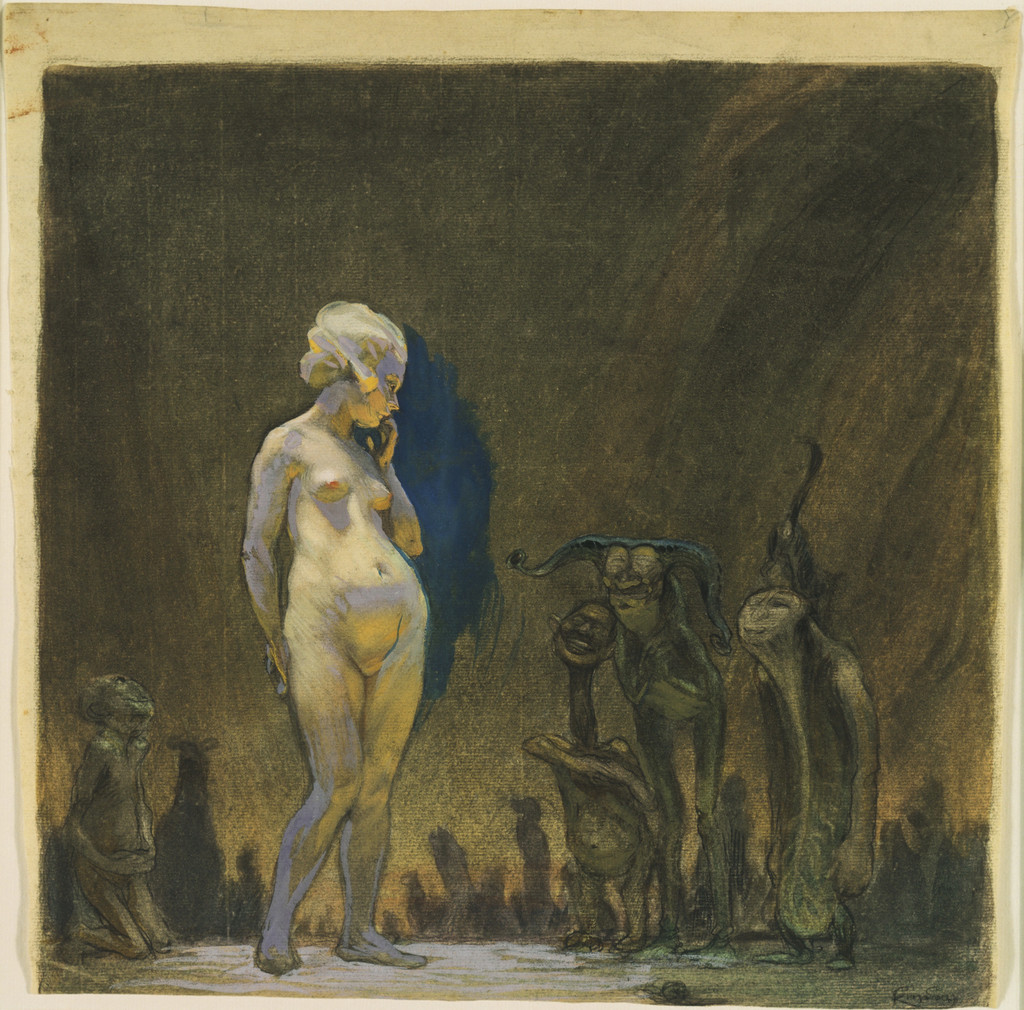
Kupka wished to explore the laws of the universe and the underlying cosmic order, which he imagined as a “kaleidoscope of changing light, color forms and space.” This drawing is part of a series exploring these ideas; dark shapes explode and unfold on the page while the debris from this universal force appears to float on the surface. As the eye attempts to make sense of the dense network created between the layered charcoal lines and delicate white shapes, one gets the sense of peering into the unknown.
Instituto de Arte de ChicagoCC BY 4.0
Ficha
- Número de inventario
- 2013.965
En el catálogo
Fuentes
- Instituto de Arte de Chicago: the museum's own open data · obtenido hace 6 días
- Imagen: Instituto de Arte de Chicago — © the artist or rights holder
Mientras tanto, en la vida de Frantisek Kupka
La vida entera1911
Meetings of the Puteaux Group (Section d’Or)
He attended the meetings of the Puteaux Group (Section d’Or), the Cubists’ circle.
1912
In the Cubist room of the Salon des Indépendants
He exhibited “Amorpha, Fugue in Two Colors” in the Cubist room at the Salon des Indépendants (other accounts say at the Section d’Or cubist exhibition), although he did not wish to be identified with any movement.
1913
Completes “Creation in the Plastic Arts”
He completed the book “Creation in the Plastic Arts”, which was published in Prague only in 1923.
the First World War (1914 – 1918)
Volunteers for the front in the First World War
He served as a volunteer although he was at least 25 years older than the rest of the regiment; Blaise Cendrars, in “La Main coupée”, describes him as a proud, calm, strong soldier. When the regiment set out on foot from Paris for the front in Picardy, his wife met the column at the La Défense roundabout and marched with it, carrying his bag and rifle, until the colonel had her arrested and sent back to Paris; she later made her way to the front lines to spend time with her husband.
the First World War (1914 – 1918)
Frostbitten foot: he leaves the front
He left the front because of frostbite in his foot, caused by nights in trenches waist-deep in freezing water.