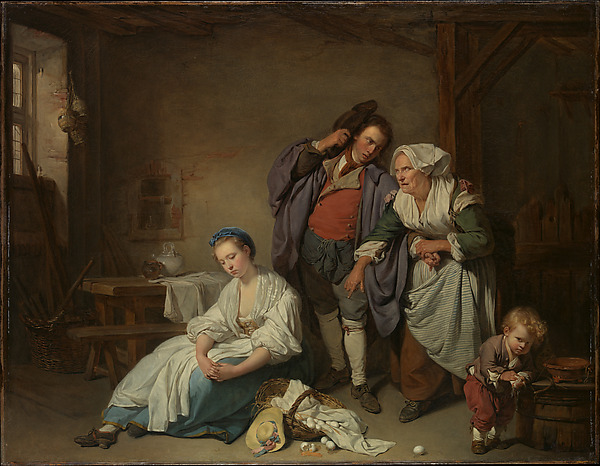
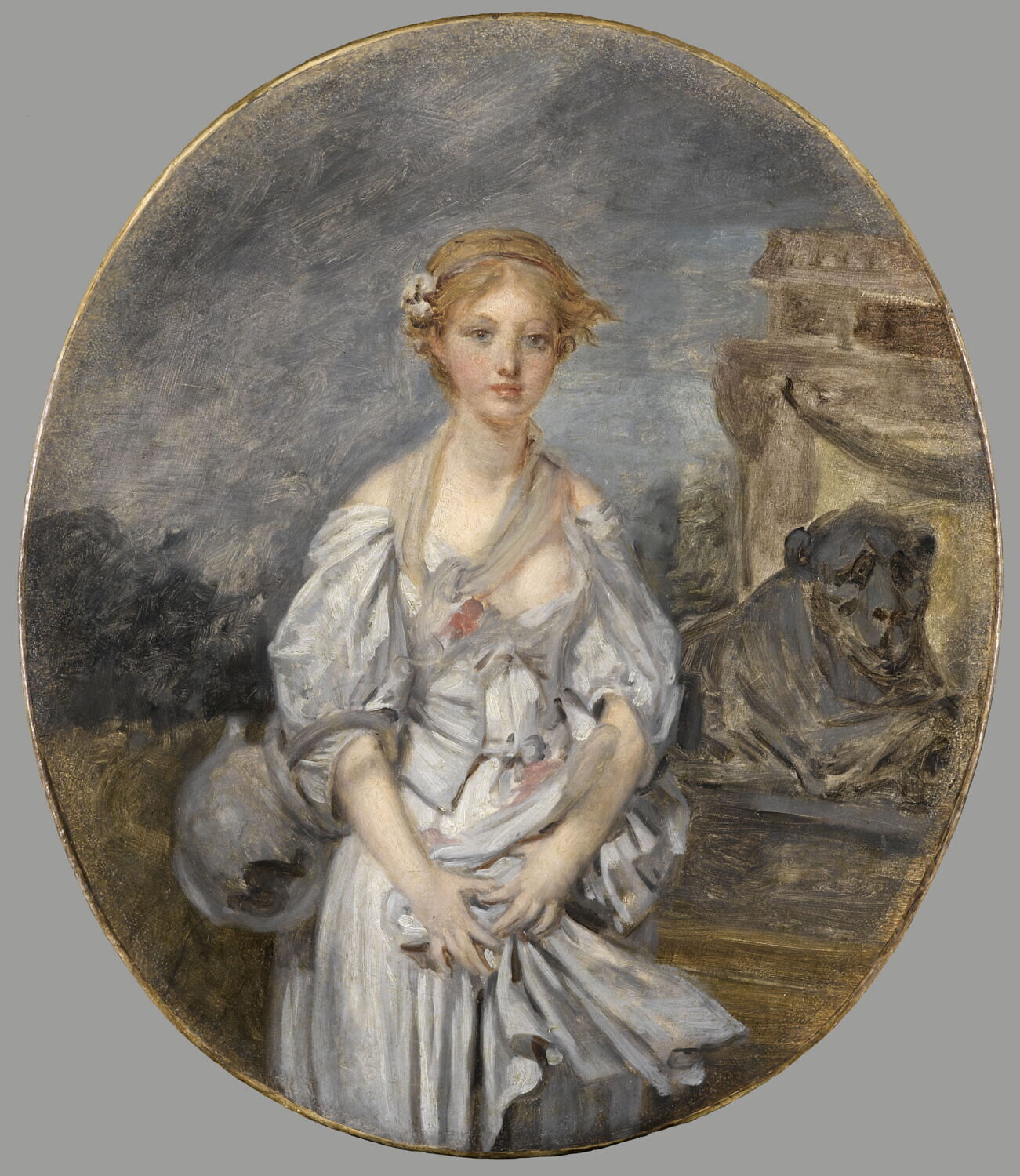
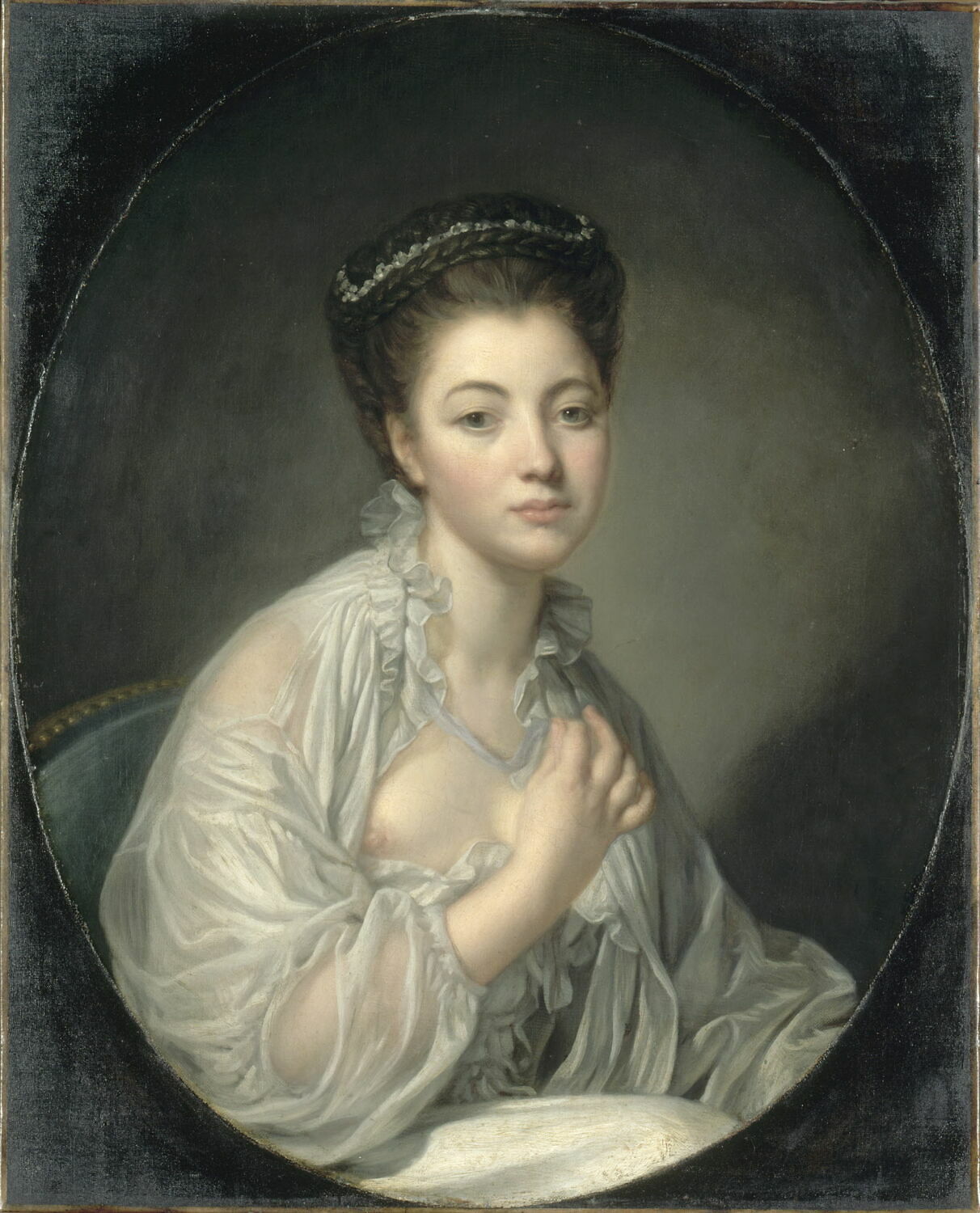
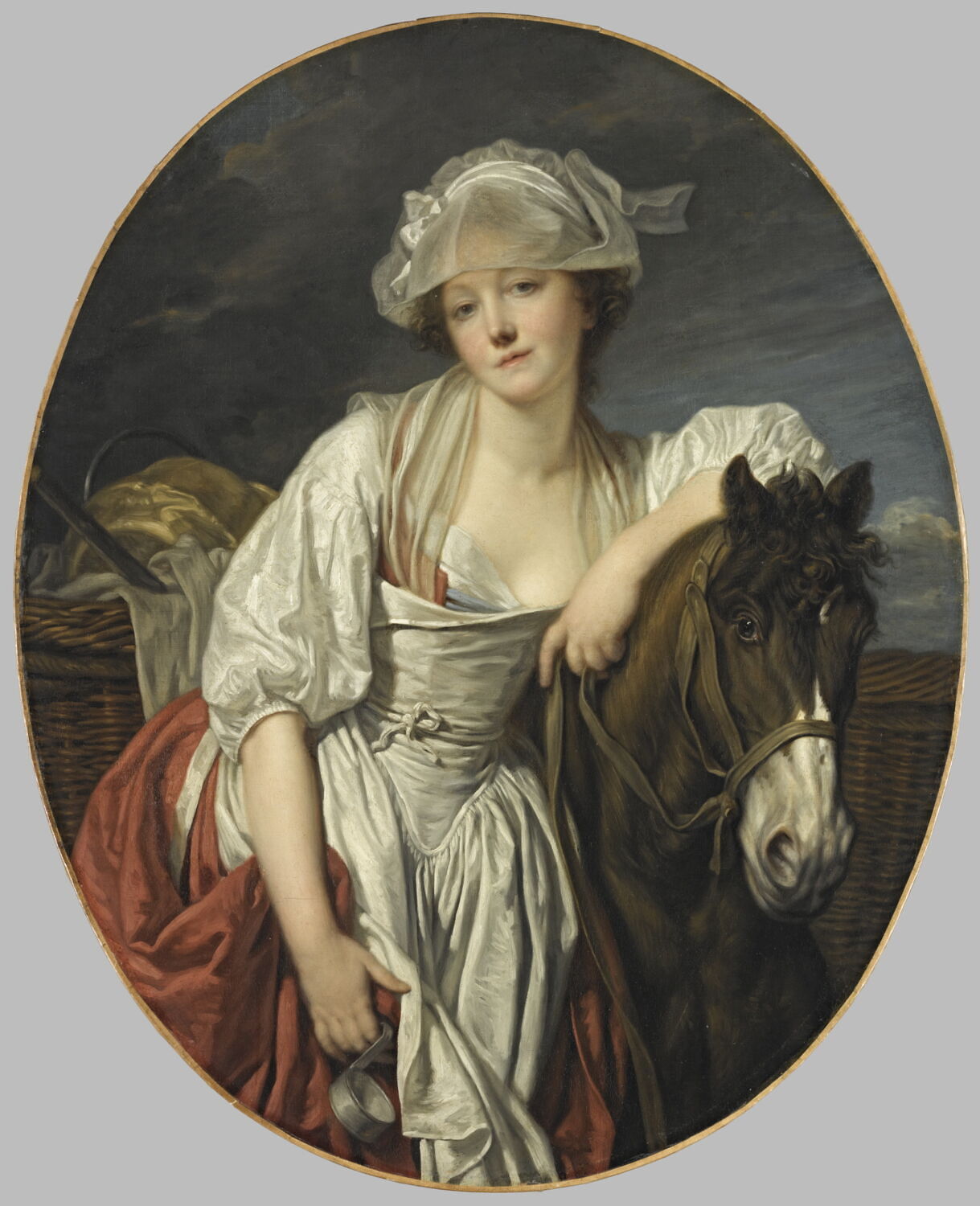
Jean Baptiste GreuzeFrancia, 1725–1805
Девочка за столом
¿Se puede contemplar?
Se desconoce
Palacio de Peterhof
San Petersburgo, Rusia
Se conoce el propietario; no se sabe si hoy está expuesta.
- En este estado desde
- Fuente
- El museo
Ficha
- Número de inventario
- ПДМП 1014-ж
En el catálogo
Fuentes
- El Catálogo Estatal del Fondo Museístico de Rusia
- Imagen: Palacio de Peterhof — © Петергоф · Госкаталог музейного фонда РФ
Mientras tanto, en la vida de Jean Baptiste Greuze
La vida entera21 de agosto de 1725
Born
1750
Follows Grandon to Paris
Greuze’s father opposed his becoming a painter, but the Lyon portraitist Charles Grandon persuaded him to give way, and the youth became Grandon’s pupil in Lyon; in 1750 he follows his teacher to Paris. At the Royal Academy he studies under Charles-Joseph Natoire, but the two do not get on.
1755
The Deceived Blind Man brings him into the Academy
Greuze exhibits The Deceived Blind Man; presented by the sculptor Pigalle, he is immediately accepted by the Academy as an agréé. He also enjoys the support of the well-known connoisseur La Live de Jully, brother-in-law of Madame d’Épinay.
1763
The Paralytic and the triumph of the Salon of 1763
Greuze exhibits at the Salons of 1759, 1761 and 1763 with growing success; the high point is The Paralytic (1763), which immediately wins unheard-of fame. The painting is bought by Empress Catherine II on the recommendation of Diderot, one of its most passionate admirers.
1765
The Salon of 1765: thirteen paintings and the height of his fame
At the Salon Greuze is represented by thirteen works, among them Young Girl Weeping for Her Dead Bird, The Good Mother, The Bad Son Punished and The Father’s Curse (the last two now in the Louvre); this is the zenith of his fame. He continues his series of pictures on upbringing and the relations between fathers and children, one of the great questions of the Enlightenment.
1769
Admitted to the Academy only as a genre painter
Wishing to be received as a history painter, Greuze presents the canvas Septimius Severus and Caracalla, exhibited beside his portrait of Jeaurat and the Little Girl with a Black Dog, and suffers a clear fiasco. The Academy accepts him, but only as a genre painter; the director says it respects his former excellent works but has “shut her eyes” to this unworthy canvas.