Huevos rotos
Broken Eggs
Sobre el cuadro
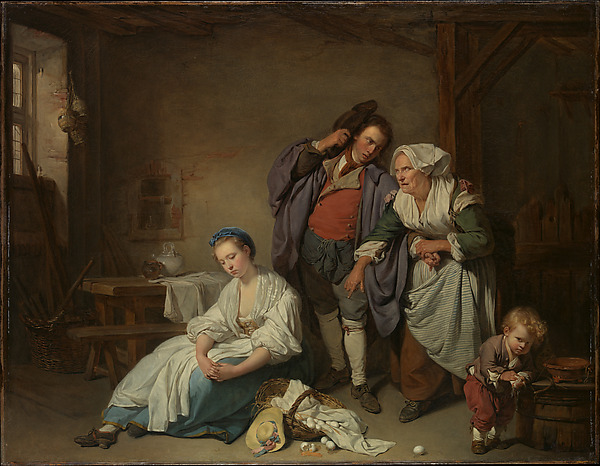
Huevos rotos es una pintura ejecutada en 1756 por el artista francés Jean-Baptiste Greuze. Realizado en óleo sobre lienzo, el cuadro representa a una anciana reprendiendo a su hijo menor responsable de haber roto los huevos en la cesta de la sirvienta que está sentada abatida en el suelo, mientras a la derecha un niño pequeño intenta arreglar uno de los huevos. Es la primera de muchas pinturas de Greuze en las que utiliza objetos rotos como metáfora de la pérdida de la virginidad de una joven. Para los espectadores contemporáneos, estaría muy claro que el joven sombrío y la muchacha compungida han ido más allá del coqueteo. Greuze expuso la obra en el Salón de 1757 con un título explicativo: Une Mère grondant un jeune Homme pour avoir renversé un Panier d'Oeufs que sa Servante apportoit du Marché. Un Enfant tente de raccomoder un oeuf cassé ("Una madre regaña a un joven por haber volcado una cesta de huevos que su sirvienta trajo del mercado. Un niño intenta reparar un huevo roto").
Seguir leyendo
Se exhibe en el Museo Metropolitano de Arte, que lo adquirió en 1920.
Ficha
- Número de inventario
- 20.155.8
Mientras tanto, en la vida de Jean Baptiste Greuze
La vida entera1750–1755
His first picture is taken for someone else’s work
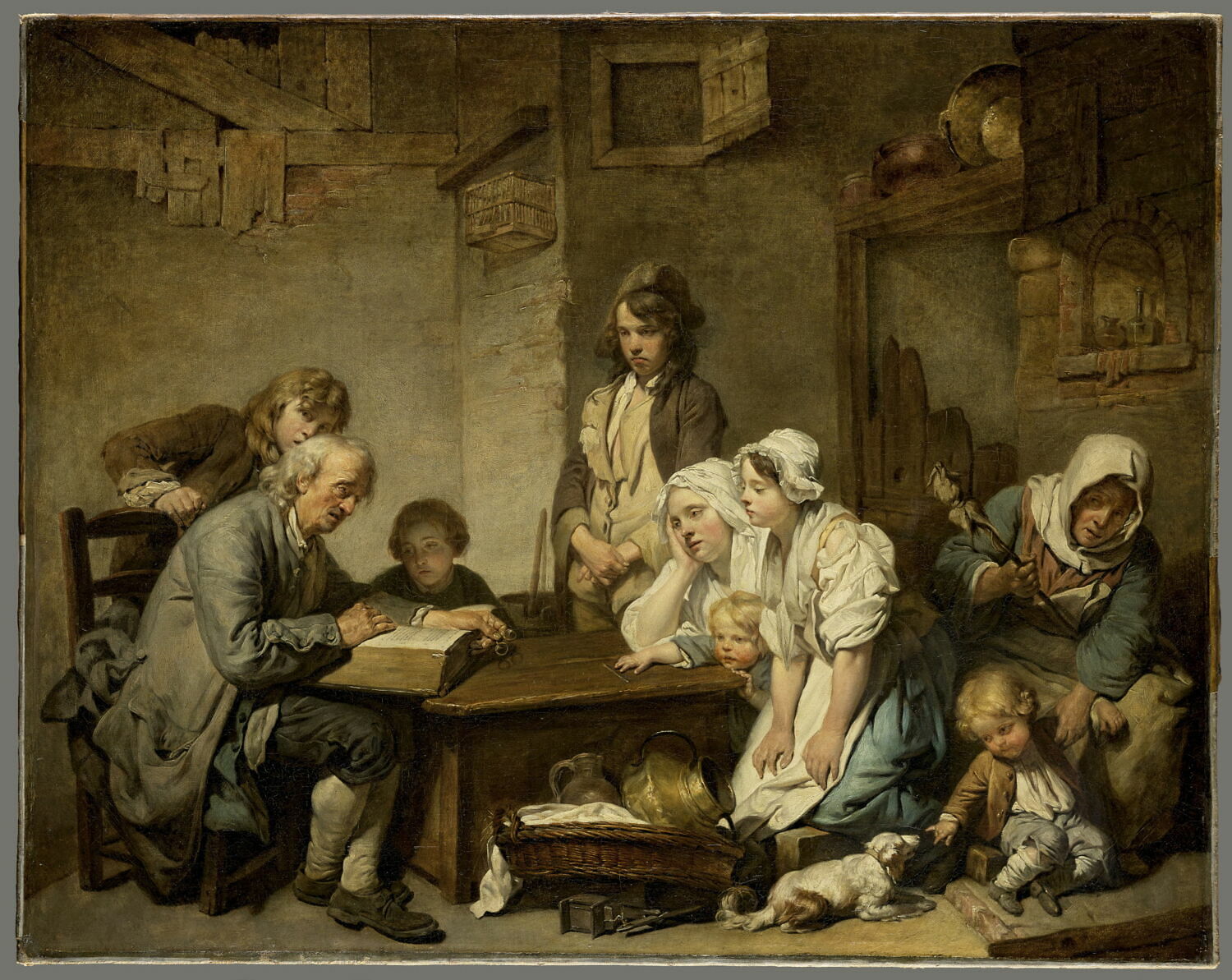
A provincial who has settled in Paris at twenty-five, Greuze draws from the live model at the Royal Academy’s school without attracting his teachers’ attention; when he produces his first picture, The Father of a Family Explaining the Bible to His Children, its authorship is called into question.
1755
The Deceived Blind Man brings him into the Academy
Greuze exhibits The Deceived Blind Man; presented by the sculptor Pigalle, he is immediately accepted by the Academy as an agréé. He also enjoys the support of the well-known connoisseur La Live de Jully, brother-in-law of Madame d’Épinay.
1755–1757
To Italy with Abbé Gougenot
Towards the close of 1755 Greuze leaves for Italy with Abbé Louis Gougenot, a student of mythology and allegory whom the Academy elected an honorary member during the journey; he undertook it probably to silence those who taxed him with ignorance of great models of style. The trip did more harm than good: the Italian subjects that made up all his contributions to the Salon of 1757 showed he had been put on a false track, and he soon returned to the source of his first inspiration.