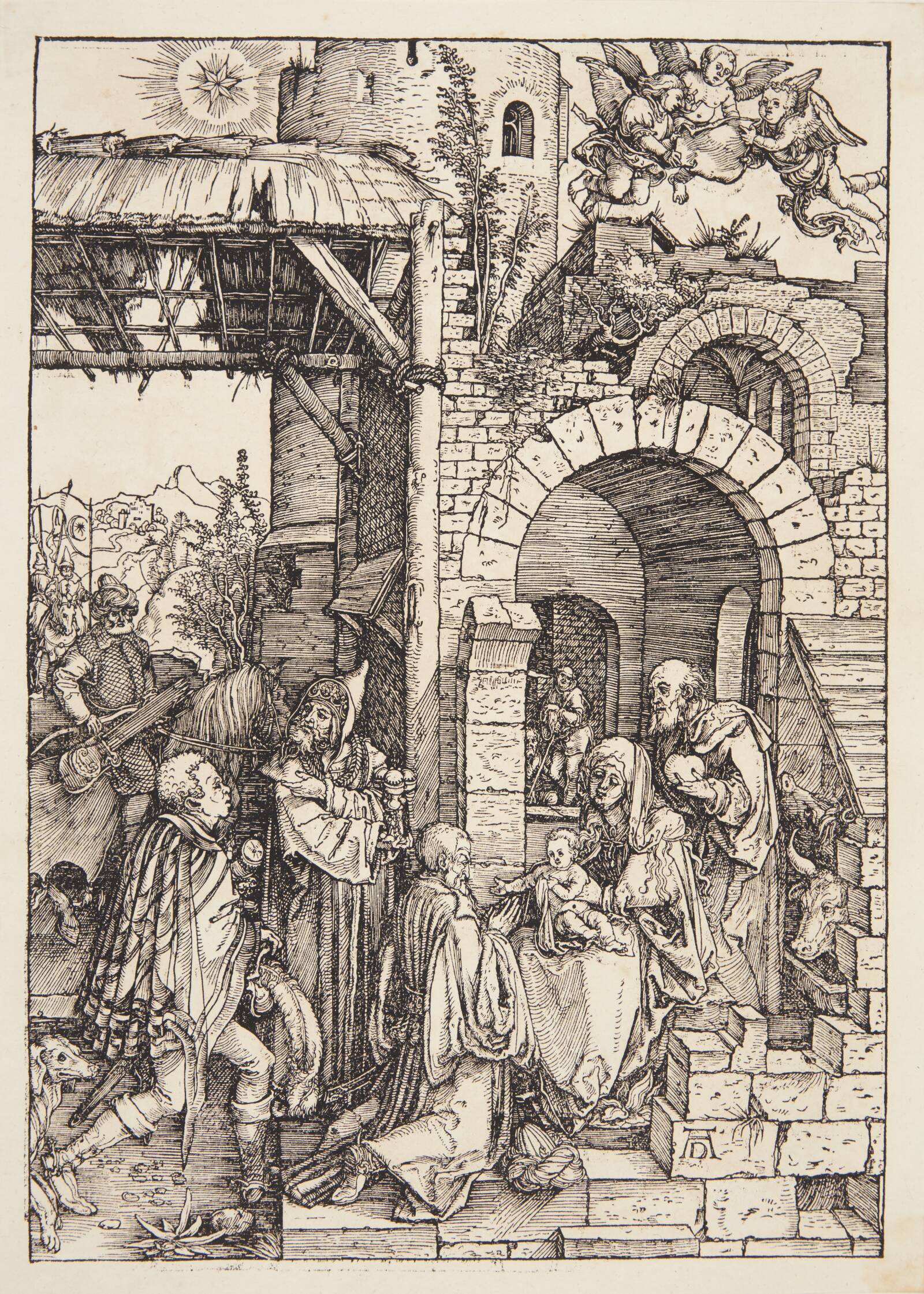
 Albrecht DürerAlemania, 1471–1528
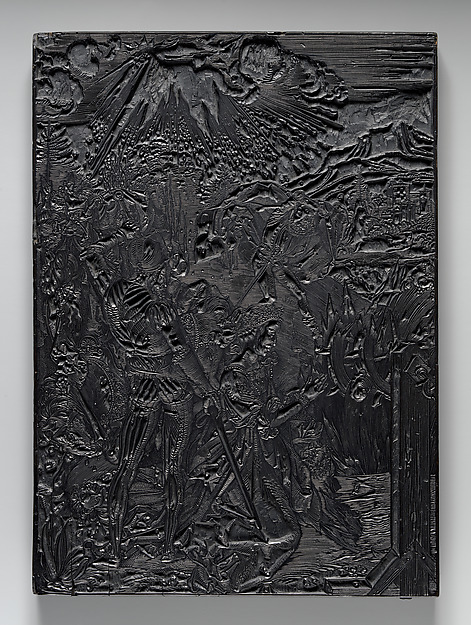
De hellige tre kongers tilbedelse
¿Se puede contemplar?
Por ahora no recibe

Copenhague, Dinamarca
Pertenece a la colección, pero ahora mismo no está expuesta.
- Comprobado
- En este estado desde
- Fuente
- El museo
Ficha
- Número de inventario
- KKSgb9685/22
En el catálogo
Fuentes
- Galería Nacional de Dinamarca
- Imagen: Galería Nacional de Dinamarca — public domain
Mientras tanto, en la vida de Albrecht Dürer
La vida entera1500
Jacopo de' Barbari and the secret of proportion
The Venetian Jacopo de' Barbari, whom Dürer had met in Venice, came to Nuremberg, and Dürer said he learned much from him about perspective, anatomy and proportion. Feeling that de' Barbari would not explain everything he knew, Dürer began studies of his own that became a lifelong preoccupation.
1501–1502
In the circle of Nuremberg's humanists
Through his lifelong friend Willibald Pirckheimer, Dürer entered the circle of Nuremberg's humanists. He engraved illustrations for Conrad Celtis's editions of Hrotsvitha (1501) and of his Four Books of Love (1502), and decorated 14 books in Pirckheimer's library with drawings.
1502
Death of his father
Albrecht Dürer the Elder died, and his son took on the care of his mother and his two younger brothers, Endres and Hans.
1504 · Lugar de trabajo
Lutherstadt Wittenberg
1505
Second journey to Italy
Dürer set off for Italy again — perhaps not only to earn money but also to stop Marcantonio Raimondi from copying his prints. His stay in Venice is known from ten surviving letters to Pirckheimer.
1505–1507
To Bologna for the secrets of perspective
Dürer travelled to the university city of Bologna, hoping to learn the secrets of geometric perspective from its scholars. He then meant to visit Mantegna in Padua but received news of his death, which he greatly regretted afterwards.
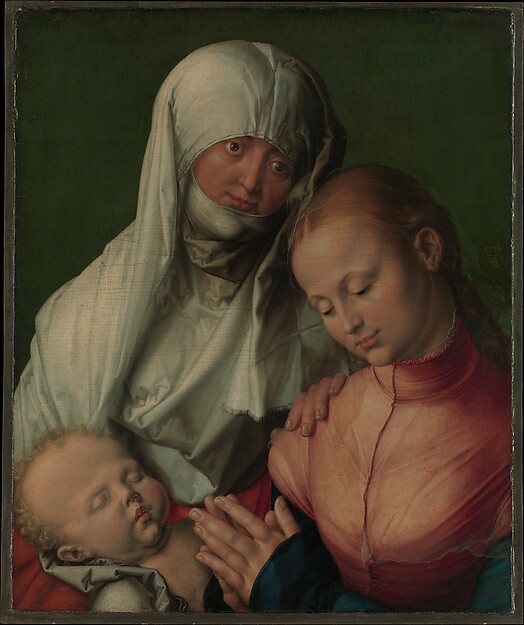
![Madonna and Child [obverse], Albrecht Dürer, c. 1496/1499](https://api.nga.gov/iiif/878db7e6-10ae-4cae-ba5d-6d6f5c413ae8/full/!2400,2400/0/default.jpg)
![Lot and His Daughters [reverse], Albrecht Dürer, c. 1496/1499](https://api.nga.gov/iiif/7565a449-f82a-414b-9bda-c93f55a51b4d/full/!2400,2400/0/default.jpg)