ART WIKI32.963 en sala
MapaColecciónArtistasMuseosExposicionesRevista
Acceder

ART WIKI

Dónde cuelga la obra maestra y cuándo le dejan pasar.

Colecciones: Galería Nacional de Arte, Galería Nacional de Dinamarca, Galería Nacional de Retratos, Galería Tretiakov, Harvard Art Museums, Instituto de Arte de Chicago, Instituto de Artes de Mineápolis, MoMA, Museo de Arte de Cleveland, Museo de Victoria y Alberto, Museo del Hermitage, Museo del Louvre, Museo Estatal Ruso, Museo Hirshhorn y Jardín de Esculturas, Museo J. Paul Getty, Museo Metropolitano de Arte, Museo Pushkin, Museo Smithsoniano de Arte Americano, Museo Whitney de Arte Estadounidense, National Museum of Asian Art, Rijksmuseum, Villa Getty, Catálogo Estatal del Fondo Museístico de Rusia (274 museos), Europeana (19 museos), Wikidata (6 museos), Paris Musées (12 museos) y Joconde, la base de museos del Ministerio de Cultura de Francia (495 museos). Las imágenes pertenecen a sus titulares de derechos.

Secciones

  • Mapa
  • Búsqueda
  • Colección
  • Obras maestras
  • Expuestas ahora
  • Artistas

Más

  • Museos y galerías
  • Exposiciones
  • Revista
  • De dónde salen los datos
  • Privacidad y cookies
InicioMapaCatálogo
  1. Colección/
  2. Instituto de Artes de Mineápolis/
  3. Die Hexe - Witch Riding on a Goat
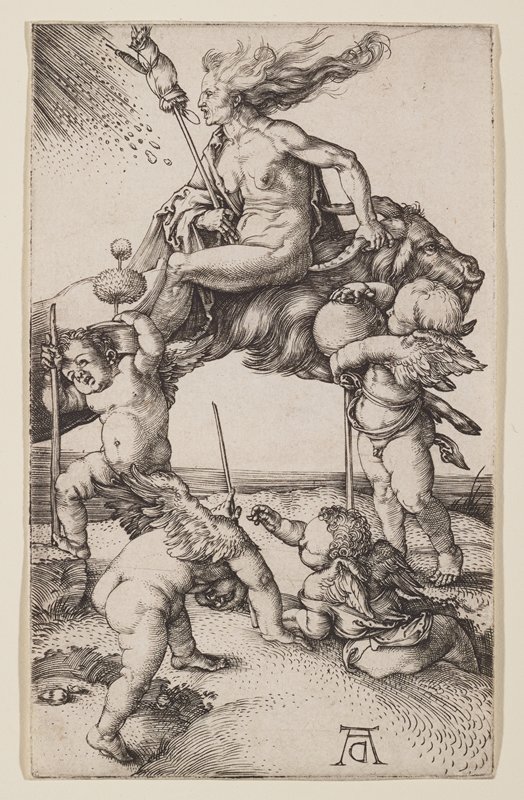
Die Hexe - Witch Riding on a Goat, Albrecht Dürer, c. 1500
Albrecht Dürer, retratoAlbrecht DürerAlemania, 1471–1528

Die Hexe - Witch Riding on a Goat

c. 1500 · Print

¿Se puede contemplar?

Por ahora no recibe

Instituto de Artes de Mineápolis

Minneapolis, Estados Unidos

Pertenece a la colección, pero ahora mismo no está expuesta.

Comprobado
hace 3 días
En este estado desde
29 sept 2026
Fuente
El museo
En el mapaPágina del museo

Sobre la obra

La bruja o Bruja cabalgando hacia atrás sobre una cabra es un grabado sobre cobre fechado alrededor de 1500, realizado por el artista renacentista alemán Alberto Durero (1471-1528).

Wikipedia · CC BY-SA

En palabras del museo

Albrecht Dürer eventually brought a scientific and mathematical mindset to his art, but early in his career, dark and mysterious forces often stoked his imagination. In this engraving, a witch rides backwards on a flying goat, while putti cavort below. One of these capricious baby angels struggles to retain control of the unstable sphere of fate, which can roll in unpredictable directions. Another precariously supports a potted topiary plant, perhaps a symbol of man’s attempts to tame nature. Dürer signed his monogram backwards, confirmation that witchcraft has pushed the world off-kilter.

Instituto de Artes de Mineápolis

Ficha

c. 1500
14711528
Número de inventario
2014.117.2

Lo que muestra

MujerGoatFemale nudePuttiAnimalCherubFigures

En el catálogo

EstampasGrabado a burilRenacimientoSiglo XVIGermanMythologyAlemania

Idas y venidas

  1. Ahora no está expuesta

    Instituto de Artes de Mineápolis · 29 sept 2026 — hoy · Verificado

  2. Ahora no está expuesta

    Galería Nacional de Arte · 29 sept 2026 — 29 sept 2026 · Verificado

  3. Ahora no está expuesta

    Instituto de Artes de Mineápolis · 28 sept 2026 — 29 sept 2026 · Verificado

  4. Ahora no está expuesta

    Galería Nacional de Arte · 27 sept 2026 — 28 sept 2026 · Verificado

  5. Ahora no está expuesta

    Rijksmuseum · 26 sept 2026 — 27 sept 2026 · Verificado

  6. Ahora no está expuesta

    Galería Nacional de Arte · 26 sept 2026 — 26 sept 2026 · Verificado

  7. Ahora no está expuesta

    Rijksmuseum · 25 sept 2026 — 26 sept 2026 · Verificado

Fuentes

  • Instituto de Artes de Mineápolis
  • Imagen: Instituto de Artes de Mineápolis — public domain

Mientras tanto, en la vida de Albrecht Dürer

La vida entera
  1. 1500

    Jacopo de' Barbari and the secret of proportion

    The Venetian Jacopo de' Barbari, whom Dürer had met in Venice, came to Nuremberg, and Dürer said he learned much from him about perspective, anatomy and proportion. Feeling that de' Barbari would not explain everything he knew, Dürer began studies of his own that became a lifelong preoccupation.

  2. 1501–1502

    In the circle of Nuremberg's humanists

    Through his lifelong friend Willibald Pirckheimer, Dürer entered the circle of Nuremberg's humanists. He engraved illustrations for Conrad Celtis's editions of Hrotsvitha (1501) and of his Four Books of Love (1502), and decorated 14 books in Pirckheimer's library with drawings.

  3. 1502

    Death of his father

    Albrecht Dürer the Elder died, and his son took on the care of his mother and his two younger brothers, Endres and Hans.
Más obras de Albrecht Dürer

Todas las obras
Virgin and Child with Saint Anne, Albrecht Dürer, probably 1519

Virgin and Child with Saint Anne

probably 1519 · Museo Metropolitano de Arte

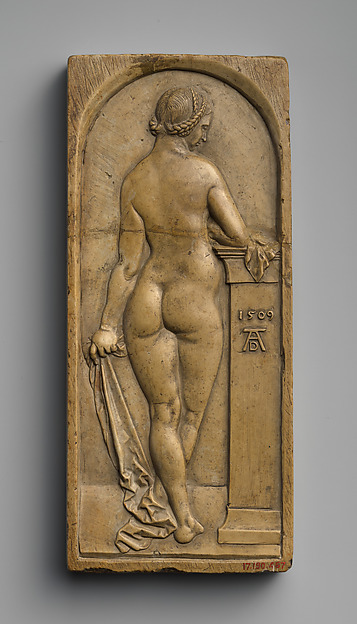
Female Nude Seen from Behind, Albrecht Dürer, early 17th century

Female Nude Seen from Behind

early 17th century · Museo Metropolitano de Arte

Madonna and Child [obverse], Albrecht Dürer, c. 1496/1499

La Virgen con el Niño.

c. 1496/1499 · Galería Nacional de Arte

Lot and His Daughters [reverse], Albrecht Dürer, c. 1496/1499

Lot and His Daughters [reverse]

c. 1496/1499 · Galería Nacional de Arte

The Martyrdom of Saint Catherine, Albrecht Dürer, ca. 1498

The Martyrdom of Saint Catherine

ca. 1498 · Museo Metropolitano de Arte

Nemesis (The Great Fortune), Albrecht Dürer, c. 1501/1502

Nemesis (The Great Fortune)

c. 1501/1502 · Museo de Arte de Cleveland

Large Horse, Albrecht Dürer, 1505

Large Horse

1505 · Museo de Arte de Cleveland

The Lamentation, Albrecht Dürer, 1507

The Lamentation

1507 · Museo de Arte de Cleveland

Bajo el mismo techo: Instituto de Artes de Mineápolis

Página del museo
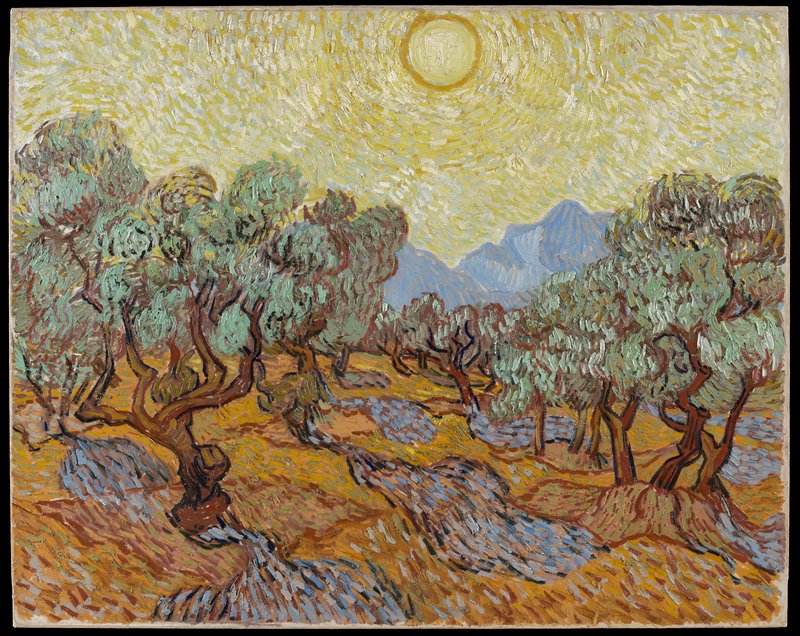
Olive Trees, Vincent van Gogh, 1889

Vincent van Gogh

Olive Trees, 1889

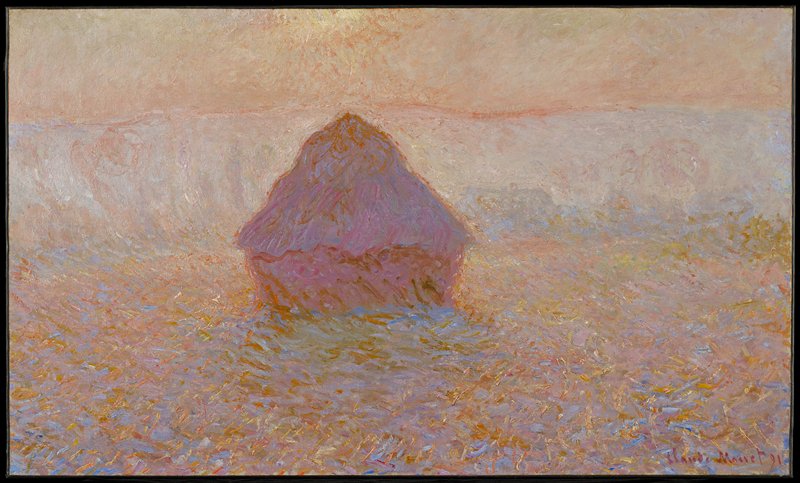
Grainstack, Sun in the Mist, Claude Monet, 1891

Claude Monet

Grainstack, Sun in the Mist, 1891

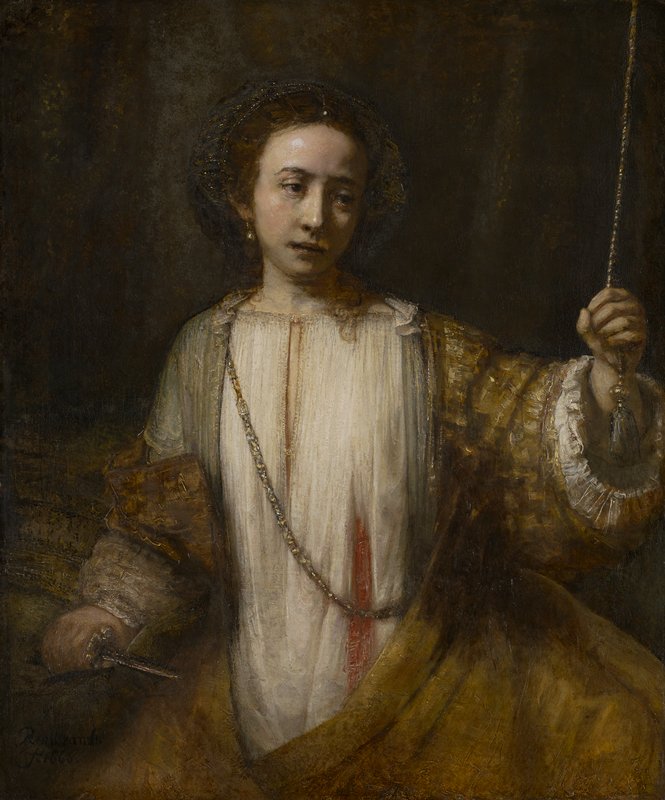
Lucretia, Rembrandt van Rijn, 1666

Rembrandt van Rijn

Lucretia, 1666

Self-Portrait with Dr. Arrieta, Francisco José de Goya y Lucientes, 1820

Francisco de Goya

Goya atendido por el doctor Arrieta, 1820

Study for Improvisation V, Vassily Kandinsky, 1910

Vasily Kandinsky

Study for Improvisation V, 1910

Tahitian Landscape, Paul Gauguin, 1891

Paul Gauguin

Tahitian Landscape, 1891

Chestnut Trees at Jas de Bouffan, Paul Cézanne, c. 1885–86

Paul Cézanne

Chestnut Trees at Jas de Bouffan, c. 1885–86

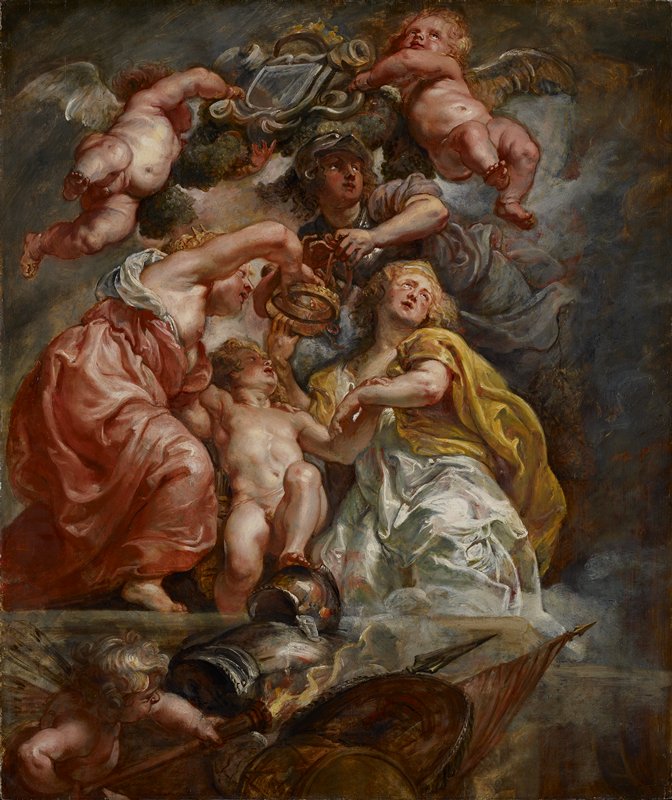
The Union of England and Scotland (Charles I as the Prince of Wales), Peter Paul Rubens, 1633–34

Peter Paul Rubens

The Union of England and Scotland (Charles I as the Prince of Wales), 1633–34

Sobre el mismo tema · Mujer

Todas las obras sobre el tema
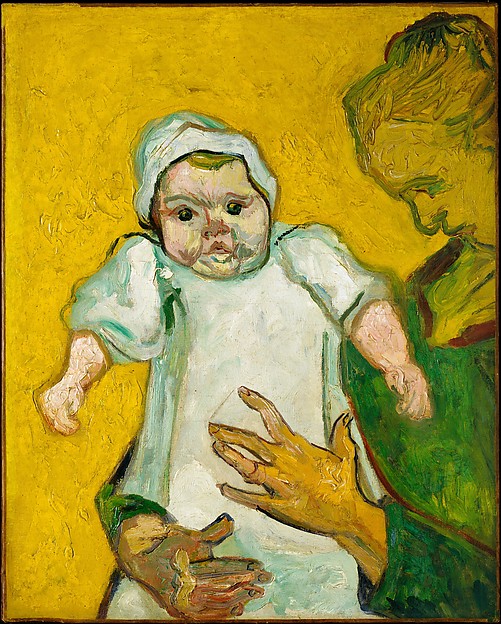
Madame Roulin and Her Baby, Vincent van Gogh, 1888

Vincent van Gogh

Madame Roulin and Her Baby, 1888

Museo Metropolitano de Arte

Garden at Sainte-Adresse, Claude Monet, 1867

Claude Monet

La terraza de Sainte-Adresse, 1867

Museo Metropolitano de Arte

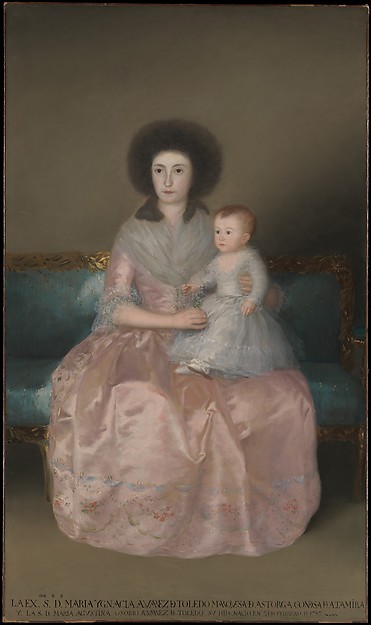
Condesa de Altamira and Her Daughter, María Agustina, Goya, 1787–88

Francisco de Goya

Condesa de Altamira and Her Daughter, María Agustina, 1787–88

Museo Metropolitano de Arte

Two Women on the Shore, Edvard Munch, 1898

Edvard Munch

Two Women on the Shore, 1898

Rijksmuseum

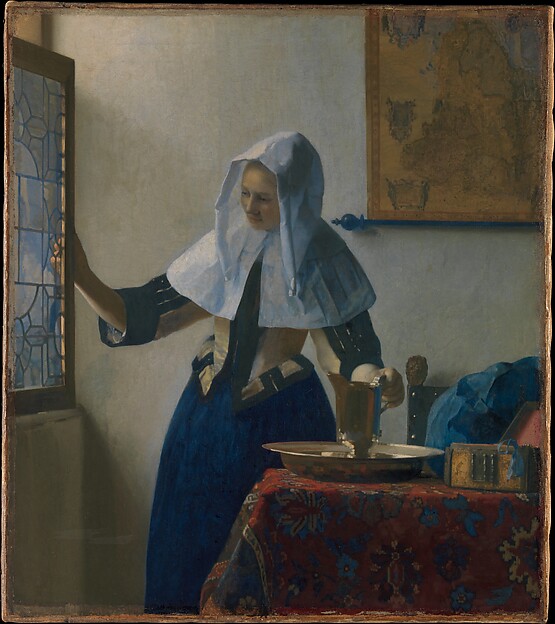
Young Woman with a Water Pitcher, Johannes Vermeer, ca. 1662

Johannes Vermeer

Mujer con una jarra de agua, ca. 1662

Museo Metropolitano de Arte

Study of a Young Woman, Johannes Vermeer, ca. 1665–67

Johannes Vermeer

Retrato de una mujer joven, ca. 1665–67

Museo Metropolitano de Arte

Ia Orana Maria (Hail Mary), Paul Gauguin, 1891

Paul Gauguin

Ia Orana Maria (Hail Mary), 1891

Museo Metropolitano de Arte

Rubens, Helena Fourment (1614–1673), and Their Son Frans (1633–1678), Peter Paul Rubens, ca. 1635

Peter Paul Rubens

Rubens, Helena Fourment (1614–1673), and Their Son Frans (1633–1678), ca. 1635

Museo Metropolitano de Arte