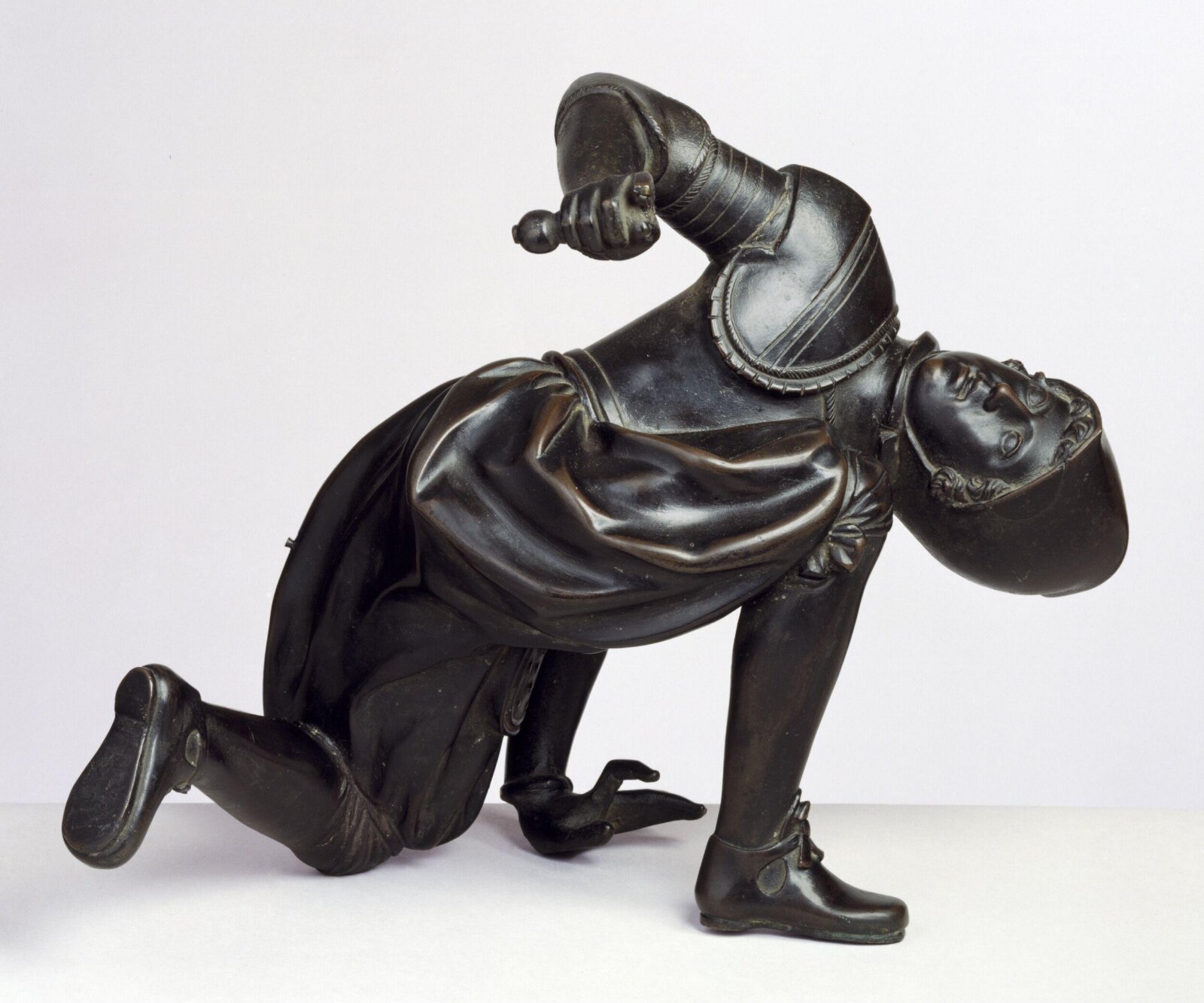
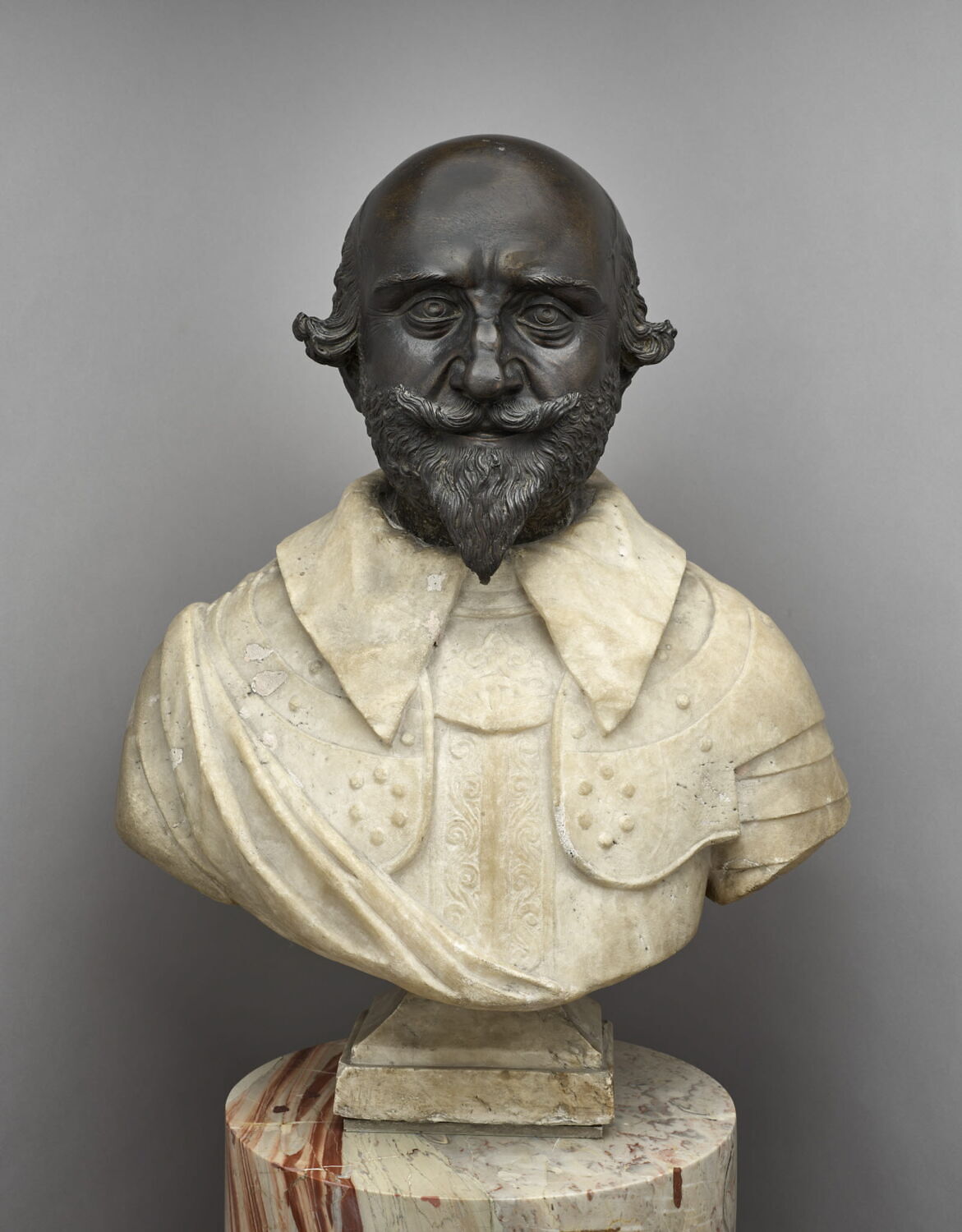
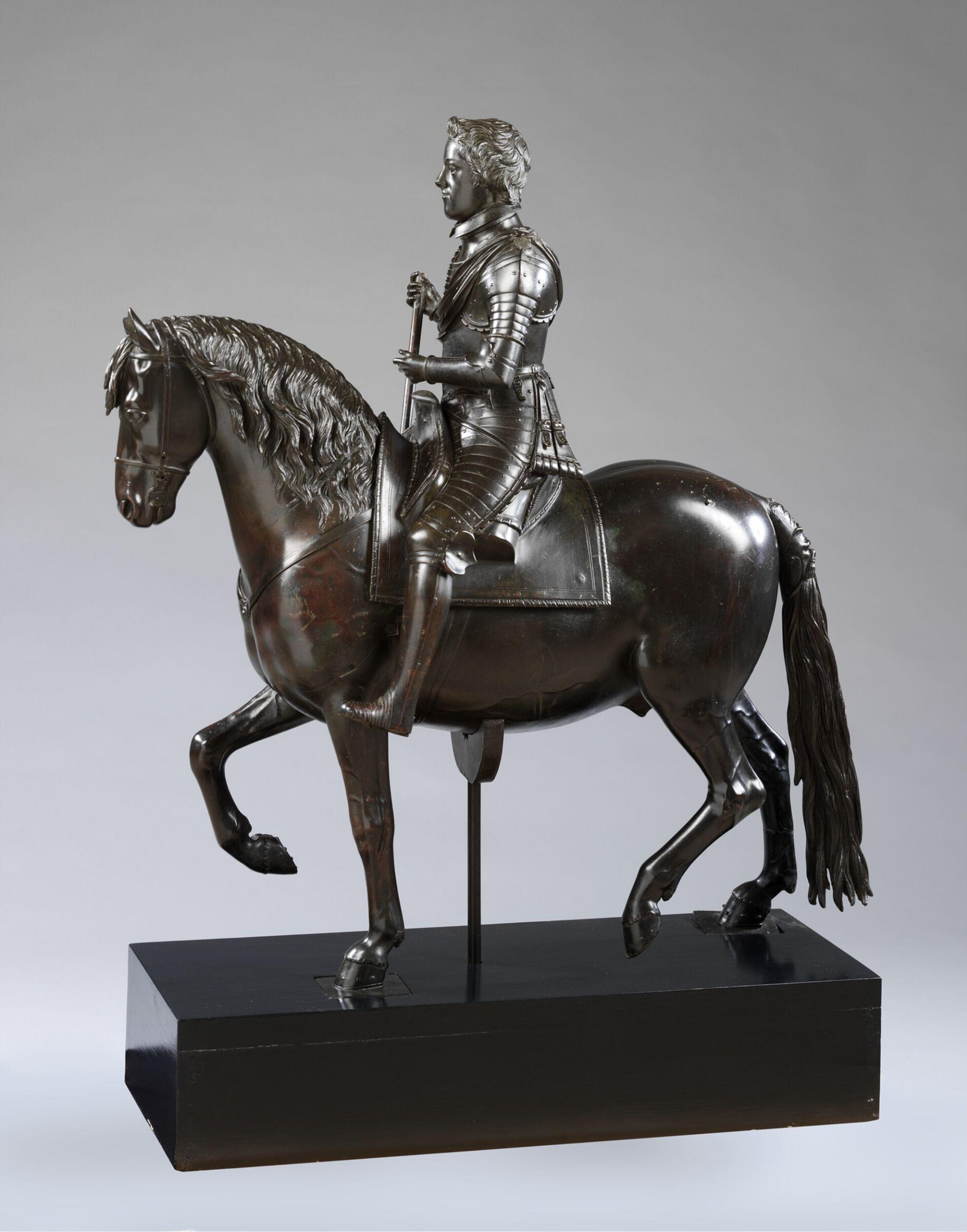
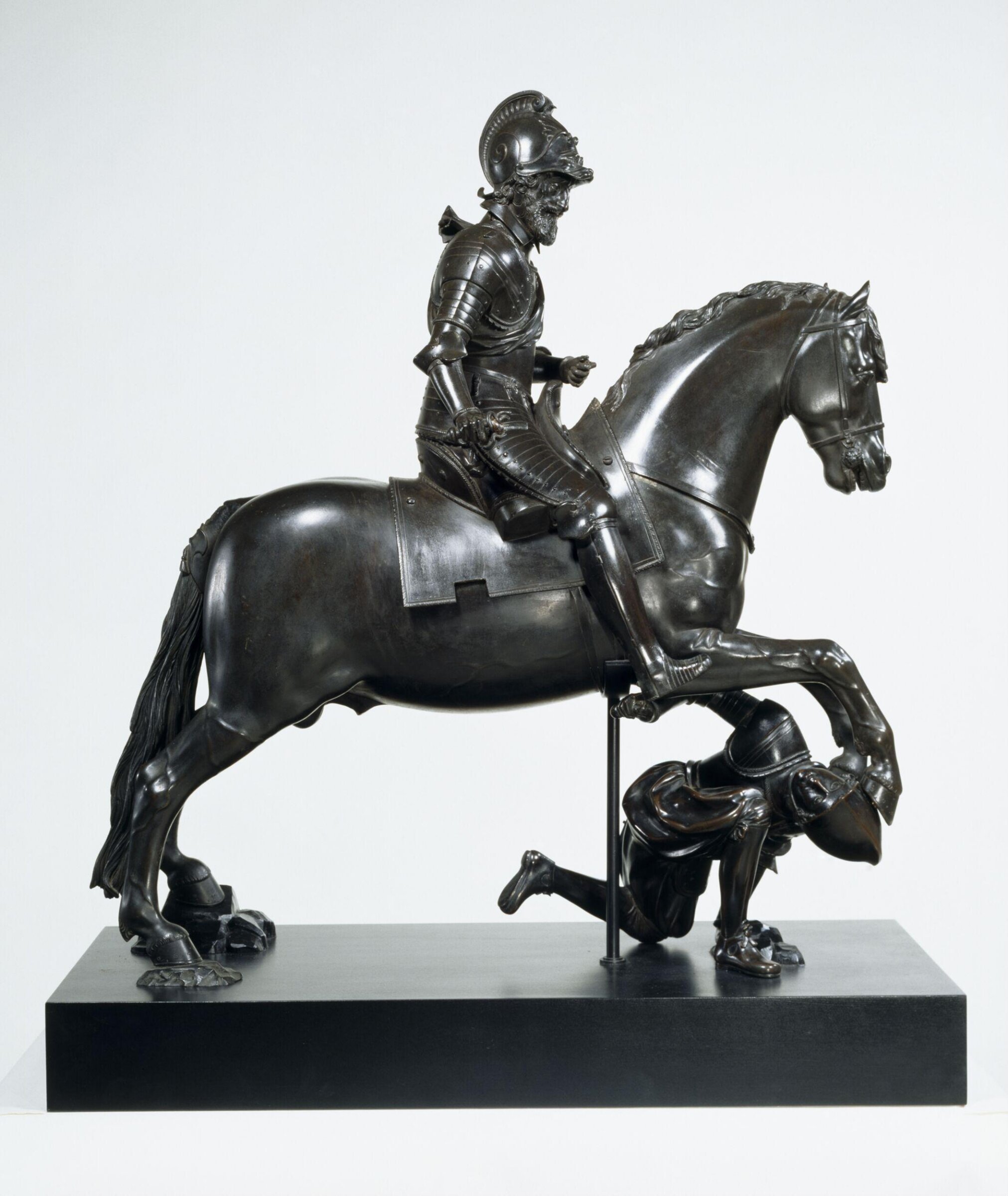
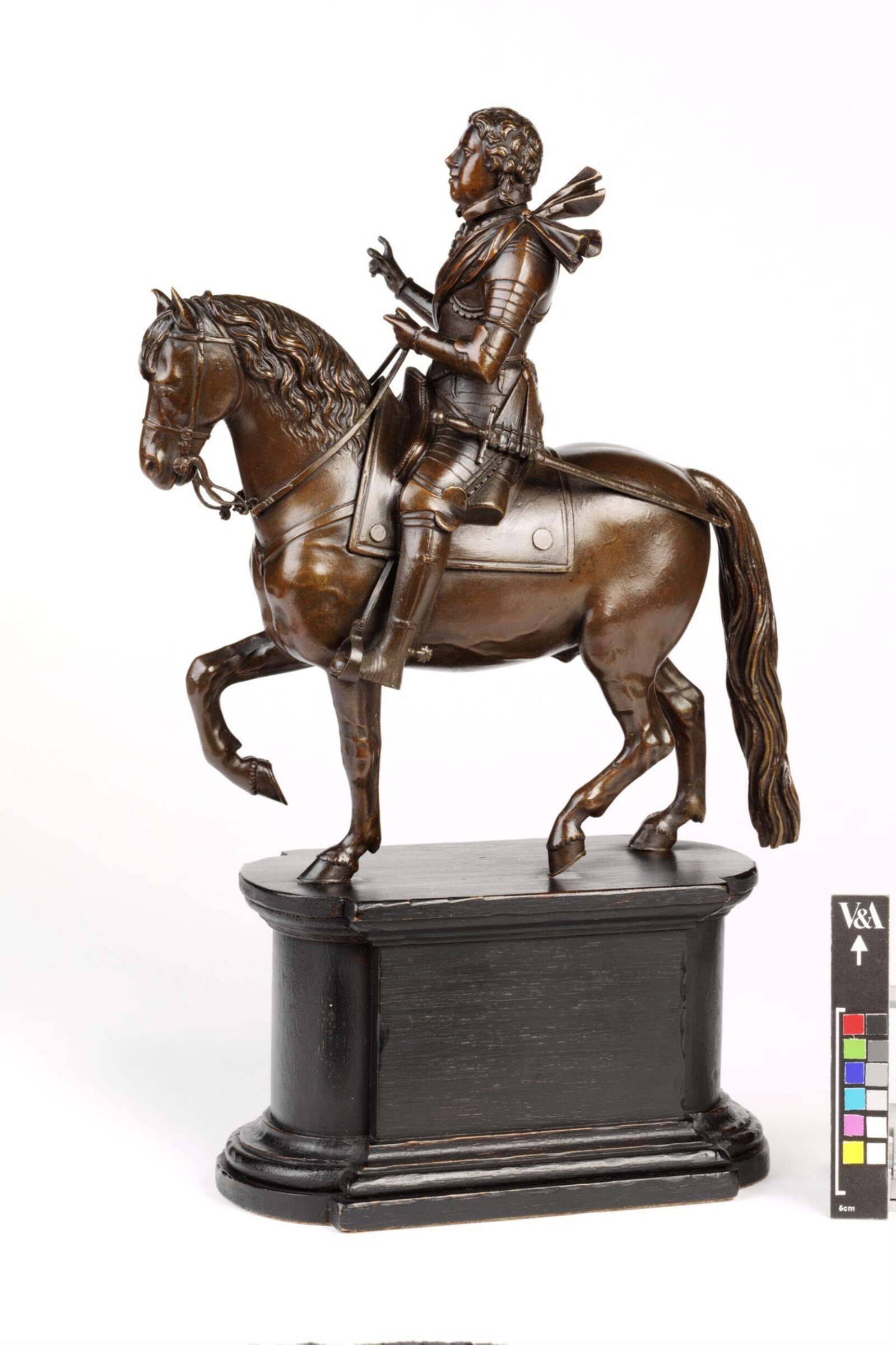
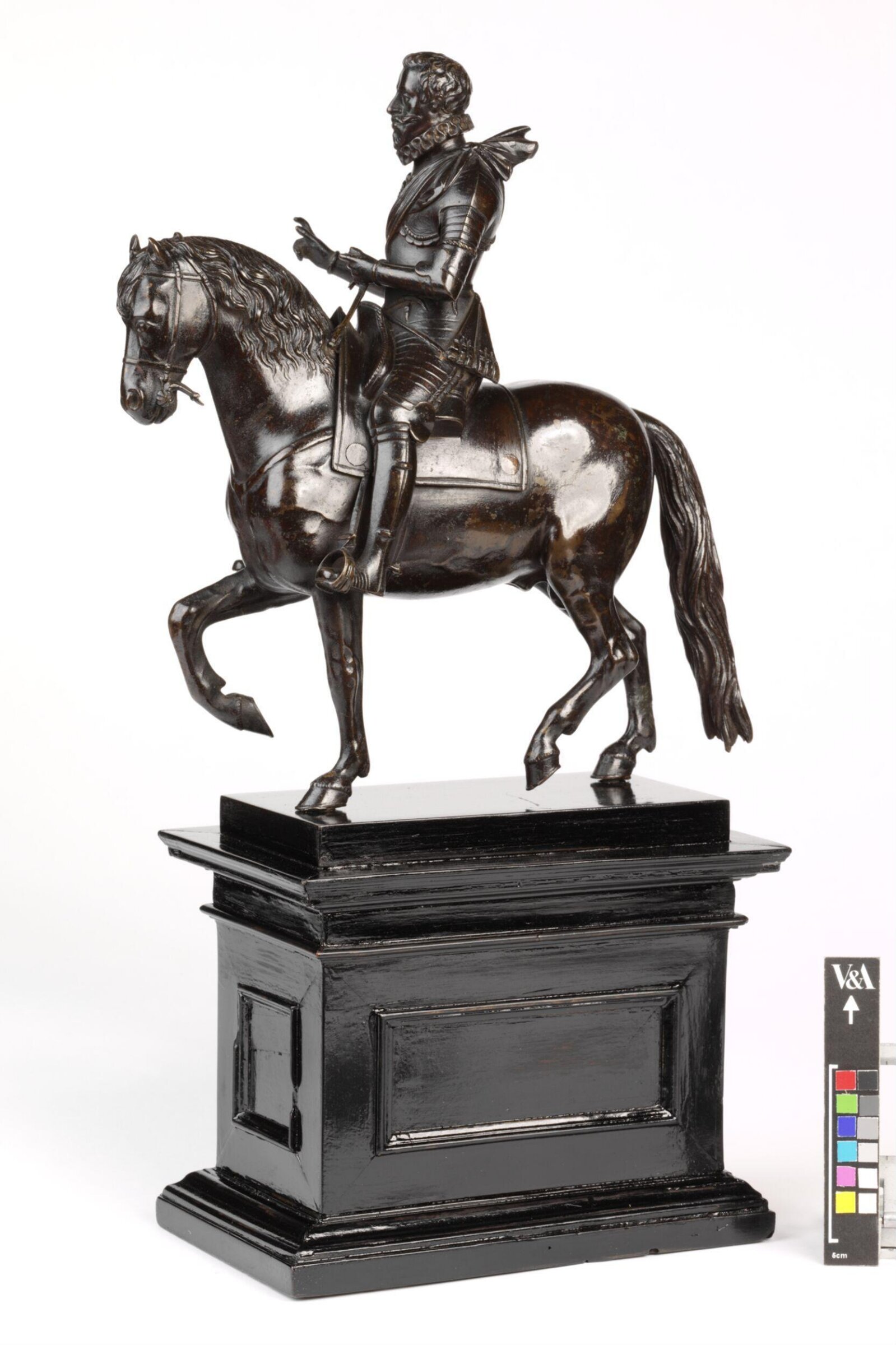
Henri IV of France reigned 1589-1610. The equestrian bronze statue of which this warrior forms a part is one of a pair; the other represents Louis XIII, Henri's son and successor (A.47-1951). Only two of Le Sueur's surviving equestrian bronzes are signed: a small statuette of Louis XIII in the V&A (A.1-1994) of about 1620, and the life-size statue of Charles I at Trafalgar Square dated 1633. The Statues of Henri IV and Louis XIII are attributed to Le Sueur on the basis of their close relationship to these two works.
Read on
Both works probably date from Le Sueur's period of activity as sculptor in Paris before he went to England in 1625 to work for the court of Charles I, shortly after the marriage of Charles to Louis XIII's sister, Henrietta-Marie. Comparison with the apparent age of Louis XIII on contemporary medals suggests that the bronzes were made in 1615-20, when he was 14-19 years of age, Henri IV was deeply involved in the Wars of Religion between Catholics and Huguenots (Protestants) in France which lasted from 1562-1598. This statue reflects Henri's successful struggle to bring these hostilities to an end.
Le Sueur was sculpteur ordinaire to the King of France, before being sent to London where he stayed until Civil War forced his return to France. His skill and precision in portraying armour may reflect the influence of his father who was a master armourer in Paris. Horse and rider were cast separately. The back of the horse has a large hole, concealed by the rider, through which the core material from casting was removed. The head of the King was also separately cast. This working practice, which could enable the head of a different rider to be added to the basic model, was developed in the workshop of Pietro Tacca, and also practised by the Austrian sculptor Caspar Gras. In using this method, as well as in the concept of the heroic equestrian statue, Le Sueur was influenced by the work of Giambologna and of his assistant,Tacca, whose work he knew in Paris.