
ART WIKI32.963 en sala
MapaColecciónArtistasMuseosExposicionesRevista
Acceder

ART WIKI

Dónde cuelga la obra maestra y cuándo le dejan pasar.

Colecciones: Galería Nacional de Arte, Galería Nacional de Dinamarca, Galería Nacional de Retratos, Galería Tretiakov, Harvard Art Museums, Instituto de Arte de Chicago, Instituto de Artes de Mineápolis, MoMA, Museo de Arte de Cleveland, Museo de Victoria y Alberto, Museo del Hermitage, Museo del Louvre, Museo Estatal Ruso, Museo Hirshhorn y Jardín de Esculturas, Museo J. Paul Getty, Museo Metropolitano de Arte, Museo Pushkin, Museo Smithsoniano de Arte Americano, Museo Whitney de Arte Estadounidense, National Museum of Asian Art, Rijksmuseum, Villa Getty, Catálogo Estatal del Fondo Museístico de Rusia (274 museos), Europeana (19 museos), Wikidata (6 museos), Paris Musées (12 museos) y Joconde, la base de museos del Ministerio de Cultura de Francia (495 museos). Las imágenes pertenecen a sus titulares de derechos.

Secciones

  • Mapa
  • Búsqueda
  • Colección
  • Obras maestras
  • Expuestas ahora
  • Artistas

Más

  • Museos y galerías
  • Exposiciones
  • Revista
  • De dónde salen los datos
  • Privacidad y cookies
InicioMapaCatálogo
  1. Colección/
  2. Museo de Arte de Cleveland/
  3. Chrysanthemums and Cabbage
Chrysanthemums and Cabbage, Tao Cheng, c. 1486 or before
TTao ChengChina, 1471

Chrysanthemums and Cabbage

c. 1486 or before · Painting

¿Se puede contemplar?

Por ahora no recibe

Museo de Arte de Cleveland

Cleveland, Estados Unidos

Pertenece a la colección, pero ahora mismo no está expuesta.

Comprobado
hace 3 días
En este estado desde
19 ago 2026
Fuente
El museo
En el mapaPágina del museo

Sobre el cuadro

On an autumn day in Beijing, Tao Cheng had a gathering with a group of scholar-officials and created two paintings in a spontaneous, casual style. The first depicts chrysanthemums, slender bamboo stalks, and a rock in monochrome ink. Tao applied light colors for the second painting that depicts cabbage. Tao deliberately placed the images on the first sections of the paper so that his honorable guests could add their poetic inscriptions inspired by his imagery.

Seguir leyendo

In the first section to the right, all seven poetic inscriptions refer to the beloved poet and recluse Tao Qian (also called Tao Yuanming, AD 365–427) who was particularly known for his profound love for chrysanthemum flowers. Most of the inscriptions in the second section express sympathy for the poor, since cabbage is the main ingredient in their humble food. Taken together, the poems and paintings allude to the life and responsibilities of the scholar-official: the importance of both an upright character and a concern for the poor citizens in order to achieve good government.

Museo de Arte de Cleveland

Ficha

Número de inventario
1960.40

En el catálogo

PinturaTintaPintura chinaRenacimientoSiglo XVChina, Ming dynasty (1368–1644)

Fuentes

  • Museo de Arte de Cleveland
  • Imagen: Museo de Arte de Cleveland — Museum open access
Bajo el mismo techo: Museo de Arte de Cleveland

Página del museo
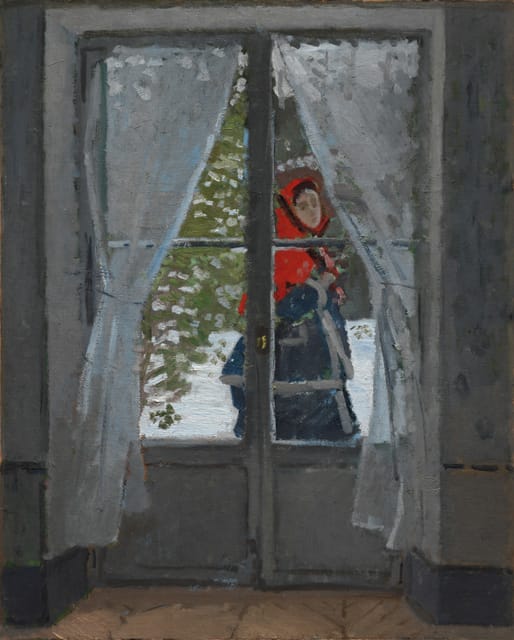
The Red Kerchief, Claude Monet, c. 1868–73

Claude Monet

The Red Kerchief, c. 1868–73

Melencolia I, Albrecht Dürer, 1514

Albrecht Dürer

Melancolía I, 1514

The Virgin and Child with the Pear, Albrecht Dürer, 1511

Albrecht Dürer

The Virgin and Child with the Pear, 1511

The Nativity, Albrecht Dürer, probably c. 1509/1510

Albrecht Dürer

The Nativity, probably c. 1509/1510

The Virgin and Child on a Crescent with a Starry Crown, Albrecht Dürer, 1508

Albrecht Dürer

The Virgin and Child on a Crescent with a Starry Crown, 1508

The Lamentation, Albrecht Dürer, 1507

Albrecht Dürer

The Lamentation, 1507

Large Horse, Albrecht Dürer, 1505

Albrecht Dürer

Large Horse, 1505

Nemesis (The Great Fortune), Albrecht Dürer, c. 1501/1502

Albrecht Dürer

Nemesis (The Great Fortune), c. 1501/1502