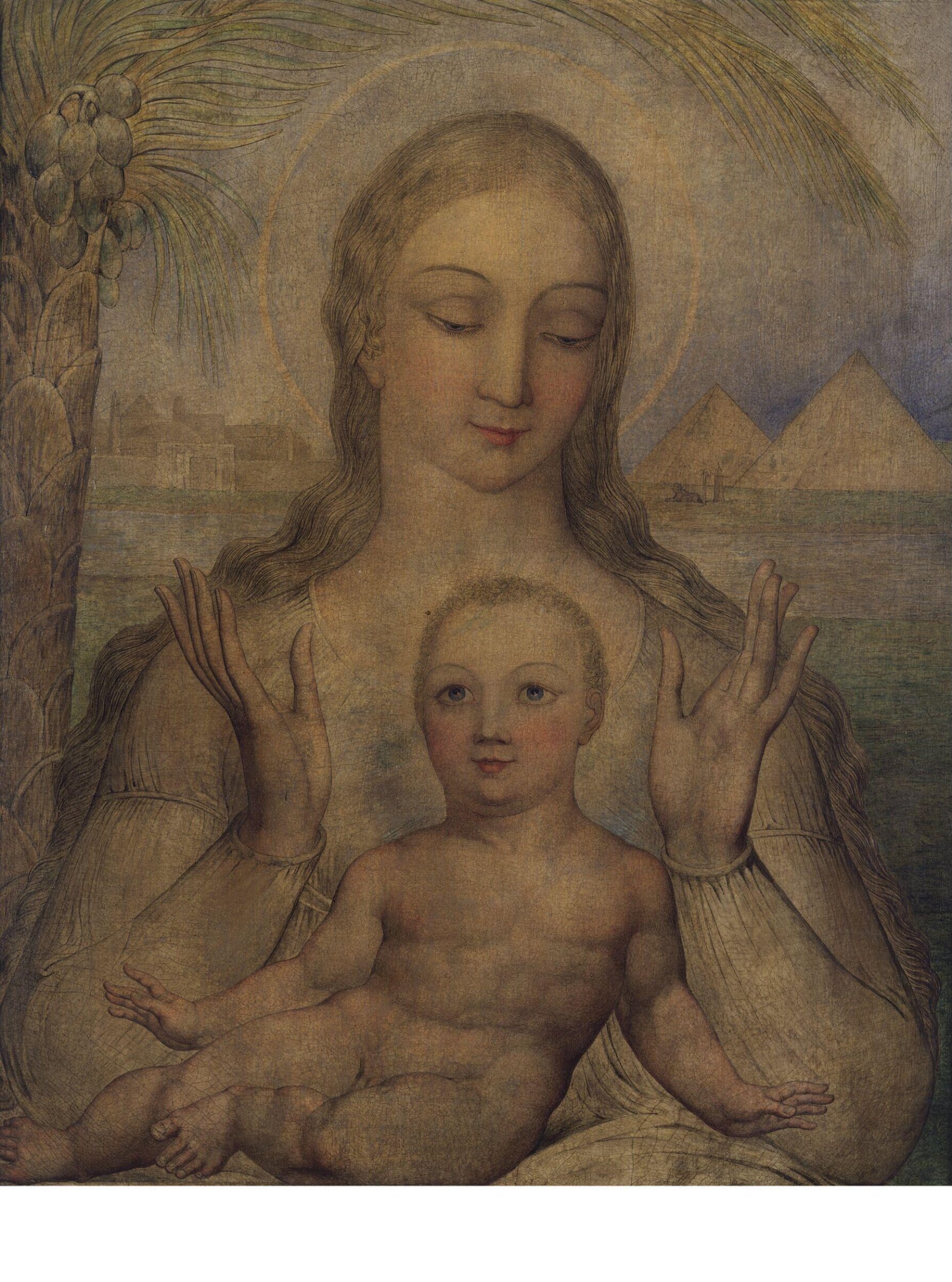
William BlakeReino Unido, 1757–1827
Canto I
¿Puedo verla?
No expuesta por ahora
¿Dónde está «Canto I» hoy? Colección: Galería Nacional de Arte, Washington D. C. No expuesta por ahora. Comprobado 23 de noviembre de 2026.

Washington D. C., Estados Unidos
Pertenece a la colección, pero ahora mismo no está expuesta.
- Comprobado
- En este estado desde
- Fuente
- El museo
Sobre la obra
Canto I, hecho por William Sharp según Thomas Stothard en 1787-1788, pertenece a la National Gallery of Art de Washington. Figuras se reúnen en torno a un gran rostro que emerge de la roca, con otro rostro alado arriba entre las nubes. Aguafuerte y grabado se combinan sobre papel avitelado. La imagen, asociada a The Triumphs of Temper de William Hayley, mide solo 10,5 por 6,9 centímetros.
Ficha
- Número de inventario
- 1983.103.2.c
Lo que muestra
En el catálogo
Fuentes
- Galería Nacional de Arte
- Imagen: Galería Nacional de Arte — Museum open access
En la vida de William Blake
La vida entera1779–1785
Rebelling against Reynolds at the Academy
At the Royal Academy Blake rebelled against what he regarded as the unfinished style of fashionable painters such as Rubens, championed by the first president, Joshua Reynolds, and over time came to detest Reynolds' pursuit of “general truth” and “general beauty”. Against Reynolds' fashionable oil painting he preferred the classical precision of Michelangelo and Raphael.
1780–1808
Exhibits six times at the Royal Academy
Despite his antagonism towards Reynolds, Blake submitted works to the Royal Academy on six occasions between 1780 and 1808.
1784–1785 · Residencia
Broadwick Street
1785–1791 · Residencia
Poland Street
1788
Invents relief etching
In 1788, aged 31, Blake invented relief etching, or “illuminated printing”: text and designs are drawn on a copper plate in acid-resistant ink and etched so that the protected areas stand in relief, and the printed pages are coloured by hand in watercolours. He used it for most of his well-known works, including “Songs of Innocence and of Experience”, “The Book of Thel”, “The Marriage of Heaven and Hell” and “Jerusalem”.