ART WIKI32.963 en sala
MapaColecciónArtistasMuseosExposicionesRevista
Acceder

ART WIKI

Dónde cuelga la obra maestra y cuándo le dejan pasar.

Colecciones: Galería Nacional de Arte, Galería Nacional de Dinamarca, Galería Nacional de Retratos, Galería Tretiakov, Harvard Art Museums, Instituto de Arte de Chicago, Instituto de Artes de Mineápolis, MoMA, Museo de Arte de Cleveland, Museo de Victoria y Alberto, Museo del Hermitage, Museo del Louvre, Museo Estatal Ruso, Museo Hirshhorn y Jardín de Esculturas, Museo J. Paul Getty, Museo Metropolitano de Arte, Museo Pushkin, Museo Smithsoniano de Arte Americano, Museo Whitney de Arte Estadounidense, National Museum of Asian Art, Rijksmuseum, Villa Getty, Catálogo Estatal del Fondo Museístico de Rusia (274 museos), Europeana (19 museos), Wikidata (6 museos), Paris Musées (12 museos) y Joconde, la base de museos del Ministerio de Cultura de Francia (495 museos). Las imágenes pertenecen a sus titulares de derechos.

Secciones

  • Mapa
  • Búsqueda
  • Colección
  • Obras maestras
  • Expuestas ahora
  • Artistas

Más

  • Museos y galerías
  • Exposiciones
  • Revista
  • De dónde salen los datos
  • Privacidad y cookies
InicioMapaCatálogo
  1. Colección/
  2. Instituto de Arte de Chicago/
  3. Blooming Plant
Blooming Plant, Paul Klee, 1931
Paul Klee, retratoPaul KleeAlemania, 1879–1940

Blooming Plant

1931 · Drawing and Watercolor

¿Se puede contemplar?

Por ahora no recibe

Instituto de Arte de Chicago

Chicago, Estados Unidos

Pertenece a la colección, pero ahora mismo no está expuesta.

Comprobado
anteayer
En este estado desde
19 ago 2026
Fuente
Los datos de colección del propio museo
En el mapaPágina del museo

Ficha

1931 · a los 52 años
18791940
Número de inventario
1978.604

En el catálogo

Dibujos y acuarelasAcuarelaModernismoSiglo XXAlemania

Fuentes

  • Instituto de Arte de Chicago: los datos abiertos del museo · obtenido hace 8 días
  • Imagen: Instituto de Arte de Chicago — © the artist or rights holder

Mientras tanto, en la vida de Paul Klee

La vida entera
  1. 1921–1931

    The preliminary course on the “theory of form”

    Klee developed a preliminary course in the “theory of form” that began with the “point as the beginning of all beginnings”, moving through space, and the “cosmic egg” from which line, spiral, square, circle and cube are born. Students listened to lectures illustrated with Klee’s own abstract watercolours and then painted their own, trying to express movement, balance, flight and tension.

  2. 1928–1929

    A journey to Egypt

    Egypt impressed Klee less than Tunisia, yet in the desert he felt an almost mystical bond with the land: he was drawn to the proportions of the ancient funerary monuments and to the esoteric numerology by which they were built. His later “Ad Parnassum” was influenced by the trip.

  3. 1931

    Leaving the Bauhaus for the Düsseldorf Academy

    Teaching at the Bauhaus shifted ever more from painting towards an architectural aesthetic, which no longer suited Klee: in 1931 he gave up his post there and became a professor at the Düsseldorf Academy of Art.

  4. 1933

    Nazi harassment, a house search and dismissal

    When the Nazis came to power a campaign of persecution was launched against Klee: the press called him a “typical Galician Jew”, his flat in Dessau was searched, and in Düsseldorf he was barred from work until he produced documents proving Aryan descent. He was forced to give up his professorship.

  5. late 1933

    Emigration to Switzerland

    At the end of 1933, at his wife’s insistence, Klee left Germany and returned to Bern. He applied for Swiss citizenship, but a positive answer came only after his death.

  6. 1933–1934

    Shows in London and Paris, and a meeting with Picasso

    In 1933–34 Klee had shows in London and Paris and finally met Pablo Picasso, whom he greatly admired.

Más obras de Paul Klee

Todas las obras
New House in the Suburbs, Paul Klee, 1924

New House in the Suburbs

1924 · Galería Nacional de Arte

May Picture, Paul Klee, 1925

May Picture

1925 · Museo Metropolitano de Arte

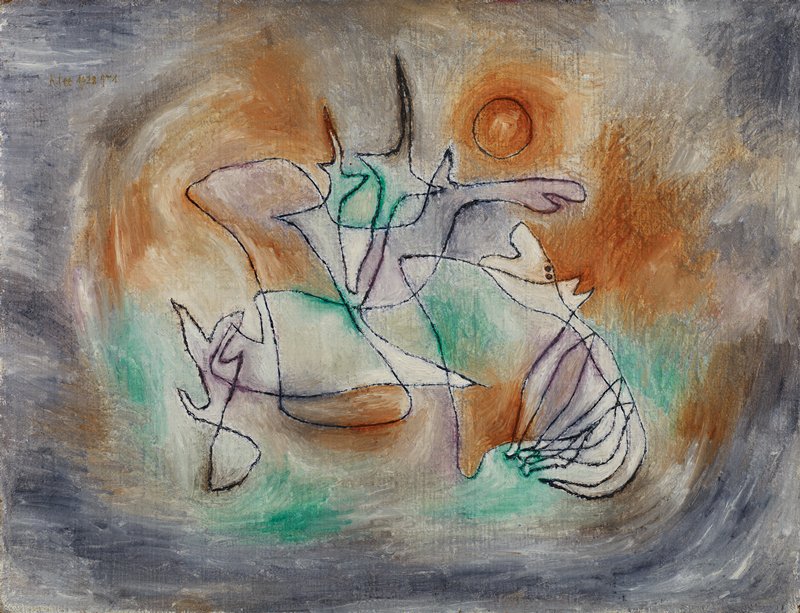
Howling Dog, Paul Klee, 1928

Howling Dog

1928 · Instituto de Artes de Mineápolis

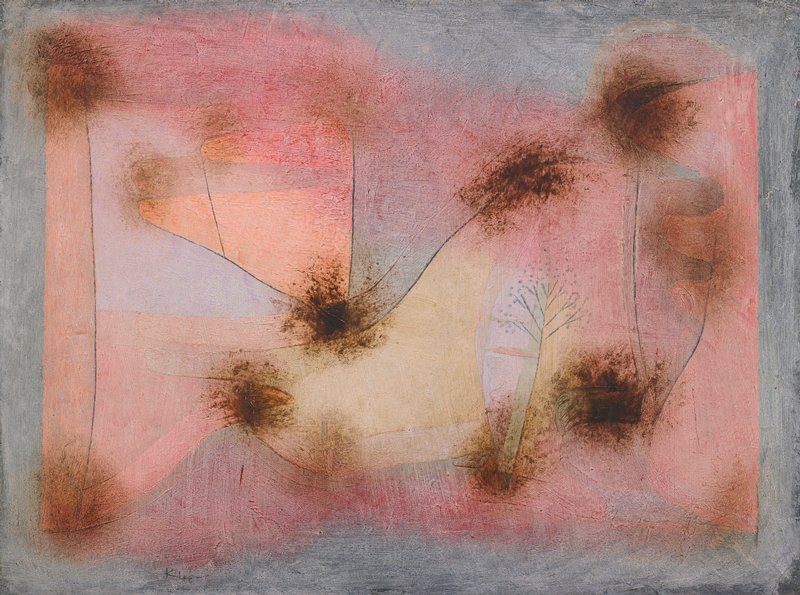
Hardy Plants, Paul Klee, 1934

Hardy Plants

1934 · Instituto de Artes de Mineápolis

Stakim, Paul Klee, c. 1928

Stakim

c. 1928 · Instituto de Arte de Chicago

Fleeing Ghost, Paul Klee, 1929

Fleeing Ghost

1929 · Instituto de Arte de Chicago

In the Magic Mirror, Paul Klee, 1934

In the Magic Mirror

1934 · Instituto de Arte de Chicago

Auslöschendes Licht, Paul Klee

Auslöschendes Licht

Albertina

Bajo el mismo techo: Instituto de Arte de Chicago

Página del museo
The Bedroom, Vincent van Gogh, 1889

Vincent van Gogh

The Bedroom, 1889

A Sunday on La Grande Jatte — 1884, Georges Seurat, 1884–86, border added 1888–89

Georges Seurat

Tarde de domingo en la isla de la Grande Jatte, 1884–86, border added 1888–89

Paris Street; Rainy Day, Gustave Caillebotte, 1877

Gustave Caillebotte

Calle de Paris, dia de lluvia, 1877

Two Sisters (On the Terrace), Pierre-Auguste Renoir, 1881

Pierre-Auguste Renoir

En la terraza, 1881

The Basket of Apples, Paul Cézanne, c. 1893

Paul Cézanne

Cesto de manzanas, c. 1893

Stacks of Wheat (End of Summer), Claude Monet, 1890–91

Claude Monet

Stacks of Wheat (End of Summer), 1890–91

American Gothic, Grant Wood, 1930

Grant Wood

American Gothic, 1930

Nighthawks, Edward Hopper, 1942

Edward Hopper

Noctámbulos, 1942