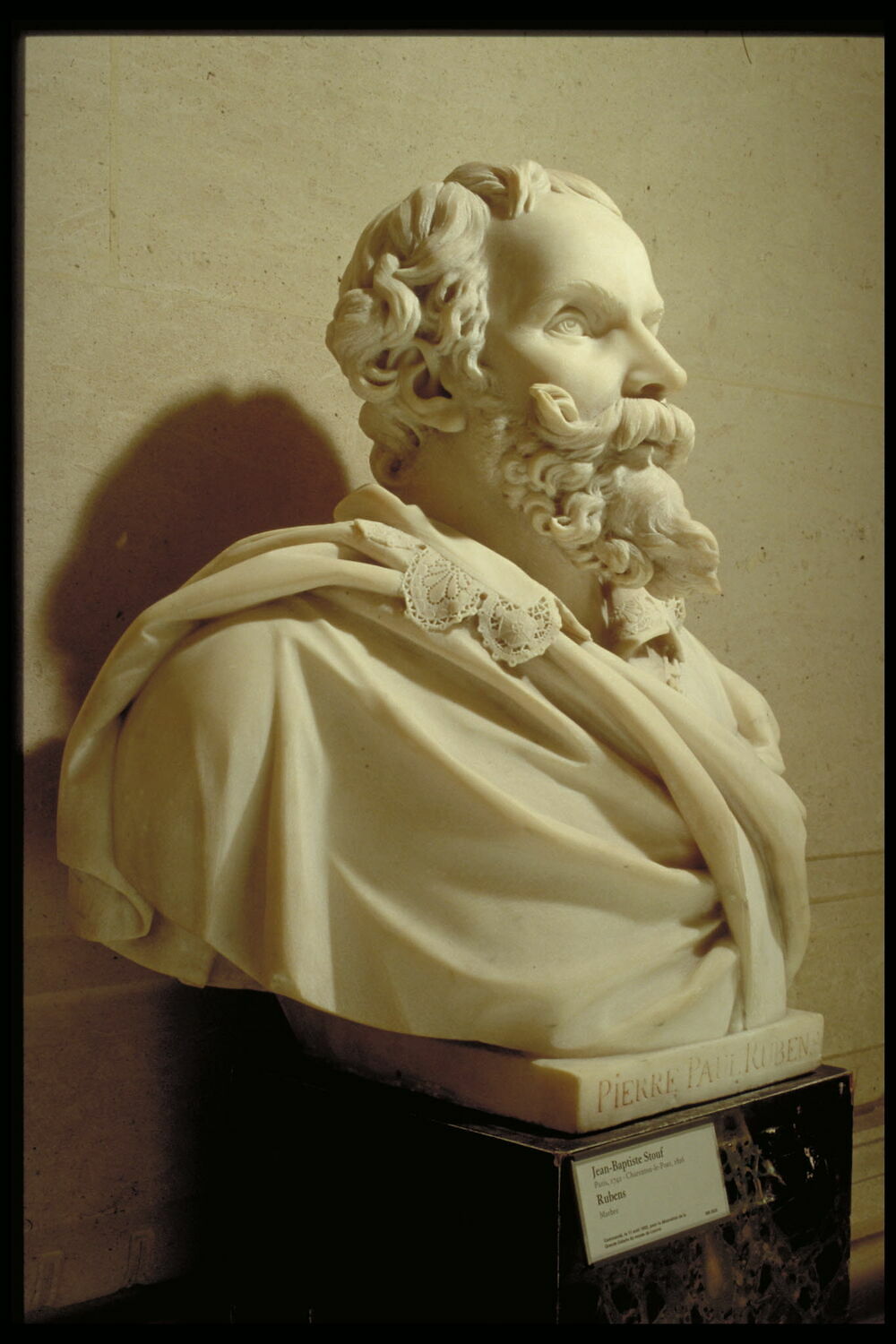
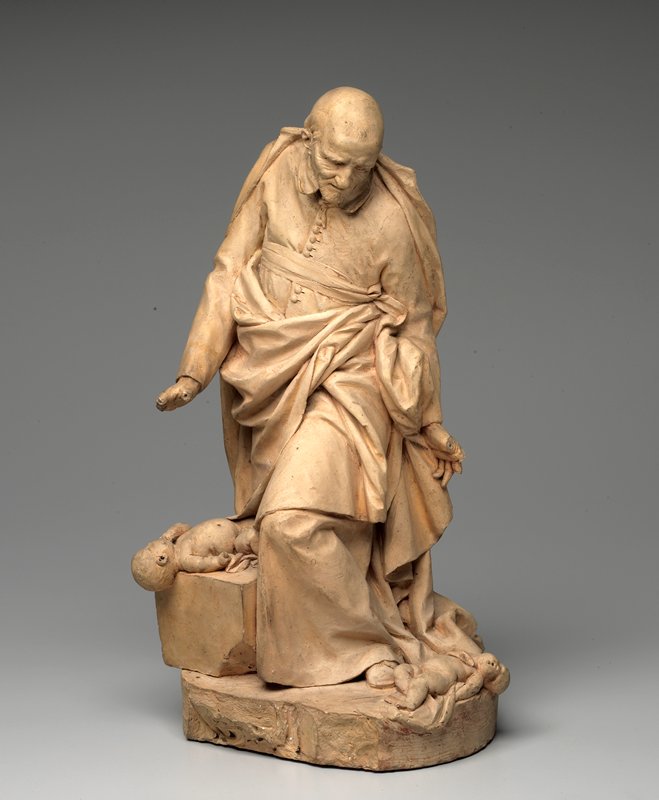
Jean Baptiste StoufFrancia, 1742–1826
Belisarius
¿Se puede contemplar?
Sí, recibe visitas
Expuesta al público. Quién lo avala figura más abajo.
- Comprobado
- En este estado desde
- Fuente
- El museo
Sobre la escultura
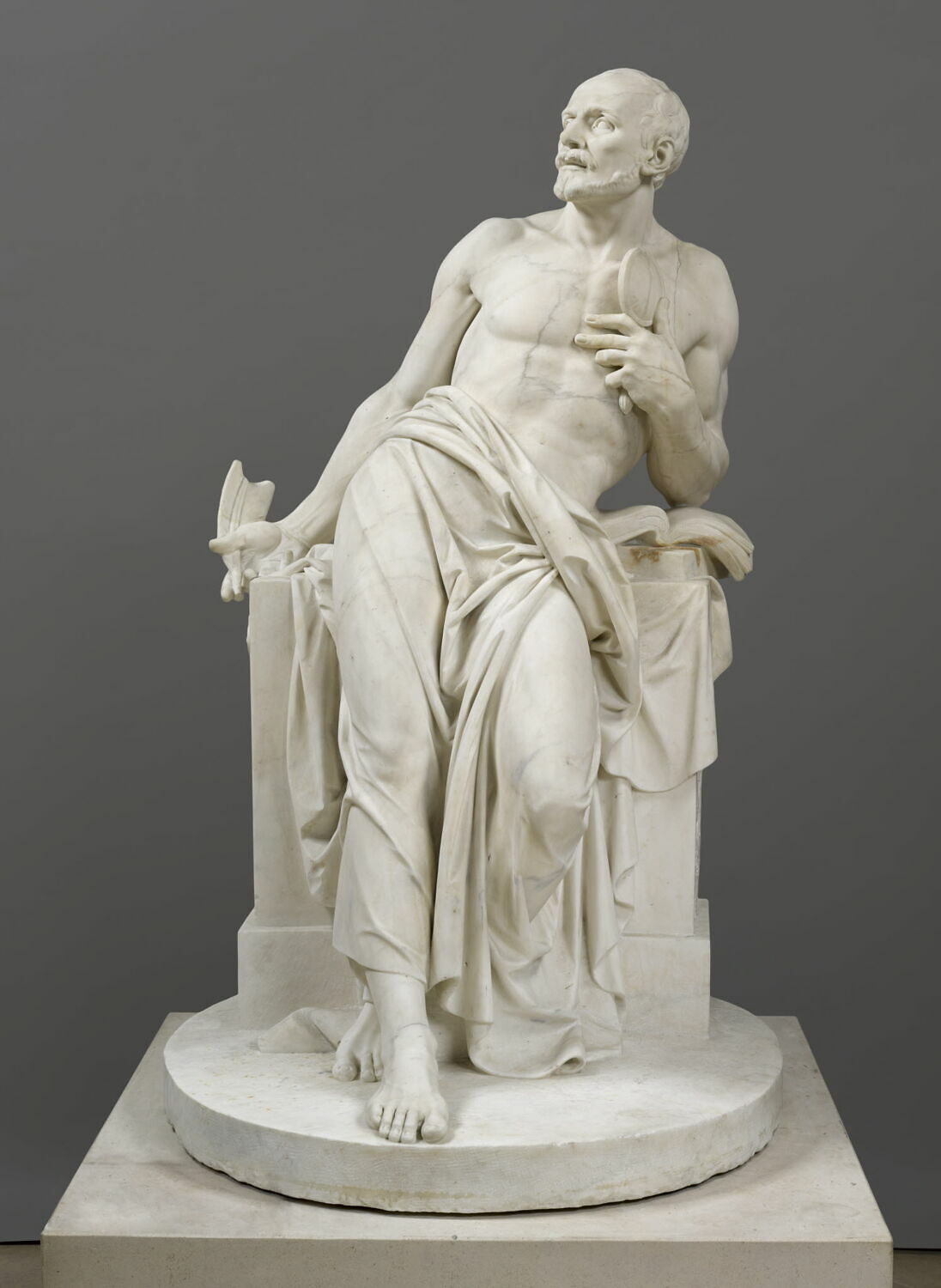
This aged and emaciated figure is the blind general Belisarius. Heavy eyelids almost completely cover his eyes, which register nothing of the outside world. Deeply set eye sockets, encircled by wrinkles, also draw attention to Belisarius's blindness. His veined and wrinkled forehead, tilted head, and open mouth, emphasize his vulnerable state. In the mid-1700s, a novel by Jean-François Marmontel revived interest in Belisarius--a popular general of the Roman Empire whose promising career was sabotaged by the jealous Emperor Justinian I. In Marmontel's novel, the emperor has the heroic general blinded, reducing Belisarius to begging. He is eventually rediscovered and aided by former officers and his family.
Seguir leyendo
This dramatic tale of patriotism, injustice, and redemption was widely embraced in revolutionary and post-revolutionary France and was a popular subject for painters and sculptors--including Jacques-Louis David, Jean-Antoine Houdon, and François Gérard (whose painting [*Belisarius*](https://www.getty.edu/art/collection/objects/225120/baron-francois-pascal-simon-gerard-belisarius-french-1797/) is also in the Museum's collection). Jean-Baptiste Stouf exhibited this marble sculpture at the Salon of 1791; he had previously shown a terracotta model of the bust of Belisarius in 1785. Like many eighteenth-century artists who depicted Belisarius, Stouf emphasized the subject's pathos, highlighting the injustice of the general's plight. The intimate and sympathetic portrait also demonstrates Stouf's mastery of marble carving.
The luxuriantly sculpted beard and cascading curls of hair, the crumpled, crinkled skin, and the broad, high brow are all captured with a subtlety that belies the challenge of carving stone. The formal characteristics of Belisarius echo classical and Baroque sculpture but also anticipate the Romantic sensibility of the 1800s.
Museo J. Paul Getty
Ficha
- Número de inventario
- 2005.19
En el catálogo
Fuentes
- Museo J. Paul Getty
- Imagen: Museo J. Paul Getty — Open Content