 Berenice AbbottEstados Unidos, 1898–1991
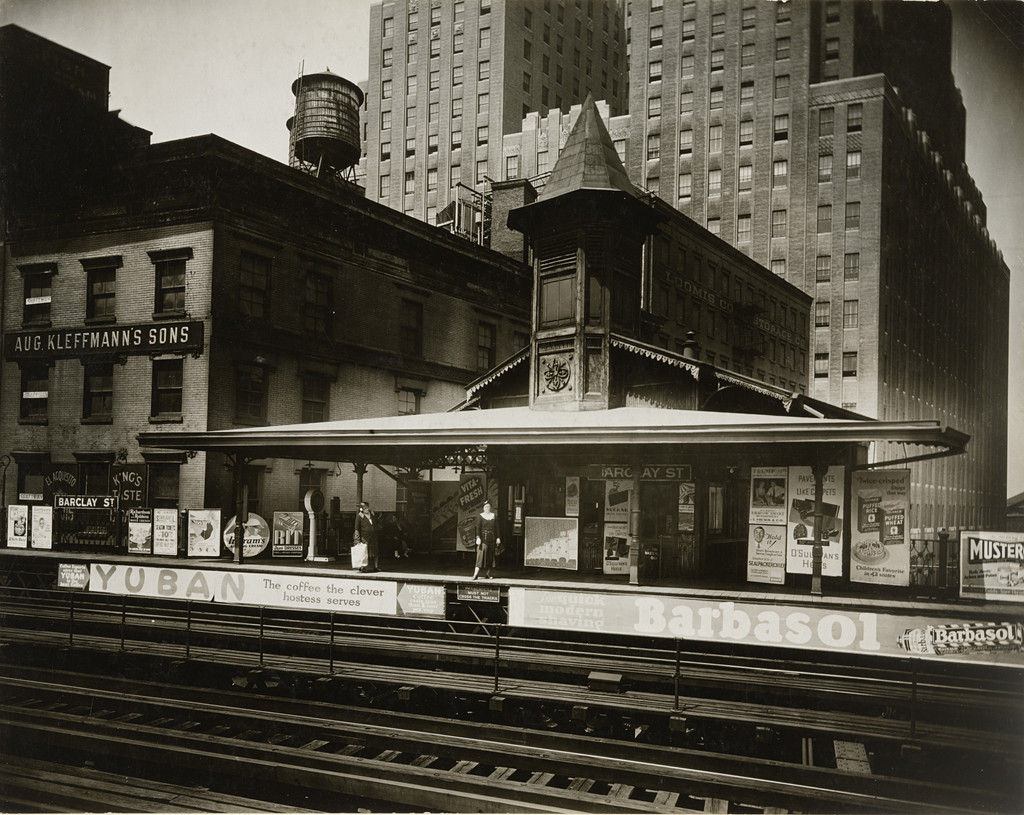
Barclay Street Elevated Platform
¿Se puede contemplar?
Por ahora no recibe

MoMA
Nueva York, Estados Unidos
Pertenece a la colección, pero ahora mismo no está expuesta.
- Comprobado
- Fuente
- Los datos de colección del propio museo
Ficha
- Número de inventario
- 322.1974
En el catálogo
Fuentes
- MoMA: the museum's own open data · obtenido hace 13 días
- Imagen: MoMA — © the artist or rights holder
Mientras tanto, en la vida de Berenice Abbott
La vida entera1930s
The idea behind “Changing New York”
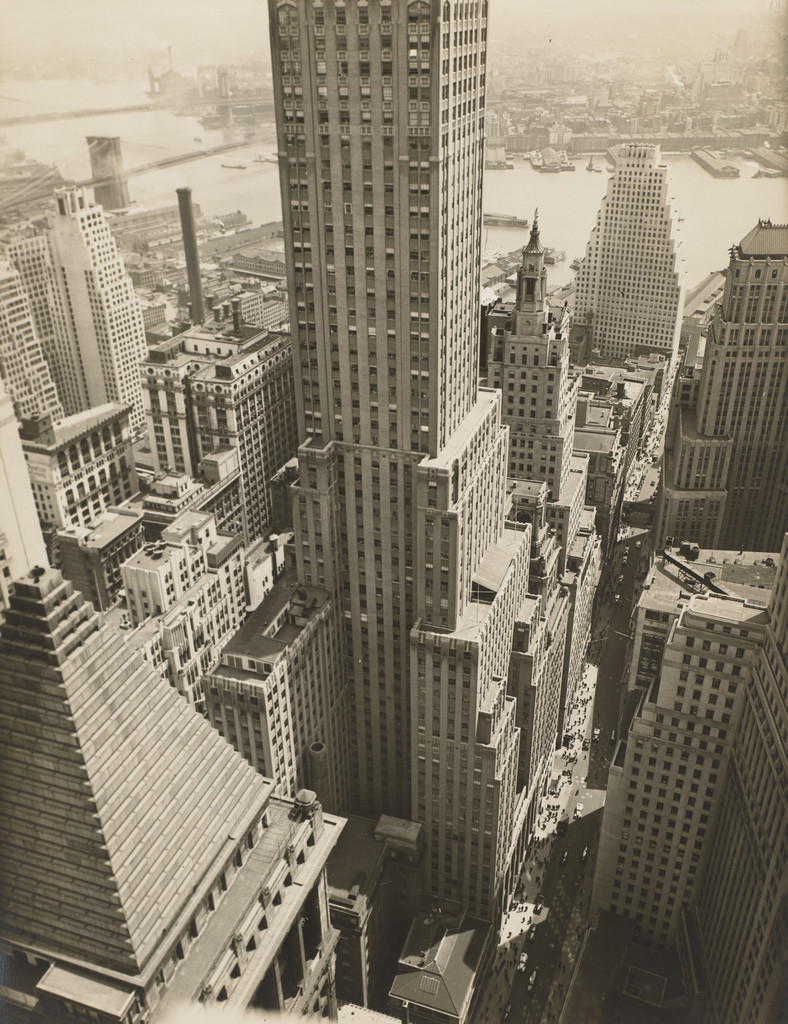
Her project is primarily a sociological study embedded within modernist aesthetic practices, meant to show the interaction between the city’s diverse people, the places where they live, work and play, and their daily activities. Lewis Mumford’s historical writings of the early 1930s strongly influence her, and buildings of the “paleotechnic era” often look downright menacing in her photographs.
1933
Begins teaching at the New School for Social Research
From 1933 she supports herself with commercial work and teaching gigs at the New School for Social Research; for six years she works on her New York project independently, unable to get financial support from organizations such as the Museum of the City of New York, foundations such as the Guggenheim Foundation, or individuals.
1934
Museum exhibition brings patrons and a co-author
An exhibition she prepares at the Museum of the City of New York in 1934 helps her find serious patrons (the Federal Art Project begins to fund the project) and a co-author, the art critic Elizabeth McCausland, who becomes a close friend.
1935
The Federal Art Project hires her as project supervisor
In 1935 the Federal Art Project (FAP) hires her as project supervisor for “Changing New York”: she continues to photograph the city while assistants help in the field and in the office, leaving her all her time for producing, printing and exhibiting her photographs. By the time she resigns from the FAP in 1939 she has produced 305 photographs, deposited at the Museum of the City of New York.
1935
Moves into a loft with the critic Elizabeth McCausland
She moves into a Greenwich Village loft with the art critic Elizabeth McCausland and lives with her until McCausland’s death in 1965. McCausland is an ardent supporter, writing about Abbott in the Springfield Daily Republican, Trend and New Masses (the latter under the pseudonym Elizabeth Noble) and contributing the captions for “Changing New York”.