 Pieter CoddePaíses Bajos
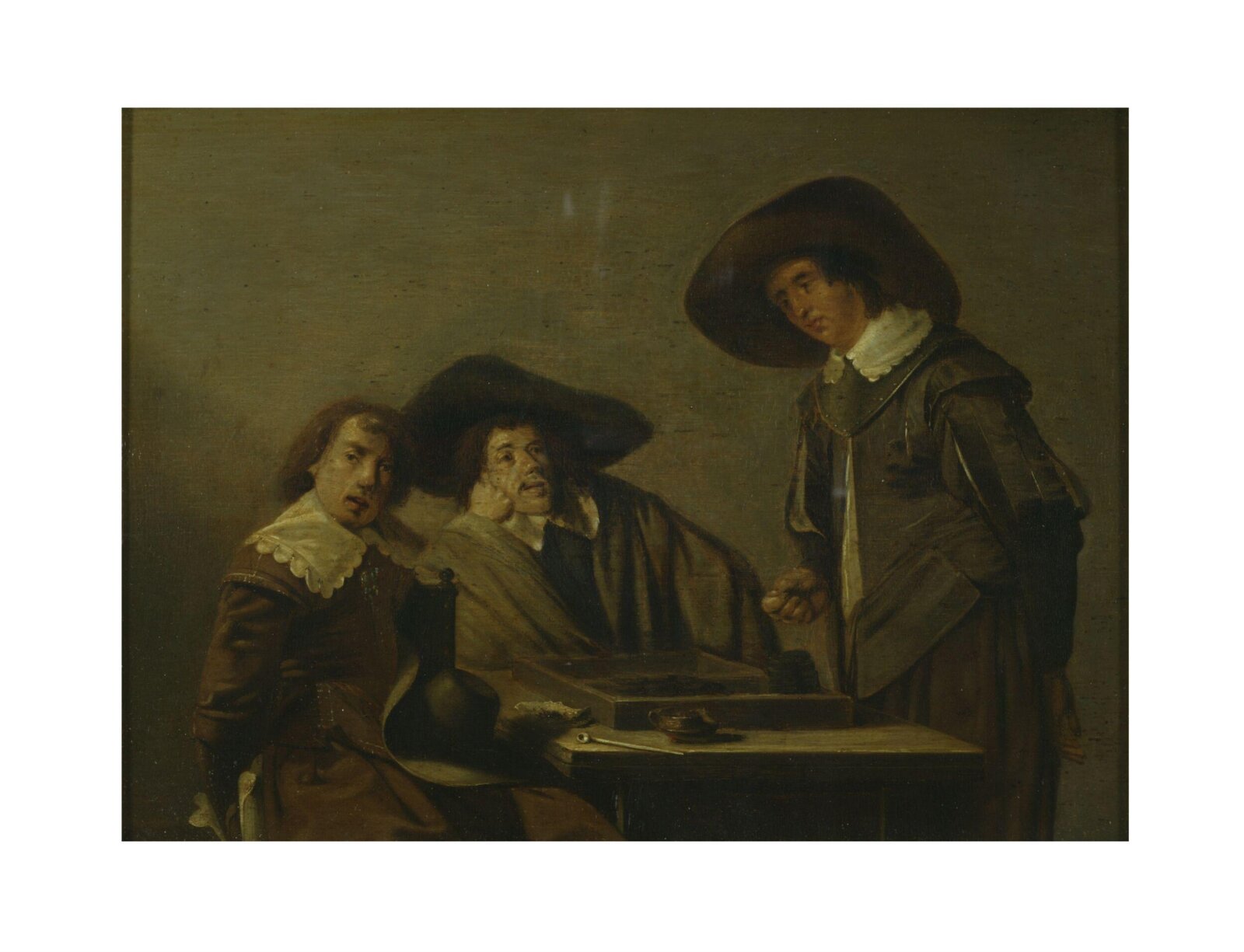
Backgammon players
¿Puedo verla?
No expuesta por ahora
¿Dónde está «Backgammon players» hoy? Colección: Museo de Victoria y Alberto, Londres. No expuesta por ahora. Comprobado 25 de septiembre de 2026.

Londres, Reino Unido
Pertenece a la colección, pero ahora mismo no está expuesta.
- Comprobado
- En este estado desde
- Fuente
- El museo
Sobre el cuadro
Three backgammon players, two sitting, and one standing, at a table which holds the backgammon board, a clay pipe and smoking paraphenalia including a brazier and a paper with loose tobacco. Previously attributed to a follower of Anthonie Palamedes, this work appears closer to the style of his contemporary Pieter Codde (1599-1678). Codde was a Dutch painter and poet who worked primarily in Amsterdam. He was particularly productive in the 1620s and 1630s, painting mainly interior genre scenes. He is best known as a painter of interiors with numerous figures, often either elegant ladies and gentlemen in merry or musical companies, tric-trac players or soldiers in guardrooms. The theme of the Merry Company, in which he particularly specialized, became increasingly fashionable in the first half of the 17th century, especially in Haarlem and Amsterdam.
Leer más
His palette is characterized by cool grey-brown tones, and he employed a fine, rather dry brush technique. He often reused the same compositions and motifs. He produced many paintings with the theme of backgammon for example and the figure supporting his chin on his hand reappears in several works (such as Louvre MNR. 452). He generally grouped men and women informally and dedicated a significant amount of attention to painting the details of their fashionable clothing.
Museo de Victoria y Alberto
Ficha
- Número de inventario
- 1365-1869
Lo que muestra
En el catálogo
Fuentes
- Museo de Victoria y Alberto
- Imagen: Museo de Victoria y Alberto — © Victoria and Albert Museum, London